Loading…
 🔍 Click to enlarge
herbannual💧 Hydroponic-Compatible
Dill
Anethum graveolens
Feathery herb essential for pickles, fish, and dressings. Attracts beneficial insects.
Quick Facts
Sun:☀️ Full Sun
Water:💧💧 Moderate
USDA Zones:Zones 3–11
Space:🪴 Container, 🌱 Small Bed, 🏡 Large Garden
Soil:Loam, Sandy, Silty
Best Season(s):Spring, Summer
Experience Level:🌱 Beginner
Native Range:Southwest Asia
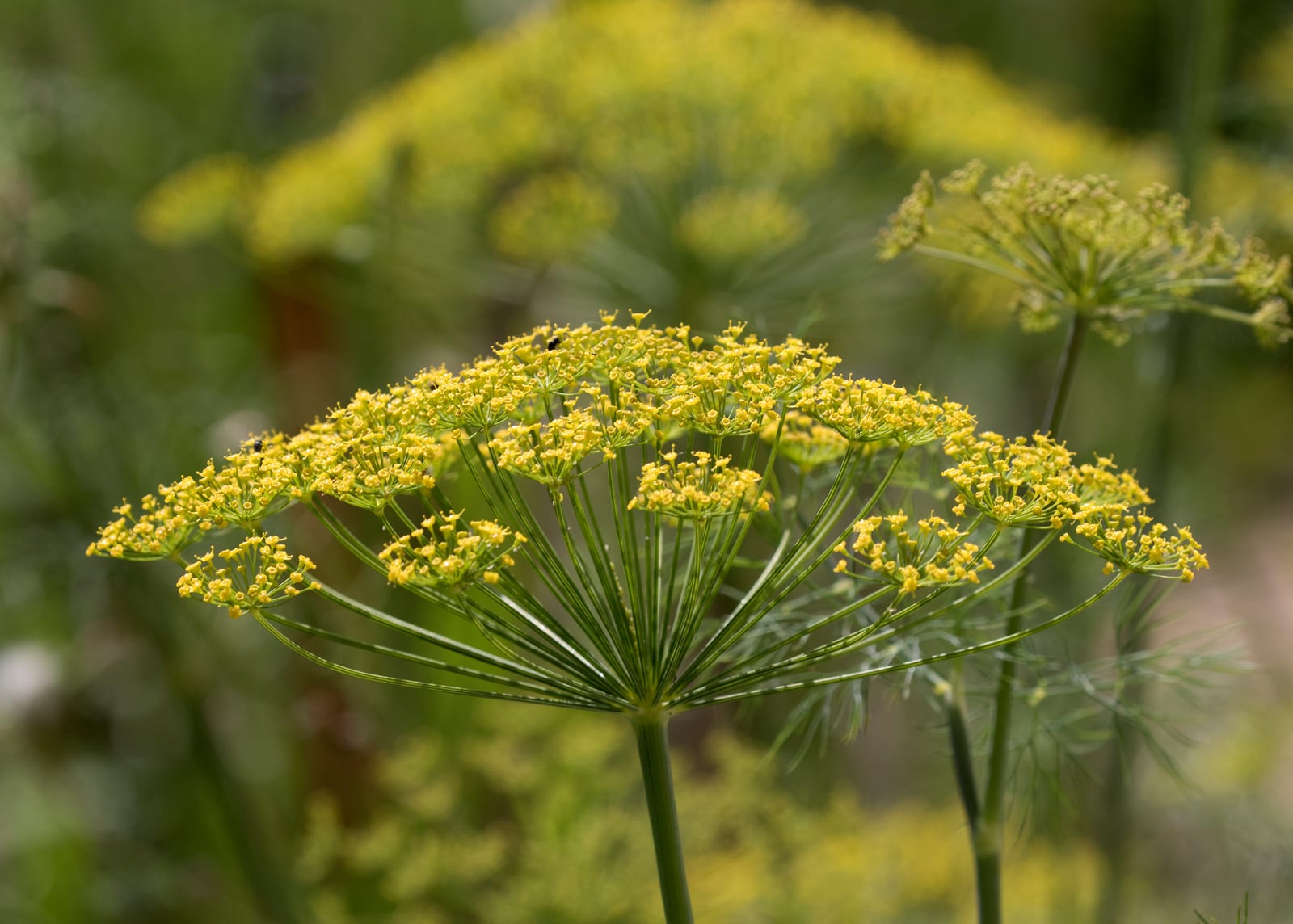
Bloom Color:Small yellow umbels, also used in pickling
Bloom Cycle:Midsummer
Days to Harvest:25–35 days in hydro for leaves
Harvest Pattern:Continuous / cut-and-come-again
Care Notes
Direct sow — dislikes transplanting. Let some flower heads go to seed for self-sowing.
💧 Hydroponic Notes
Works in DWC or Kratky. Needs a deep container for its taproot. Compact varieties like Fernleaf are ideal for indoor hydro.
Growing Details
Mature Size:2-4 ft tall, 1-1.5 ft wide
Growth Rate:🐇 Fast
Zone Performance
Dill grows as a fast-cycling annual throughout its full Zone 3-11 range, so zone mainly determines timing and number of successions possible: cold Zone 3-5 gardens get one or two plantings before frost ends the season, while warm Zone 9-11 gardens can direct-sow dill in fall and winter as well as spring, since it bolts quickly once summer heat arrives everywhere.
Companions & Wildlife
🦌 Deer Resistance
seldom damaged
Dill's pungent, feathery foliage is generally passed over by deer in favor of more palatable garden plants.
🐝 Pollinator Value
high
Dill's flat-topped yellow flower umbels attract hoverflies, parasitic wasps, ladybugs, and are a favored host plant for black swallowtail butterfly caterpillars.
Good Companions
Broccoli — Dill's flowers attract parasitic wasps and other predatory insects that prey on cabbage worms and other brassica pests.
Cabbage — Dill's flowers attract parasitic wasps and other predatory insects that prey on cabbage worms and other brassica pests.
Kale — Dill's flowers attract parasitic wasps and other predatory insects that prey on brassica pests.
Troubleshooting
⚠️ Bolting to seed quickly in hot weather, ending leaf production
Succession sow every 3-4 weeks through the cool season and harvest leaves promptly before flower heads form.
⚠️ Toppling over in wind or rain due to tall, hollow stems
Plant in a sheltered spot or stake tall varieties, and avoid overly rich soil that produces excessively soft, weak growth.
⚠️ Parsleyworm (black swallowtail caterpillar) defoliating plants
Tolerate moderate feeding to support butterfly populations, or plant extra dill specifically as a sacrificial host plant.
⚠️ Transplant shock and bolting when started indoors and moved outside
Direct sow dill whenever possible, since its taproot resents disturbance and disturbed seedlings often bolt prematurely.
💧 Growing Dill Hydroponically
Dill is well suited to soil-free growing. Here is what to know before you set up.
Time to harvest
25–35 days in hydro for leaves
Target pH (herbs)
5.5 – 6.5
Nutrient strength (EC, established)
1.0 – 1.6 mS/cm
Seedlings: 0.4 – 0.8 mS/cm
Light (DLI)
14 – 20 mol/m²/day
Roughly 12 – 16 hours a day indoors
Strength and light figures are typical ranges for herbs as a group, not measurements specific to Dill. Your nutrient's feeding chart takes priority.
Best-suited systems
Workable
Works in DWC or Kratky. Needs a deep container for its taproot. Compact varieties like Fernleaf are ideal for indoor hydro.
✅ Pet Safety
Non-toxic to cats and dogs in normal culinary amounts.
Informational only — always check with a veterinarian if you suspect your pet has eaten something it shouldn't have.
🌿 Traditional & Medicinal Use
Traditional digestive folk use (the origin of "dill" relates to an old word for soothing) — primarily a culinary herb.
Informational only, not medical advice — consult a healthcare provider before using any plant medicinally.