Stack dozens of plants in the floor space of a chair — how tower systems work, what they suit, and where they fall short.
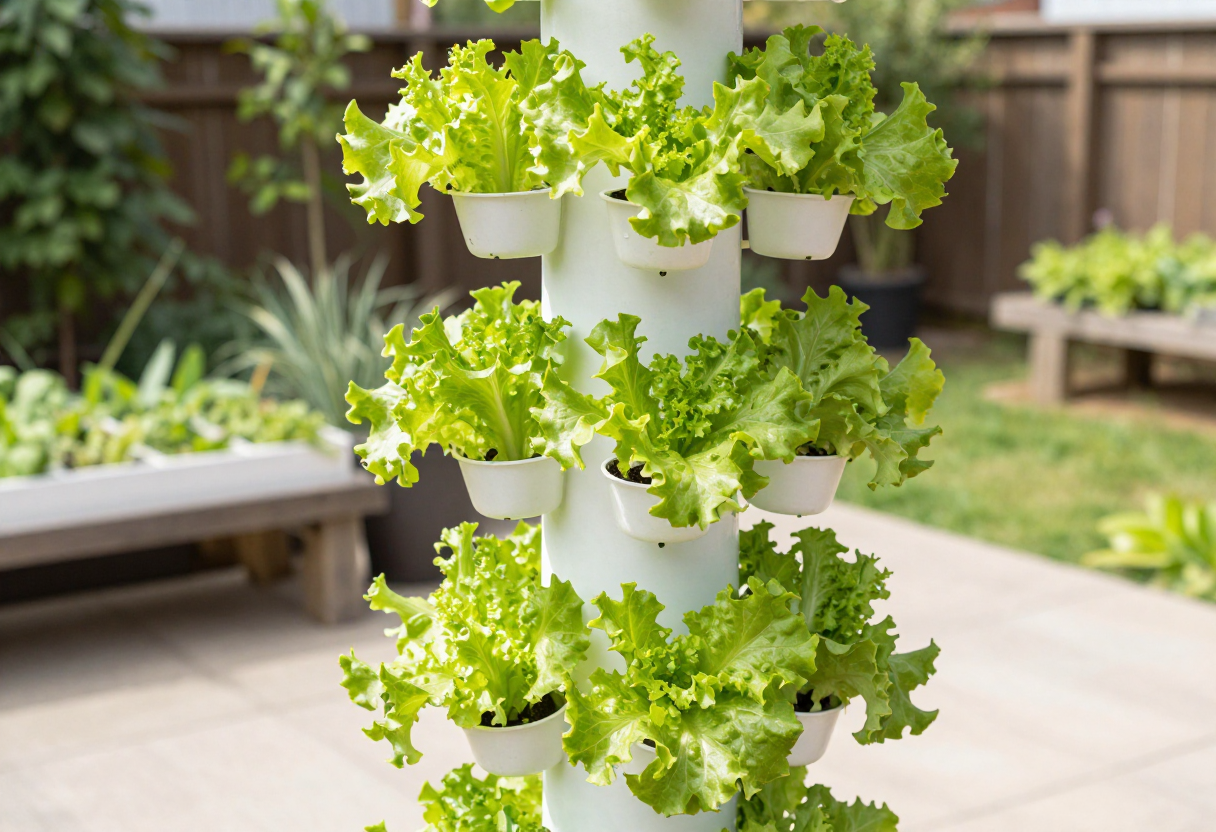
A vertical hydroponic tower grows plants in pockets stacked in a column, with nutrient solution pumped to the top and trickling down past the roots. Because you are growing up instead of out, a tower can hold a couple dozen lettuce, herb, or strawberry plants in about the floor space of a chair, which makes it appealing for patios, kitchens, and small yards. The tradeoffs are a pump that must not stop, small pockets that limit plant size, and uneven watering if the design is poor. This guide covers how towers work, what to grow, how to set one up, and how to keep it healthy. To compare towers with other systems, use the site's Hydroponic System Chooser, and for solution numbers see Hydroponic Nutrients, pH & EC.
A tower is a recirculating system arranged vertically. A pump at the base lifts solution through a tube to the top, where it is released and flows down through the column, wetting the roots in each pocket before draining back into the reservoir.
•Plants sit in net cups or pockets around the outside of a column, with roots reaching inward to the flowing solution.
•Gravity does the work on the way down, so the design depends on even flow reaching every level, including the bottom.
•The reservoir sits at the base, which also keeps the unit stable and holds the pump.
•Because there is little medium to hold water, a tower loses moisture quickly if the pump stops, so it needs the same protections as NFT.
📏
The appeal is density: a tower gives you many plants per square foot of floor. It only pays off if you actually eat that many greens and herbs, so size the tower to what you will use.
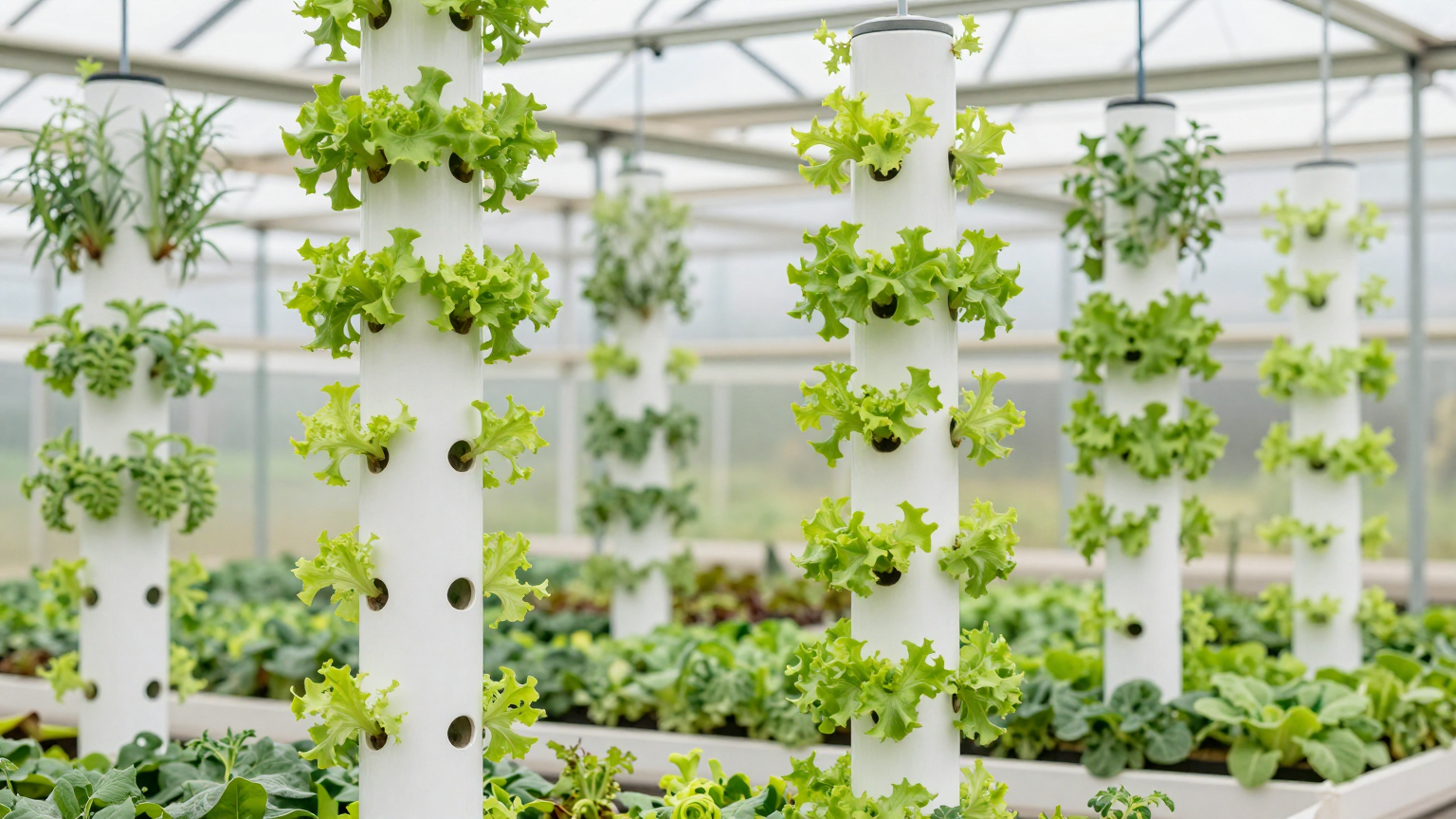
A tower stacks many plants into a small footprint, fed from the top by a pump.
What Grows Well in a Tower
Towers suit light plants with modest root systems, because the pockets are small and the structure holds limited weight.
Crop
Fit
Notes
Lettuce and leafy greens
Excellent
The classic tower crop; harvest outer leaves for continuous production
Basil, mint, parsley, cilantro
Excellent
Compact herbs thrive in small pockets
Strawberries
Excellent
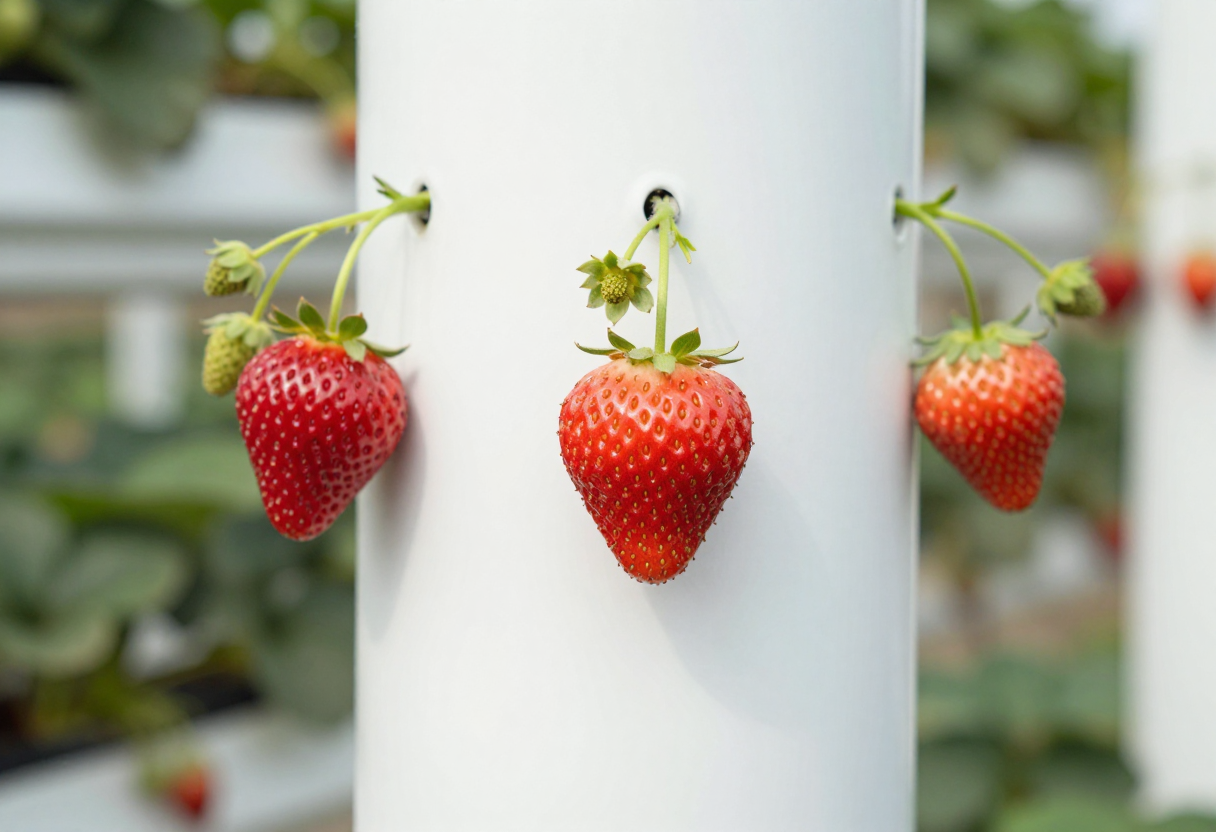
Fruit hangs clear of the column; everbearing types fruit over a long season
Kale, bok choy, arugula
Very good
Fast growers that finish well in pockets
Tomatoes, peppers, cucumbers
Poor
Too heavy for the pockets and column; use DWC or Dutch buckets instead
•Put larger, heavier plants in the middle levels and small ones at the edges to keep the tower balanced.
•Mix plants with similar light and feeding needs in one tower, so one solution suits them all.
•Vigorous herbs like mint can crowd their neighbors, so plant them where they have room or use a separate tower.
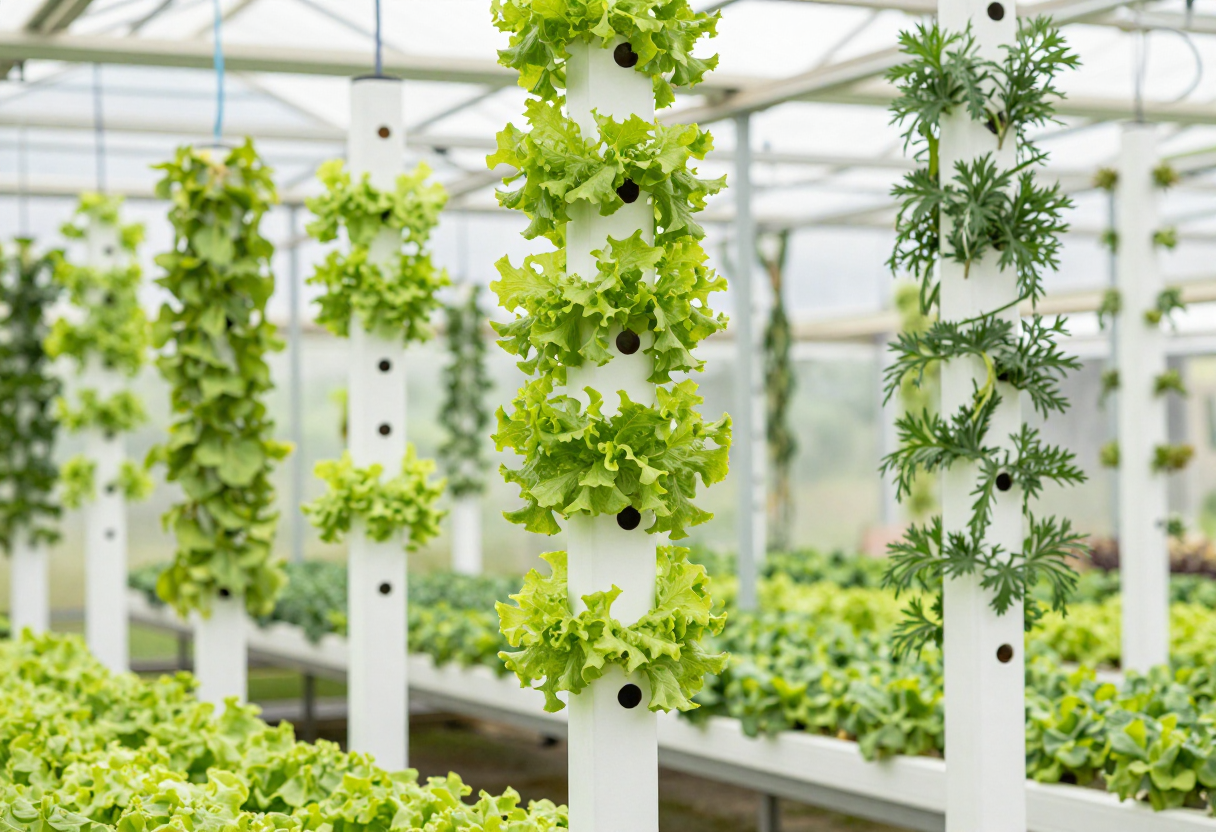
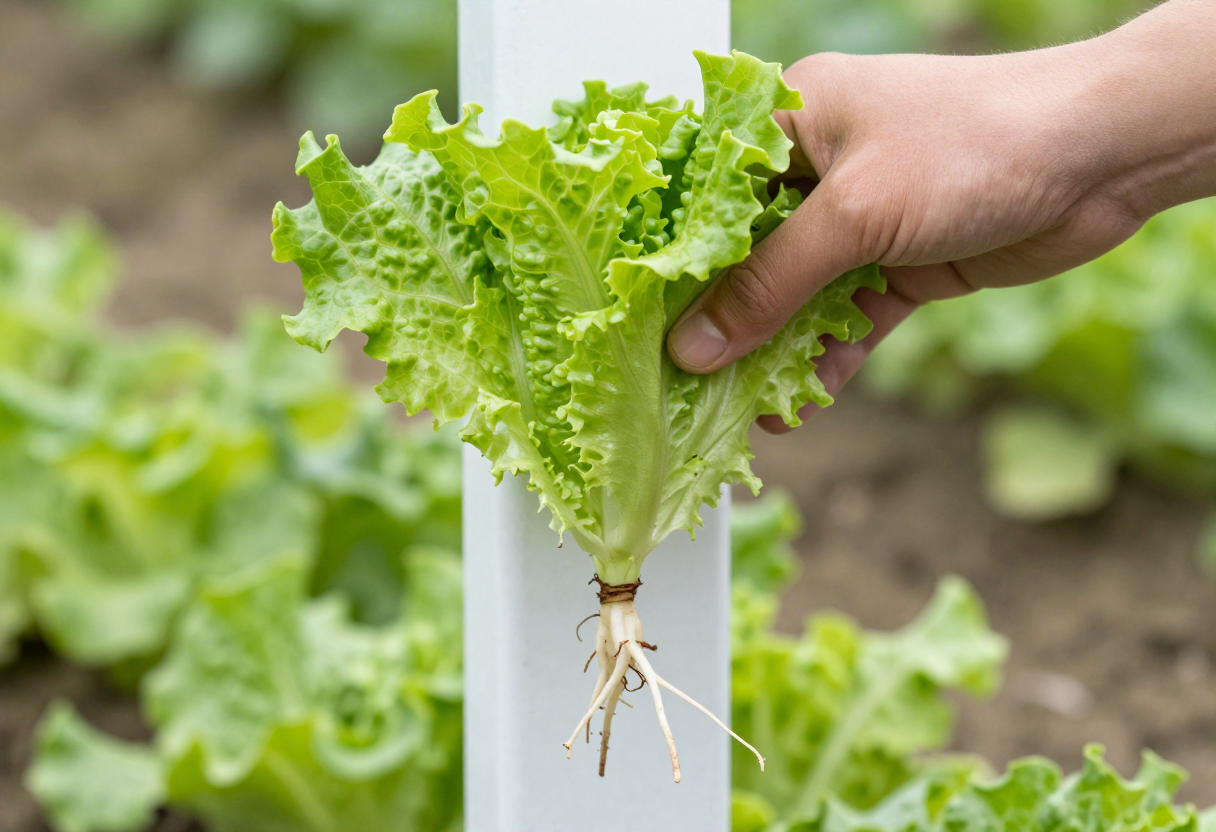
Towers scale from a single patio unit to whole rows in a greenhouse.Strawberries are one of the best tower crops, with fruit hanging clear of the column.
Setting Up a Tower
Many home towers come as complete kits, which is the simplest way to start. If you build your own, the parts are a base reservoir, a pump, a column with pockets, and a top distributor.
•Place the tower on a level, stable surface where it will not tip, near a GFCI-protected outlet, and where it gets adequate light — either strong sun or a grow light.
•For indoor use, position lights so every level receives enough intensity, since the bottom often gets much less than the top. See the Grow Lights guide.
•Fill the reservoir, adjust pH, add nutrients at a mild strength, and run the system with plain water first to confirm even flow to every level.
•Start seedlings in rockwool or coco plugs and place them in the pockets once roots appear.
•Water can evaporate quickly, especially outdoors, so plan to top up the reservoir often.
⚠️
Do not put a tower where a leak or overflow can damage floors, and keep the pump and cord off wet surfaces. If you are away often, choose a system with a buffer, since a tower can dry out within hours of a pump failure.
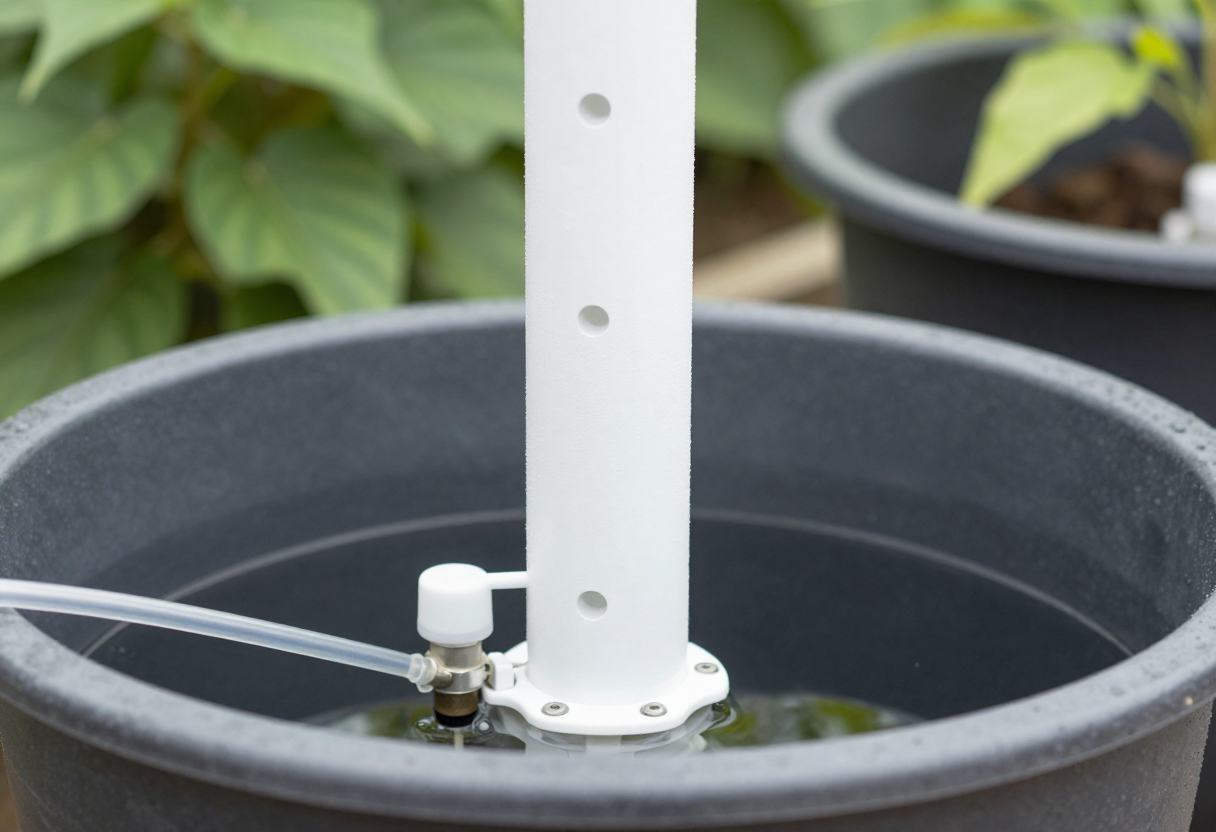
The reservoir and pump at the base feed solution to the top of the column.
Keeping a Tower Healthy
Towers are compact, so small problems spread quickly. A steady routine catches issues early.
Symptom
Likely Cause
Fix
Bottom plants dry or stunted
Uneven flow, with too little reaching the lower levels
Increase flow slightly and check for blockages or an unlevel base
Top plants healthy, bottom plants pale
Too little light reaching the lower levels
Add or reposition lights, or put shade-tolerant crops lower
Water flowing down the outside
Pockets or fittings not seated properly
Re-seat net cups and check the column seals
Wilting throughout
Pump failure or a blocked line
Restore flow immediately; keep a spare pump
Brown, crispy leaf tips
Solution too strong
Measure strength and dilute with plain water
Green slime on the column or roots
Light reaching the solution
Cover the reservoir and any exposed channels
🧼
Between crops, take the tower apart, scrub the column and reservoir, and rinse well. Old root debris left inside is where clogs and disease begin.
Check the roots in a few pockets regularly — they show problems before the leaves do.
🌿 Get Seasonal Gardening Tips
New guides, planting reminders, and growing tips — straight to your inbox.
No spam. Unsubscribe anytime.
About the Author
David Rodgers is the Founder & Head Gardener of Planting Atlas. With over 40 years of hands-on gardening experience in Oklahoma's Zone 7 climate, he researches, writes, and personally tests every guide on the site.
David draws from real backyard trials, soil testing, and trusted sources like Oklahoma State University Extension and USDA data to deliver practical, zone-specific advice that actually works.