The crops that grow best without soil — ranked by how easy they are, how fast they finish, and which system suits each one.
Not every plant is equally happy in a hydroponic system. Fast-growing leafy greens and herbs are the easiest and most rewarding, fruiting crops like tomatoes and peppers pay off but demand strong light and more attention, and some plants — deep roots, trees, big vines and grains — are simply poor fits. This guide sorts the crops that do well into tiers, gives typical time to harvest for each, and matches them to the right kind of system. The timings come from the site's Plant Database. To see how these fit your space, use the Hydroponic System Chooser, and for the wizard's hydroponic path, the Garden Architect.
A few traits predict success in a soilless system. Crops that check most of these boxes are the easiest to start with.
•Fast growth. The sooner a crop finishes, the sooner you learn what works and the less time a problem has to develop.
•Modest size. Small, light plants fit easily in net pots and channels, while large, heavy plants need bigger containers, real support, and more light.
•Shallow, fibrous roots. Plants adapted to a wet, loose root zone do well; crops that need deep, firm soil to develop, like most root vegetables, struggle.
•Cut-and-come-again harvests. Plants you can harvest repeatedly, like lettuce leaves and herbs, give the most food from one setup.
•Tolerance for indoor conditions. Cooler-season greens like spinach and arugula do best at moderate temperatures, while fruiting crops need warmth and strong light.
🧭
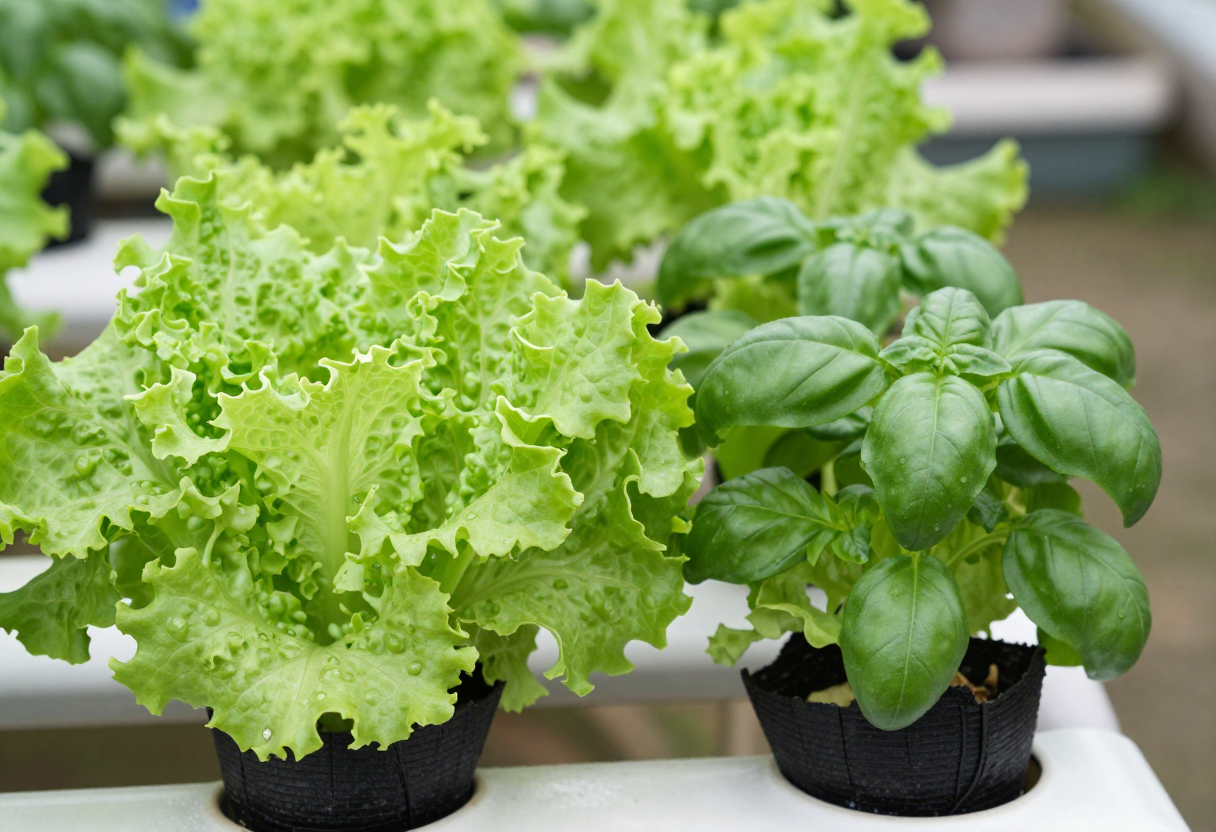
If you are new to hydroponics, start with one easy crop in one simple system. Basil and lettuce are the classic first choices because they grow fast and forgive mistakes.
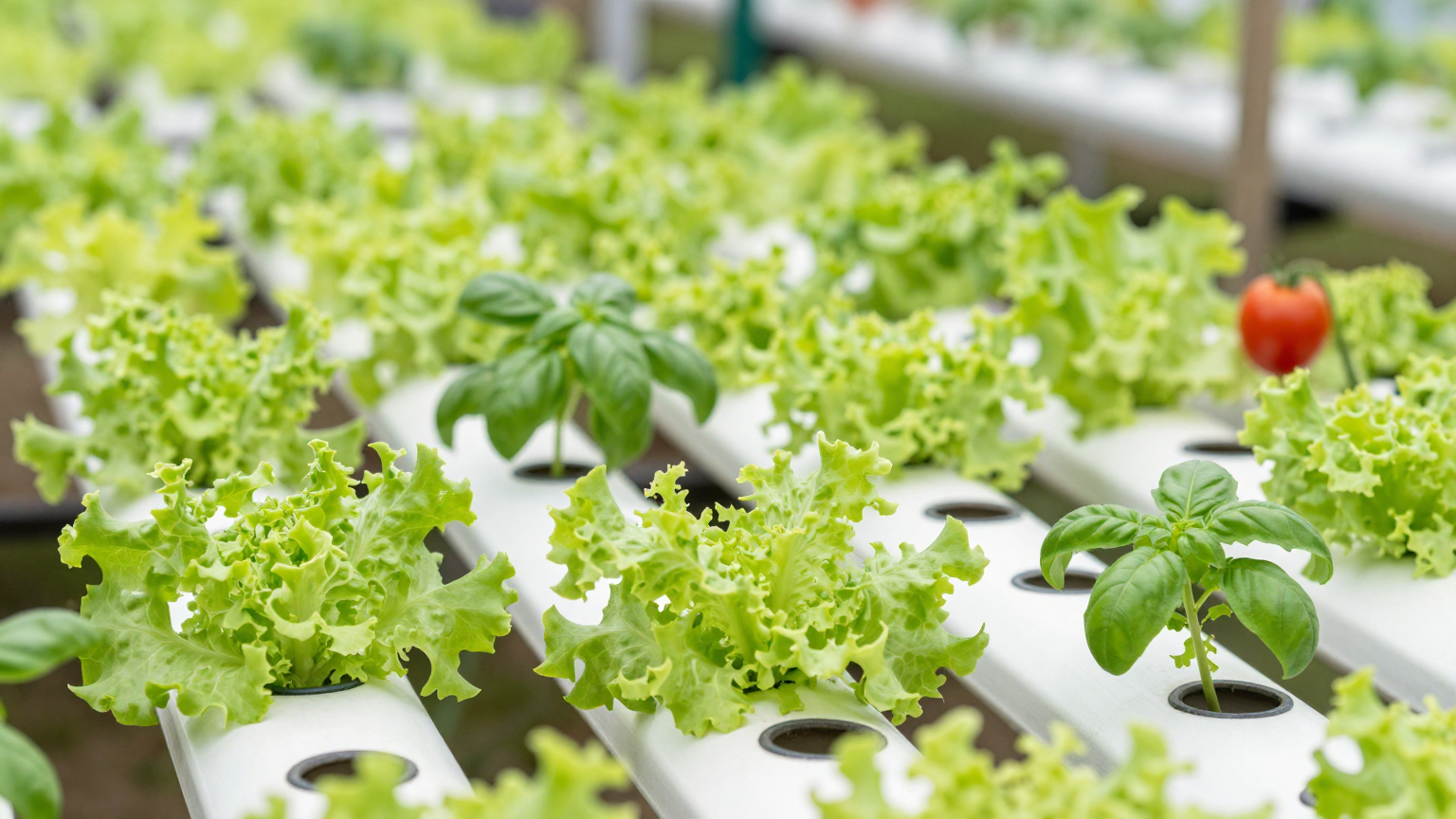
Fast-growing greens and herbs are the easiest and most rewarding crops to start with.
Leafy Greens: The Easiest Crops
Leafy greens are the backbone of home hydroponics. They grow quickly, tolerate a range of conditions, and suit nearly every system, especially Kratky, deep water culture, NFT, and towers.
Crop
Typical Time to Harvest
Best Systems
Notes
Arugula
20–40 days
Kratky, NFT
One of the fastest; baby leaves in about three weeks; prefers cooler temperatures
Watercress
15–25 days
NFT, DWC
Naturally suited to water; grows extremely fast
Spinach
20–40 days
Kratky, NFT
Prefers cool conditions, roughly 50–70°F
Swiss chard
25–35 days to first harvest
DWC, NFT
More heat-tolerant than lettuce; harvest outer stalks continuously
Lettuce
30–45 days in hydroponics
Kratky, DWC, NFT, towers
The classic first crop; harvest outer leaves for continuous production
Bok choy
30–50 days
NFT, Kratky
Baby heads at about 30 days; a great brassica for hydroponics
Slower and larger; harvest outer leaves continuously
🥬
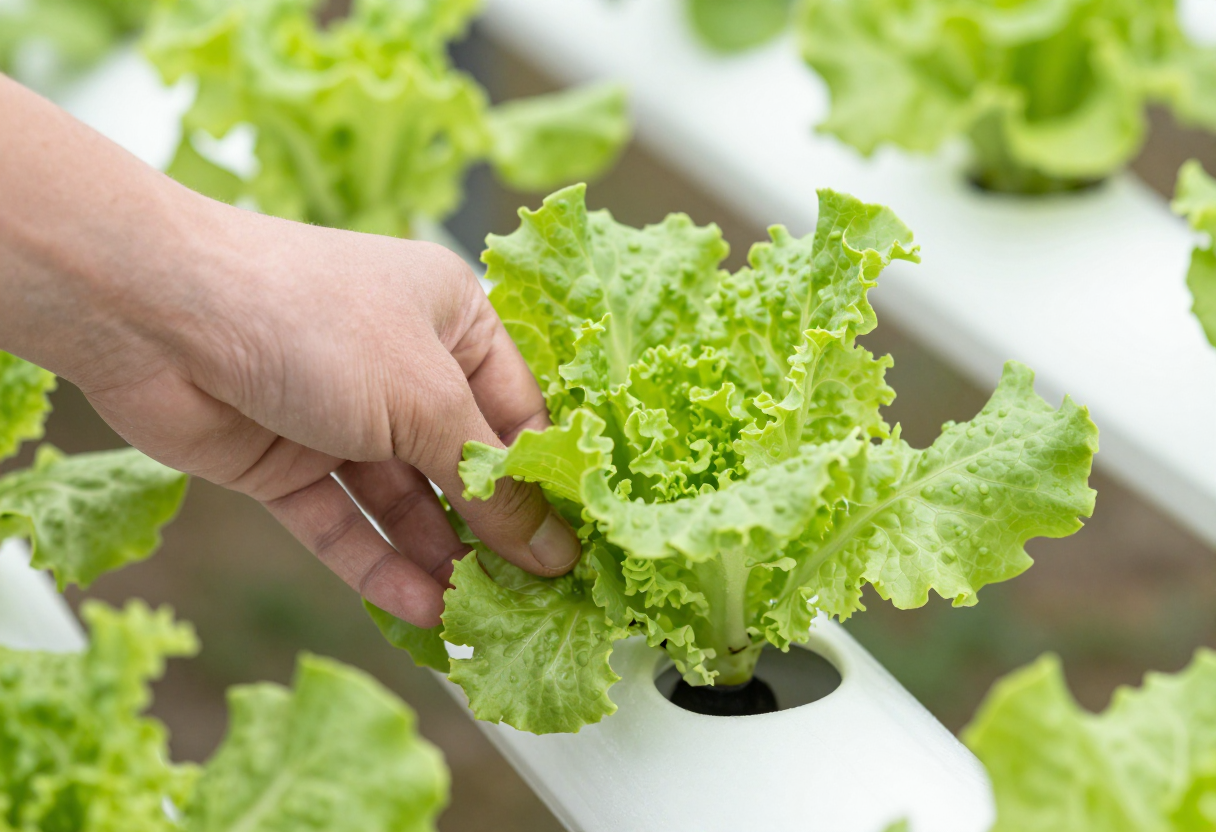
Harvest the outer leaves and leave the center growing. A single lettuce or chard plant can keep producing for weeks instead of being cut once.
Harvesting outer leaves keeps greens producing for weeks.
Herbs: Fast, Compact, and Useful
Herbs are ideal for small setups. They are compact, valuable, and mostly forgiving, and many grow noticeably faster in hydroponics than in soil.
Crop
Typical Time to Harvest
Best Systems
Notes
Basil
20–25 days in hydroponics
Any system
Among the best hydroponic herbs; pinch flowers to keep leaves coming
Cilantro
20–30 days
Kratky, NFT
Bolts more slowly at cool indoor temperatures; succession plant every few weeks
Dill
25–35 days for leaves
DWC, Kratky
Needs a deeper container for its taproot; compact varieties suit indoor growing
Chives
30–40 days
Kratky, NFT
Snip about 2 inches above the net cup for regrowth
Mint
30–40 days from cutting
Kratky, NFT
Very fast and vigorous; harvest often and keep it in its own container
Lemon balm
35–50 days
Kratky, NFT
Grows quickly; good for tea
Parsley
50–70 days
Kratky, NFT
Slow to germinate, so buying seedlings can save weeks
Oregano
6–8 weeks
Kratky, NFT
Prefers slightly drier conditions; pinch regularly for bushy growth
Thyme
6–8 weeks to harvestable size
Kratky
Slow to start but low-maintenance; avoid waterlogged roots
Rosemary
8–12 weeks to harvestable size
Kratky
Slow but reliable; likes some air exposure between waterings
Stevia
60–90 days to first harvest
Kratky, NFT
Harvest regularly to keep it compact; dry the leaves for a natural sweetener
🌿
Keep vigorous herbs like mint in their own container. They grow fast enough to crowd out neighbors and to tangle roots in a shared reservoir.
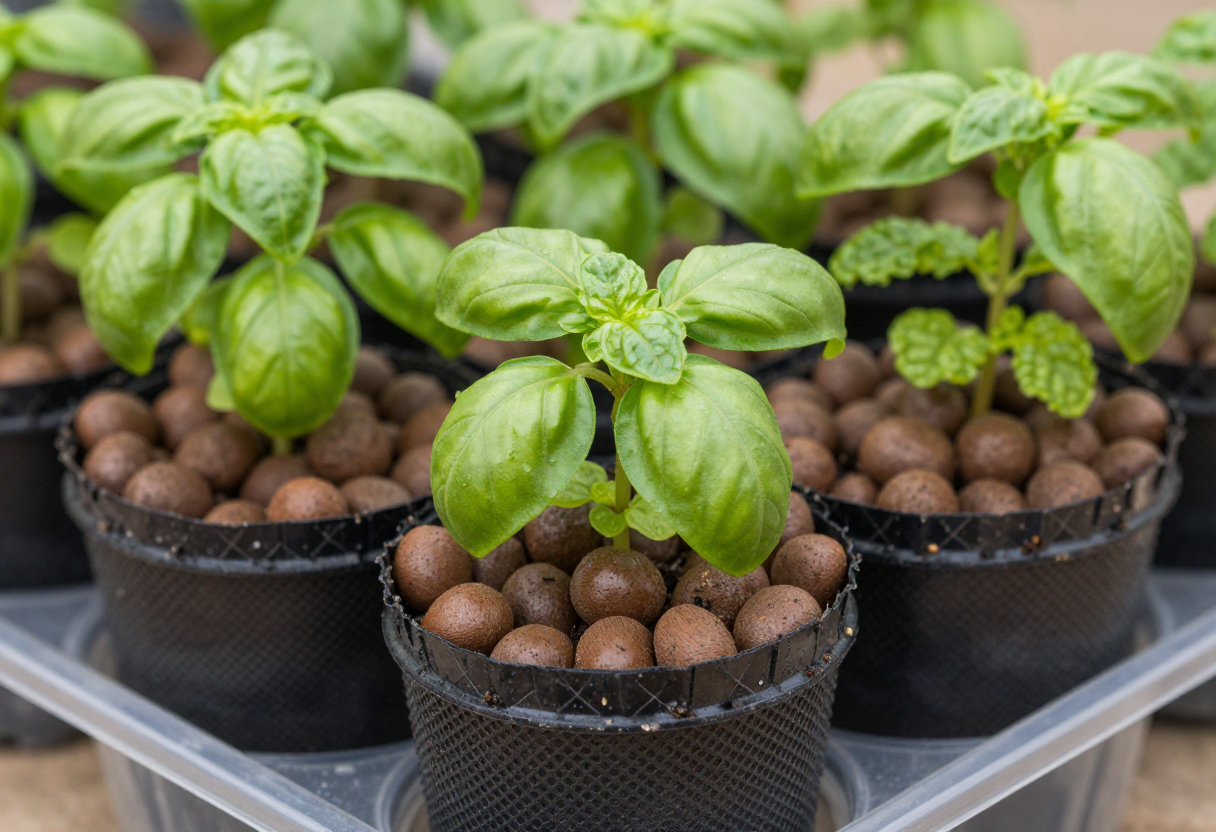
Herbs are compact, fast, and valuable — ideal for small hydroponic setups.
Fruiting Crops: Bigger Rewards, More Work
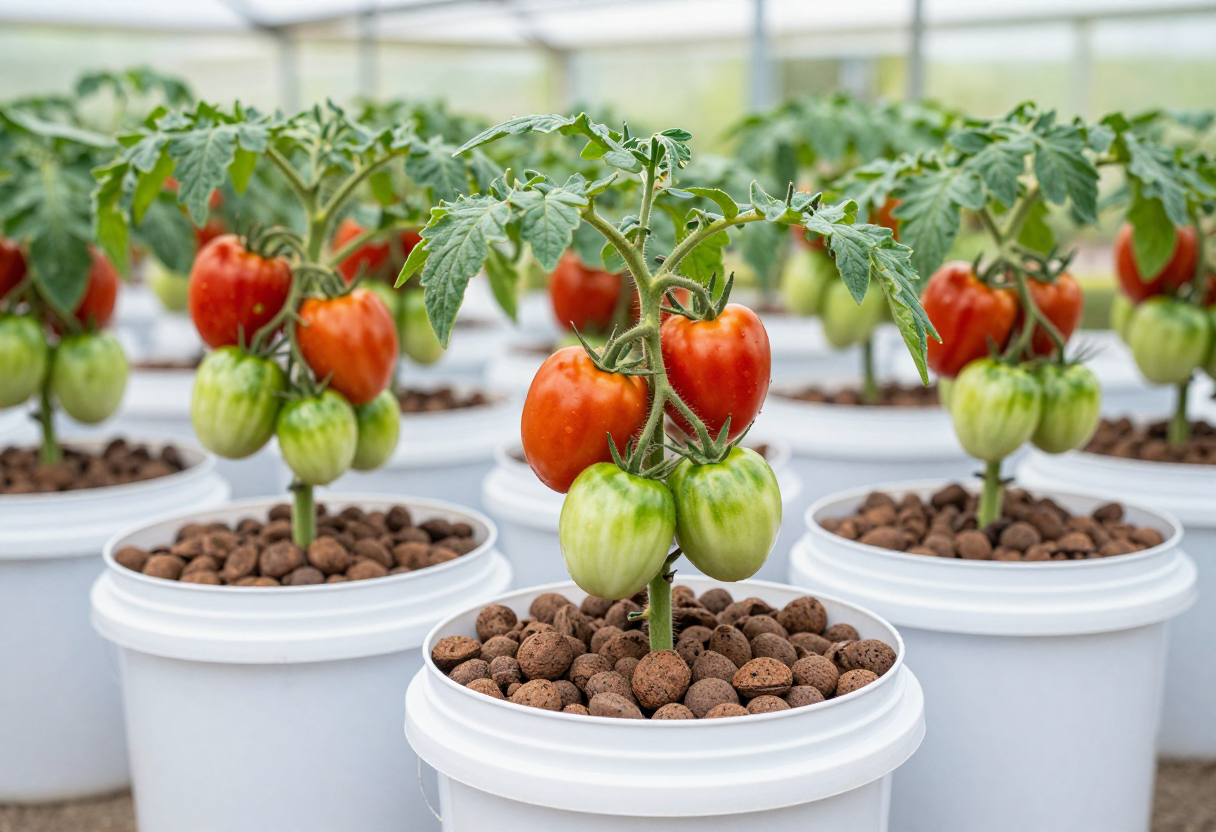
Tomatoes, peppers, cucumbers, and eggplant do very well in hydroponics, but they ask more of the grower. They need strong light, warmth, support, and stronger nutrient solutions, and they take months rather than weeks.
Crop
Typical Time to Harvest
Best Systems
Notes
Cucumber
40–60 days in hydroponics
DWC, ebb & flow, Dutch bucket
Needs a vertical trellis; compact varieties suit indoor growing
Tomato
60–80 days
DWC, ebb & flow, Dutch bucket
Needs a cage or trellis; watch calcium and magnesium
Eggplant
65–80 days
DWC, ebb & flow
Warm and bright; support branches as fruit develops
Bell pepper
70–90 days
DWC, ebb & flow, Dutch bucket
Strong light for 16–18 hours a day; keep pH 6.0–6.5
Hot pepper
70–100 days
DWC, ebb & flow, Dutch bucket
Compact varieties do best indoors; warm conditions
Broccoli
55–80 days in hydroponics
DWC, ebb & flow
Needs cool temperatures and a larger root space
Strawberry
60–90 days from transplant
NFT, towers
One of the best hydroponic fruits; everbearing types fruit through the year
⚠️
Fruiting crops fail most often from too little light. If you cannot give them roughly 14–18 hours of strong light, choose greens and herbs, or add a proper grow light and check the numbers with the Grow Light DLI Calculator.
Fruiting crops reward the effort but need strong light and support.
Crops That Are Poor Fits
Knowing what not to grow saves frustration. Some crops can technically be grown in a soilless system but rarely make sense at home.
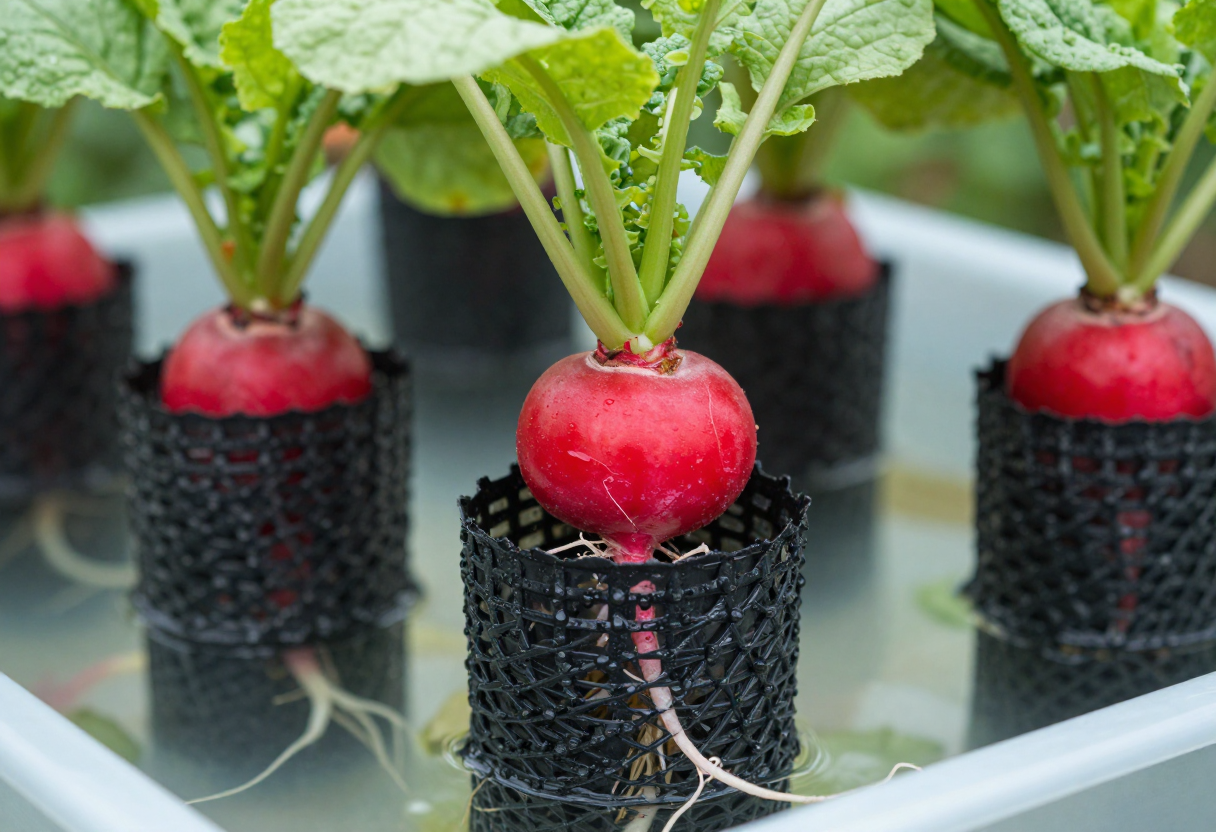
•Most root vegetables, such as carrots, potatoes, parsnips, and beets, need firm, deep growing material to shape properly. Radishes are the exception, and they do well in Kratky or deep water culture with a deep net cup.
•Corn, wheat, and other grains need a great deal of space and light for a small harvest.
•Trees, shrubs, and large vines take too much room and support for a home system.
•Heavy long-season crops such as squash and melons sprawl and are usually better in soil or large containers.
🥕
If you want to grow roots or other soil crops indoors, consider containers or the Garden Architect's non-hydroponic paths instead. Hydroponics shines with greens, herbs, and fruiting crops.
Radishes are the one common root crop that does well in hydroponics.
🌿 Get Seasonal Gardening Tips
New guides, planting reminders, and growing tips — straight to your inbox.
No spam. Unsubscribe anytime.
About the Author
David Rodgers is the Founder & Head Gardener of Planting Atlas. With over 40 years of hands-on gardening experience in Oklahoma's Zone 7 climate, he researches, writes, and personally tests every guide on the site.
David draws from real backyard trials, soil testing, and trusted sources like Oklahoma State University Extension and USDA data to deliver practical, zone-specific advice that actually works.