Mowing height, deep watering, feeding, aeration, and overseeding — the handful of habits that make a thick, healthy lawn.
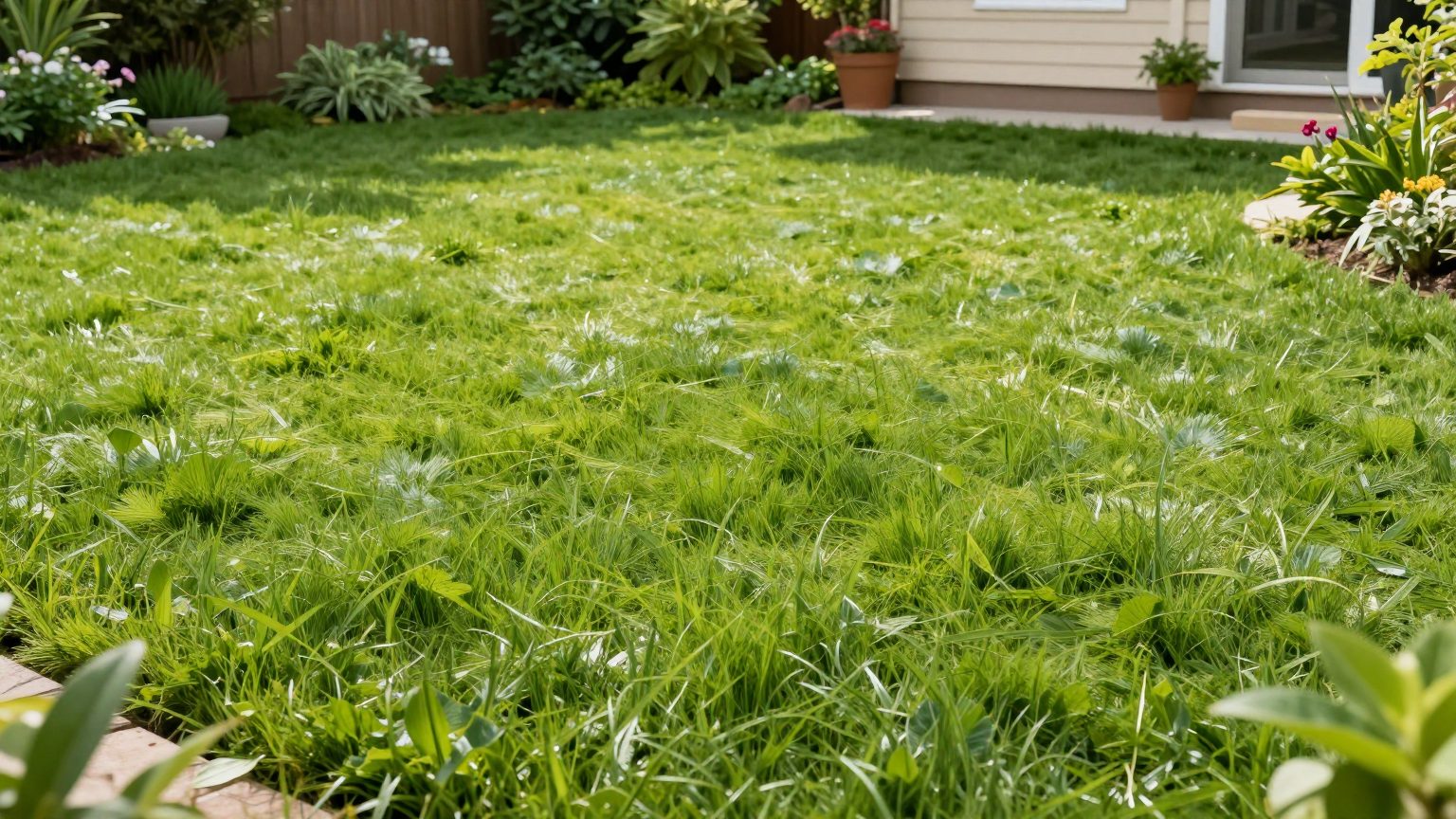
A healthy lawn is less about a long list of products and more about a handful of habits done at the right time: mowing high, watering deeply, feeding at the right season, aerating compacted soil, and overseeding thin areas. A thick lawn crowds out most weeds by itself, which reduces the need for chemicals. The most important first step is knowing whether you have a cool-season or a warm-season grass, since that decides nearly every timing question. This guide covers grass types, mowing, watering, feeding, aeration, overseeding, and the common problems. For weeds in more detail, see Weed Management, for saving water, see Water-Wise Gardening, and for feeding the soil, see Organic Fertilizing and Soil Health.
Grasses fall into two groups that grow best at different temperatures, and each is cared for on a different calendar. Identify yours before you buy fertilizer or seed, since timing is the difference between helping a lawn and harming it.
Group
Common grasses
Grows best
Typical regions
Cool-season
Kentucky bluegrass, tall fescue, fine fescues, perennial ryegrass
Spring and fall, in mild temperatures; may slow or go dormant in summer heat
Northern half of the country and the transition zone
Warm-season
Bermudagrass, zoysiagrass, St. Augustinegrass, centipedegrass
Summer heat; goes dormant and brown in winter after cold weather
The South and warm regions
The transition zone, the band between the two regions, can grow either group, and gardeners there often choose tall fescue or a warm-season grass depending on shade, water, and how much summer stress the lawn sees.
🔍
If you are unsure what grass you have, take a small piece of turf to a local garden center or your cooperative extension office, and ask for an identification.
Mowing Well
Mowing is the most frequent job and the one with the biggest effect. Mowing too short weakens grass, exposes soil to weeds, and dries the lawn out faster.
•Follow the one-third rule: never remove more than about a third of the blade height in a single mowing.
•Mow cool-season grasses relatively high, generally around 3-4 inches. Warm-season grasses are usually mown lower, roughly 1-3 inches depending on the type, and each has its own preferred range.
•Keep mower blades sharp. A dull blade tears grass and leaves ragged brown tips instead of a clean cut.
•Leave the clippings on the lawn. They break down quickly and return nutrients to the soil.
•Mow when the grass is dry, and vary the mowing pattern from time to time to avoid ruts and to keep grass upright.
•Raise the mowing height in hot, dry weather, which shades the soil and helps the lawn survive stress.
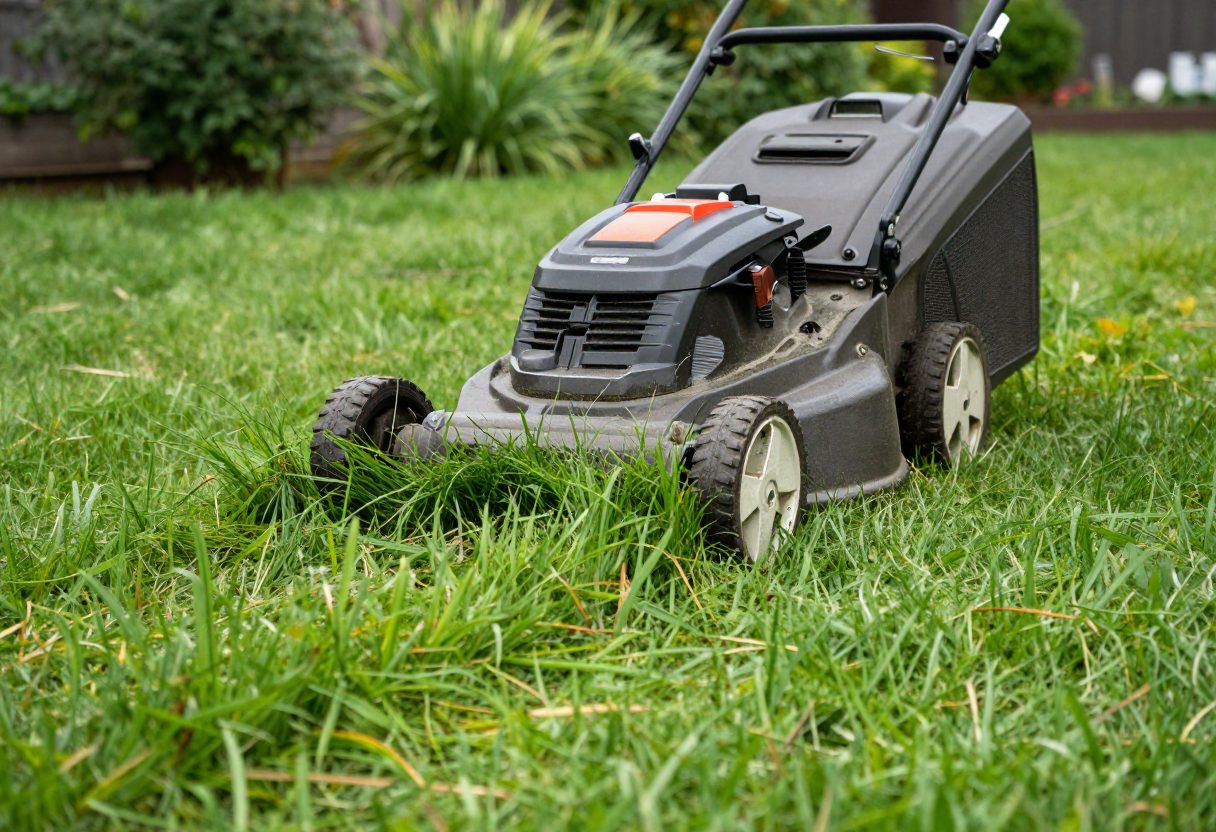
Mowing high and often, with a sharp blade, is the simplest way to a thicker lawn.
Watering Deeply, Not Often
Deep, infrequent watering pushes roots down, making the lawn more drought tolerant. Frequent shallow watering does the opposite, encouraging shallow roots and disease.
•Aim for roughly 1 inch of water a week, including rain, and more in very hot, dry spells. Sandy soils may need it split into two sessions, while heavy clay soaks it in more slowly.
•Water early in the morning, when there is less wind and evaporation, and the grass dries during the day.
•Check how much your sprinkler delivers by placing a few empty cans or shallow dishes on the lawn and timing how long they take to collect an inch.
•If water runs off before soaking in, water in shorter cycles with a pause between them.
•A lawn that is thirsty shows a bluish-gray tint, and footprints stay pressed into the grass instead of springing back.
•Warm-season grasses may go dormant in drought and recover with the return of rain, while cool-season grasses can also go dormant in summer heat.
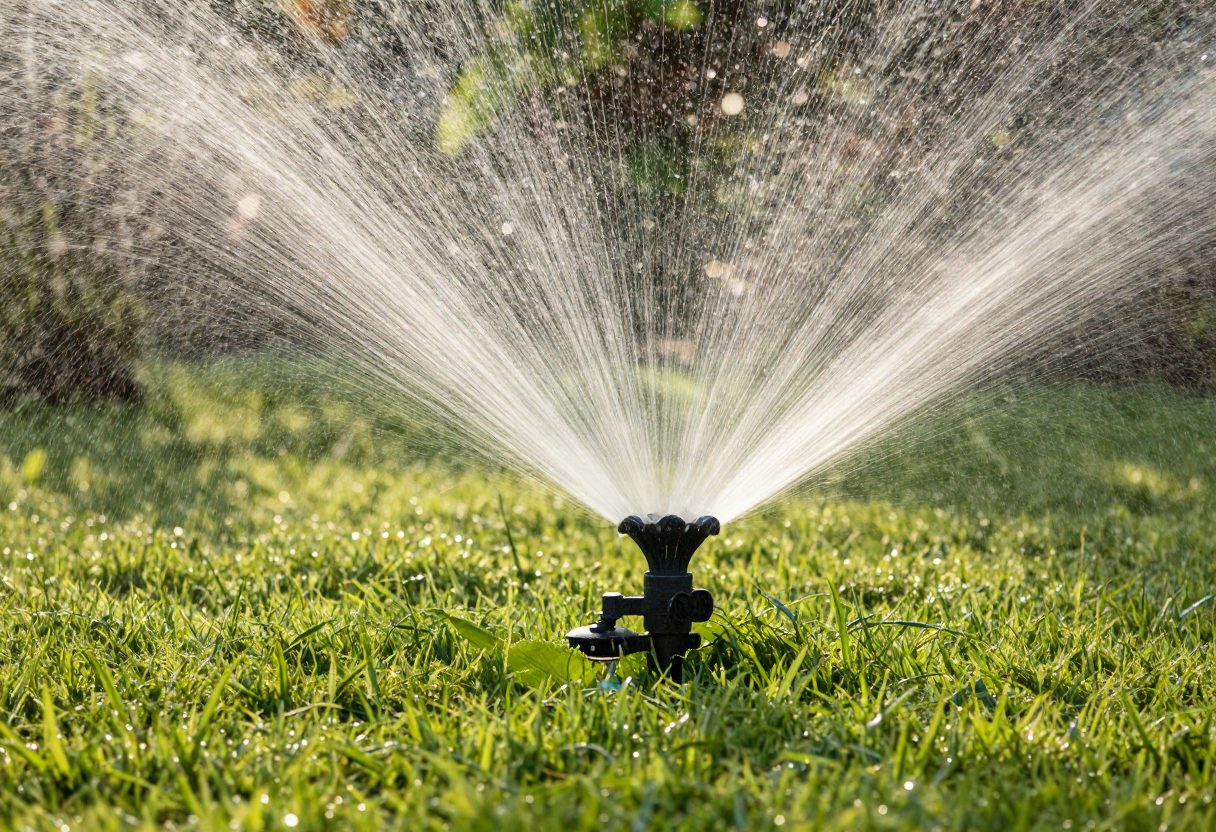
Early morning is the best time to water, with less evaporation and time for the grass to dry.
Feeding at the Right Time
Lawns are hungry, mostly for nitrogen, but more is not better. The right timing depends on the grass group, and the best plan begins with a soil test to check what your soil actually needs.
Grass group
Best feeding times
Notes
Cool-season
Early fall is the most important feeding, with a lighter feeding in late fall or spring
Avoid heavy feeding in summer heat, which can stress the lawn and encourage disease
Warm-season
Late spring through summer, once the grass is actively growing
Avoid feeding late in the season, which can push soft growth before cold weather
•Take a soil test every few years to learn the pH and any nutrient shortages. See Soil Health for how to interpret one.
•Choose a slow-release or organic fertilizer, which feeds steadily and lowers the risk of burning the lawn or of runoff.
•Follow the label rate. Applying more than directed burns grass and can pollute waterways.
•Sweep or blow any fertilizer off driveways and sidewalks back onto the lawn.
•Water lightly after feeding, following the product label, so the fertilizer moves into the soil.
Aeration for Compacted Soil
Foot traffic, mowing, and heavy clay compact soil until water, air, and nutrients cannot reach the roots. Core aeration removes small plugs of soil, opening channels that let the lawn breathe.
•Use a core aerator, which pulls out plugs of soil, rather than a spike tool, which can press soil tighter around each hole. Machines can be rented, and some lawn services provide the job.
•Aerate when the grass is actively growing and the soil is moist but not saturated. For cool-season lawns that is early fall or spring, and for warm-season lawns late spring to early summer.
•Leave the plugs on the lawn. They break down in a couple of weeks and return soil to the surface.
•Most lawns benefit from aeration every year or two, and heavily compacted or clay lawns more often.
•Follow aeration with overseeding and light feeding, when the lawn needs them, since the holes give seed excellent contact with soil.
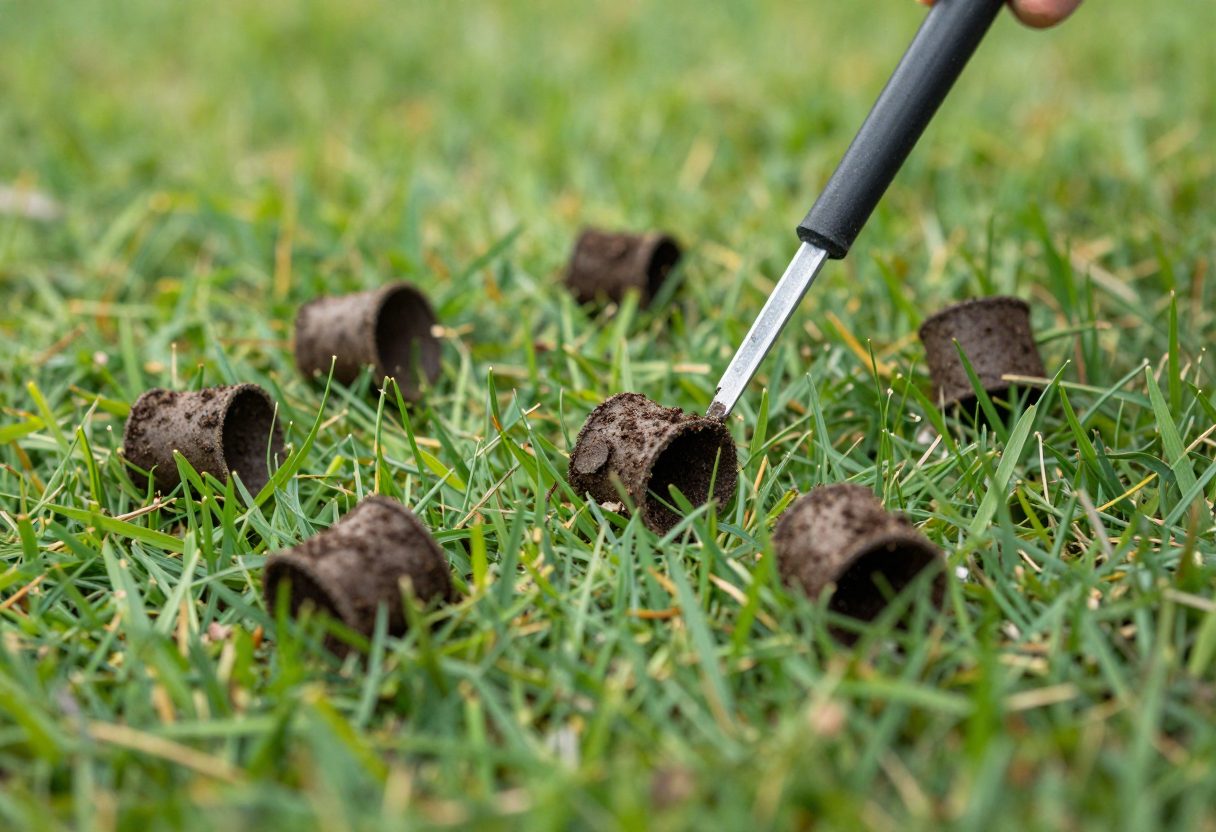
Core aeration pulls out small plugs of soil, opening channels for water and air.
Overseeding and Repairing Thin Areas
Lawns thin out over time. Overseeding, which means spreading new seed over the existing turf, fills thin spots, adds improved varieties, and crowds out weeds.
•For cool-season lawns, early fall is the best time, when soil is warm and air is cooler. Warm-season lawns are best seeded or plugged in late spring to early summer.
•Mow a little lower than usual, remove debris, and loosen the surface with a rake so seed reaches soil.
•Choose seed suited to your climate and your amount of sun, and follow the seeding rate on the bag.
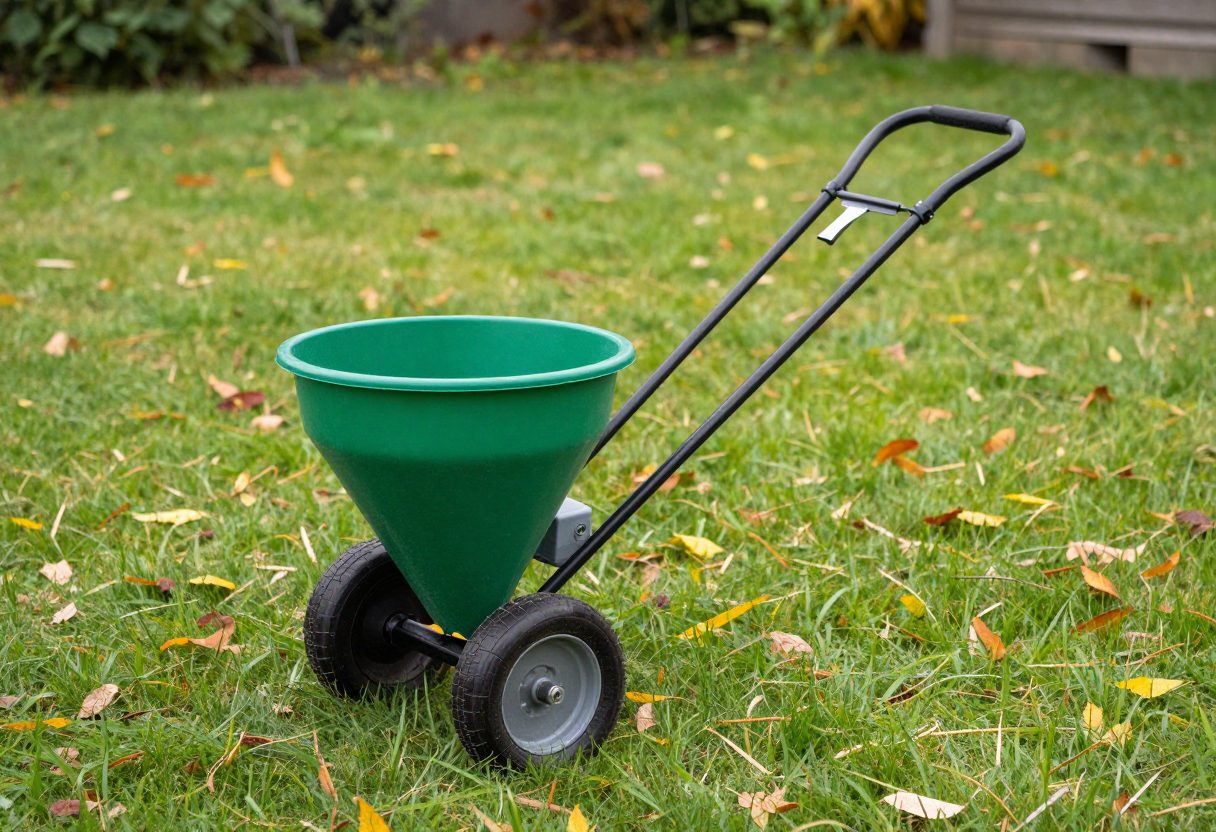
•Spread the seed evenly with a broadcast spreader, then rake lightly or roll to press it into contact with soil.
•Keep the seeded area consistently damp, with light watering once or twice a day, until seedlings are established, then return to deep, less frequent watering.
•Wait until new grass has been mowed a few times before applying weed killers, since many products harm seedlings. Check the label.
A broadcast spreader gives an even coat of seed across a thinning lawn.
Common Lawn Problems
Most lawn problems come from stress: mowing too low, watering the wrong way, compacted soil, or the wrong grass in the wrong place. Fix the cause and the lawn usually recovers.
Problem
Likely cause
What to do
Irregular brown patches
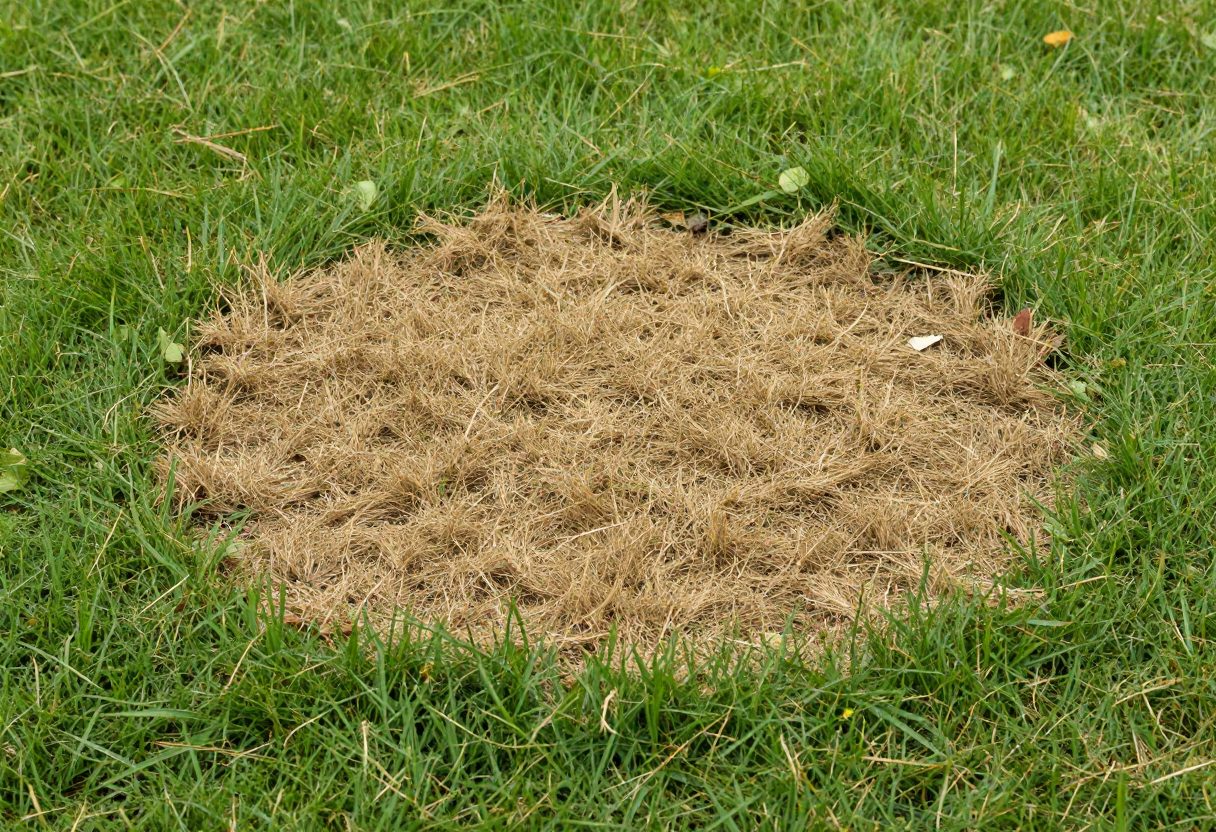
Drought stress, dog urine, a fungal disease in humid weather, or grubs
Check watering first; pull back a bit of turf to look for grubs, and water deeply in the morning
Turf peels up like carpet
Grubs feeding on roots
Confirm with a spade test, and treat according to the grub species and timing recommended locally
Thin grass under trees
Shade and root competition
Raise mowing height, use shade-tolerant grass, or replace with a groundcover or mulch
Weeds such as dandelion and crabgrass
Thin turf, mowing too low, or bare soil
Mow higher, thicken the lawn with overseeding, and time any pre-emergent product to the recommended soil temperature. See Weed Management
Moss
Shade, compaction, poor drainage, or low fertility
Improve light and drainage, aerate, and address soil acidity if a test shows it
Dead, dry, crunchy grass
Drought dormancy or lack of water
Water deeply; dormant grass often greens up again when conditions improve
🌍
If a lawn is more trouble than it is worth in a hard spot such as deep shade or a steep slope, consider replacing part of it with groundcover, mulch, or a low-water planting. See the Low-Maintenance Landscape guide.
A brown patch has many possible causes, so check watering, soil, and grubs before treating.
🌿 Get Seasonal Gardening Tips
New guides, planting reminders, and growing tips — straight to your inbox.
No spam. Unsubscribe anytime.
About the Author
David Rodgers is the Founder & Head Gardener of Planting Atlas. With over 40 years of hands-on gardening experience in Oklahoma's Zone 7 climate, he researches, writes, and personally tests every guide on the site.
David draws from real backyard trials, soil testing, and trusted sources like Oklahoma State University Extension and USDA data to deliver practical, zone-specific advice that actually works.