Create a beautiful yard that stays attractive through the season without demanding weekly hours of weeding, watering, and pruning.
The most effective low-maintenance landscape isn't one that has fewer plants — it's one where every plant is matched perfectly to its site. A native ornamental grass in the right spot needs no supplemental water, no deadheading, and no pest management once established. The same plot planted with a hybrid tea rose demands weekly spraying, fertilizing, and deadheading. The low-maintenance approach starts with honest site assessment: sun exposure, soil type, drainage, and how much rainfall your region receives, then choosing plants that thrive in those exact conditions rather than fighting them.
The single biggest driver of ongoing maintenance burden is a mismatch between a plant's needs and its actual site conditions — every hour spent fighting that mismatch (extra watering, pest treatment, structural staking) is maintenance a correctly sited plant would never have demanded.
•Assess actual sun exposure honestly — count real hours of direct sun, not an assumed "full sun" label, before choosing plants for a spot.
•Match soil type rather than amending it indefinitely — a plant genuinely suited to clay or sandy soil needs far less ongoing intervention than one that merely tolerates heavy amendment.
•Choose plants whose natural mature size fits the space without requiring regular pruning to keep them in bounds.
•Favor plants with a naturally tidy habit — no aggressive suckering, no invasive spreading, no need for regular deadheading to look presentable.
🌾
Native and regionally adapted plants are disproportionately represented among genuinely low-maintenance choices — see the site's Native Plants Guide for region-specific options that need minimal water and no synthetic fertilizer once established.
A plant genuinely suited to its site — sun, soil, and water — needs far less ongoing intervention than one that merely tolerates the spot.
Lawn Reduction Strategies
Lawn is one of the highest-maintenance landscape elements per square foot — regular mowing, watering, and fertilizing add up to significant ongoing time and cost compared to almost any planted alternative.
Alternative
Maintenance Level
Best For
Groundcover beds
Low once established
Replacing lawn in shaded or difficult-to-mow areas
Mulched planting beds
Low
Converting lawn edges and borders into low-input planted space
Native meadow planting
Low-moderate (occasional mowing/cutback)
Larger open areas where a managed meadow look is acceptable
Hardscape (patio, gravel, decking)
Very low
High-traffic areas where plants would struggle anyway
Reduced, well-shaped lawn
Moderate (still needs mowing)
Keeping some lawn for function (play area, open sightline) while shrinking the total mowed area
🌿
Lawn reduction doesn't need to be all-or-nothing — converting even the hardest-to-mow sections (steep slopes, narrow strips, deep shade under trees) into groundcover or mulched beds delivers real maintenance savings without eliminating lawn entirely.
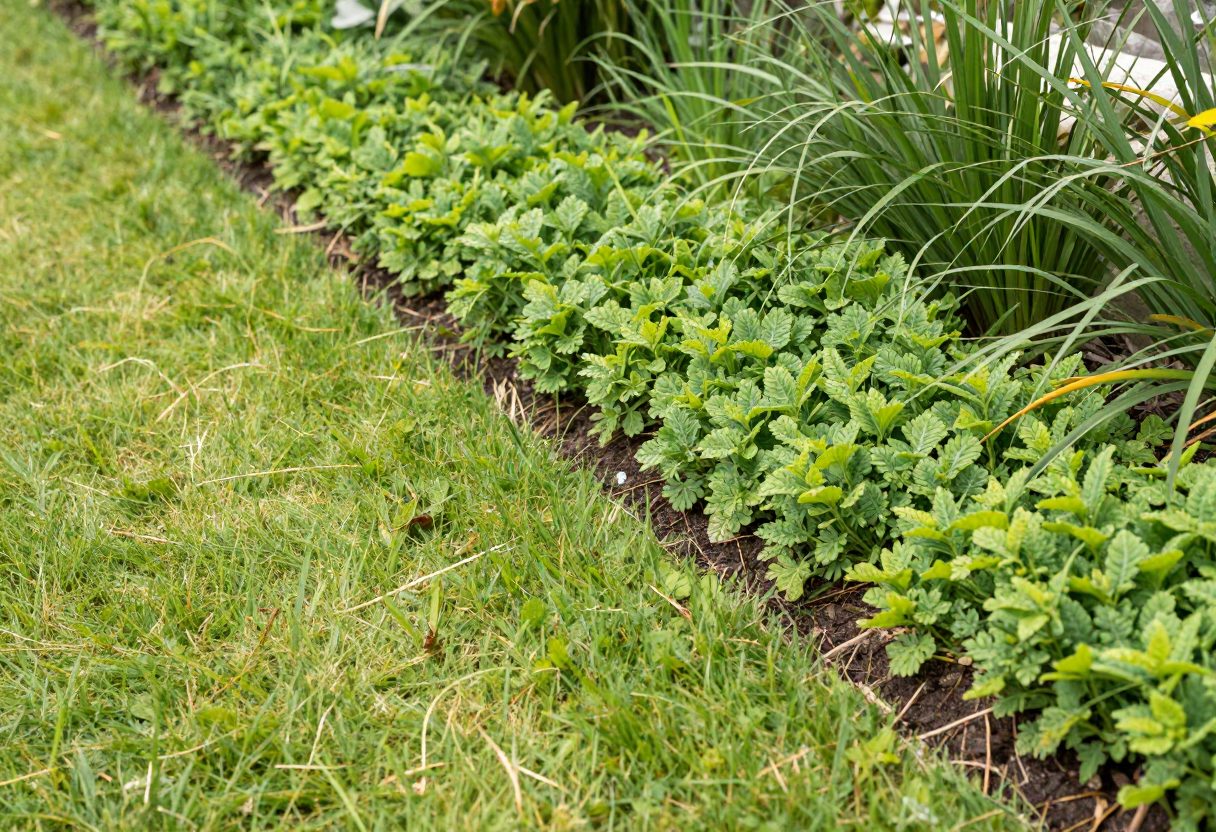
Converting a hard-to-mow lawn section into groundcover reduces ongoing maintenance without eliminating green space.
Mulching for Weed Suppression and Water Retention
A consistent, well-maintained mulch layer is one of the highest-leverage low-maintenance investments a landscape can make — it does the ongoing work of weed suppression and moisture retention with no repeated labor beyond periodic reapplication.
•Apply roughly 3 inches of wood chip or bark mulch across planting beds to suppress weed germination and slow moisture loss from the soil surface.
•Refresh mulch annually as it breaks down, rather than letting bare soil reappear and invite fresh weed growth.
•Keep mulch pulled back from plant stems and tree trunks to avoid rot and pest issues.
•Consider a landscape fabric barrier only in true no-planting zones (under gravel paths, for instance) — it becomes a long-term maintenance liability in actively planted beds as it degrades and weeds root through it.
🪵
A well-mulched bed with the right plant density genuinely needs less weeding than a bare or thinly mulched one — dense planting itself shades out weed seedlings that would otherwise establish in exposed soil.
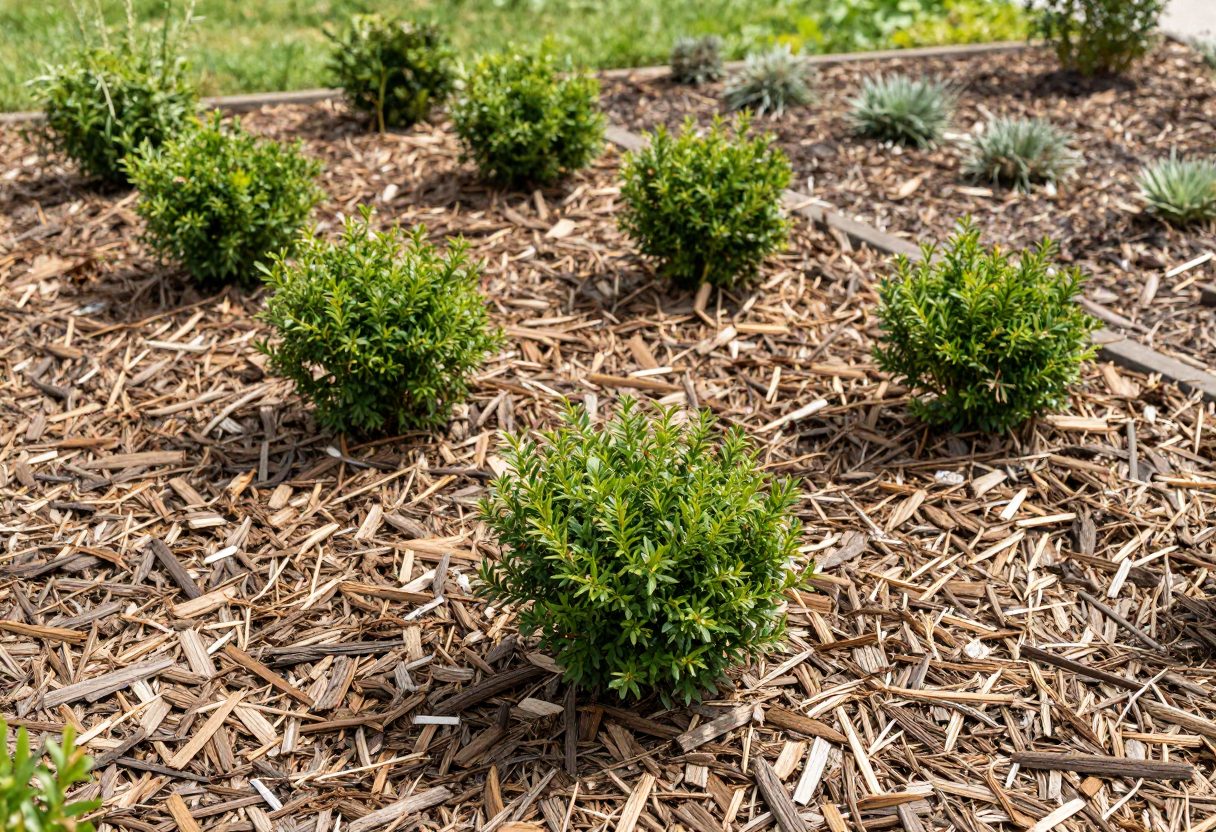
A consistent 3-inch mulch layer suppresses weeds and retains moisture with no repeated labor beyond annual reapplication.
Drought-Tolerant Plant Palettes
Grouping plants with similar water needs together (hydrozoning) and leaning on drought-tolerant species where possible reduces both watering frequency and the risk of over- or under-watering individual plants sharing a zone.
Plant Category
Examples
Notes
Ornamental grasses
Little bluestem, feather reed grass, switchgrass
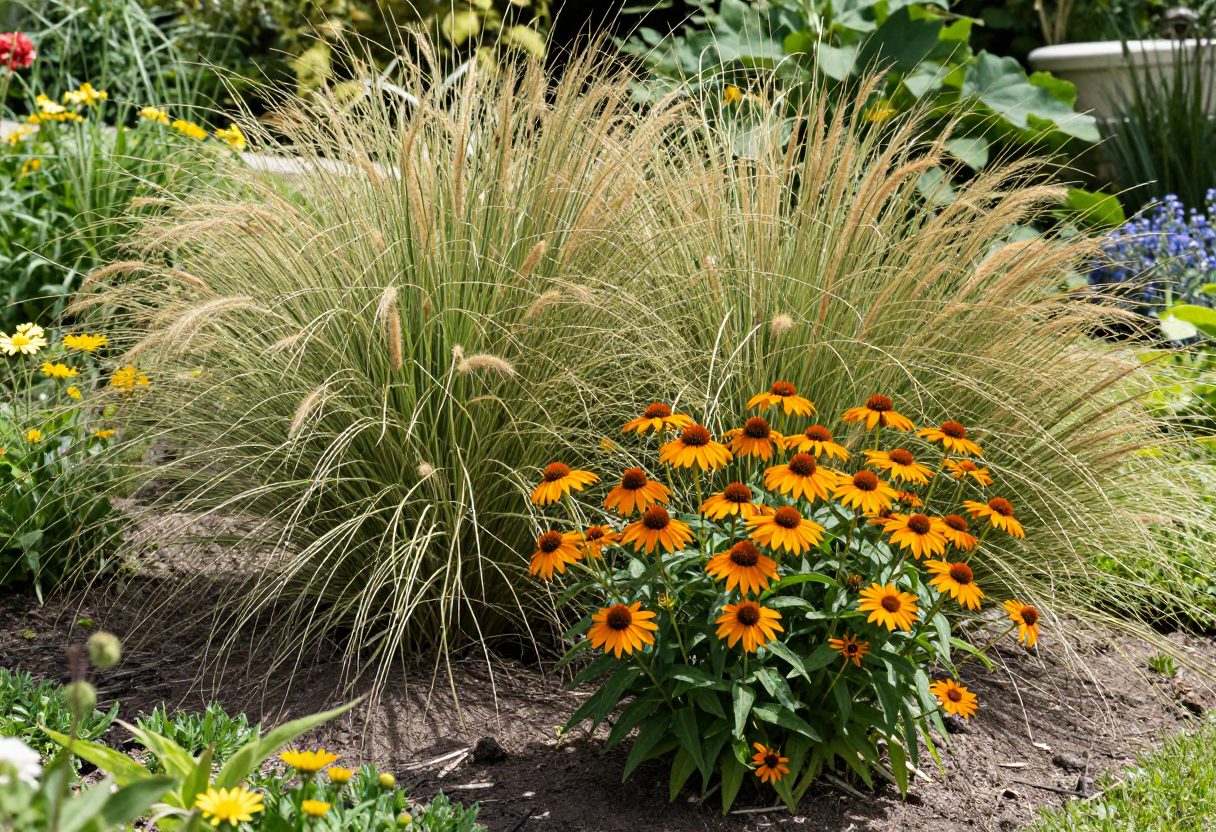
Minimal water once established, provide structure and movement with almost no care
Reliable bloom with far less water than typical garden perennials
Succulents (hardy varieties)
Sedum, hardy ice plant
Genuinely thrive on neglect in the right climate and drainage
Drought-tolerant shrubs
Junipers, many native shrubs by region
Low water need once established, minimal pruning required for a naturally tidy habit
💧
See the site's Water-Wise Gardening guide for the full irrigation and hydrozoning techniques that pair naturally with a drought-tolerant plant palette — the plant choices and the watering approach reinforce each other.
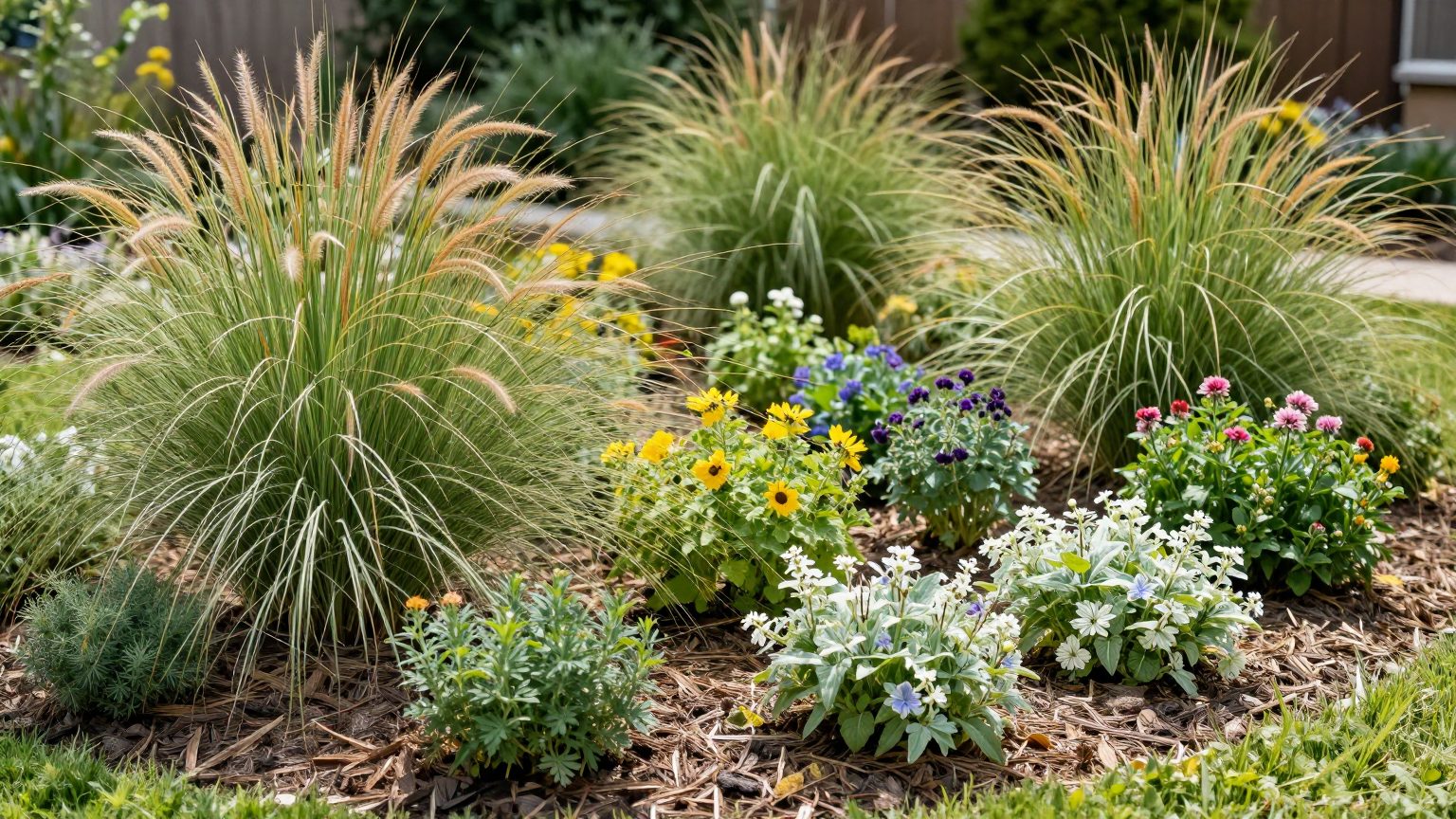
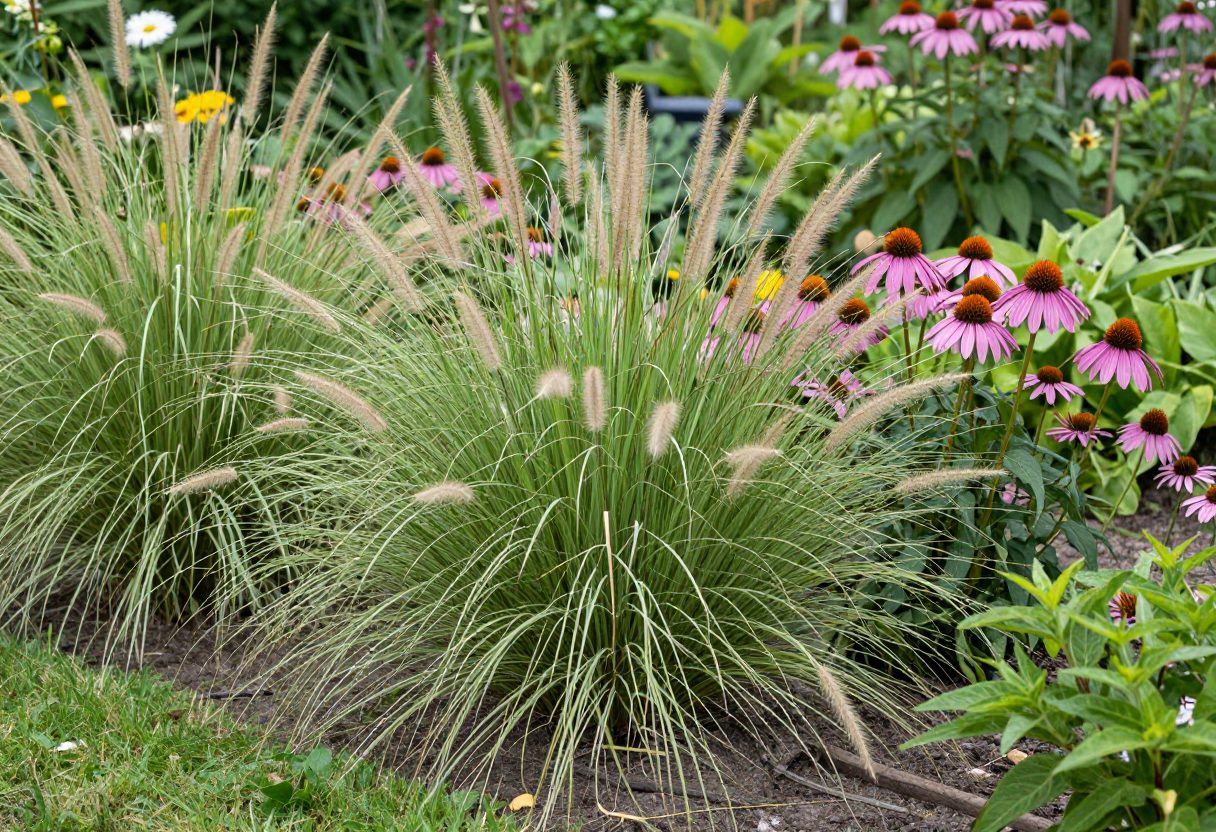
Ornamental grasses and drought-tolerant perennials provide reliable structure and bloom with minimal water once established.
Edging and Hardscape for Reduced Upkeep
A clean, defined edge between beds and lawn keeps a landscape looking tidy with minimal effort, while thoughtful hardscape choices reduce the total planted area that needs ongoing attention.
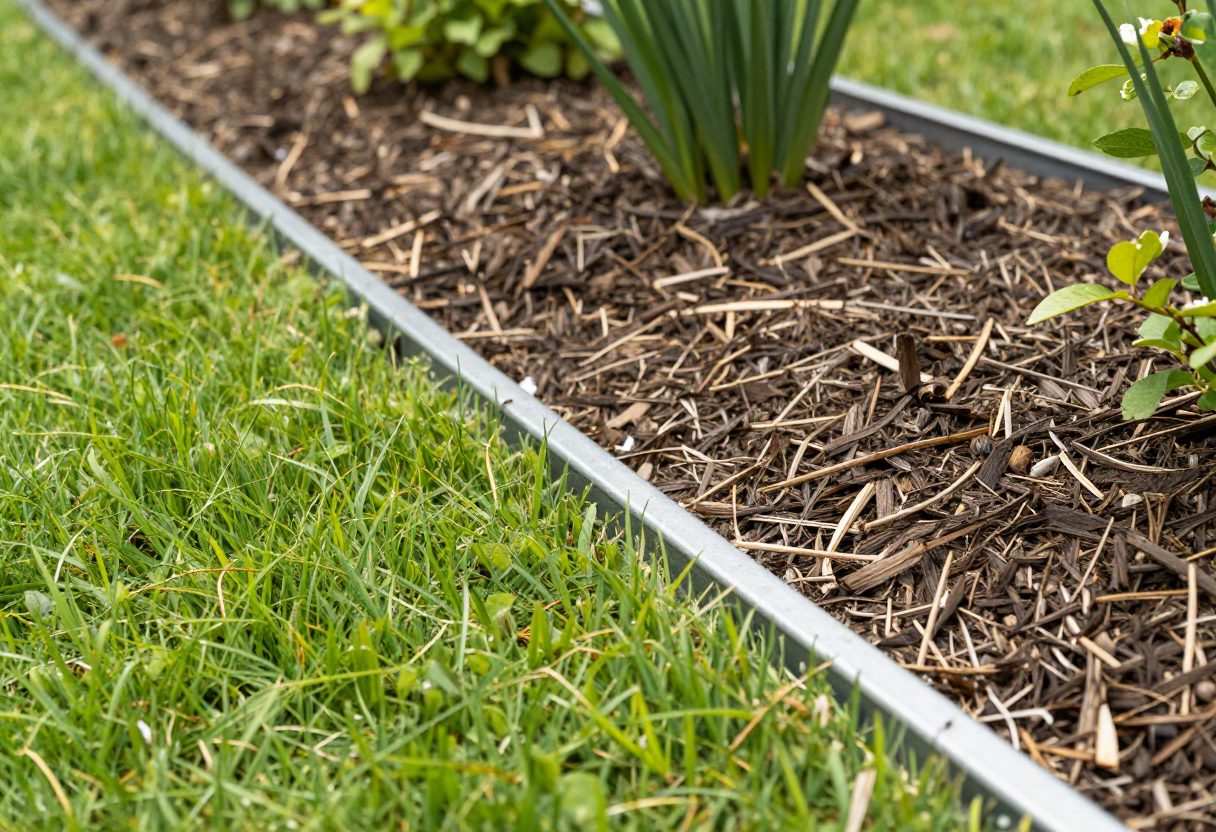
•Install physical edging (steel, stone, or brick) between beds and lawn to prevent grass from creeping into planted areas and reduce the need for regular manual edging.
•Use permeable hardscape (gravel, pavers with planted joints) for paths and seating areas — these need essentially no ongoing maintenance beyond occasional weed removal.
•Design bed shapes with mowing in mind — smooth curves are easier to maintain than sharp corners or narrow peninsulas that are awkward to mow around.
•Concentrate higher-maintenance elements (a small cutting garden, a few container plantings) into a compact, manageable area rather than spreading demanding plants throughout the whole landscape.
🧱
A one-time investment in quality edging pays for itself in reduced maintenance within a season or two — it eliminates the recurring task of manually re-cutting bed edges that grass has crept into.
Physical edging keeps beds looking tidy year-round while eliminating the recurring task of manual edge-cutting.
🌿 Get Seasonal Gardening Tips
New guides, planting reminders, and growing tips — straight to your inbox.
No spam. Unsubscribe anytime.
About the Author
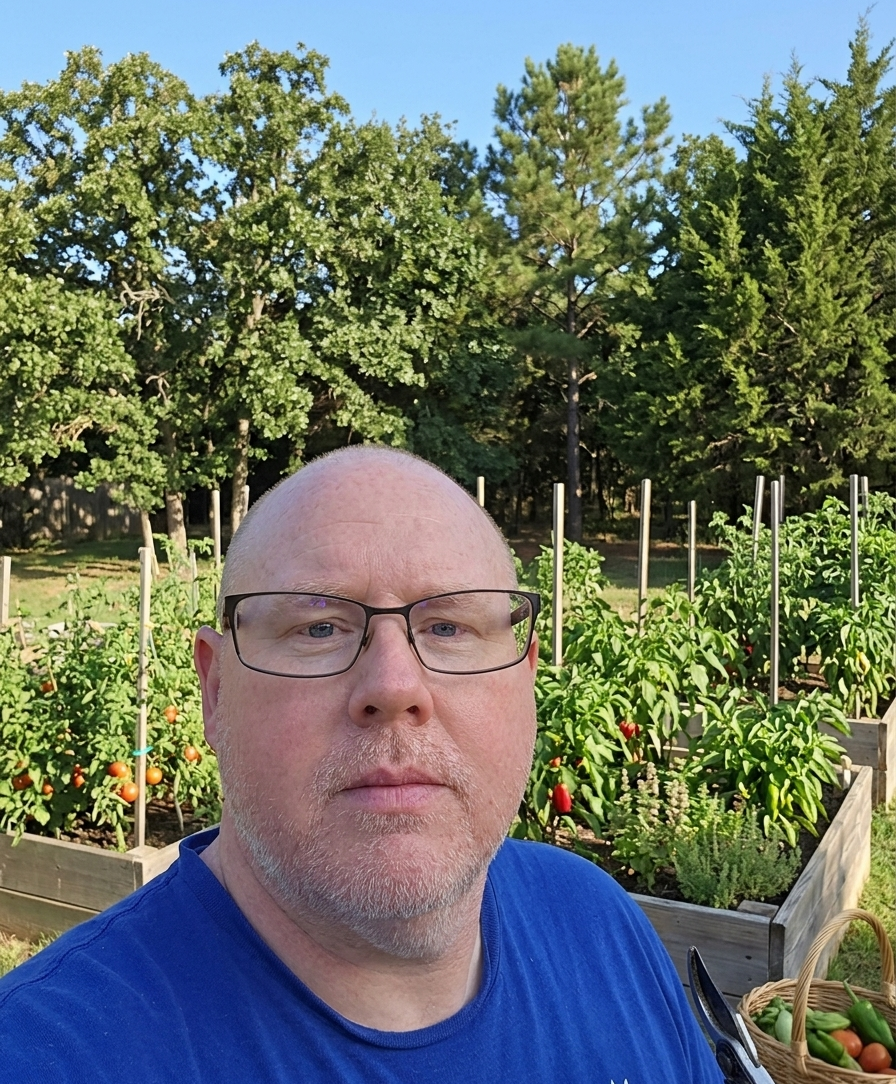
David Rodgers is the Founder & Head Gardener of Planting Atlas. With over 40 years of hands-on gardening experience in Oklahoma's Zone 7 climate, he researches, writes, and personally tests every guide on the site.
David draws from real backyard trials, soil testing, and trusted sources like Oklahoma State University Extension and USDA data to deliver practical, zone-specific advice that actually works.