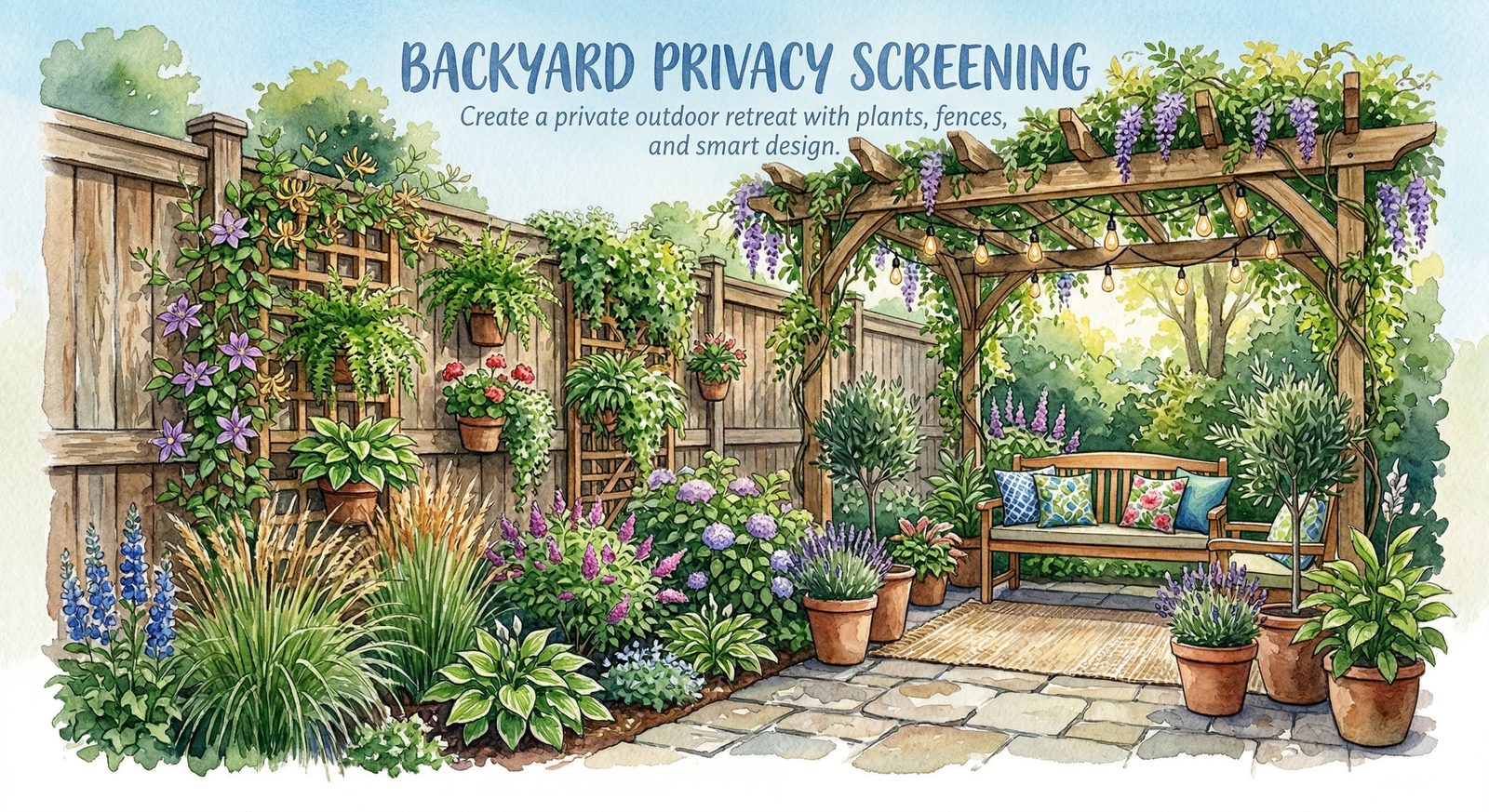
Create a private outdoor retreat with plants, fences, structures, and smart design
Your backyard should feel like yours — a place where you can eat, relax, entertain, or simply sit without feeling watched, exposed, or trespassed upon by the view from the street or a neighbor's window. Privacy is not a luxury; it is one of the most fundamental qualities that makes outdoor space actually usable. This guide covers every proven approach — from fast-growing privacy plants and fences to pergolas, screens, and layered design strategies — and how to combine them into a retreat that works in any American yard, any climate, any budget.
The most expensive privacy mistake in American landscaping is buying plants or building a fence without first understanding exactly where privacy is being lost and at what height. A 6-foot fence solves nothing if the privacy problem is a two-story neighbor looking down from their second-floor window. A row of 12-foot arborvitaes is overkill if the only intrusion is headlights from a road passing the side yard. The diagnostic step — which almost no one takes — is what separates privacy solutions that genuinely work from ones that look like privacy but don't provide it.
Privacy is not a binary condition. It exists on a spectrum from full exposure to complete enclosure, and most effective privacy designs deliberately operate in the middle — creating the feeling of seclusion without the oppressive sensation of being walled in. Understanding which points of intrusion matter most, at what height and angle, and during which times of day and year is the foundation of every good privacy design decision.
The Three-Step Privacy Assessment
•Sit in your outdoor spaces at the times you actually use them: Privacy needs differ by time of day. Morning sun from the east, evening sun from the west, and neighbors who are outside at specific times all affect where and when privacy is needed. Spend time in your outdoor areas during the hours you most want to use them.
•Identify every sight line: Walk the perimeter of your property and identify every location from which someone outside your property has a view into your outdoor living area. Note the direction, angle, and height of each intrusion. The most important intrusions are from: neighboring windows (especially upper-floor), neighboring patios and decks, public sidewalks and streets, elevated vantage points (raised decks, balconies), and vehicle traffic. Note which intrusions are worst and when.
•Measure the screening height required: Stand at each intrusion point and estimate the height at which a screen would block the view. In practical terms, a neighbor whose window overlooks your patio from 30 feet away may require 8–10 feet of screening, while a neighbor whose first-floor window is 60 feet away may only need 5–6 feet. Closer intrusions require taller screening; farther intrusions require less.
Types of Privacy Problems and Their Solutions
Privacy Problem
Key Characteristics
Best Solution Strategy
What Won't Work
Street or sidewalk visibility
Ground-level; frontal; often from moving cars and pedestrians; may be seasonal (winter dormancy exposes yard when deciduous plants lose leaves)
Dense evergreen hedge or opaque fence along front or side property line; mixed evergreen-deciduous planting provides year-round coverage
Deciduous plants alone for year-round privacy; low plantings (under 5 ft) for street-level views
First-floor neighbor window
Horizontal view line; fixed angle; can be addressed at relatively modest height (5–7 ft depending on distance)
Dense evergreen shrubs or privacy fence at or near the property line; strategic tree canopy positioned between the window and your sitting area
Tall narrow plants that screen the window but not the ground-level space between
Second-floor or elevated neighbor
Downward angle view; significantly harder to screen; requires either very tall plants, overhead shade structure, or combination approach
Tall evergreen trees (arborvitae, Leyland cypress, American holly) PLUS overhead pergola or shade sail to break sightlines from above; the only complete solution for overlooking second floors
Fences (never tall enough); low hedges; any single strategy at ground level
Elevated road or highway
Elevation gives sight lines that drop into the yard; often from multiple lanes simultaneously; also creates noise and light pollution
Berm (raised earthwork) planted with evergreens dramatically increases effective screening height; trees planted on berm with 3–4 ft grade change can effectively screen much taller
Standard-height fencing; plantings at grade without grade change (rarely tall enough for elevated roads)
Overlooking neighboring deck or balcony
Adjacent or angled view from elevated structure; neighbor is at eye level or above when on their deck; mutual privacy problem
Tall screening plants (arborvitae, bamboo in containers, columnar trees); lattice or trellis extensions above fence; overhead pergola creates private "room" even if sides are visible
Low hedges; ground-level fencing alone (no taller than 6 ft fence addresses a 10-ft elevated deck)
Public corner lot exposure
Multiple sight lines from two streets; often high traffic and high visibility; regulations may limit fence heights on corner lots
Wrap-around evergreen planting set back from property line; low street-side berm; strategic use of layers (low shrubs near street, taller at interior)
Tall opaque fence at corner (traffic visibility hazard; often prohibited; creates unwelcoming appearance)
Night lighting and headlight intrusion
Moving light sources; more penetrating than daytime sun; dense evergreen plantings are surprisingly effective at breaking headlight beams
Dense evergreen shrubs at minimum 5-foot depth; solid fencing with minimal gaps; berms reduce headlight angle; downward-directed landscape lighting can help reclaim visual dominance
Deciduous plantings (no winter foliage to block headlights); single-row plantings with gaps
Local Regulations: Know Before You Build or Plant
Before purchasing a single plant or board, understand the regulations that govern privacy screening in your jurisdiction. These vary significantly across the United States — what is permitted in a rural county may be prohibited in an urban subdivision, and what is standard in one state may require a permit in the next.
Regulation Type
What It Governs
Who Sets It
How to Find Out
Fence height limits
Maximum fence height by yard zone (front yard, side yard, backyard); typically 4 ft in front, 6 ft in back for residential; taller fences usually require a variance or permit
Local municipality (city or county zoning/planning department)
Call or visit the planning/zoning department; search "[your city] fence height ordinance"
Fence placement / setbacks
How close to property line a fence can be placed; setbacks from streets, alleys, utilities; required sight-distance triangles at corners
Local municipality; often varies by neighborhood zone
Planning department; utility companies for their easements
HOA rules
May restrict fence height, material, color, style; may require HOA board approval before installation; may also restrict plant species or height
Homeowners Association; governed by CC&Rs (Covenants, Conditions, and Restrictions)
Your HOA CC&Rs and bylaws; contact HOA management company for clarification
View easements
In some developments or states (common in coastal California and mountain communities), existing view corridors may be legally protected; planting trees that block a protected view can result in mandatory removal
Local government; individual deed covenants; sometimes state law
Title report for your property; deed review; planning department inquiry
Plant height restrictions
Some municipalities and HOAs restrict height of plants near property lines; "nuisance" plantings that block neighbor views can be subject to legal action in some jurisdictions
State nuisance laws; local ordinances; HOA rules
State nuisance statutes; local ordinances; ask planning department about "spite fence" or "nuisance vegetation" laws in your state
Utility easements
Underground or overhead utility lines may restrict what can be planted or built within the easement area; tree roots near underground lines may be prohibited
Utility companies; often recorded in property deed
Call 811 before digging; review property deed for recorded easements; contact utility companies for planting clearance requirements
Tree ordinances
Some cities restrict removal of mature trees; heritage tree ordinances protect specific species or size trees; may also restrict new planting species (invasive plant lists)
Local municipality (parks department often enforces)
Call your city's Urban Forestry or Parks department; search "[your city] tree ordinance"
📋
HOA Approval — Get It in Writing Before You Plant or Build: If you live in a community with an HOA, submit your screening plan — including plant species, sizes, fence type, and placement — for written approval before purchasing anything. Verbal approval is not binding. Many homeowners have installed expensive privacy plantings or fences only to receive a violation notice requiring removal. Written approval, including any conditions, protects your investment.
A completed privacy assessment often points toward exactly this kind of layered solution rather than a single tall barrier.
Section 2: Fences and Solid Structures
A fence provides immediate, complete, year-round privacy from the day it is installed — no waiting years for plants to grow, no seasonal gaps when deciduous plants lose their leaves. It is the fastest and most reliable privacy solution available and the right choice in many situations. The trade-off: fences are typically the most expensive per-linear-foot privacy option, they require permits and contractor work for most installations, and they can feel claustrophobic or create "prison yard" aesthetics when poorly designed.
The most successful privacy designs typically combine fences with plantings — using a fence as the primary privacy layer for immediate results while planting around it for aesthetics, longevity, and to soften the hard edges that fences create. A fence alone is functional; a fence with intentional plantings is a designed retreat.
Fence Materials: Comparing the Full Range
Material
Privacy Rating
Lifespan
Cost (per linear foot installed)
Maintenance
Best For
Limitations
Cedar (western red cedar)
Excellent — solid board construction
15–25 years with care; 10–15 without
$25–50/lf installed
Stain or seal every 2–3 years; replace rotted boards as needed
Natural appearance; Pacific NW and western states where cedar is local; premium residential
Grays and weathers without treatment; expensive; quality varies widely; some cedar today is plantation-grown and less durable than old-growth
Pressure-treated pine
Excellent — solid board construction
15–20 years; posts 20–30 years
$20–40/lf installed
Stain or seal every 2–3 years for appearance; structurally OK without treatment
Cost-effective; most widely available wood option; excellent in humid Southeast and Mid-Atlantic
Greenish tint when new fades over time; chemicals in older treated wood (current ACQ treatment is safer); not as attractive as cedar
Redwood
Excellent
20–30 years with care
$40–75/lf installed
Oil or stain every 2–3 years
California and Pacific Coast where redwood is traditional and regionally sourced; premium appearance
Expensive; increasingly difficult to find sustainably sourced; primarily a regional California product; heavy
Composite / PVC-wood blend
Excellent
20–30 years
$35–65/lf installed
Very low — clean annually with soap and water; never needs painting or staining
Low-maintenance preference; areas with high humidity where wood rots; homeowners who want "install and forget" fence
Plastic appearance (improving with newer products); more expensive upfront; fades and becomes chalky in intense sun without UV-resistant products
Vinyl (PVC)
Excellent — no gaps in solid panel styles
20–30 years
$30–60/lf installed
Very low — rinse occasionally
HOA-friendly areas where white vinyl is accepted or required; low-maintenance households
Aesthetic range limited; can crack in severe cold; yellows with UV exposure over time without quality UV inhibitors; limited repair options (replace whole sections)
Aluminum and steel
Lower — typically picket or spear style; solid panel options exist but less common
30–50 years; effectively permanent with galvanizing or powder coat
$40–120/lf installed (solid panel much higher)
Minimal — inspect and touch up paint/powder coat when scratched
Pool fencing (meets code); modern architectural aesthetic; high-security applications; humid or coastal climates where wood rots quickly
Standard picket style provides minimal privacy; solid metal panels are expensive and industrial-looking
Horizontal board (hardwood or cedar)
Excellent — contemporary board-on-board or solid horizontal
15–25 years depending on species
$40–80/lf installed
Same as vertical wood; oil or stain every 2–3 years
Modern and contemporary design aesthetic; very popular in new construction neighborhoods; creates distinctive high-end look
Requires quality lumber with minimal warp; horizontal boards hold moisture differently than vertical — choose naturally rot-resistant species; more expensive than standard vertical cedar
Bamboo panel fencing
Good — solid rolls and panels available; some gaps in standard products
Tropical and Asian aesthetic gardens; budget screening; container-based screening that can be moved
Durability varies enormously by product quality; some split and deteriorate quickly; not appropriate in humid climates without treatment; avoid near irrigation
Fence Design: Making Privacy Beautiful
A 6-foot solid board fence stops the views — but it can also feel like a wall, create a tunnel effect in narrow yards, and reduce rather than enhance the experience of the space it was meant to protect. Thoughtful fence design turns a functional structure into an aesthetic feature.
The Lattice Top Extension
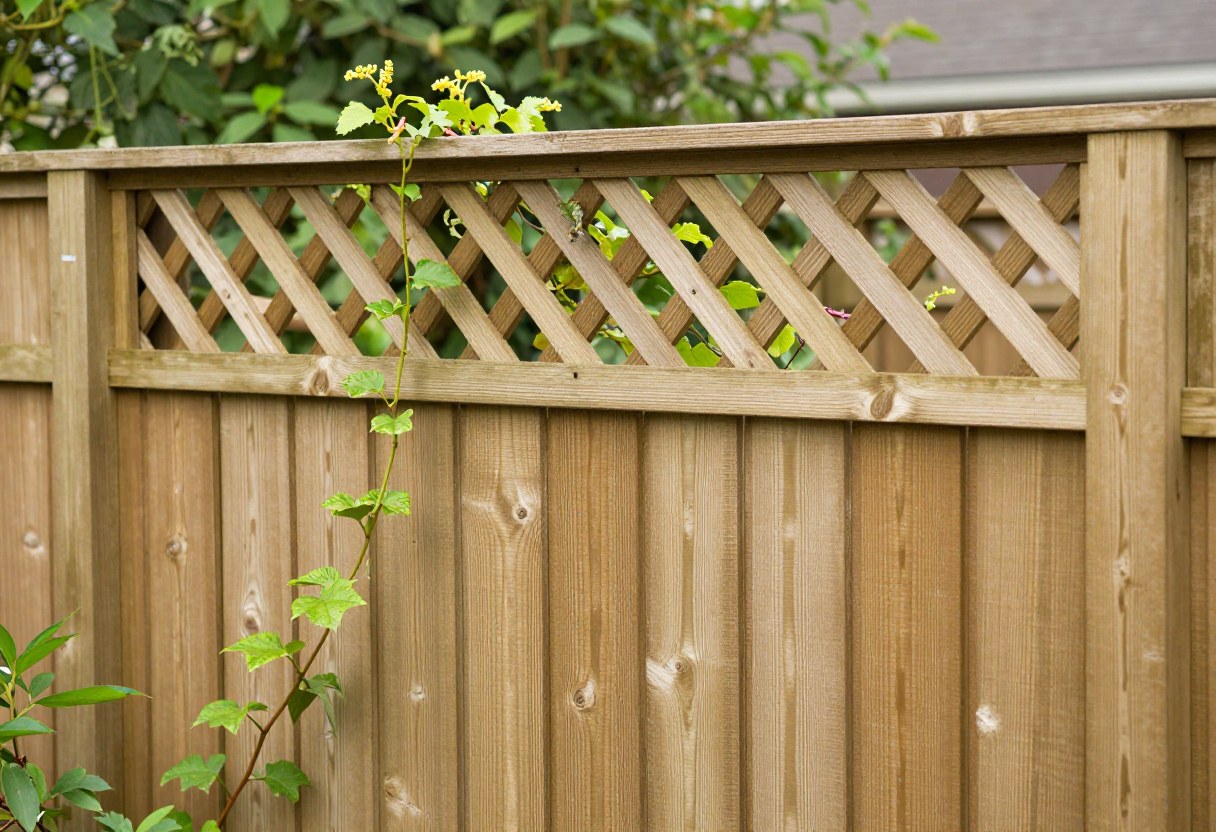
Adding a 12–18 inch lattice section above a standard 6-foot fence accomplishes three things simultaneously: it increases effective visual screening height to 7–7.5 feet for standing viewers, it creates a support structure for climbing plants that soften the fence appearance, and it creates visual interest and scale variation that breaks up the monotony of a plain board fence. Lattice extensions can be added to new fences at construction or retrofitted to existing fences.
Board-on-Board Construction
Standard privacy fences leave slight gaps between boards that widen as lumber dries and shrinks. Board-on-board construction overlaps adjacent boards so that there are no through-gaps regardless of shrinkage — providing guaranteed privacy from any angle while also giving the fence a more substantial, layered appearance. This is the correct construction method for any fence where actual privacy (not just visual privacy at certain angles) is the goal.
Fence as Design Feature
•Incorporate integrated planters: Built-in planter boxes at fence base allow climbing plants and shrubs to grow against and over the fence, softening hard edges and integrating the fence into the garden rather than segregating it
•Vary height for visual interest: A fence that steps down in height in some sections and rises in others creates rhythm and reduces the tunnel effect of a uniform-height enclosure; use taller sections to block specific sight lines and lower sections where privacy is less critical
•Consider the inside face: The face of the fence you live with every day deserves as much attention as the outside face; horizontal board fences are beautiful from both sides; vertical board fences can be treated with paint, stain, or planters on the interior
•Incorporate lighting: Post cap lights, strip lighting along the top rail, or solar-powered post lights transform a daytime privacy structure into an atmospheric evening element; the fence becomes part of the outdoor room rather than just its wall
Fence Permitting: What to Expect Nationwide
Topic
Details
When a permit is typically required
Fences over 6 feet in most jurisdictions; any fence on corner lots that may affect traffic sight lines; fences in historic districts or special overlay zones; fences within FEMA floodplain areas; fences adjacent to public right-of-way
When a permit is typically not required
Residential fences under 6 feet in many jurisdictions; fences set back from property lines; fences replacing existing permitted fences of the same height and type — but always verify locally
Typical permit requirements
Survey showing property lines and fence placement; fence elevation drawings showing height and style; material specification; often neighbor notification or signature requirements; setback verification
Permit timeline
Varies from same-day administrative review in some cities to 4–8 weeks in busy permit offices; factor into your project timeline; many contractors handle permit filing as part of their service
Cost of permits
Typically $50–300 for residential fence permits; some jurisdictions charge by linear foot of fence; commercial applications can be significantly more
Property line verification
Fences built on the wrong side of a property line can result in forced removal at significant cost; commission a boundary survey ($400–1,500 depending on lot size and region) before installing any fence; alternatively, use existing surveys from your title documents, but verify their accuracy with corner markers
Spite fence laws
Many states have laws prohibiting "spite fences" — structures built primarily to annoy a neighbor rather than for legitimate use; fences over certain heights built near a property line without functional purpose may be actionable under these laws
A lattice top extension adds 12-18 inches of effective screening height while giving climbing plants a structure to soften the fence.
Section 3: Privacy Plants — The Complete Selection Guide
Plants are the most beautiful, most ecologically valuable, and — over the long term — most cost-effective privacy screening solution available. A well-chosen and well-planted privacy hedge or screen provides benefits that no fence can match: seasonal change and beauty, wildlife habitat, noise reduction through sound absorption, air filtering, cooling through transpiration, and an increasing rather than decreasing visual asset that grows more beautiful and more effective year after year.
The trade-off is time. A newly planted arborvitae hedge may take 5–7 years to reach full screening height. A Leyland cypress screen may deliver impressive results in 3–4 years but requires careful management to prevent it from overgrowing its space. Understanding the realistic growth timeline, the mature size, and the long-term maintenance requirements of any privacy plant is essential before committing to a specific species.
⏱️
Managing Growth Expectations: The "fast-growing" label on privacy plants deserves scrutiny. "Fast" in the nursery industry means different things in different climates. A Leyland cypress rated for "3 feet per year" grows that fast in Zone 7 Virginia — it may grow 18 inches per year in Zone 5 Minnesota and 4 feet per year in Zone 8 Georgia. Climate, soil quality, irrigation, and fertilizing all affect growth rate. Add 20–30% to estimated timelines for challenging soils or climates, and subtract 20% if you invest in excellent soil preparation, irrigation, and fertilization.
Evergreen Trees: The Tall Screen Specialists
Evergreen trees are the workhorse of privacy screening — they provide year-round coverage, grow tall enough to screen second-floor windows and elevated views, and create the most dramatic screening results. The key is choosing the right species for your climate and available space.
Plant
Zones
Growth Rate
Mature Height / Width
Best Spacing
Key Strengths
Key Limitations
Thuja 'Green Giant' (Green Giant Arborvitae)
5–8
Fast: 3–5 ft/yr in good conditions
40–60 ft tall / 12–20 ft wide at maturity
5–8 ft apart for hedge; 10–15 ft for specimen
Disease-resistant; deer-resistant in most regions; adapts to most soils; excellent cold hardiness; dense year-round foliage; most popular privacy screen in America for good reason
Can become very large if not managed; not deer-proof everywhere; susceptible to bagworms in some areas
Leyland Cypress
6–10
Very fast: 3–4 ft/yr
50–70 ft tall / 15–25 ft wide unmanaged
6–10 ft apart; requires regular pruning to manage size
Extremely fast screening; dense from ground up; available in large sizes for immediate impact; widely available across the South and Mid-Atlantic
Develops Seiridium canker disease in humidity; not cold-hardy above Zone 6; becomes massive without regular pruning; better alternatives exist in most situations
Emerald Green Arborvitae (Thuja occidentalis)
3–8
Slow-moderate: 6–9 in/yr
10–15 ft tall / 3–4 ft wide
3–4 ft apart for tight hedge; 4–5 ft for looser screen
Narrow columnar form; excellent for tight spaces; very cold-hardy; long-lived; widely available and affordable
Deer browse heavily in many regions — significant problem in suburban areas with deer pressure; slow growth requires patience; moderate drought tolerance
American Arborvitae (Thuja occidentalis native)
2–8
Moderate: 12–24 in/yr
20–40 ft tall / 10–15 ft wide
5–8 ft apart
Native to eastern North America; very cold-hardy; excellent for wetlands and moist sites; wildlife value; long-lived
Deer browse extremely heavily — often unusable without deer protection in high-deer-pressure areas; spider mites in hot dry conditions
Eastern Red Cedar (Juniperus virginiana)
2–9
Moderate: 12–18 in/yr
30–40 ft tall / 10–20 ft wide
6–10 ft apart
Native; extremely drought and heat tolerant; good for difficult sites; excellent wildlife habitat (berries for birds); very wind-resistant; hardy from Canada to Florida
Not appropriate near apple or crabapple trees (hosts cedar-apple rust); variable form
American Holly (Ilex opaca)
5–9
Slow-moderate: 12–24 in/yr
20–50 ft tall / 10–20 ft wide
8–12 ft apart
Native; excellent four-season interest; red berries; dense evergreen foliage; good wildlife value; does not have the hedge-only aesthetic of conifers — a genuinely beautiful tree
Requires male and female plants for berries; slow initial establishment; needs acidic soil (pH 5.0–6.5)
Wax Myrtle (Morella cerifera)
6–11
Fast: 3–5 ft/yr
10–20 ft tall / 10–15 ft wide
5–8 ft apart
Native to Southeast and Gulf Coast; extremely fast-growing; salt-tolerant; drought-tolerant once established; nitrogen-fixing; fragrant aromatic foliage; year-round bird habitat
Only for Zone 6–11; freezes back in Zone 6 but recovers; can be scrubby without regular light pruning
Cryptomeria (Japanese Cedar)
5–8
Fast: 2–3 ft/yr
40–60 ft tall / 20–30 ft wide
8–15 ft apart
Beautiful graceful year-round form; fine-textured foliage; less stiff than arborvitae; disease-resistant; excellent in Pacific NW
Bronze winter color in cold climates; requires more space than columnar species; not always readily available
Skip Laurel (Prunus laurocerasus)
6–9
Fast: 2–3 ft/yr
8–18 ft tall / 5–8 ft wide
4–6 ft apart
Very dense broadleaf evergreen; responds excellently to pruning; attractive glossy foliage; excellent for formal and informal applications
Susceptible to diseases in consistently wet conditions; not cold-hardy above Zone 6; toxic berries; some invasive concern in Pacific NW
Loblolly Pine (Pinus taeda)
6–9
Very fast: 3–5 ft/yr
60–90 ft tall / 25–35 ft wide
10–15 ft apart
Fastest-growing native evergreen in the Southeast; excellent for large-scale screening on rural properties; very drought tolerant; excellent wildlife habitat
Loses lower branches with age — not effective for ground-level privacy as it matures; requires significant space; better for rural than urban applications
Evergreen Shrubs: The Dense Middle Layer
Evergreen shrubs are the most versatile privacy screening plants — they can function as standalone screens, as the middle layer in a multi-tier planting, or as foundation plantings that provide year-round privacy at the 4–8 foot range where most first-floor window intrusions occur.
Plant
Zones
Growth Rate
Mature Height
Best Use
Key Notes
Boxwood (Buxus spp.)
5–9 varies
Slow–moderate (6–12 in/yr)
3–15 ft (varies widely by cultivar)
Formal hedges; foundation planting; structured privacy at medium heights
Classic formal hedge plant; responds well to shaping; 'Dee Runk' and 'Graham Blandy' are excellent columnar forms; blight-resistant varieties now available; NOT deer-resistant
Native to eastern North America; excellent for wet or poorly drained sites; dense evergreen foliage; black berries attractive to birds; spreads via suckers forming dense colonies
Mountain Laurel (Kalmia latifolia)
4–9
Slow (6–12 in/yr)
5–15 ft
Woodland screening; naturalistic privacy on shaded slopes
Native; beautiful spring bloom; excellent for shaded woodland settings; deer-resistant; requires acidic well-drained soil
Japanese Holly (Ilex crenata)
5–8
Slow–moderate
3–10 ft (cultivar dependent)
Formal low to medium hedges; foundation screens
Resembles boxwood but more disease-resistant; many cultivars available; excellent for structured privacy screening
Southern Magnolia (Magnolia grandiflora)
7–9
Moderate (1–2 ft/yr)
60–80 ft tall; can be maintained shorter
Large-scale screening; statement tree with screening function; Southeast specialty
Quick hedge formation in warm climates; Southeast screen
Distinctive red new growth is showy; however, extremely susceptible to Entomosporium leaf spot disease in humid climates — better alternatives usually available
Yew (Taxus spp.)
4–7
Slow (6–12 in/yr)
4–20 ft (cultivar dependent)
Formal hedge; shade-tolerant screen; foundation planting
Tolerates more shade than almost any other evergreen; long-lived; responds well to hard pruning; toxic berries; deer browse heavily
Diverse genus; Leatherleaf Viburnum (V. rhytidophyllum) is excellent large-scale evergreen; spring blooms; wildlife value; less formal than boxwood but more ecologically valuable
Bamboo: Fast Privacy with Critical Caveats
⚠️
Running bamboo (Phyllostachys spp.) — AVOID as a privacy plant unless you install continuous rhizome barrier 24–36 inches deep around the entire planting. Running bamboo spreads via underground rhizomes that can travel 20+ feet per year. Once established beyond a barrier, it is extremely difficult to eradicate. In many states, spreading bamboo onto a neighbor's property is legally actionable as a nuisance. The most commonly sold privacy bamboo (golden bamboo, black bamboo) are running types.
•Clumping bamboo (Fargesia, Borinda, Thamnocalamus) — the safe alternative: grows in a slowly expanding clump that does not send runners. Fargesia species are cold-hardy to Zone 5; Fargesia robusta 'Campbell' and Fargesia dracocephala 'Rufa' are widely recommended
•Bamboo in containers: running bamboo can be used in large containers (30–50 gallon minimum) to control spread completely while still providing dramatic privacy screening on patios and decks; change container soil every 3–5 years and monitor for roots escaping through drainage holes
•Rhizome barrier installation: if using running bamboo in the ground, HDPE rhizome barrier (60 mil minimum thickness, 24–36 inches deep, installed with the top 2 inches above soil grade and overlapping/bonded at the seam) is the only reliable containment method; budget $3–8 per linear foot for barrier installation
•Height and density: in appropriate climates (Zone 5–10 depending on species), clumping bamboo can reach 12–20 feet within 5–7 years, creating one of the most effective and visually striking privacy screens available
Fast-Growing Privacy Vines and Climbers
Vine
Zones
Evergreen?
Speed
Height on Trellis
Best For
Notes
Climbing Hydrangea (Hydrangea anomala petiolaris)
4–8
No — deciduous
Slow first 2 years; moderate after (1–2 ft/yr)
30–80 ft on a structure
Shaded walls and fences where other vines struggle; very beautiful
Slow to establish but extremely long-lived and beautiful; worth the patience; excellent for north-facing situations; large white flowers
American Wisteria (W. frutescens)
5–9
No — deciduous
Moderate–fast (3–6 ft/yr)
15–30 ft
Dramatic seasonal screening; native alternative to invasive Asian wisterias
Native to Southeast; well-behaved; fragrant; blooms on new wood; much less aggressive than Asian species — the correct choice when wisteria is desired
Clematis (various spp.)
3–9
No — deciduous mostly
Moderate (5–8 ft/yr)
6–20 ft depending on species
Specific spot screening; mixed trellis plantings; adding bloom color to existing screening
Enormous variety — some bloom spring, summer, or fall; 'Jackmanii' is vigorous and reliable; many varieties available for every zone
Star Jasmine (Trachelospermum jasminoides)
7–10
Yes — evergreen
Moderate–fast (2–3 ft/yr)
15–20 ft
Evergreen privacy screen in mild climates; fragrant year-round coverage
Excellent in southern and Pacific Coast gardens; fragrant white flowers; good for fence and trellis screening; requires mild winters
Passionflower (Passiflora incarnata)
5–9
No — deciduous
Very fast (10–20 ft/yr)
15–25 ft
Fast seasonal coverage; host plant for Gulf Fritillary butterfly
Native; extraordinarily fast and beautiful; unique flowers; dies to ground in winter in most zones; may spread aggressively
Virginia Creeper (Parthenocissus quinquefolia)
3–9
No — deciduous
Very fast (6–10 ft/yr)
40–50 ft on a structure
Fast large-scale coverage; excellent fall color; native wildlife habitat
Native; attaches via adhesive pads (no nails needed); brilliant red fall color; aggressive but manageable; not invasive in the ecological sense
Coral Honeysuckle (Lonicera sempervirens)
4–9
Semi-evergreen in warm zones
Moderate (3–5 ft/yr)
12–20 ft
Native; hummingbird magnet; non-invasive alternative to Japanese honeysuckle
Native to eastern U.S.; coral-red tubular flowers loved by hummingbirds; does not spread invasively like its Japanese relative; excellent on fences and trellises
⚠️
Japanese and Chinese Wisteria (Wisteria sinensis, W. floribunda) — AVOID: highly invasive species in most of the U.S.; do not plant near natural areas. Also extremely aggressive — will damage gutters, siding, and trees. Use American Wisteria (W. frutescens) instead.
Deer avoid plants with strong fragrances, toxic compounds, or tough leathery foliage; no plant is 100% deer-proof when deer are extremely hungry; combining deer-resistant plants with temporary fencing during establishment is most reliable
Wet or poorly drained soil
Inkberry Holly; Wax Myrtle (Zone 6+); native Buttonbush (deciduous); Bald Cypress (Zone 4–9); River Birch (deciduous); native Elderberry (deciduous)
Most privacy plants prefer well-drained soil; these species are adapted to moist or periodically flooded conditions; wet sites dramatically limit conifer choices
Dry, drought-prone conditions
Eastern Red Cedar (Juniperus virginiana); Wax Myrtle; Desert Willow (Zone 7–11); Pinyon Pine; Mesquite; Yucca
These plants are native to or adapted for periodic drought; established specimens rarely need supplemental irrigation; do not plant arborvitae or Leyland Cypress in drought-prone sites without irrigation
Most screening conifers require at least 4–6 hours of sun; these plants tolerate considerably less; shade privacy solutions require creative multi-layer design
Very cold climates (Zones 3–4)
American Arborvitae (with deer protection); Black Hills Spruce; White Spruce; Balsam Fir; Juniperus scopulorum (Rocky Mountain Juniper)
Limited to genuinely cold-hardy species; most Leyland Cypress and many privacy favorites won't survive Zone 4 winters; native conifers from cold-climate regions are the most reliable
Salt air and coastal conditions
Eastern Red Cedar; Wax Myrtle; Yaupon Holly; Beach Plum (Prunus maritima); Red Chokeberry; Rugosa Rose (deciduous)
Salt spray from ocean winds damages foliage on most conifers; native coastal species are salt-tolerant; arborvitae and most Thuja species perform poorly in salt air
Alkaline soil (pH above 7.5)
Eastern Red Cedar; Lilac (deciduous); Rugosa Rose (deciduous); Ponderosa Pine (West); Juniper species
Most broadleaf evergreens and some conifers prefer acidic soil; these species tolerate neutral to alkaline conditions better; soil amendment is always preferable to fighting pH
Urban air pollution
Eastern Red Cedar; native oaks as tall canopy layer; Green Giant Arborvitae; Thornless Honeylocust canopy
Urban plants must tolerate poor air quality, reflected heat, compacted soils, and drought; native plants adapted to eastern cities perform best
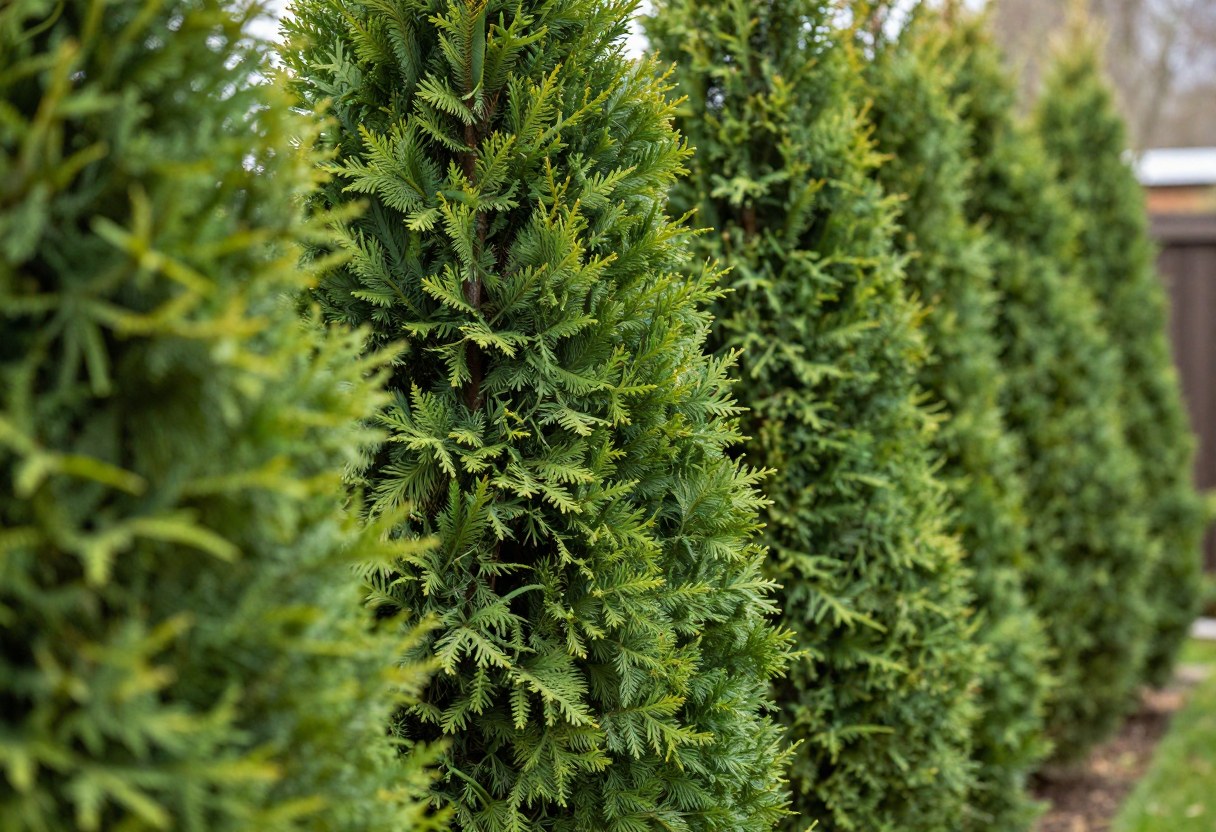
Evergreen trees are the workhorse of privacy screening — the only category that reliably grows tall enough to screen a second-floor window.
Fences and plants address the sides of your outdoor space — the lateral privacy problem. But for yards with overlooking neighbors, elevated roads, or upper-floor windows, lateral screening is insufficient without overhead privacy as well. Structures — pergolas, shade sails, overhead trellises, cabanas, and gazebos — address the vertical dimension of privacy and transform a backyard from an open space into a defined outdoor room.
The relationship between privacy and structure is reciprocal: structures create the architectural framework that defines an outdoor room and gives plants a vertical surface to climb, while plants soften, animate, and integrate the structure into the garden. The most complete privacy solutions combine structural elements with plant screening.
Pergolas: The Framework of Outdoor Privacy
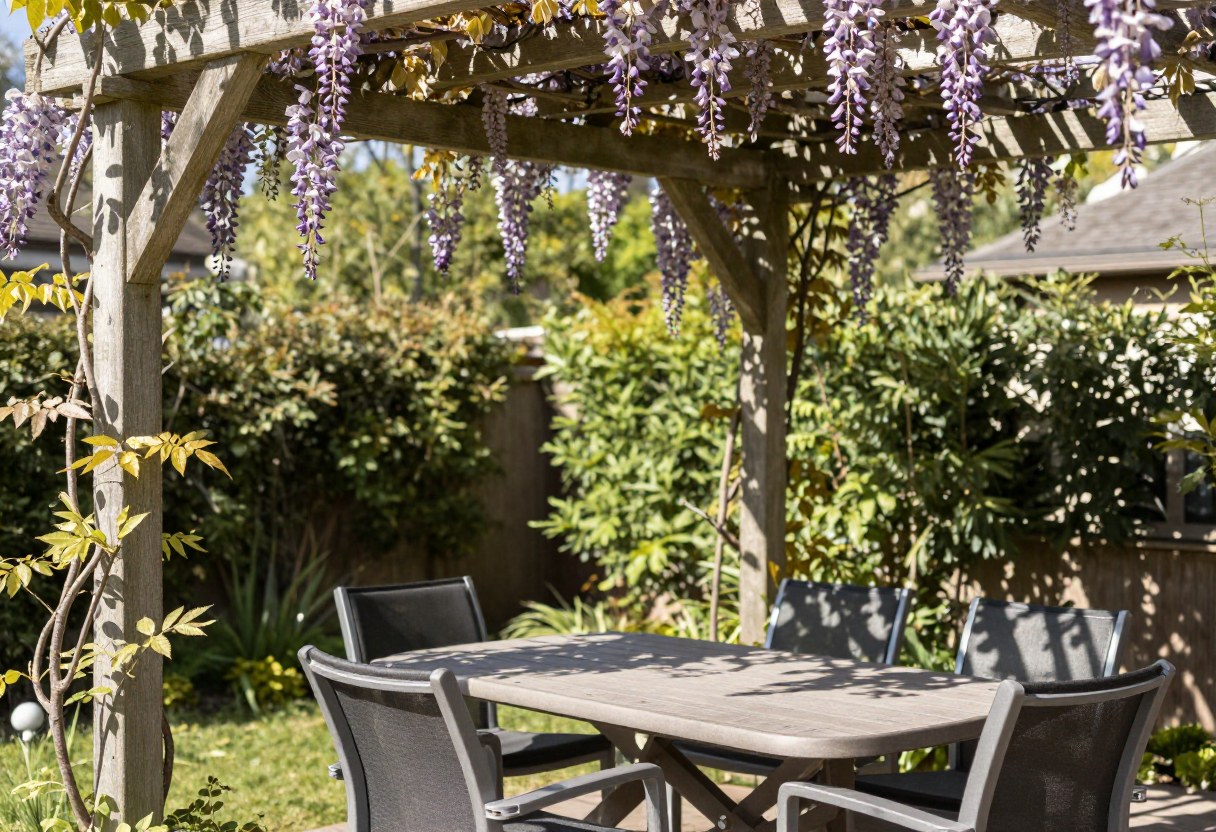
A pergola — an open overhead structure supported by columns with beams and rafters — is one of the most versatile outdoor structures for privacy enhancement. On its own, a pergola provides dappled shade and creates the psychological sense of enclosure that defines an outdoor room. Combined with climbing plants, shade sails, or retractable canopies, it provides genuine overhead privacy from upstairs windows and overlooking decks.
Pergola Material
Lifespan
Cost Range (12×16 ft)
Best For
Maintenance
Notes
Cedar or redwood
15–25 years with care
$3,500–8,000 DIY; $7,000–18,000 installed
Natural appearance; traditional gardens; Pacific NW and mountain West
Stain or seal every 2–3 years
Most beautiful and traditional option; naturally rot-resistant; quality varies by lumber source
Pressure-treated pine
15–20 years
$2,500–6,000 DIY; $5,000–14,000 installed
Budget-conscious construction; paint or stain for appearance upgrade
Paint or stain every 2–3 years
Functional but requires cosmetic treatment for best appearance; the most affordable wood option
Composite (Trex, etc.)
25–30 years
$4,500–10,000 DIY; $9,000–22,000 installed
Low-maintenance; modern aesthetic; HOA communities
Minimal — clean annually
No painting or staining; consistent appearance; some composite materials look less natural than wood
Aluminum (powder-coated)
30–50 years
$3,000–8,000 DIY kit; $7,000–18,000 installed
Coastal environments (no rust); modern/contemporary aesthetic; highest durability
Minimal — touch up scratches
Excellent in humid, coastal, or rainy climates; kits widely available for DIY
Architectural/modern aesthetic; very heavy structural applications
Inspect for rust annually; touch up paint as needed
For contemporary homes and modern landscape designs; requires skilled fabrication for custom work
Vinyl / PVC
20–30 years
$3,000–7,000 DIY kit; $6,000–15,000 installed
HOA communities; very low maintenance households
Minimal
Kit-based systems are widely available; consistent white or tan appearance; less visually interesting than wood but highly durable
Adding Privacy to a Pergola
•Climbing plants: Plant wisteria, climbing roses, grapes, hops, or annual vines at each post; within 2–3 seasons, the canopy fills in significantly; combined with rafters or shade cloth, creates near-complete overhead coverage
•Shade sails: Triangular or rectangular tensioned fabric sails attached to pergola posts provide immediate overhead coverage; available in UV-blocking fabric; easily removed seasonally
•Retractable canopies: Track-mounted retractable fabric canopies allow full coverage when needed and full open sky when preferred; good canopy systems run $2,000–8,000 depending on size but provide exceptional function
•Solid roofing: Polycarbonate panels or conventional roofing material over a pergola converts it to a covered patio with genuine weather and privacy protection; transforms the space dramatically but requires a more substantial structure and typically a building permit
Shade Sails, Screens, and Modular Systems
Not every privacy solution requires building a full pergola or installing a fence. A range of modular, semi-permanent, and temporary screening systems offer genuine privacy benefits with minimal commitment and lower cost — excellent for renters, for testing solutions before permanent installation, or for filling specific gaps in an existing privacy screen.
System
Description & Cost
Best For
Limitations
Shade sails
Triangular or square tensioned fabric panels attached to anchor points; $50–500+; attached to fence posts, pergola posts, or freestanding anchors
Overhead protection from elevated neighbors; renters; quick deployment
Require proper tensioning and anchor points rated for wind load; can tear out anchors in high wind
Outdoor curtains
Weatherproof fabric panels on tension rods, cable systems, or curtain tracks; $30–150 per panel; hung from a pergola or porch ceiling
Deck and covered patio side privacy; selective privacy (close what you need, open what you want)
Only effective as side screening, not overhead; need a pergola or overhead structure for mounting
Reed and bamboo screens
Natural fiber rolls or panels; $30–100 for a 6×8 foot panel; attach to existing fences or stand independently
Temporary or seasonal screening; extending fence height 12–18 inches while plants establish
Limited longevity (1–5 years); not as effective as purpose-built screening
Living walls / vertical planter systems
Modular planting panels filled with growing medium; $200–800 for a 4×4 section installed; requires irrigation
Urban balconies; high-visual-impact situations; limited space
More expensive and maintenance-intensive than other options; irrigation required
Cable wire trellis systems
Horizontal or diagonal stainless steel cables between posts or wall brackets; guide for climbing plants
Training espalier trees or dense climbing vines; elegant solution when plants fill in
No immediate privacy — relies on plant growth to fill in; takes 2–4 seasons for effective screening
Freestanding modular screens
Manufactured panels (teak, aluminum, HDPE, or composite) on weighted bases; $150–800+ per panel
Patios, poolside, renters; portable and repositionable
Wind stability can be a concern; individual panel coverage limited for larger spaces
Gazebos, Cabanas, and Garden Houses
At the most invested end of the outdoor privacy structure spectrum, gazebos, cabanas, and garden houses provide complete architectural enclosure — private outdoor rooms as usable in rain as in sun, as private as any interior room, and defining features of a backyard design. These are significant investments ($5,000–50,000+) that require permits in most jurisdictions.
•Gazebos: Octagonal or round roofed structures with open or screened sides; a well-placed gazebo creates an outdoor room that is inherently private through enclosure; screen panel infill between posts provides insect protection and further privacy
•Cabanas and pool houses: Pool-adjacent structures that provide changing facilities, shade, and privacy; critical for pool-adjacent privacy screening in subdivision settings where pool areas are visible from multiple neighbors
•Garden houses and pavilions: Rectangular roofed structures with variable wall configurations; the most architecturally versatile option; can be fully open, partially enclosed, or fully enclosed with screened walls; excellent for outdoor dining and entertaining
•Permit and code considerations: Any permanent roofed structure typically requires a building permit; setback requirements from property lines are stricter for structures than for fences; height restrictions may apply; always check with local building and planning departments before purchasing or building
A pergola addresses the vertical dimension of privacy that fences and hedges alone can never solve.
Section 5: Layered Privacy Design
The most effective and most beautiful privacy designs in American landscaping are not single solutions — not just a fence, not just a hedge, not just a pergola — but layered combinations of two or three approaches that complement each other's strengths and compensate for each other's weaknesses. A fence provides immediate privacy but looks harsh; add a planting on both sides and it disappears into the landscape. A planting screen takes years to establish; add a temporary fence or screen behind it for immediate privacy while you wait. A pergola creates overhead enclosure; add side screening plants around it to complete the private room.
Layered design also provides redundancy — if one element fails (a tree dies, a fence board rots), the other layers continue to function. And it allows gradual investment: start with what you can afford, then add layers as budget allows, always building toward a complete and coherent design.
The Three-Layer Privacy Formula
Layer
Role
Height Range
Typical Elements
Distance from Seating Area
Layer 1 — Structural Background
The tall backdrop that screens elevated views and establishes the sense of enclosure; the primary privacy performer
8–20+ feet
Tall evergreen trees (Green Giant, hollies, cryptomeria); existing tree canopy; privacy fence with lattice extension
10–30 feet
Layer 2 — Middle Screening
Dense mid-height plants that fill the gap between ground and tree canopy; screens most first-floor neighbor windows; provides year-round visual texture
4–8 feet
Evergreen shrubs (skip laurel, boxwood, viburnum); medium conifers (emerald arborvitae); privacy fence at standard height; dense mixed shrub hedge
5–15 feet
Layer 3 — Foreground Softening
The plants closest to the seating area; not primarily privacy-focused but creates the feeling of lushness and separation that completes the retreat experience
1–4 feet
Perennials, ornamental grasses, low shrubs, container plants; deck railing planters; raised planter boxes; groundcovers that extend to the lawn edge
0–8 feet
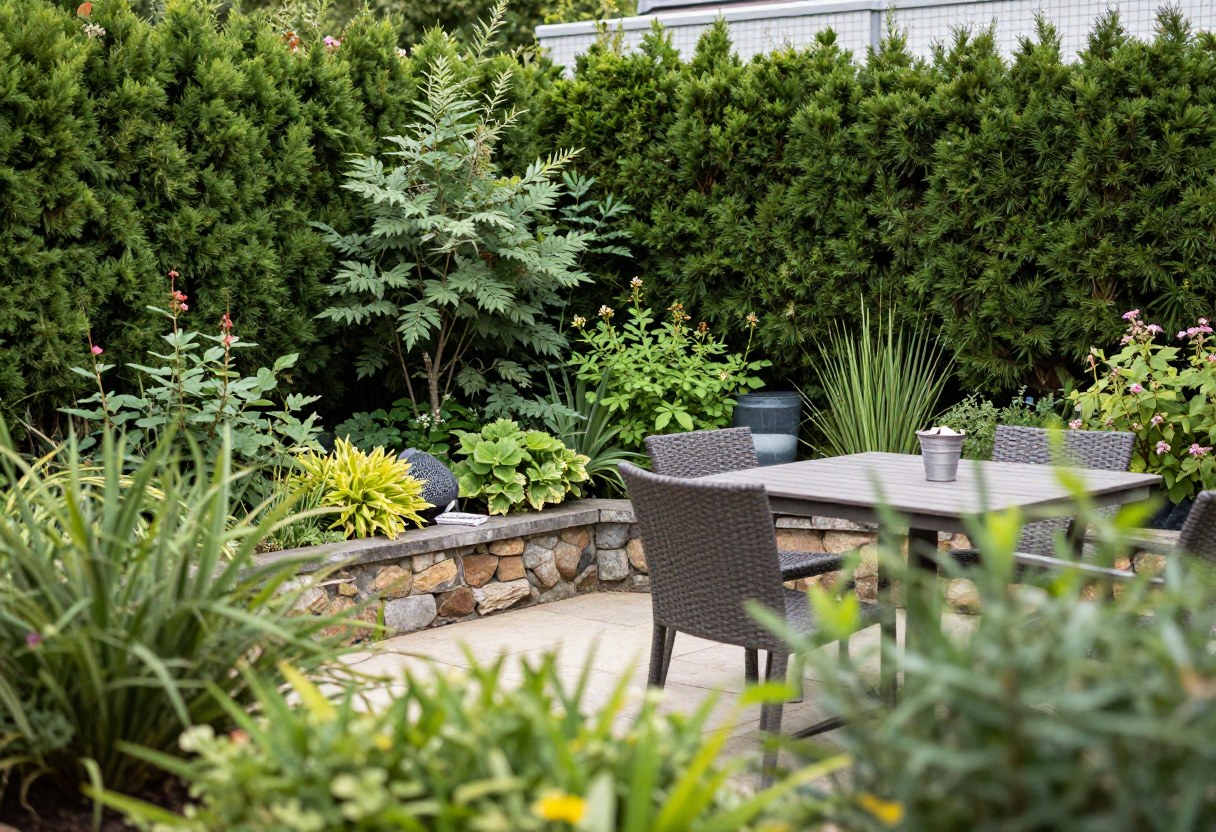
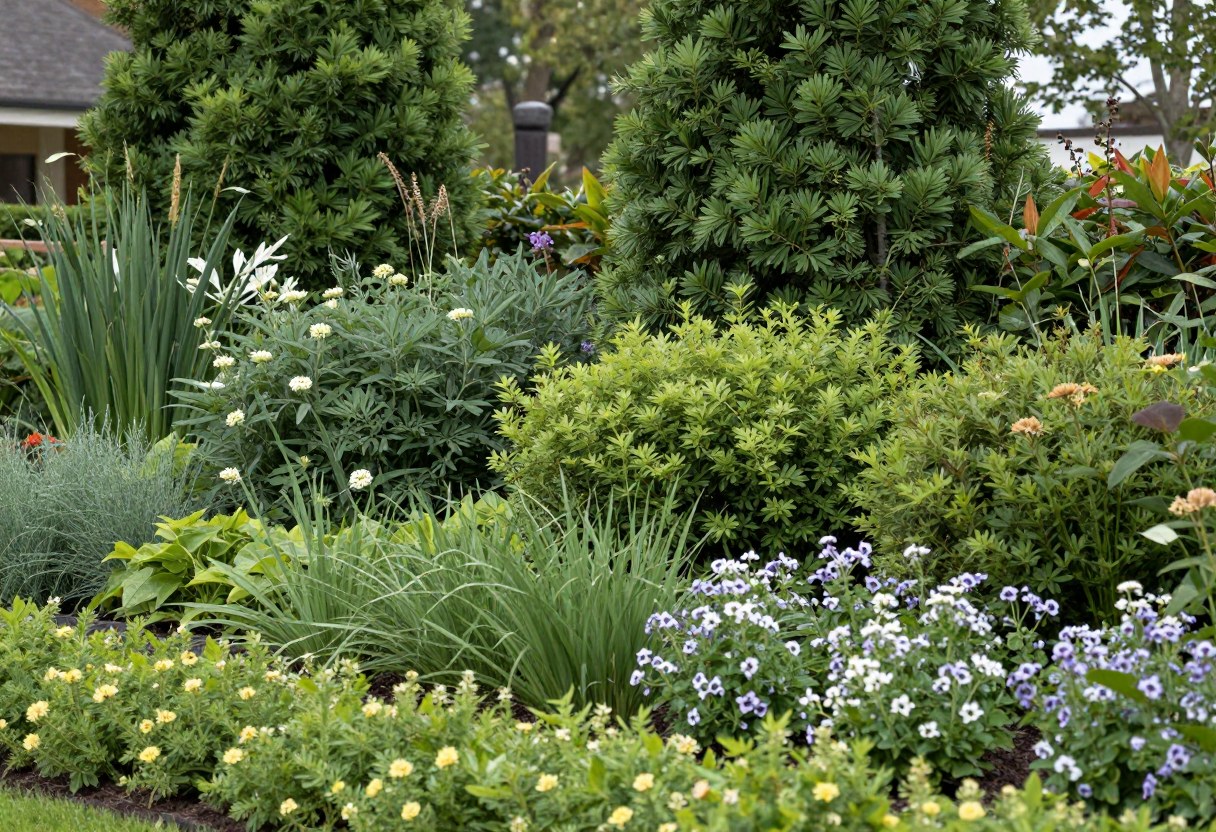
The three-layer formula in practice — structural background, middle screening, and foreground softening working together.
Privacy Design Strategies by Yard Type
The Small Urban Backyard (Under 2,000 sq ft)
Small backyards face the most challenging privacy situation: multiple close neighbors, elevated views from surrounding buildings, limited horizontal space for plantings, and the psychological difficulty of making a small space feel private without making it feel even smaller.
•Embrace vertical — plant tall columnar trees (columnar arborvitae, columnar hornbeam, columnar English oak) that provide height with minimal footprint; 2–3 feet wide and 20–25 feet tall is the ideal profile for urban privacy in tight spaces
•Use pergola and overhead structure to create a "ceiling" — a defined overhead element is the single most powerful tool for making a small space feel like a private room rather than an exposed corner
•Contain bamboo in planters for instant screen — large containers of clumping bamboo on wheels can be repositioned as needed and provide excellent screening density in very little space
•Use evergreen walls rather than mass plantings — a wall of espaliered (trained flat) evergreen plants against a fence takes 18 inches of depth and provides a living green wall; Skip Laurel and Holly espalier well
•Sound matters as much as sight in urban yards — a water feature (fountain, rill, or wall water feature) creates acoustic privacy that breaks city noise intrusion; combined with plant screening, it transforms a city backyard into a genuine retreat
The Suburban Lot (2,000–8,000 sq ft)
The typical American suburban backyard has the widest range of privacy strategies available — enough space for meaningful plantings, standard fence options, and the ability to create genuine depth between screening elements and the living area.
•The perimeter hedge is the backbone of suburban privacy — a continuous planting of Green Giant arborvitae, skip laurel, or mixed native evergreens along the rear and side property lines creates the private garden room that is the gold standard of suburban landscape design
•Tier heights at property corners for visual interest — a privacy design that steps up at corners (taller at corners, slightly lower in between) creates a sense of enclosure without a uniform wall effect
•Combine a solid rear fence with plantings in front of it on both sides — a fence provides immediate privacy while arborvitae or shrubs planted in front of it hide the fence and provide additional depth; spacing of 4–5 feet from the fence face creates a planting bed that looks like a designed garden, not a prison wall
•Place a pergola over the primary patio or seating area — creates the overhead "room" effect that definitively separates your outdoor living area from the more public zones of the yard
The Large Lot or Rural Property (Over 8,000 sq ft)
Large lots offer the most latitude but also the most scope for the privacy problem — a rural 2-acre lot with no landscaping may be visible from a road 300 feet away, a neighboring farmhouse, and passing vehicles. The scale of solution must match the scale of the problem.
•Think in terms of windbreaks and shelter belts, not hedges — multiple staggered rows of mixed evergreens and deciduous trees create a wildlife habitat corridor, significant noise and wind reduction, and full privacy at lower cost per linear foot than a single-row hedge
•Use berms (raised earthworks) to dramatically increase the effective height of plantings — a 3–4 foot berm planted with trees effectively adds 3–4 feet of screening height without adding to tree size; a berm along a road-facing boundary is one of the most cost-effective large-lot privacy investments
•Plan for a 10–20 year horizon — large-lot plantings include trees that will reach maturity over decades; mix fast-growing temporary screening (Leyland cypress, privet) with long-lived permanent trees (oaks, native hollies, pines); the temporary plants provide screening while the permanent trees establish, then are removed when the permanent trees mature
•Consider privacy in zones — on a large lot, not every acre needs privacy; focus investment on the outdoor living zone immediately around the house and let the larger property have a more open character where privacy is less critical
Regional Planting Plans: Proven Combinations
Region
Background Layer
Middle Layer
Foreground Layer
Timeline to Full Screening
Northeast Screen (Zones 4–6)
Thuja 'Green Giant' at 6-foot spacing; or native White Spruce in Zone 4–5
Mix of American Holly (Zone 5+) and native inkberry holly; both provide year-round coverage and wildlife value
Switch grass (Panicum virgatum) in clumps; deer-resistant; native; beautiful fall color and winter structure
Background 70% screening by year 4; full screening by year 7
Southeast Summer Retreat (Zones 7–9)
Wax Myrtle as fast-growing native backbone (reaches 15+ feet in 5 years in Zone 7–9); supplement with Cryptomeria for form contrast
Without supplemental irrigation expect 6–10 years; irrigation in the first 2 years dramatically accelerates establishment
🌿
Fence + Plants: The Most Reliable Combination. A 6-foot fence provides immediate full privacy at eye level; Green Giant arborvitae planted 3–4 feet in front of the fence will grow above it within 6–8 years and eventually screen second-floor windows too. The fence protects newly planted trees during establishment and provides full privacy while you wait. This combination — fence now, trees for the long term — is the most reliable privacy design in American residential landscaping.
Section 6: Noise, Wind & Light Screening
Visual privacy addresses one dimension of outdoor privacy. In many American yards — near busy roads, commercial areas, neighboring properties with active outdoor life — the intrusions are as much auditory and atmospheric as visual. Traffic noise, music from neighboring properties, headlights sweeping through a yard at night, and uncomfortable wind all prevent a space from feeling like a private retreat even when the sight lines are blocked.
Noise Reduction: What Plants and Fences Actually Do
Complete noise elimination from a backyard is not achievable with landscaping short of a solid concrete wall. But meaningful noise reduction — 5–10 decibels, which the human ear perceives as a doubling or halving of loudness — is achievable with appropriate plant mass and strategic design. More importantly, plants have a secondary acoustic effect that is as significant as actual sound reduction: they create white noise through wind movement and create visual interruption that reduces perceived noise even when the actual decibel reduction is modest.
Noise Strategy
How It Works
Effectiveness
Best Elements
Dense plant mass
Plants absorb and scatter sound waves; the more mass, the more absorption; a single row of trees provides minimal sound reduction; multiple rows provide meaningful reduction
5–8 dB reduction with 30+ feet of dense mixed plantings; perceived as significant noise reduction
Multiple rows of dense evergreens; mixed conifer and broadleaf species; mass planting (not single specimens)
Solid fencing + plant combination
Hard surfaces reflect sound; plants behind the fence absorb what gets through; the combination outperforms either alone
8–12 dB reduction with solid fence plus 10+ feet of planting behind it
Solid concrete, masonry, or dense wood fence plus conifer planting; most effective combination for urban noise
Masonry walls
Solid masonry (brick, stone, or concrete block) provides the best reflective barrier for road noise; professional installation required; expensive but effective
10–15 dB reduction from a solid 6-foot masonry wall; the most effective single element
Concrete block with stucco finish; natural stone; brick; require engineering and permits for walls over 3–4 feet
White noise and water features
Running water creates broadband white noise that masks other sounds; doesn't reduce noise but changes the acoustic character of the space from "traffic noise" to "water feature"
Highly effective at masking; psychological effect of masking is significant; does not reduce actual decibels
Fountains; waterfalls; streams; rill water features; even a small fountain near the seating area is effective
Grade changes and berms
Raising a planted berm between the noise source and seating area creates both a physical barrier and positions plants higher; dramatically more effective than flat plantings for road noise
A 3–4 foot berm with plantings can reduce effective noise 8–15 dB beyond what flat plantings provide
Earth berms with evergreen plantings; effective for road and highway noise; requires significant earthwork
Interior garden sounds
Wind chimes, rustling grasses, birds attracted by feeders and native plants, and conversation near a water feature all contribute to acoustic character of the space
Subjective but significant; changes the acoustic experience from noise intrusion to active garden soundscape
Tall ornamental grasses that rustle; wind chimes; bird-attracting plants; water features; any elements that contribute pleasant ambient sound
Wind Protection: Creating a Calm Outdoor Retreat
Strong prevailing winds can make outdoor spaces uncomfortable regardless of how private they are visually. Wind screening is one of the least discussed but most impactful aspects of backyard comfort, particularly in the Great Plains, coastal areas, and mountain communities where wind is a dominant environmental factor.
•Solid fences and walls create turbulence: paradoxically, a completely solid barrier creates a zone of turbulence on the lee side as wind deflects over the top and creates eddies; a permeable windbreak (plants or a fence with some porosity) actually provides calmer conditions in the protected zone than a solid wall
•The 7x rule: a windbreak provides protection for a distance approximately 7 times its height on the leeward side; a 10-foot windbreak protects approximately 70 feet of garden; placing seating areas in this zone is the goal
•Multiple-row windbreaks are most effective: a staggered double or triple row of plants creates a more effective wind barrier than a single row at the same height; wind must navigate through multiple obstacles rather than deflecting over a single line
•Species selection for wind: choose wind-tolerant species for exposed windbreak positions — junipers, native oaks, pines, and willows are significantly more wind-resistant than arborvitae, Leyland cypress, and most ornamental trees; a beautiful screening tree that is blown over by the first significant storm was a wasted investment
•The microclimate benefit: an effective windbreak doesn't just make the garden more comfortable — it raises the effective growing zone temperature by 1–2 USDA zones in the protected area, extends the growing season, and increases outdoor comfort during shoulder seasons when wind is coldest
Light Control: Headlights, Streetlights, and Night Privacy
Night privacy is often ignored in daytime-focused landscape design. A yard that feels reasonably private during the day can feel completely exposed at night when interior lights illuminate occupants for anyone passing. Conversely, streetlights, headlights, and neighboring property lights can intrude into what should be a private evening retreat.
•Dense evergreen plantings are highly effective against headlights: multiple rows of arborvitae, holly, or mixed evergreens significantly reduce headlight penetration; a single row with gaps is insufficient — the headlight beams find the gaps; aim for 6–10 feet of continuous evergreen mass facing any headlight source
•Your own lighting reclaims the space: thoughtfully designed landscape lighting — downward-directed path lights, up-lit trees and specimens, string lights in pergola and overhead structures — creates a visual environment dominated by your own light design rather than exterior intrusions; the spaces you illuminate become the visual focus
•Dark sky-compliant fixtures: full-cutoff light fixtures that direct all light downward eliminate the glare that makes outdoor spaces feel exposed while reducing light pollution; increasingly available and aesthetically superior to older globe-style fixtures
•Interior lighting discipline at night: if privacy from neighboring windows at night is a priority, the single most effective action is controlling the light inside the outdoor space; bright uplighting that illuminates occupants for neighbors is counterproductive — use downward-directed task lighting near seating and decorative atmospheric lighting rather than flood-style illumination
💧
The Water Feature Upgrade: Even a modest recirculating fountain ($150–400) placed near your primary seating area changes the entire acoustic character of the space. The broadband white noise of moving water masks traffic, neighbor conversations, and ambient city sounds more effectively than any amount of fencing. It is the single highest-impact-per-dollar addition to any privacy-focused backyard design.
Section 7: Regional Privacy Guide
Climate profoundly affects both the plants available for privacy screening and the conditions your screening must contend with. What succeeds brilliantly in the Pacific Northwest may fail catastrophically in the Texas summer heat. This section provides region-specific guidance for plant selection and design strategies adapted to local conditions.
Region
Climate Challenges
Best Evergreen Screens
Best Fast-Growing Options
Avoid
Regional Design Notes
New England & Upper Northeast (Zones 3–6)
Cold winters; heavy snow loads on plantings; salt spray in coastal areas; deer pressure in many suburbs
White Spruce; Black Hills Spruce; American Arborvitae with deer protection; native White Pine
Norway Spruce (fast but large); Thuja 'Green Giant' (Zone 5+); Lombardy Poplar (short-lived but fast)
Leyland Cypress (cold-sensitive, dies in Zone 5–6 winters); Wax Myrtle; most subtropical plants
Snow load can split multi-stem arborvitae — choose single-leader specimens or protect with twine wrapping in winter; deer protection essential during establishment; salt-tolerant species critical within 1 mile of coastline
Mid-Atlantic (Zones 6–7)
Hot humid summers; cold winters; significant deer pressure; heavy clay soils in Piedmont
Thuja 'Green Giant'; Eastern Red Cedar; American Holly; Cryptomeria; Leyland Cypress (Zone 7 only)
Photinia in humid lowland areas (disease-prone); plants with poor cold hardiness above Zone 6
Chesapeake Bay watershed restrictions limit fertilizer use near waterways — choose low-input native screening plants; Thuja 'Green Giant' is the dominant regional choice for good reason; pair with native understory shrubs for ecological value
Southeast & Gulf Coast (Zones 7–9)
Heat and humidity; hurricane wind; year-round growing season; excellent plant growth rates; heavy rainfall
Wax Myrtle (reaches 15 ft in 4–5 years); Clumping Bamboo; Loblolly Pine for large properties
Leyland Cypress in humid areas (Seiridium canker devastates it); Emerald Green Arborvitae (heat-stressed in Zone 8+); Photinia (disease-prone)
Hurricane-prone areas should favor flexible-stemmed plants and avoid large canopy trees near structures; native wax myrtle is the most underused privacy plant in the South and outperforms most alternatives; year-round growing season means plants establish twice as fast as in northern climates
Florida (Zones 8–11)
No sustained winter cold; intense summer rain and humidity; subtropical to tropical conditions south of Ocala; salt air in coastal areas
Podocarpus (Yew Pine) — one of Florida's best privacy plants; Clusia rosea; native Cocoplum; native Buttonbush
Clusia rosea (very fast in South FL); Podocarpus; Sea Grape (coastal)
Arborvitae (poor heat tolerance south of Zone 8); most northern conifers; Leyland Cypress
Florida has unique native plant regulations for restoration areas; check local rules before planting; South Florida's tropical climate supports dramatic privacy screening plants unavailable anywhere else in the U.S.; Podocarpus is underused nationally but exceptional in FL
Great Lakes & Midwest (Zones 4–6)
Cold winters; heavy snow; lake-effect weather; four distinct seasons; excellent summer growing conditions; deer pressure varies by suburb
White Spruce; Thuja 'Green Giant' (Zone 5+); Black Hills Spruce; Eastern White Pine; American Arborvitae (with deer protection)
Norway Spruce; Hybrid Willow (short-lived; for temporary screening only); Green Giant in Zone 5+
Leyland Cypress (cold damage Zone 6; dead in Zone 5); most Southern plants; Wax Myrtle
Midwestern soil quality is generally excellent — plants establish well; native tallgrass prairie plants (switchgrass, little bluestem) make excellent foreground screening layer with wildlife value; windbreak design is especially important in open Midwestern landscapes
Great Plains (Zones 4–7)
Extreme wind; temperature swings; semi-arid in the west; alkaline soils; hail risk; limited tree diversity historically
Eastern Red Cedar (best wind-tolerant native screen); Rocky Mountain Juniper; Plains Cottonwood (deciduous but fast and native)
Hybrid Poplar (very fast; short-lived; good temporary screen); Cedar on eastern plains
Arborvitae (wind-damaged easily); Leyland Cypress; plants requiring significant moisture in drier western plains
Wind protection is often the primary goal — plants that are "windbreak-worthy" (flexible, wind-adapted, native) are essential; Eastern Red Cedar is the most reliable and valuable screening plant on the Plains; berms amplify any planting effectiveness dramatically
Mountain West (Zones 4–8)
Short growing season at altitude; UV intensity; alkaline soils; dramatic temperature swings; dry conditions; wildfire risk in many areas
Ponderosa Pine; Rocky Mountain Juniper; Arizona Cypress (Zone 7+); Douglas Fir; Gambel Oak
Arizona Cypress in Zone 7+; Quaking Aspen (deciduous; spectacular; native)
Most southeastern plants; Leyland Cypress above Zone 7; plants requiring consistent moisture without irrigation
Wildfire-prone areas must consider fire-resistant plant choices; native juniper species are both most practical and most ecologically appropriate; work with local fire department on Firewise landscaping
Pacific Northwest (Zones 7–9 west of Cascades)
Mild wet winters; dry summers; excellent plant growth; native conifer forests provide natural context; slug and snail pressure
Western Red Cedar; Douglas Fir; Leyland Cypress (performs well in PNW unlike Southeast); English Laurel; Skip Laurel; native Vine Maple (deciduous)
Leyland Cypress (grows exceptionally well in PNW); Western Red Cedar; English Laurel (grows aggressively)
Plants requiring significant heat; most plants from other regions are simply unnecessary given the excellent native plant palette
Native conifer forest context makes conifer screening naturalistic and appropriate; PNW has the richest native screening plant palette in the country; arborist wood chips are free and abundant — use them heavily for plant establishment; rainfall is reliable but summer drought requires irrigation for new plantings
California (Zones 8–11)
Mediterranean climate — wet winters, dry summers; fire risk in many areas; diverse microclimates from coast to inland valley to desert
Toyon; native Coffeeberry; California Wax Myrtle; Lemon Bottlebrush; Pittosporum; Italian Cypress (formal); California Bay Laurel
Italian Cypress (fast; columnar; very popular in CA); Lemon Bottlebrush; Feijoa (edible privacy screen)
Water-thirsty plants in drought zones; Leyland Cypress (disease-prone in CA conditions); invasive Eucalyptus in some counties
Fire-resistant plantings are critical in WUI zones; check local fire district guidance; California's water situation makes drought-tolerant natives the ethical and practical choice; native California plants provide excellent privacy with zero irrigation once established
Desert Southwest (Zones 8–11)
Extreme summer heat; alkaline soils; very limited water; intense UV; monsoon season in AZ/NM; winter cold in higher elevations
Oleander (very fast; CAUTION: toxic and invasive in parts of AZ); Desert Willow; fast-growing native acacias
Most non-drought-adapted plants without irrigation; arborvitae (requires water and dislikes alkaline soil); most eastern privacy trees
Irrigation is the governing constraint — without drip irrigation, plant selection is severely limited; with drip irrigation, growth rates approximate those in other climates; native plants are the most practical and sustainable choice
🗺️
Find Your Regional Extension Office: Every state has a Cooperative Extension Service with free, research-based guidance on plants for your specific county and climate. Their plant lists reflect what actually survives in your area — not what looks good in a national catalog. Search "[your state] Cooperative Extension" for local planting guides, pest alerts, and privacy hedge recommendations specific to your exact conditions.
Section 8: HOA & Neighbor Considerations
Privacy improvements sit at the intersection of your needs and your community's rules — and your neighbor's interests. A beautifully designed privacy screen that triggers an HOA violation notice, or a hedge planted on the property line that becomes a neighbor dispute, costs far more in time, money, and stress than it saves in privacy. Navigating these relationships proactively is as important as any design decision.
HOA Compliance: Getting It Right the First Time
HOA Concern
Typical HOA Position
Compliant Approach
Negotiating When Needed
Fence height
Usually limits fence height to 6 ft in backyards; often 4 ft in front yards; some HOAs further limit heights
Build to maximum permitted height; use lattice extensions with climbing plants if additional height is desired (check if lattice counts toward height limit)
Request a variance with a written plan showing sight-line problem; include photos of the privacy intrusion; many HOAs grant variances for documented privacy needs
Fence materials and color
Often specifies approved materials (usually wood, vinyl, or composite) and sometimes color (white vinyl is common HOA standard)
Confirm approved materials list before purchasing; HOA-approved colors may be more limited than personal preference allows
Request a sample approval — many HOAs will approve materials not on the standard list if aesthetics are consistent with community standards
Plant height limits
Some HOAs limit hedge height or specify setback requirements for tall plantings
Check specific restrictions; trees may be treated differently from shrubs from hedges in the rules
Fast-growing plants that are managed to an HOA-acceptable height can still provide effective screening; a management plan may reassure the HOA board
Plant species restrictions
Some HOAs prohibit specific invasive species or may require approval for new plantings above a certain height or near property lines
Avoid invasive species regardless of HOA rules (ecological responsibility); check invasive species lists for your state
Native plants and non-invasive species are rarely restricted and are often explicitly encouraged in HOA guidelines in ecologically aware communities
Approval process
Most HOAs require Architectural Review Committee (ARC) approval for new structures and significant landscape changes
Submit a detailed plan with dimensions, materials, plant species, and site plan before purchasing or building anything; include photos of the area
Engage the ARC proactively — committee members are more helpful in planning than in enforcement; a pre-application conversation often reveals what will and won't be approved before you commit to a plan
Neighbor Considerations: Privacy Without Conflict
Your privacy screening affects your neighbors — in how it looks from their side, in how it might shade their yard or block their views, and in the ongoing relationship you have to maintain over years of shared property line. Getting this right from the beginning prevents conflicts that can escalate into expensive legal disputes.
•Communicate before you build: a brief conversation with affected neighbors about your privacy plans — showing them what you're planning — prevents surprises and creates an opportunity for cooperation; many neighbor privacy conflicts begin with perceived disrespect, not the actual screening itself
•Consider the neighbor's view: a fence's "bad side" typically faces the neighbor — the side with posts and horizontal rails rather than the finished face; choose fence styles that look good from both sides (board-on-board, horizontal boards) or plant on the neighbor's side of the fence (with their permission) to soften the back face
•Hedges on property lines: a hedge planted on the property line is jointly owned in most states — you and your neighbor are both responsible for it and both have a right to maintain it from their side; a hedge planted 12–18 inches inside your property line is entirely your responsibility and control
•View easements and neighborhood covenants: in communities with recorded view easements or neighborhood covenants (common in mountain and coastal areas), planting trees that block a protected view can result in mandatory removal at your expense; review your title documents and check for recorded easements before planting anything that might affect neighbor views
•Spite fence laws: fences or plantings built primarily to annoy a neighbor rather than for legitimate privacy use may be subject to "spite fence" laws in your state; keep the purpose of your screening legitimate and documented — address real privacy needs rather than creating screening out of conflict with a neighbor
•Tree and hedge encroachment: branches or roots extending over a property line can be trimmed by the neighbor to the property line; however, significant trimming that harms the tree's health, done without consultation, can create conflict; work cooperatively on maintenance near property lines
🤝
The Good Neighbor Fence: When installing a fence along a shared property line, consider offering to split the cost with your neighbor in exchange for their agreement on the style and placement. A shared fence is mutually beneficial, looks better from both sides, and turns a potential conflict into a cooperative project. Many neighbor relationships have been improved, not damaged, by a well-handled fence conversation.
Section 9: Costs, Budgets & Quick Reference
Privacy improvements span one of the widest cost ranges of any home improvement category — from a $30 trellis panel to a $40,000 complete landscape overhaul. Understanding the realistic cost of each approach and how to sequence investments for maximum early impact with available budget is the key to getting value from every dollar spent.
Cost Comparison: Privacy Screening Options
Solution
DIY Cost Range (materials)
Professional Cost Range (installed)
Speed of Privacy
Lifespan
Notes
Privacy fence (wood, 100 linear feet)
$1,500–3,500 materials
$4,000–10,000 installed
Immediate
15–25 years
Fastest and most reliable; best ROI for immediate need; requires permit in most areas; professional installation strongly recommended for proper post setting
Privacy fence (vinyl, 100 linear feet)
$2,000–4,500 materials
$5,000–12,000 installed
Immediate
20–30 years
Higher upfront cost; lower maintenance; HOA friendly; permit required
Privacy hedge planting (100 linear feet, 5-gallon plants)
$800–2,000 plants + soil prep
$3,000–8,000 installed
2–5 years to full screening
Indefinite with care
Lower cost but requires patience; most cost-effective long-term solution; professional installation speeds establishment significantly
Thuja 'Green Giant' (15 plants, 5-gallon)
$450–900
$2,000–5,000 planted
4–6 years to full screening
40+ years
Best long-term value of any conifer screen; price for larger plants (7-gallon) is $80–120 each; immediate impact with larger stock
Bamboo screen (clumping, 20 linear feet)
$400–800 plants
$1,200–3,000 installed
2–4 years to full height
20+ years in Zone 7+
Very effective in appropriate zones; rhizome barrier adds $200–500 for running types in confined situations
Pergola (12×16 feet, cedar)
$3,500–7,000 materials
$8,000–20,000 installed
Immediate overhead coverage
15–25 years
Most impactful single investment for transforming outdoor space; adds significant property value; permit required
Excellent for deck side privacy; great aesthetic result; combine with existing pergola
Raised planter with bamboo
$300–800 per 8 ft section
$600–1,500 installed
1–2 years to full height
10+ years (container)
Excellent for patio and deck privacy; movable; no ground disturbance; works for renters
Berm construction (100 linear feet, 3-foot height)
$2,000–5,000 materials + grading
$5,000–15,000 installed
Immediate grade change; planting takes 3–5 years
Permanent
Highest long-term ROI for road noise and elevated view problems; requires significant earthwork; transforms the site permanently
Masonry wall (50 linear feet, 6 feet height)
$8,000–15,000 materials
$15,000–35,000 installed
Immediate
50+ years
Most durable and effective non-plant barrier; requires engineering and permits; appropriate for high-traffic noise situations; exceptional long-term investment
Phasing Your Investment: Getting Maximum Early Impact
Phase
Timeline
Actions
Budget Range
Privacy Result
Phase 1: Immediate Impact
Month 1
Install privacy fence at most critical sight line; add shade sail or pergola over primary seating area; plant 3–5 large arborvitae at most visible intrusion point
$3,000–8,000
70–80% privacy at primary use area immediately; critical sight lines blocked
Phase 2: Plant Framework
Year 1
Install full privacy hedge or screening tree row at property perimeter; plant climbing vines on fence; add container bamboo on deck/patio
$2,000–5,000
Full perimeter planting established; begins growing toward full screening height; 60% screening at perimeter
Phase 3: Middle Layer
Year 1–2
Fill in middle layer of privacy design with evergreen shrubs; add lattice to fence top for vine climbing; install cable trellis systems where needed
$1,500–4,000
Three-layer design beginning to function; visual depth and enclosure building
Phase 4: Completion and Refinement
Year 3–5
Replace temporary screening with permanent plantings as trees establish; add landscape lighting; install permanent water feature; remove fast-temporary screens as permanent trees take over
$2,000–6,000
Complete privacy design fully functional; living and structural elements mature; full retreat experience achieved
DIY vs. Professional: The Honest Guide
Task
DIY-Suitable?
Why / Why Not
Professional Value-Add
Small plant installation (under 30 plants, 5-gallon or smaller)
Yes — very DIY-friendly
Straightforward; no special equipment; significant cost savings (60–70% less than professional install)
Professional grading and soil prep may add value; professional warranty on plants
Large tree installation (15-gallon or larger; 50+ plants)
Partially — site prep DIY; actual large plant installation difficult without equipment
Large trees require equipment (tree spade, bobcat); physical demand is high for DIY
Professional planting crews install large orders much faster with better root zone preparation; often worth the cost for the warranty alone
Wood fence installation
Possible for experienced DIYers with proper tools
Post setting is critical — improper depth, concrete, and alignment leads to fence failure within 5 years; common DIY failure point
Professional fence installers set posts correctly for local frost depth and soil conditions; typically include warranty; faster and more likely to pass permit inspection
Pergola construction
Possible for experienced DIYers — moderate woodworking project
Straightforward if you have basic carpentry skills; post setting and beam connection are the critical joints
Professional carpenter or deck contractor ensures structural adequacy; particularly valuable if pergola attaches to house (ledger board connection requires specific flashing)
Shade sail installation
Yes — very DIY-friendly
Simple installation if proper anchor points exist; instructions included with most sails
Professional installation only warranted for large commercial-grade sails where anchor engineering is critical
Landscape lighting
Partially — low-voltage systems are DIY-friendly
Low-voltage (12V) landscape lighting is safe for DIY; line voltage (120V) must be done by a licensed electrician
Electrician required for line-voltage installations; landscape lighting designers provide high-value design consultation for complex systems
Grading and berm construction
Partially — small berms under 2 feet; larger grading requires equipment
Equipment rental ($300–600/day for mini-excavator) makes larger grading accessible to DIY; proper compaction and drainage important
Professional grading contractors ensure proper drainage grades; essential for large berms and drainage-sensitive sites
Quick Reference: Privacy Screening Selector
Situation
Best First Action
Best Long-Term Solution
Speed
Budget Range
Need privacy now — no time to wait for plants
Install privacy fence at problem area
Fence + evergreen plants behind it
Immediate
$4,000–12,000 for 50 linear feet
Budget under $1,000
Plant 5–7 Thuja Green Giant in most critical zone; add shade sail over seating area
Continue planting additional zones each season
3–5 years for primary screening
$400–900 plants + $150–400 sail
Overlooking second-floor neighbor window
Plant tall columnar trees (arborvitae, Green Giant) closest to that direction; add pergola overhead
Tall evergreens + pergola with retractable canopy
4–6 years for full effectiveness
$5,000–15,000 combined
Front yard street visibility
Evergreen hedge along property line (check setback requirements); low berm if road is elevated
Multi-row native evergreen screen set back from street
Fence at code + Green Giant hedge behind it exceeding fence height over time
1 year for fence; 5 for full planting
$5,000–15,000
Renter with no permanent installation options
Container bamboo on deck/patio; freestanding privacy screens; outdoor curtains on pergola
Maximize movable solutions that come with you when you leave
Immediate–1 year
$500–3,000
Noise reduction from road
Dense evergreen plantings (multiple rows if possible); berm if site allows; water feature near seating
Earth berm + multi-row evergreen planting + water feature combination
5–8 years for significant noise reduction
$8,000–30,000 for berm + planting
Privacy on small city lot
Columnar evergreens (narrow footprint); pergola over patio; outdoor curtains on patio sides
Three-layer design with columnar background, evergreen middle layer, container foreground
2–5 years for full effect
$5,000–20,000 depending on scope
Pool area privacy from multiple neighbors
Install fence to maximum permitted height immediately; plant arborvitae on fence interior
Privacy fence + mature evergreen hedge + pergola over deck portion of pool area
Fence immediate; full design 4–7 years
$10,000–30,000 complete
Maximum deer pressure area
Choose deer-resistant species only (Green Giant, hollies, native ferns); protect young plants with temporary fencing during establishment
Deer-resistant evergreen species permanently established
3–5 years with deer-resistant plants
$3,000–10,000 depending on length
Privacy on a slope
Plant on top of slope (elevated planting on natural grade is more effective); consider terracing with retaining walls plus plantings
Terraced retaining wall with evergreen planting at each level
Terracing immediate; plants 3–5 years
$8,000–25,000 for terracing + planting
Creating Your Private Retreat: A Final Word
Privacy is one of those qualities that you don't fully appreciate until you have it — and can't fully tolerate not having once you've experienced it. The difference between a backyard that feels like an extension of your home and one that feels like a performance for the neighbors is almost entirely a matter of deliberate screening design. The plants, fences, and structures described in this guide are the tools; the design principles are the map.
The most important thing to remember: start. The Green Giant arborvitae you plant this fall will be 8 feet tall in four years. The pergola you build this spring will transform how you use your outdoor space this summer. The fence that goes in before the season starts gives you privacy from day one. Every season you wait is a season of outdoor space you underutilize because it doesn't feel like yours.
Design for your specific situation. Understand what you're screening from and at what height. Choose plants matched to your climate and site conditions. Layer your solutions so they support each other. Work within your local regulations and maintain good relationships with neighbors while you do it. And invest with a long-term mindset — the privacy screen that takes five years to mature is yours forever, and it gets more beautiful every year.
🌿
A private yard is not a luxury. It's the difference between outdoor space you own and outdoor space that owns you. Plant the tree. Build the pergola. Put up the fence. Give yourself the retreat your backyard is supposed to be.
🌿 Get Seasonal Gardening Tips
New guides, planting reminders, and growing tips — straight to your inbox.
No spam. Unsubscribe anytime.
About the Author
David Rodgers is the Founder & Head Gardener of Planting Atlas. With over 40 years of hands-on gardening experience in Oklahoma's Zone 7 climate, he researches, writes, and personally tests every guide on the site.
David draws from real backyard trials, soil testing, and trusted sources like Oklahoma State University Extension and USDA data to deliver practical, zone-specific advice that actually works.