Choose and place the right shrubs and plants around your home's base — framing the house attractively while avoiding maintenance and moisture headaches.
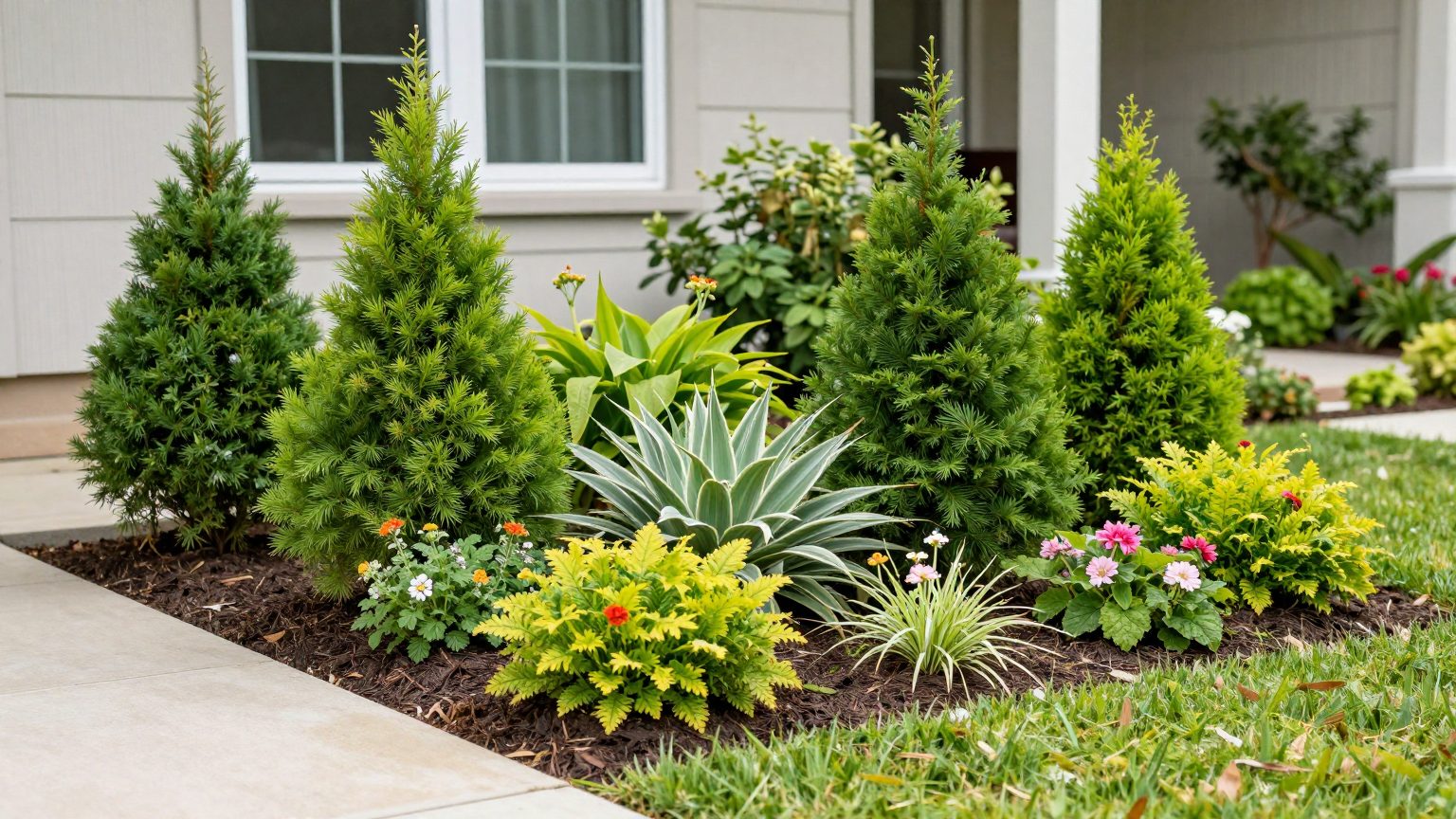
Foundation planting serves two purposes at once: it visually connects a house to its site by softening hard architectural lines, and it defines the entry experience for anyone approaching the front door. The most common mistake is planting too close to the foundation and choosing shrubs that grow far larger than expected. A juniper that looks perfect at three feet will reach twelve feet in ten years, eventually pressing against siding, blocking windows, and trapping moisture against the wall — the very problems foundation planting is supposed to prevent.
Successful foundation planting starts with knowing the mature size of every plant before it goes in the ground, then placing it at least half its mature width away from the foundation wall — a rule that prevents nearly every common foundation-planting failure.
•Look up mature width, not the size at purchase — nursery plants are almost always sold well before reaching their eventual size.
•Place each shrub at a minimum distance from the wall equal to half its mature width, so it never needs to be pressed against the house even at full size.
•Leave equivalent spacing between adjacent shrubs based on their combined mature widths, not their current nursery size, to avoid overcrowding a few years in.
•Account for height near windows specifically — a shrub that will exceed windowsill height at maturity should either be placed further from the window or chosen in a genuinely dwarf variety.
⚠️
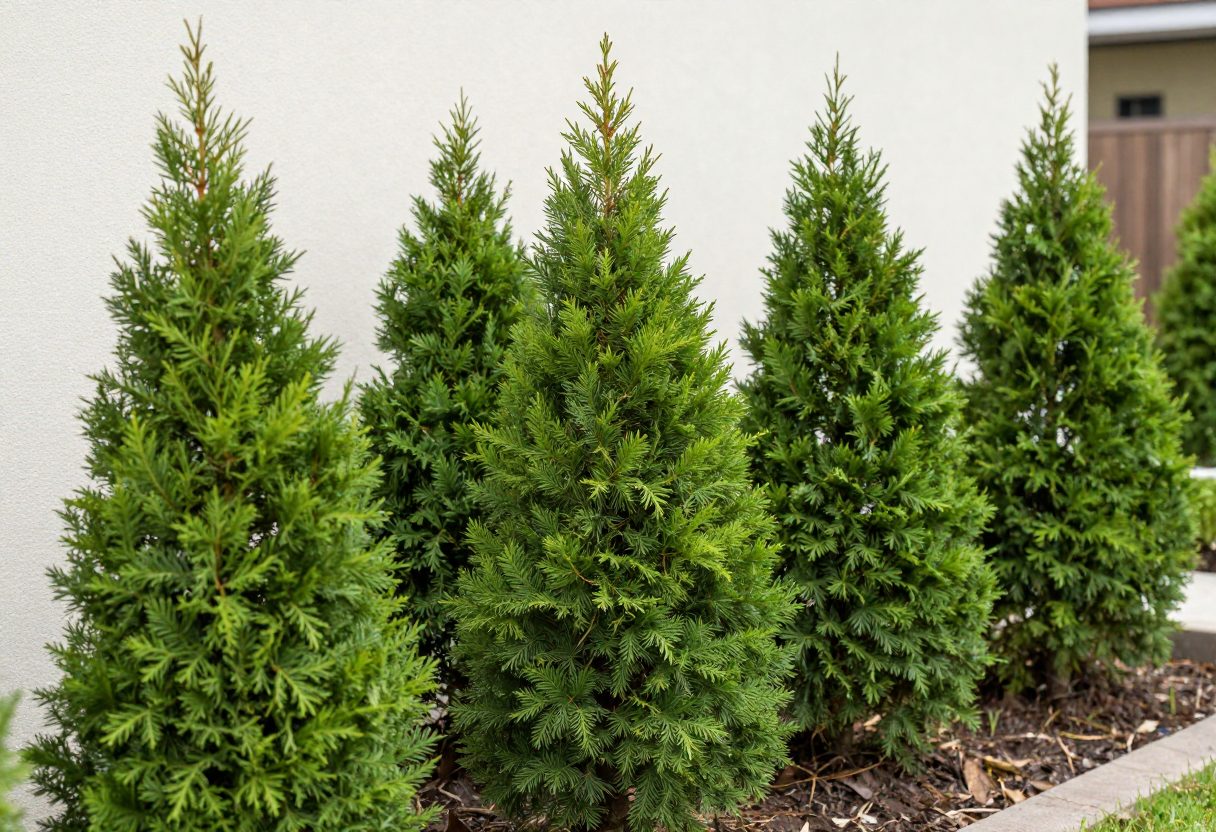
A juniper, arborvitae, or similar evergreen that looks perfectly proportioned at three feet tall commonly reaches ten to twelve feet within a decade — verify the specific cultivar's true mature size (dwarf varieties of the same species can differ dramatically) before planting close to a house.
Spacing each shrub at least half its mature width from the wall prevents crowding as plants reach full size.
Evergreen vs. Deciduous Combinations
Evergreen shrubs provide the year-round structure that anchors a foundation planting through winter, but mixing in deciduous shrubs with real seasonal interest prevents the whole planting from looking static across the year.
Role
Example Plants
Seasonal Value
Evergreen backbone
Boxwood, dwarf conifers, inkberry holly, dwarf yew
Structure and green presence through winter, when deciduous plants are bare
Spring interest
Forsythia, spirea, azalea
Early bloom that breaks up a static winter look
Summer interest
Oakleaf hydrangea, panicle hydrangea, summersweet
Flowers and lush foliage during the peak growing season
Extends visual interest into the shoulder seasons when many gardens go quiet
🌸
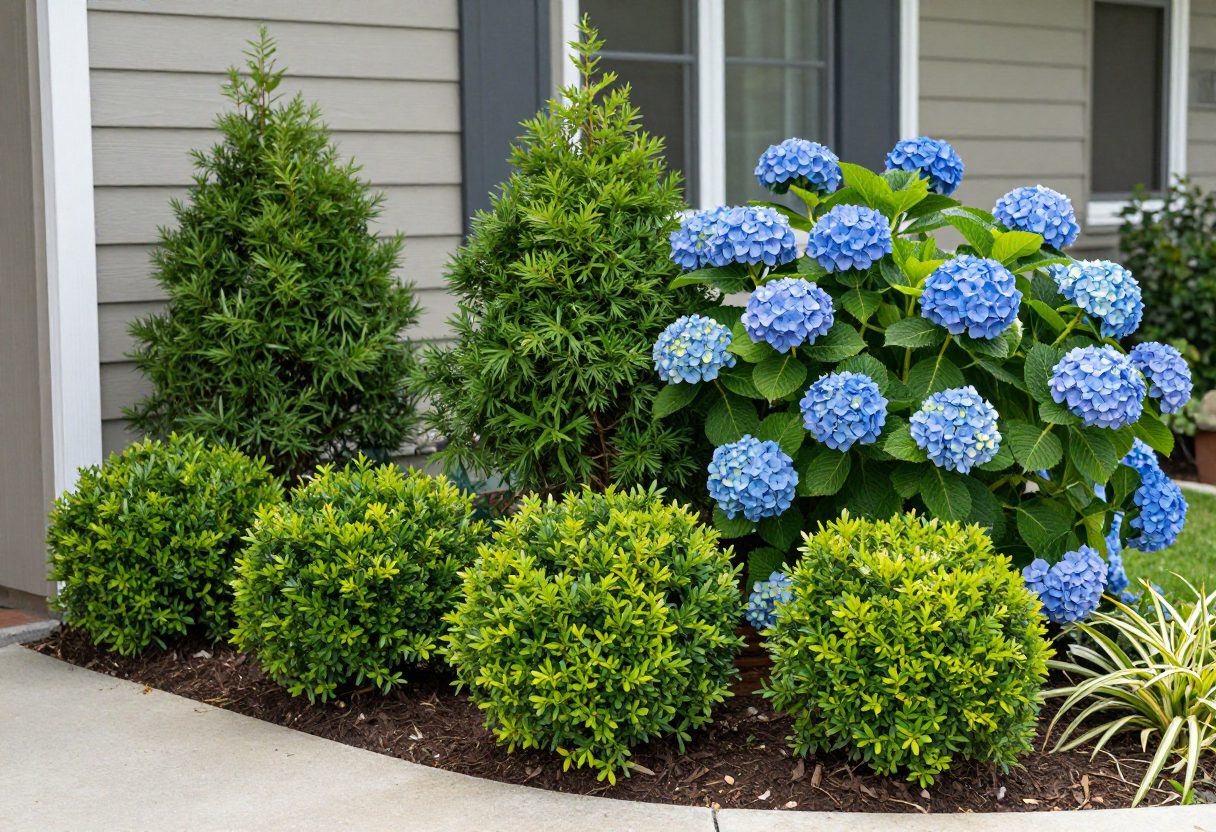
A foundation planting built entirely from evergreens looks tidy but static year-round; even two or three well-placed deciduous shrubs with distinct seasonal moments (spring bloom, fall color, winter berries) meaningfully improve the planting's year-round interest.
Mixing evergreen boxwood with a seasonal bloomer like hydrangea keeps a foundation planting from looking static year-round.
Corner Specimens vs. Mass Planting
Two distinct planting strategies work together in most successful foundation designs — larger anchor specimens at visually important points, and repeated groupings that unify the space between them.
•Corner specimens — a larger, more architectural plant (an upright evergreen, a small ornamental tree) — anchor the visual "ends" of a foundation bed and help the house read as grounded in its landscape rather than floating above it.
•Mass plantings — repeating the same shrub in groups of three, five, or more — read as more intentional and cohesive than a scattered mix of single specimens, and are more visually restful along a long foundation run.
•Reserve single specimen plants for spots that genuinely deserve individual attention (flanking an entry, marking a corner) rather than scattering unique plants throughout the bed.
•A simple, repeated palette (2-4 plant types total) across the whole foundation bed almost always reads better than a large collection of different individual shrubs.
🏡
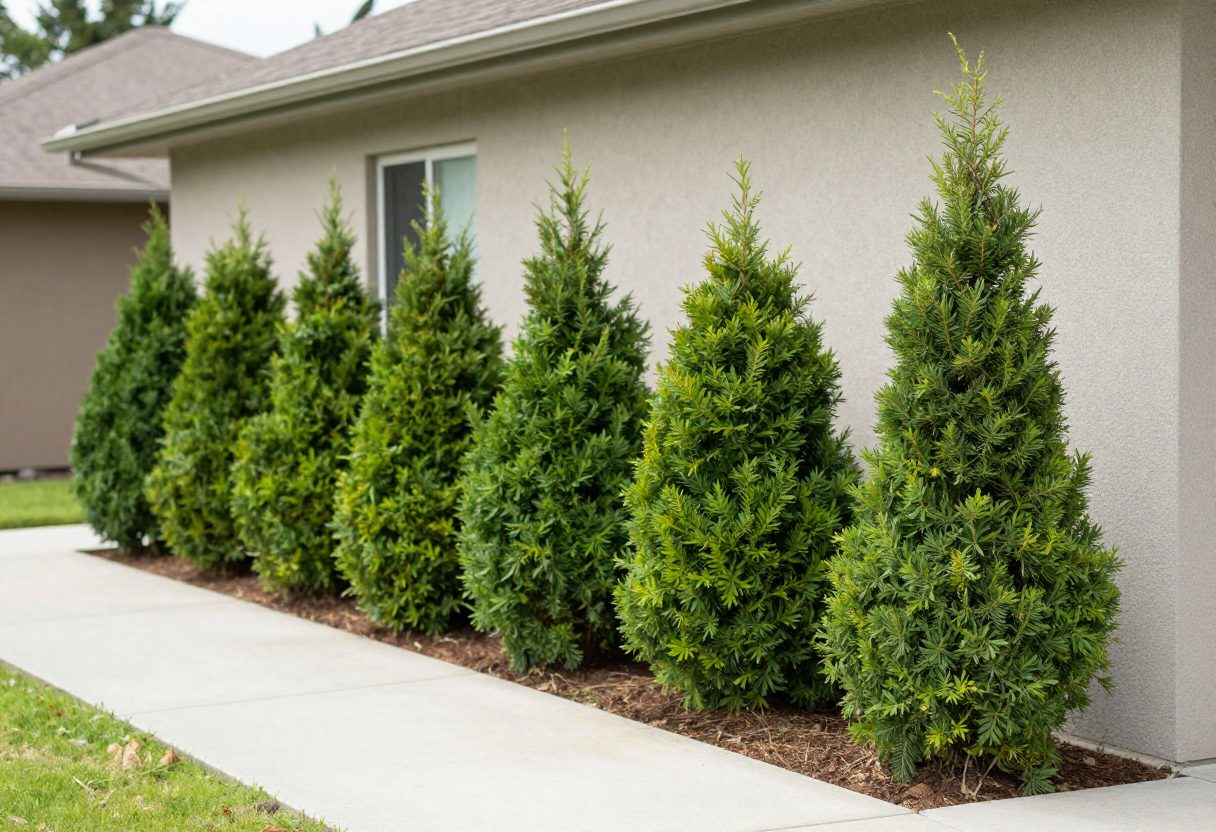
A common, reliable formula: one anchor specimen at each corner of the house, a mass planting of a mid-size shrub along the main wall run, and a low evergreen or groundcover along the front edge closest to the walkway.
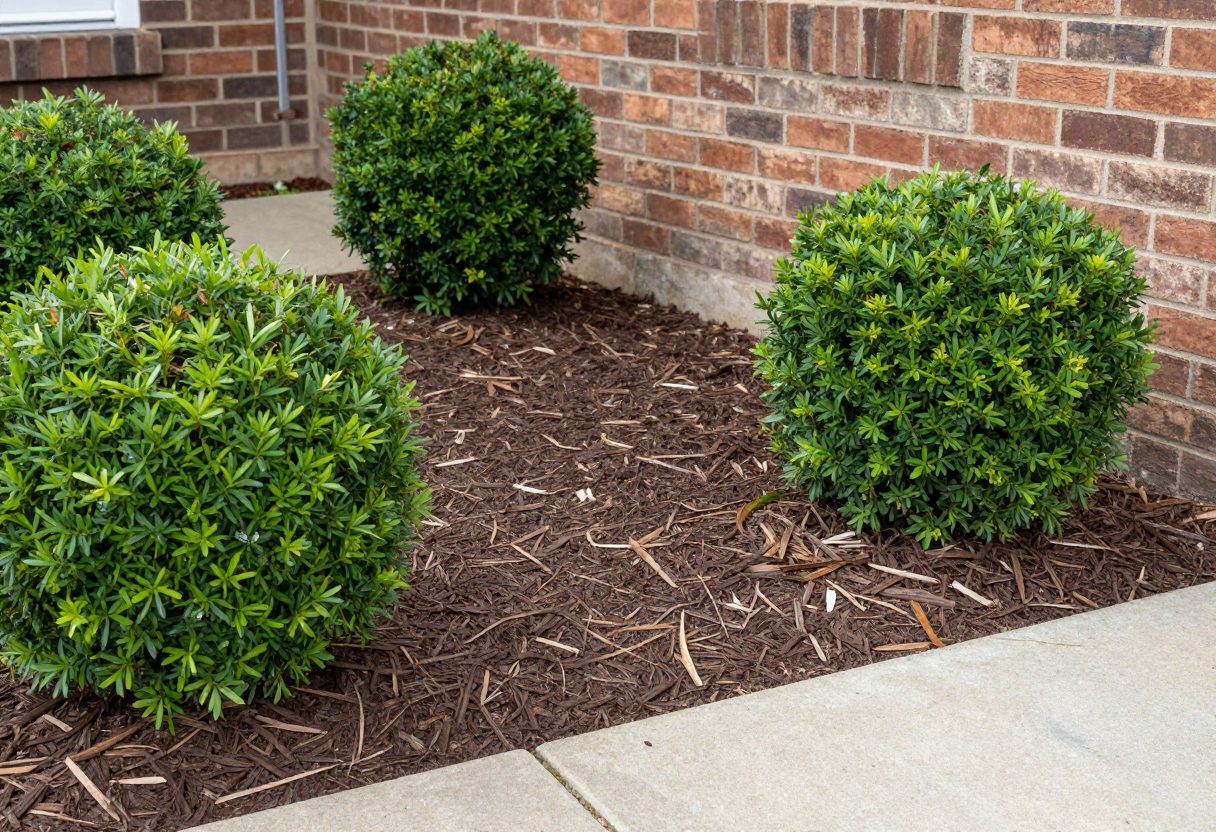
A taller corner specimen paired with a repeated mass planting reads as more intentional than scattered individual shrubs.
Dealing with Difficult Foundation Conditions
The area immediately around a house often presents growing conditions genuinely different from the rest of the yard — matching plant choice to the actual microclimate at the foundation, not the general garden conditions, prevents repeated plant failures in the same spot.
Condition
Cause
Plant Strategy
Deep shade
North-facing walls, roof overhangs, mature trees
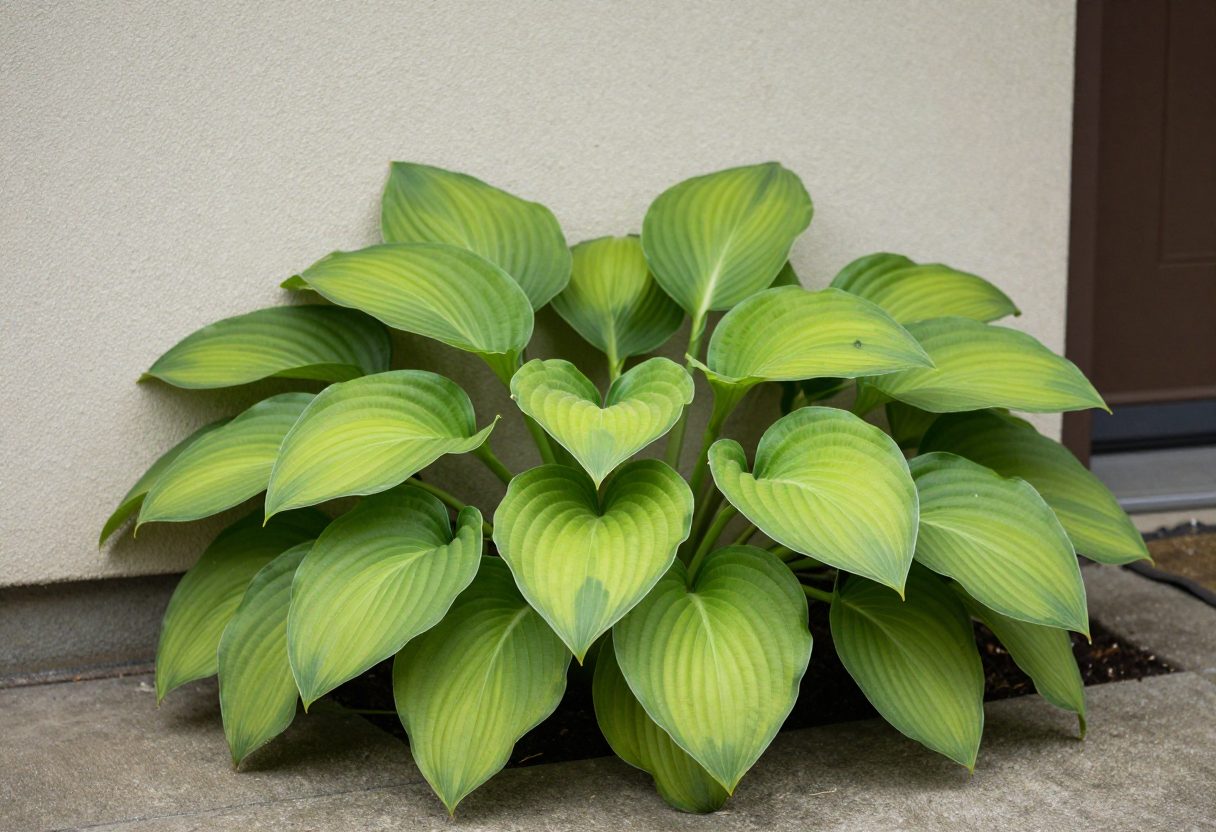
Shade-tolerant shrubs (hosta, astilbe, dwarf yew, some hydrangeas) rather than forcing sun-loving plants into the spot
Reflected heat
South or west-facing walls, especially with light-colored siding or brick
Heat-tolerant, drought-resistant plants (many junipers, yucca, ornamental grasses) that can handle intensified sun and warmth
Dry overhang zone
Under roof eaves where rain rarely reaches
Drought-tolerant plants specifically, or supplemental drip irrigation, since natural rainfall genuinely can't reach this strip
Poor drainage / wet foundation zone
Downspout discharge points, low grading near the house
Moisture-tolerant plants (some viburnums, winterberry holly) or regrading/drainage correction before planting
⚠️
The dry strip directly under a roof overhang is one of the most commonly mis-planted foundation zones — it looks like normal garden soil but receives dramatically less rainfall than the rest of the yard, and plants chosen without accounting for this often fail despite otherwise appropriate light and soil conditions.
Matching plant choice to a foundation zone's actual microclimate — like deep shade along a north wall — prevents repeated failures.
Moisture Management and Foundation Clearance
In regions with wet climates, maintaining clearance and drainage between plants and the foundation wall is critical for keeping moisture away from siding and preventing rot, in addition to the plant-sizing considerations covered above.
•Maintain roughly 18 inches of mulched clearance between mature plant foliage and the foundation wall, even after accounting for the plant's eventual mature spread.
•Ensure grading slopes away from the foundation, not toward it — foundation plantings shouldn't be installed in a way that traps water against the house.
•Keep irrigation (drip lines, sprinkler heads) from spraying directly onto siding or brick — persistent wall wetness contributes to rot, mold, and pest issues independent of the plants themselves.
•Avoid dense, non-breathing mulch layers piled directly against siding — leave a visible gap between mulch and the wall itself.
💧
The 18-inch clearance rule and the half-mature-width spacing rule work together — a plant properly spaced for its mature size will naturally maintain adequate foundation clearance even once fully grown, rather than needing constant pruning to hold it back.
Maintaining roughly 18 inches of mulched clearance between plants and the foundation keeps moisture away from siding.
Regional Foundation Plant Recommendations
Foundation planting success depends heavily on regional adaptation — a plant that thrives as a foundation shrub in one climate may struggle or become invasive in another.
A local nursery or extension office is the best final check for regional foundation plant choices — mature size, cold hardiness, and heat tolerance all interact differently across regions, and a plant list this general can only serve as a starting point.
🌿 Get Seasonal Gardening Tips
New guides, planting reminders, and growing tips — straight to your inbox.
No spam. Unsubscribe anytime.
About the Author
David Rodgers is the Founder & Head Gardener of Planting Atlas. With over 40 years of hands-on gardening experience in Oklahoma's Zone 7 climate, he researches, writes, and personally tests every guide on the site.
David draws from real backyard trials, soil testing, and trusted sources like Oklahoma State University Extension and USDA data to deliver practical, zone-specific advice that actually works.