Achieve the lush, romantic overflow of a classic cottage garden — where roses tumble over fences, self-seeders fill every gap, and abundance feels effortless.
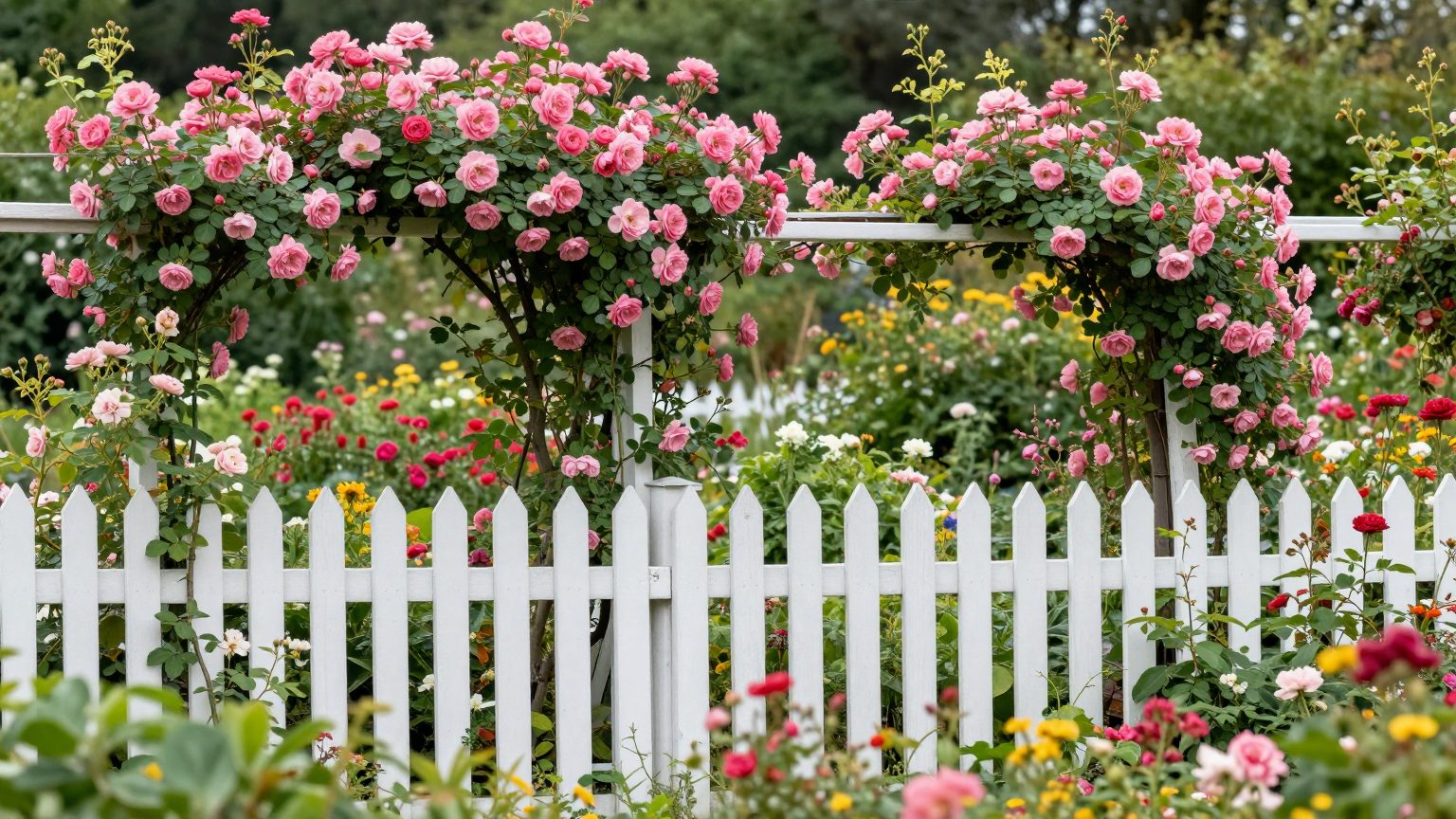
Cottage garden style is the art of controlled abundance — it looks spontaneous, but the best examples are carefully orchestrated. The hallmarks are layered planting that leaves no bare soil, a mix of annuals and perennials that bloom in overlapping waves, and a color palette that ranges from soft pastels to jewel tones depending on the gardener's taste. Defining features like picket fences, brick or gravel paths, and climbing roses or clematis on arbors give the style its structure, preventing exuberant planting from feeling chaotic. This guide focuses on the structural and design side of achieving the cottage landscape look — see the site's Cottage Garden Style guide for a deeper plant-by-plant palette.
A cottage garden that actually works is more carefully composed than it looks — the "spontaneous" effect comes from a handful of consistent design principles applied throughout the space, not from planting without a plan.
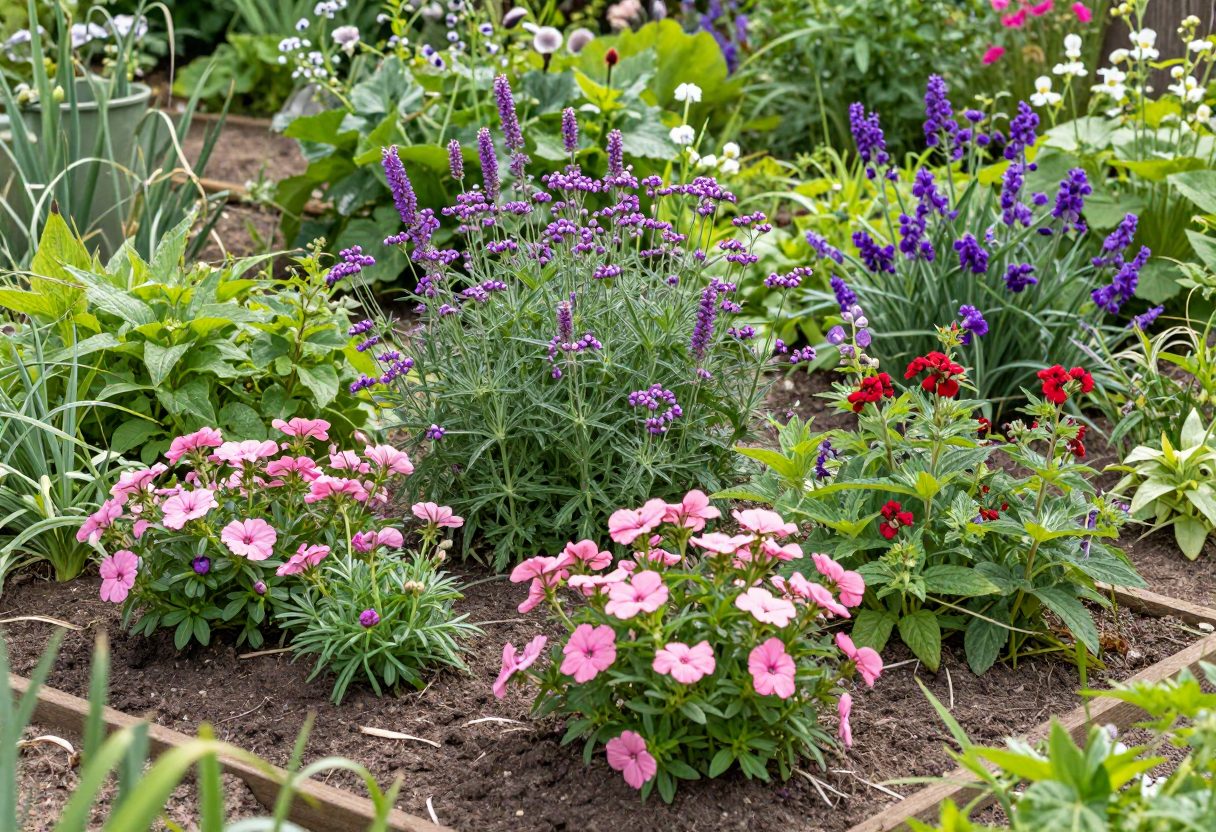
•Leave no bare soil — dense, layered planting at multiple heights is the defining visual signature of the style, achieved by planting closer together than a formal border would allow.
•Overlap bloom times deliberately — mixing early, mid, and late-season perennials and annuals keeps the bed full of color continuously rather than peaking once and going quiet.
•Repeat a core color palette or a handful of signature plants throughout the space to keep an otherwise busy planting visually cohesive.
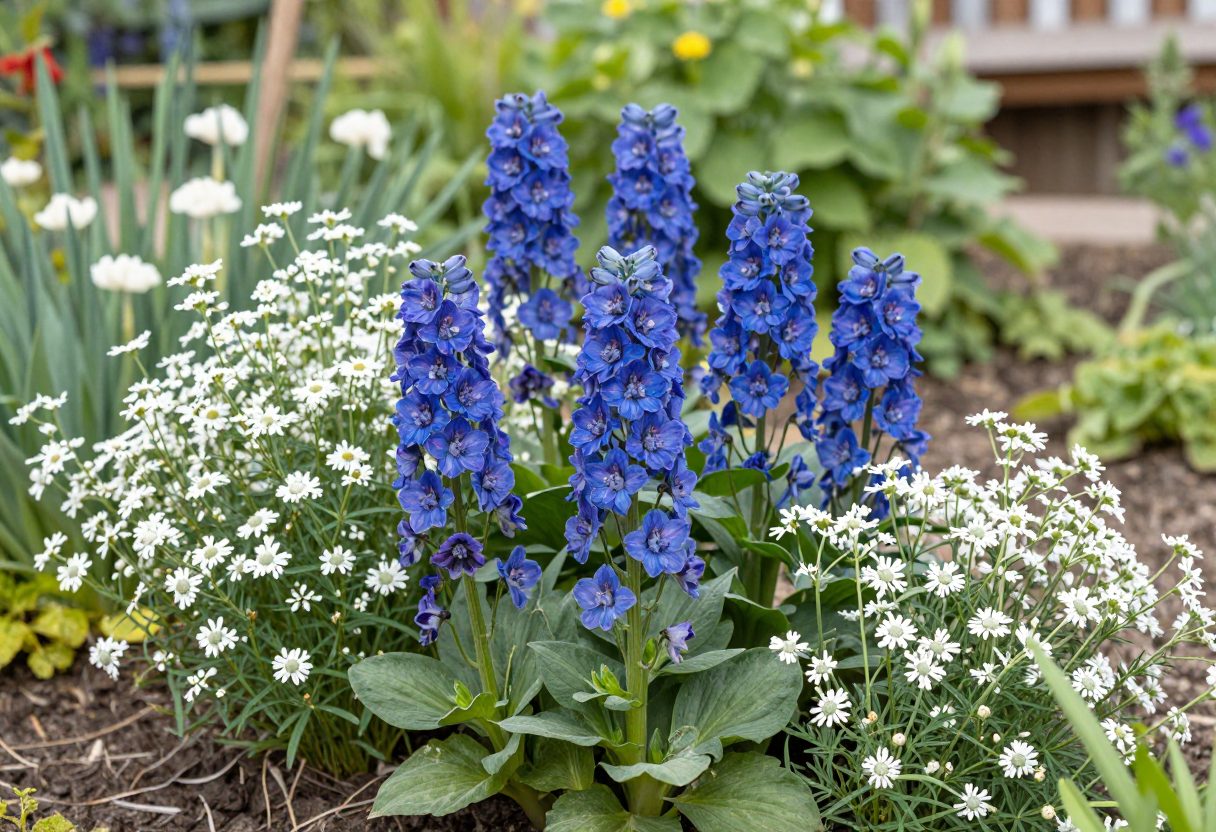
•Include vertical elements (climbing roses, clematis, delphiniums, hollyhocks) to break up an otherwise uniform mid-height planting and add the romantic, overflowing quality the style is known for.
🎨
A useful working rule: plant densely enough that neighboring plants touch at maturity, but keep a repeated color or plant thread running through the bed so the density reads as intentional abundance rather than visual noise.
Dense, layered planting with no bare soil is the defining visual signature of cottage garden style.
Fences, Paths, and Climbing Structures
Structural elements — fences, paths, and arbors — give cottage planting the framework it needs to read as designed rather than accidental; without them, even excellent plant choices can look like an untended lot.
Element
Role
Common Materials
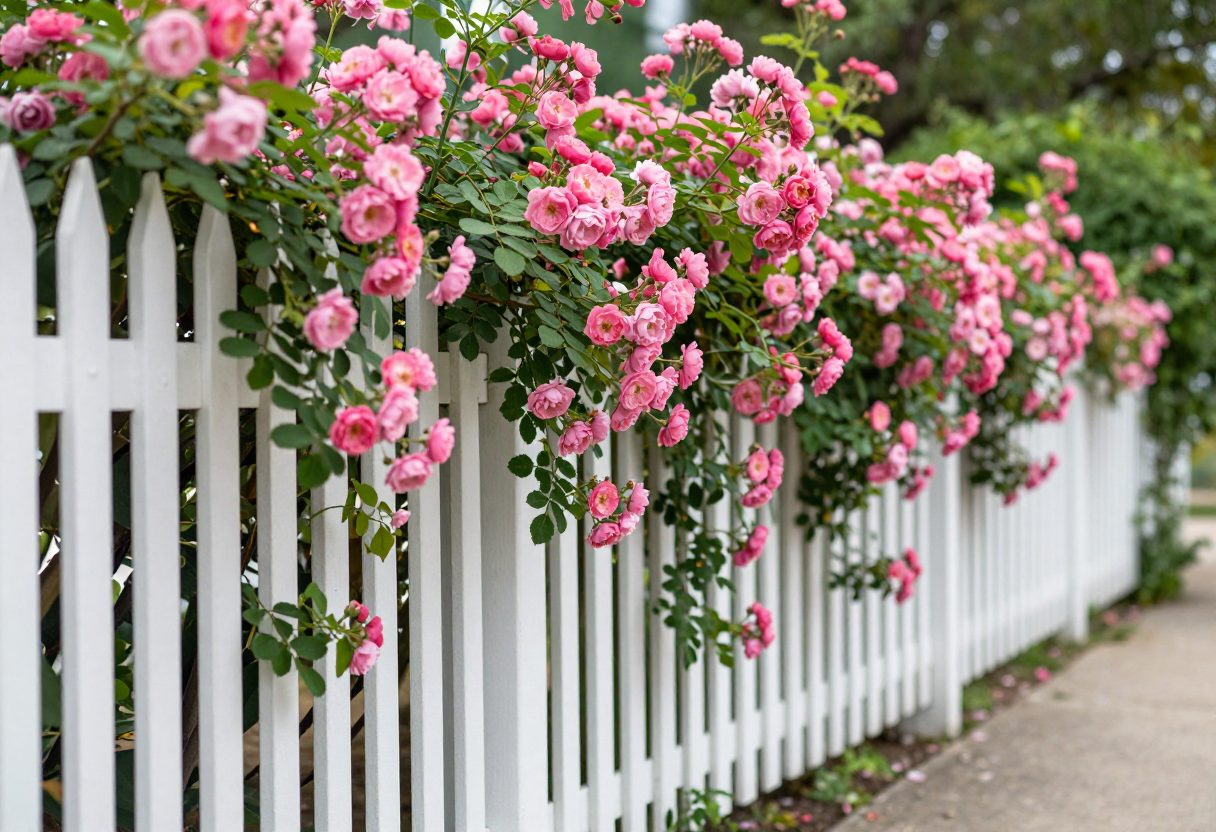
Picket fence
Defines the garden edge and provides a support surface for climbing roses and clematis
White-painted wood is classic, but any low fence style works
Path
Provides visual structure and physical access through dense planting
Brick, gravel, flagstone — informal, textured materials suit the style better than poured concrete
Arbor or arch
Frames an entry point and supports climbing plants at a focal height
Wood or metal, typically placed at a gate or path transition
Low edging
Keeps informal, spilling planting from encroaching onto paths or lawn
Brick, stone, or simple metal edging — subtle enough not to compete with the planting itself
🚪
An arbor or arch at the garden's entry point does disproportionate work for the effort involved — it frames the view into the garden and gives climbing roses or clematis an immediate, prominent showcase right where visitors first look.
A picket fence provides both the garden edge and a climbing surface that gives cottage style its structure.
Adapting Cottage Style to American Climates
Translating English cottage garden style to American climates requires real adaptation — the classic British plant palette simply doesn't perform the same way across most of the US.
Region
Climate Challenge
Adapted Plant Choices
Pacific Northwest / New England
Closest match to English cottage conditions — cool, moist summers
Hot, humid summers stress classic English perennials
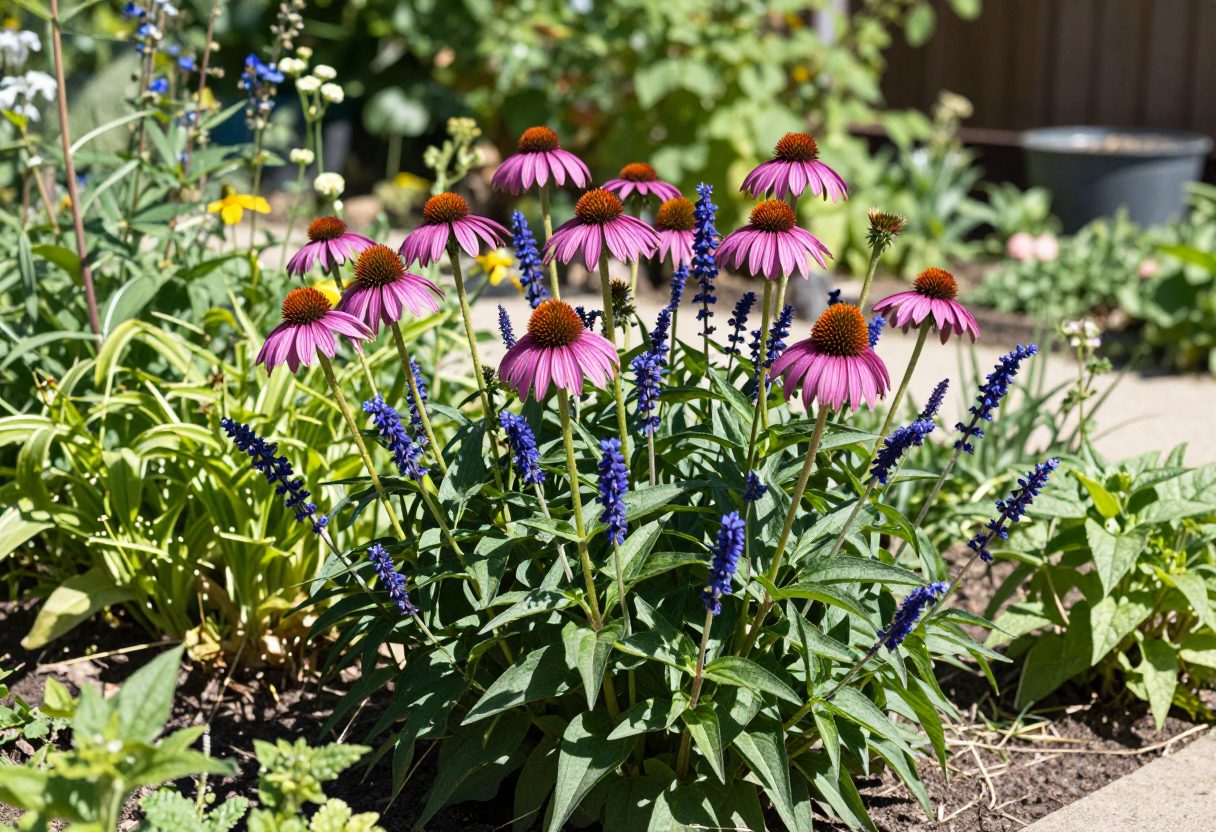
Salvias, coneflowers, black-eyed Susans, crape myrtles, and heat-tolerant roses replace delicate British choices
Midwest
Cold winters, hot summers, more climate extremes
Hardy perennials (peonies, phlox, coneflower) with self-seeding annuals filling gaps each year
Southwest / Desert
Low humidity and intense heat make true cottage style challenging
A modified palette leaning on drought-tolerant flowering perennials, with the cottage aesthetic expressed more through layout and structure than plant choice
⚠️
Forcing a classic English plant list onto an unsuited climate (delphiniums in the Deep South, for instance) usually produces disappointing, short-lived results — adapting the plant palette to your actual region delivers the cottage look far more reliably than importing a British plant list wholesale.
Heat-tolerant substitutes like coneflower and salvia bring cottage abundance to hot, humid Southeast climates.
Working with Self-Seeding Annuals
Self-sowing annuals are the cottage gardener's secret weapon — plant once, and they return and naturalize indefinitely, filling gaps between perennials with minimal ongoing effort.
Self-Seeder
Bloom Season
Notes
Larkspur
Late spring/early summer
Tall spikes add vertical interest; reseeds reliably in most climates
Bachelor's button (cornflower)
Late spring/summer
Cheerful blue blooms, extremely easy from seed
Love-in-a-mist (Nigella)
Summer
Distinctive feathery foliage and unique seed pods extend interest after bloom
California poppy
Spring/summer
Drought-tolerant, especially reliable as a self-seeder in western climates
Foxglove
Early summer
Biennial rather than true annual — blooms its second year, then reseeds
🌱
Resist the urge to deadhead every self-seeding annual completely — leaving some spent flower heads in place through late summer is what lets them drop seed and return the following year without any replanting effort.
Self-seeding annuals like larkspur and love-in-a-mist return year after year with no replanting effort.
Achieving the Abundant Look in Small Spaces
Cottage style scales down surprisingly well — the same layering and density principles that work in a large border can be compressed into a small yard or even a large container grouping.
•Use vertical structures (a single arbor, a fence line) to add height and climbing plants without consuming ground space.
•Choose compact or dwarf varieties of classic cottage plants where full-size versions would overwhelm a small bed.
•Layer densely even in a small footprint — the "no bare soil" principle matters more, not less, in a compact space where every square foot is visible.
•A single well-planted large container or a small raised bed can capture the cottage aesthetic in miniature for a patio or tiny front yard.
🏡
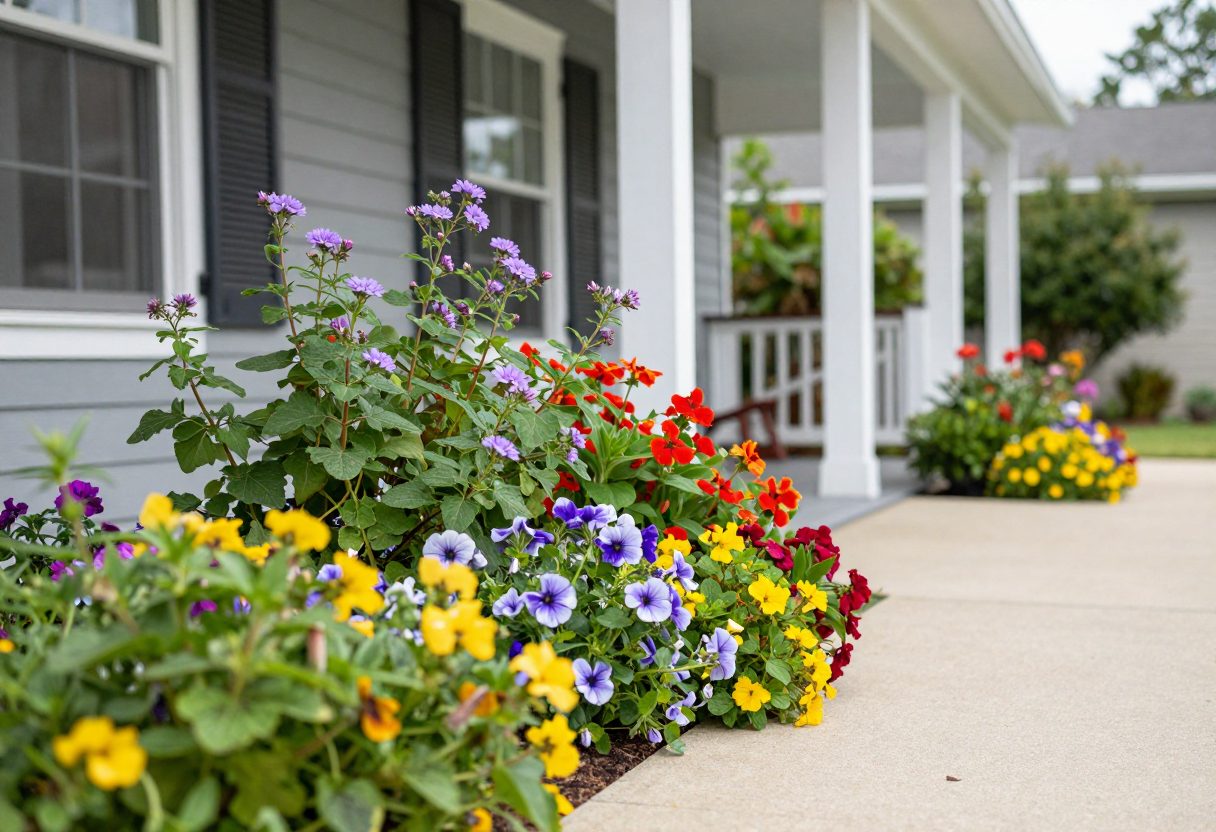
A small cottage-style planting along a front walkway or porch — dense, layered, with one climbing element on a mailbox post or small trellis — delivers the style's signature abundance without needing a large garden footprint at all.
A small, densely layered planting along a walkway captures the cottage aesthetic without needing a large garden.
🌿 Get Seasonal Gardening Tips
New guides, planting reminders, and growing tips — straight to your inbox.
No spam. Unsubscribe anytime.
About the Author
David Rodgers is the Founder & Head Gardener of Planting Atlas. With over 40 years of hands-on gardening experience in Oklahoma's Zone 7 climate, he researches, writes, and personally tests every guide on the site.
David draws from real backyard trials, soil testing, and trusted sources like Oklahoma State University Extension and USDA data to deliver practical, zone-specific advice that actually works.