Loading…
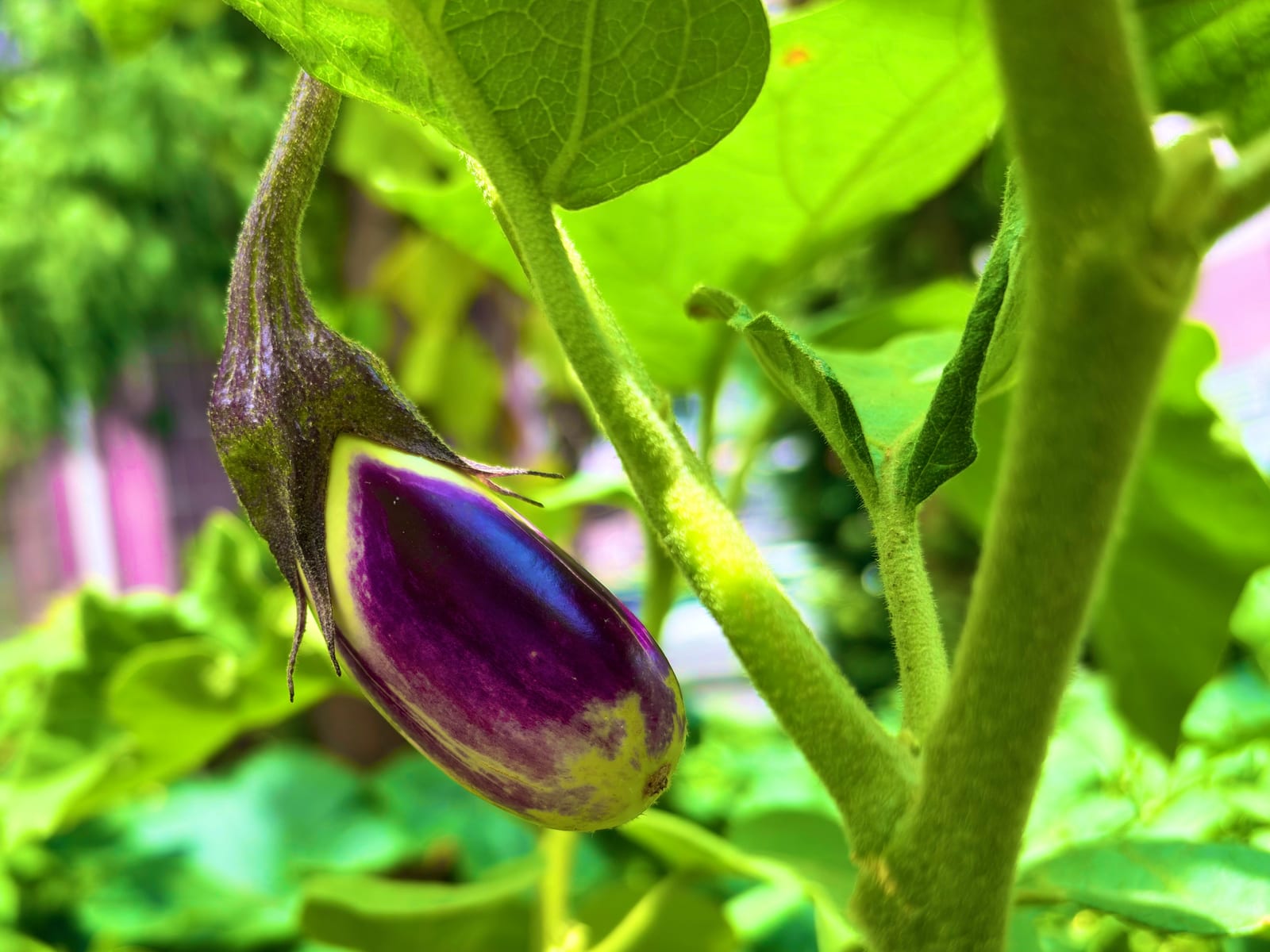 🔍 Click to enlarge
vegetableannual💧 Hydroponic-Compatible
Eggplant
Solanum melongena
Glossy, versatile vegetable that thrives in hot weather. Many shapes and colors available.
Quick Facts
Sun:☀️ Full Sun
Water:💧💧 Moderate
USDA Zones:Zones 5–11
Space:🪴 Container, 🌱 Small Bed, 🏡 Large Garden
Soil:Loam, Silty, Sandy
Best Season(s):Spring, Summer
Experience Level:🌿 Intermediate
Native Range:South & East Asia
Bloom Color:Purple, star-shaped flowers (grown for fruit)
Bloom Cycle:Continuous through summer as fruit sets
Days to Harvest:65–80 days
Harvest Pattern:Continuous / cut-and-come-again
Care Notes
Start indoors 8 weeks before last frost. Harvest when skin is glossy — dull skin means overripe.
💧 Hydroponic Notes
Works well in DWC or ebb & flow with large containers. Needs warm temps (70–85°F) and strong lighting. Support branches as fruit develops.
Growing Details
Mature Size:24-36 in tall, 18-24 in wide
Growth Rate:🌿 Moderate
Zone Performance
At the cool edge (zone 5-6), eggplant needs an 8-week head start indoors and black plastic mulch or row cover to hold soil warmth, since growth stalls entirely below 60°F. In the hottest zones (9-11) it thrives as a short-lived perennial that can be cut back and overwintered indoors or under cover, often outproducing plants grown as strict annuals further north.
Companions & Wildlife
🦌 Deer Resistance
occasionally damaged
Deer will sometimes browse young eggplant foliage, though the fuzzy leaf texture and nightshade compounds make it less preferred than many vegetables.
🐝 Pollinator Value
moderate
Self-fertile, but the nodding purple flowers benefit from buzz pollination by bumblebees, which improves fruit set and size.
Good Companions
Green Bean — Beans are thought to help repel Colorado potato beetle, which also attacks eggplant.
Troubleshooting
⚠️ Flea beetles riddling leaves with small holes
Cover young transplants with row cover until plants are established and vigorous enough to outgrow moderate damage.
⚠️ Fruit turns bitter or seedy
Harvest while skin is still glossy and fruit is young; overripe eggplant with dull skin develops bitterness and tough seeds.
⚠️ Colorado potato beetle defoliation
Hand-pick adults and orange egg clusters on leaf undersides regularly, since this pest can strip young plants quickly if left unchecked.
💧 Growing Eggplant Hydroponically
Eggplant is well suited to soil-free growing. Here is what to know before you set up.
Time to harvest
65–80 days
Target pH
5.5 – 6.5
General hydroponic range — see the notes below for anything specific to this plant.
We don't list a nutrient-strength or light target for Eggplant, because we don't have a reliable range for it. Start with your nutrient's label and adjust by watching the plants.
Best-suited systems
Works well in DWC or ebb & flow with large containers. Needs warm temps (70–85°F) and strong lighting. Support branches as fruit develops.
⚠️ Pet Safety
Ripe fruit is fine, but leaves and unripe fruit contain solanine like other nightshades — keep pets from browsing the plant.
Informational only — always check with a veterinarian if you suspect your pet has eaten something it shouldn't have.