Loading…
←Back to Newsletters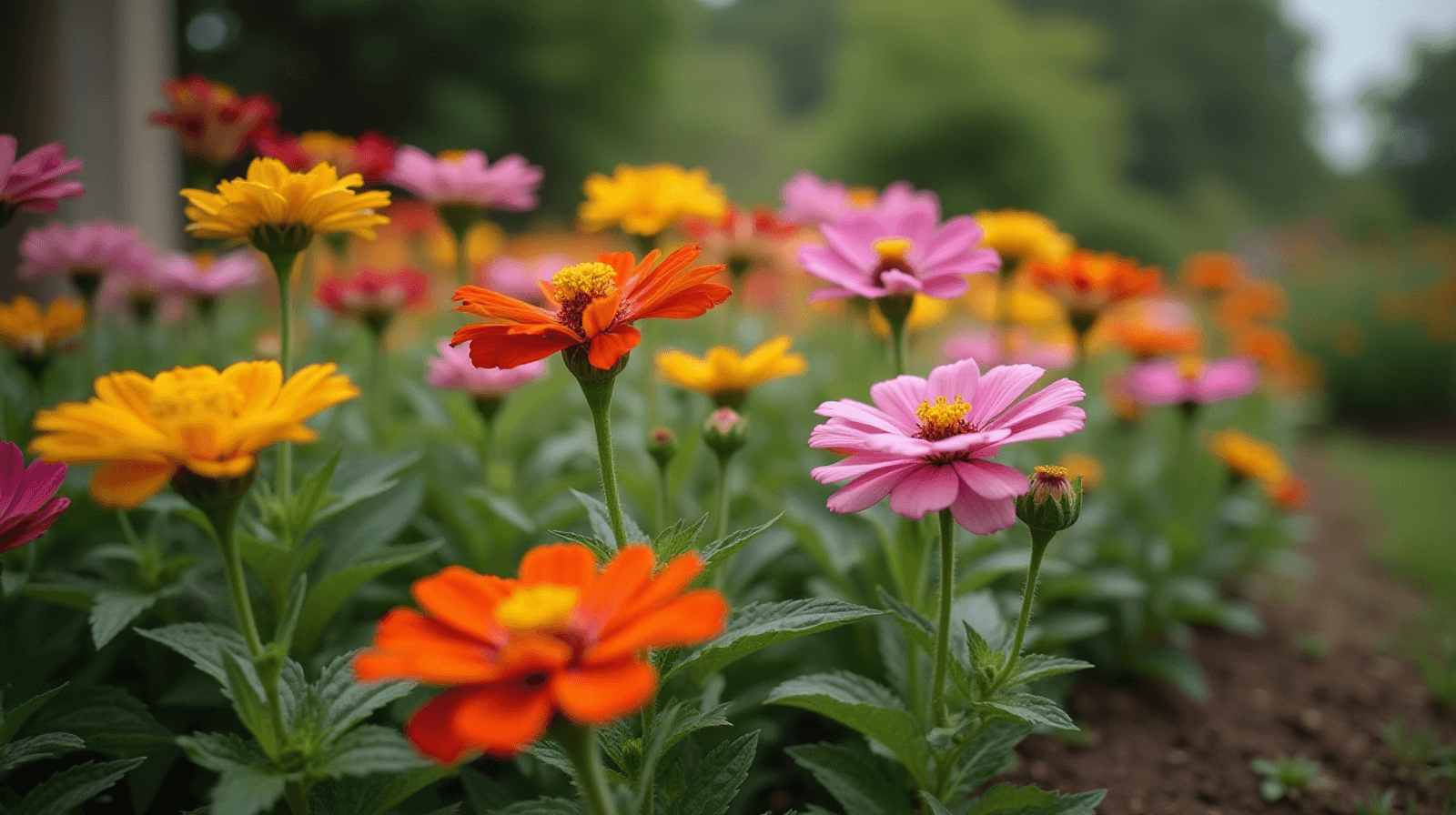

Stop Letting Your Zinnias Just Go To Seed
Written by David Rodgers — 2026-08-04
A guide to pinching your summer flowers for maximum color and bushiness.
The newsletter for backyard growers tired of advice that ignores their actual climate.
AnnualsPinchingOklahoma GardeningSummer Care
Why are my zinnias already going to seed?
If you’ve ever walked through a garden in late July and noticed your zinnias looking tall, spindly, and covered in dry, brown heads that seem to be "done," you aren't alone. Zinnias are prolific bloomers, but they have a very specific biological goal: making seeds so the next generation can grow. When a zinnia finishes its blooming cycle for a single flower head, it immediately begins putting all its energy into producing seeds.
In my early years in Oklahomaed Zone 7, I didn't understand why my zinnias would bloom once at the top and then just sit there looking like sticks. They were "bolting"—a term we use when a plant shifts from reproductive growth (making flowers) to seed production. Once that transition happens, the plant stops trying to impress us with color and starts trying to ensure its survival. If you leave them alone, they will continue to produce one bloom at the top of each stalk while the rest of the plant stays dormant. To keep those pops of color going all summer long, we have to intervene and "trick" the plant into thinking it hasn't finished its job yet.
The science (and history) of pinching
The technique of "pinching" might sound like something out of a high-end horticultural manual, but it’s actually just basic garden logic that I learned through years of trial and error. When you pinch off the top of a growing stem—specifically the flower buds or the very tip of the plant—you are physically removing the part of the plant that is currently "winning" the race for resources.
By cutting away that primary growth point, the plant’s hormones shift. Instead of sending all its energy upward to grow taller and produce one big bloom at the top, it redirects that energy into the side buds (lateral buds) that were previously suppressed. This forces the plant to branch out horizontally rather than vertically. Think of it as a strategic detour: by removing the "main" path, you force the plant to build several smaller paths. The result is a bushier, fuller plant with multiple stems and, more importantly, dozens of flower heads instead of just one or two. It’s not magic; it's just redirecting the plant's energy from seed-making back into bloom-making.
When do you actually need to pinch? The right time to pinch (and when not to)
Timing is everything with pinching. If you do it too early, the plant won't have established enough root systems or foliage to handle the stress of a cut. If you do it too late—after the main stem has already become woody and started to set seed deeply—the "magic" of branching won't happen because those side buds are no longer active.
In my experience, the best window for pinching is during the early-to-mid growing season when the plant is actively establishing itself but hasn't yet hit its primary blooming peak. You want to catch them while they are still "soft" and green. Additionally, you have to watch the weather. In our hot Oklahoma summers, I’ve learned never to do heavy pinching during a heat wave or immediately before a predicted period of extreme drought. A fresh cut is an open wound; if the sun beats down on it while the plant is already struggling with water stress, you can scorch the stem and kill that branch entirely.
| Growth Stage | Action Recommended | Why? |
|---|---|---|
| Early Establishment (4-6 inches tall) | Pinch back by 1/3 | Encourages early branching before the first big bloom. |
| Active Growth (Mid-summer) | Regular "deadheading" | Removes spent blooms to keep energy in the petals, not seeds. |
| Late Season (August/September) | Minimal pinching | Focus on maintenance; don't expect new branches to form late. |
How exactly should I pinch?
When you’re out in the garden and ready to actually do the work, you need a clear plan of action so you don't accidentally damage the plant. For smaller, delicate stems like those found in many zinnia varieties or marigolds, your fingers are often better than a tool. You can simply "pinch" off the top inch of the stem between your thumb and forefinger.
For larger plants or woodier stalks (like some sunflower varieties), you’ll want to use a pair of sharp hand pruners. The most important rule I've learned is where to make the cut: always aim for just above a "node." A node is that little bump on the stem where leaves emerge. If you cut directly into a node, you can damage the tissue and prevent that specific branch from growing back.
Follow these steps for a successful pinch:
- Identify the main central stem of the plant.
- Locate the first or second set of true leaves below the top growth point.
- Make your cut about half an inch above that leaf node.
- Remove any spent flower heads (deadheading) at least once every few days to keep the focus on new blooms.
What about other flowers? Beyond zinnias
While we’re focusing on zinnias today, this pinching technique is a "secret weapon" for several other common backyard favorites. Many of these plants behave similarly because they are all trying to do the same thing: get as many seeds out as possible before the first frost hits.
- Cosmos: These grow very tall and can become "leggy" quickly. Pinching them back early in the season helps keep them at a manageable height while creating a massive cloud of flowers.
- Marigolds: Because marigolds are often planted in dense blocks, pinching (or "nipping") the tops encourages them to grow outward into the neighbors' space rather than just upward.
- Sunflowers: While you can't "pinch" a sunflower in the same way as a zinnia once it’s huge, early-season pruning of side shoots helps keep the main stalk from becoming too heavy and falling over in high winds.
The goal for all these plants is the same: we want to trade height for volume. If you have a patch of cosmos that looks like a row of lonely poles, start pinching them back next season. You'll be amazed at how much fuller they look when they aren't trying so hard to reach the clouds.
The biggest mistake I see gardeners make with pinching
The most common mistake—and one I made plenty of times in my first decade of gardening—is over-pruning. It’s tempting to think that if a little pinch helps, then a big hack will be even better. This is not the case. When you remove too much foliage at once (more than about one-third of the plant's total mass), you can shock the system.
If you "scalp" the top off a zinnia or marigold, you are removing its ability to photosynthesize. The plant then has to spend all its energy just trying to regrow its leaves rather than making new flowers. In our hot climate, losing too much leaf surface can also make it harder for the plant to stay cool; those leaves act like a cooling system.
Another common pitfall is being inconsistent. If you only pinch the "ugly" parts of the garden but leave the rest alone, your garden will look uneven. You want to be systematic. When you're in the row, go through and give every plant that same fair share of attention. It’s better to do a little bit of work on many plants than to try and fix one "bad" plant with an aggressive cut. Be patient—the growth will come back, but it takes a little time for the new branches to find their footing after you've made your cuts.
Your turn
What are your favorite bush-forming annuals? Let me know what I should cover next! Share this with a neighbor who needs better garden advice.
🌿 Get Seasonal Gardening Tips
New guides, planting reminders, and growing tips — straight to your inbox.
No spam. Unsubscribe anytime.
About the Author
David Rodgers is the Founder & Head Gardener of Planting Atlas. With over 40 years of hands-on gardening experience in Oklahoma's Zone 7 climate, he researches, writes, and personally tests every guide on the site.
David draws from real backyard trials, soil testing, and trusted sources like Oklahoma State University Extension and USDA data to deliver practical, zone-specific advice that actually works.
Read more about David and Planting Atlas →