Loading…
←Back to Newsletters
Hydroponics From Scratch · Part 4
Stop guessing about grow lights: use DLI instead of watts.
Written by David Rodgers — 2026-10-04
How to calculate the true energy dose for greens versus fruiting plants in a controlled setup.
The newsletter for backyard growers tired of advice that ignores their actual growing needs.
hydroponicsindoor gardeninggrow lightingplant science
The biggest mistake: focusing on watts instead of energy dose
When I first started experimenting with indoor setups and hydroponics, I fell into the same trap many people do: I bought a light based on its wattage. You see a 100-watt bulb or a high-wattage LED array and think, "That’s plenty of power for my tomatoes." But here is what I learned—the hard way—is that watts are just a measure of how much electricity the fixture consumes, not how much light energy your plants actually receive.
Think of it like a garden hose. A high-pressure nozzle (high wattage) is great, but if you only turn it on for five minutes every day, the soil won't stay consistently moist enough to sustain deep roots. In an indoor grow, "wattage" tells you how much power the light pulls from your wall; DLI tells you how much of that energy actually hits and stays with the plant over a 24-hour period. If you only look at watts, you’re guessing about the total meal your plants are getting. You might have a "powerful" light that is too far away to do anything useful, or a "weaker" light that provides just enough consistent energy because it's positioned perfectly. To grow consistently, we have to stop looking at the power bill and start looking at the food source: the total dose of light over time.
What is Daily Light Integral (DLI)? It’s simply how much work your plants get.
If you find the term "Daily Light Integral" a bit intimidating or like it sounds too much like something out of a laboratory manual, let me simplify it for you. DLI is just a way to measure the total amount of light energy a plant receives in one day.
I like to think of it as the "total rainfall" metric rather than the intensity of a single storm. In my backyard, I know that a heavy downpour on a Monday might be great, but if it doesn't rain again for two weeks, the soil dries out and the plants suffer. Similarly, in an indoor setup, a high-intensity light running for only one hour might not provide enough "cumulative" energy to sustain growth compared to a lower-intensity light that stays on for longer periods.
DLI takes into account both the intensity of the light (the brightness) and the duration it is turned on. It gives you a single number that tells you if your plant has received enough "work" today to build its tissues, produce fruit, or grow those lush green leaves we want in our salads. When you move from watts to DLI, you stop guessing based on what the light can do and start measuring what it is actually doing for your specific crop.
Why does the amount matter? Different crops have different energy budgets
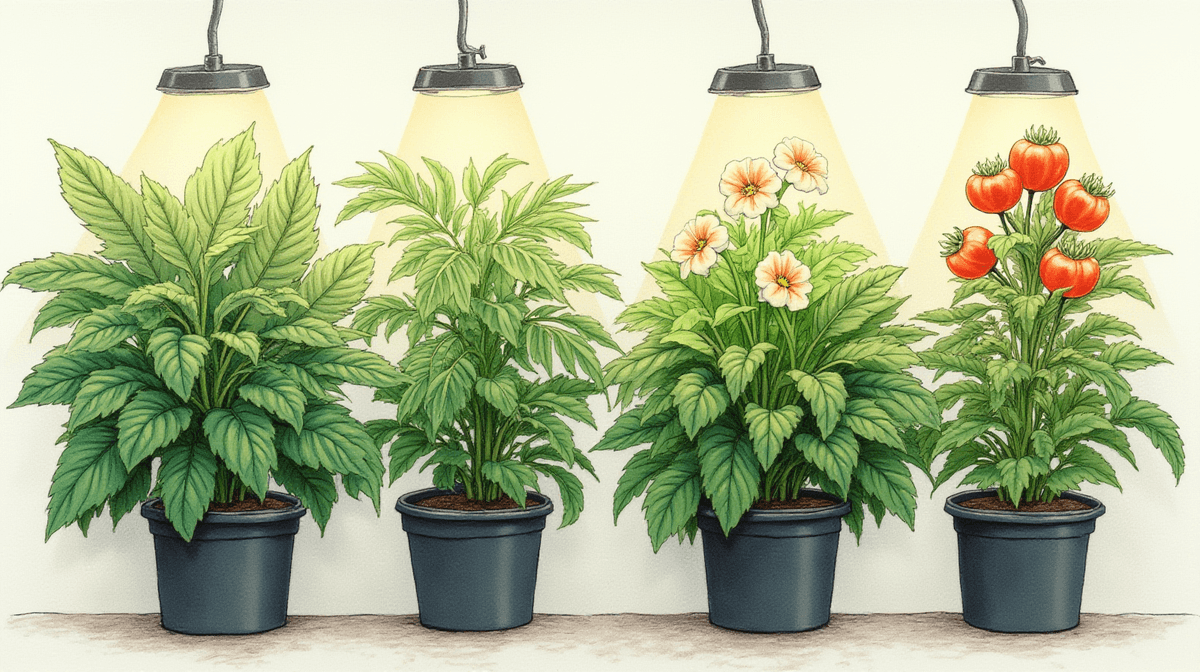
Not every plant in your grow room has the same appetite. This is one of the most important distinctions to make if you want to avoid frustration when things don't turn out as planned. A head of lettuce and a heavy tomato fruit are two completely different biological goals, and they require very different amounts of "fuel" to reach their finish lines.
Greens—like spinach, kale, and butterhead lettuce—are essentially low-energy feeders. They are focused on leaf production. Because they don't have the complex task of producing flowers, fruit, or seeds, they can thrive on a much lower DLI. If you treat them like heavy hitters, you might actually over-stress them with too much heat or intensity.
On the other hand, fruiting plants (tomatoes, peppers, and cucumbers) are high-energy demands. They have to produce flowers, pollinate, and then develop fruit—a massive biological undertaking. If these plants don't get a high enough DLI, they will often "stall." You might see them grow leaves just fine, but the flowers will drop off before they can set fruit, or the fruit will stay small and stunted. Knowing your goal allows you to tailor your light schedule specifically to what that plant needs to succeed in its specific role.
Calculating your needs: Greens vs. Fruiting Plants in the rest of our setup
When you are setting up your space, you need a target number for your DLI to hit every day. This takes the guesswork out of how many hours you need to leave your lights on. Instead of wondering if "six hours is enough," you can check your targets and adjust based on what you're actually growing this week.
For most indoor setups, here are the general benchmarks I’ve found reliable for different goals:
| Crop Category | Target DLI Range | Key Growth Goal |
|---|---|---|
| Leafy Greens (Lettuce, Spinach) | 8 – 12 mg/cm² | Rapid leaf expansion; compact growth. |
| Herbs (Basil, Cilantro) | 10 – 15 mg/cm² | Robust stem and foliage development. |
| Fruiting Plants (Tomatoes, Peppers) | 20 – 30+ mg/cm² | Fruit set; heavy yield; no "stretching." |
If you are growing a simple tray of arugula for your salads, aim for the lower end. You want it to grow quickly and stay compact. If you are trying to get those big, juicy peppers that make a difference in a summer sauce, you need to push toward the higher DLI requirements. If you find your tomato plants are "stretching" (getting tall and spindly) or failing to produce fruit even though they look healthy, it’s almost always a sign that their daily light integral is falling below that 20 mg/cm² threshold.
Tweaking the system: Height, spacing, and maximizing light capture
Once you know your target DLI, you have to manage the physical reality of your space. In my experience, even a great light can fail if it’s not positioned correctly or if the plants are crowded out of its reach. One of the most common mistakes I see is people putting their lights too high up and then trying to "make up" for it by leaving them on longer. This often leads to heat issues without providing enough concentrated energy.
To maximize your light capture, consider these three practical adjustments:
- Height Matters: Keep your lights as close to the canopy as possible without scorching the leaves. If you have a large space and need more "reach," it is better to add another light or use reflectors than to simply move one light further away.
- Spacing for Success: Don't crowd your trays. If plants are packed too tightly, the ones on the edges will get plenty of light, but the ones in the center will be shaded by their neighbors. Give them enough breathing room so that every leaf has a chance to "see" the light source.
- Reflective Surfaces: You don't need a professional grow tent to see results here. Simply lining your walls with white plastic or even high-quality white paint can reflect "lost" light back down into the canopy. This helps ensure that those lower leaves are getting enough energy to keep the whole plant healthy and productive.
When to call for help (and when it's just bad luck)
Sometimes, despite your best efforts with DLI calculations, things still go sideways. It’s important to know how to read the signs so you can act before a problem becomes a loss. In many cases, "bad luck"—like a sudden pest spike or a nutrient lockout—can look like a light issue, but usually, the plant will tell you exactly what it's missing through its physical shape.
Keep an eye out for these specific warning signs:
- Stretching (Legginess): If your peppers are growing tall and thin with large gaps between the leaves, they aren't getting enough light energy. They are literally "reaching" for more sun because their current supply isn't meeting their needs.
- Pale or Yellowing Leaves: While this can be a nutrient issue (like nitrogen deficiency), it often happens when plants are struggling to maintain themselves under low-light conditions. If the lower leaves turn yellow while the top remains green, they may be being shaded out by those above them.
- Small Fruit/Poor Set: If your flowers fall off before they can become fruit, or if the fruit is tiny and misshapen, it’s a clear sign that the energy demand of making fruit has exceeded what your light system is providing.
If you see these signs, don't just add more fertilizer—that won't fix a lack of "food" from the lights. Instead, move the lights closer or increase the duration they stay on to hit those DLI targets we talked about earlier.
Your turn
Does this help you rethink your light fixtures? Share this issue with another grower who keeps buying lights based only on wattage!
Next issue
Next up: Stepping up to growing tomatoes and peppers in buckets—we'll talk about moving from simple jars to more robust, full-sized crops.
Apply this next
🌿 Get Seasonal Gardening Tips
New guides, planting reminders, and growing tips — straight to your inbox.
No spam. Unsubscribe anytime.
About the Author
David Rodgers is the Founder & Head Gardener of Planting Atlas. With over 40 years of hands-on gardening experience in Oklahoma's Zone 7 climate, he researches, writes, and personally tests every guide on the site.
David draws from real backyard trials, soil testing, and trusted sources like Oklahoma State University Extension and USDA data to deliver practical, zone-specific advice that actually works.
Read more about David and Planting Atlas →