Loading…
←Back to Newsletters
Hydroponics From Scratch · Part 1
Starting out with hydroponic growing systems
Written by David Rodgers — 2026-09-26
A guide to demystifying soilless gardening and picking your first setup.
The newsletter for gardeners who'd rather learn from a mistake made 40 years ago than repeat it themselves.
hydroponicsindoor gardensoillessbeginner
What on earth is hydroponics? (And why it sounds so complicated)
When people hear the word "hydroponics," they usually picture high-tech laboratories, glowing purple lights, and some sort of sci-fi setup that looks like something out of a movie. It can feel intimidating, as if you need a degree in chemistry just to grow a head of lettuce without dirt. But here is the truth I’ve found after years of experimenting with different ways to get plants into the ground (or not): hydroponics isn't magic; it's just a change in delivery.
At its core, hydroponics simply means "water-growing." In traditional gardening, soil acts as the medium that holds moisture and provides nutrients for the plant roots. In a hydroponic system, we swap the soil out for something else—like clay pebbles, rockwool, or even just plain water—and we deliver the nutrients directly to the roots through a liquid solution.
Think of it like this: if traditional gardening is like finding food in a pantry (the soil), hydroponics is like having a tray of snacks delivered right to your table. It isn't "advanced" science; it’s just removing the middleman. You aren't trying to trick the plant into growing without nutrients; you are just giving them those nutrients in a way that doesn't rely on the quality or condition of your backyard dirt.
The single biggest problem with roots: oxygen
If hydroponics is so simple, why do we have so many different types of systems? Why not just put every plant in a bucket of water and call it a day? The reason comes down to one basic biological fact that I had to learn the hard way early on: roots need to breathe.
When you take soil out of the equation, you remove the tiny pockets of air that are usually trapped between dirt particles. Without those pockets, if a root sits in stagnant water without any oxygen, it won't just "sit" there—it will rot. It becomes a slimy mess, and the plant will wilt and die quickly. This is the primary hurdle we have to solve when growing without soil.
To solve this, different systems use different methods to get air down to the root zone:
- Passive aeration: Some systems (like Kratky) rely on leaving a gap of air between the bottom of the roots and the water level.
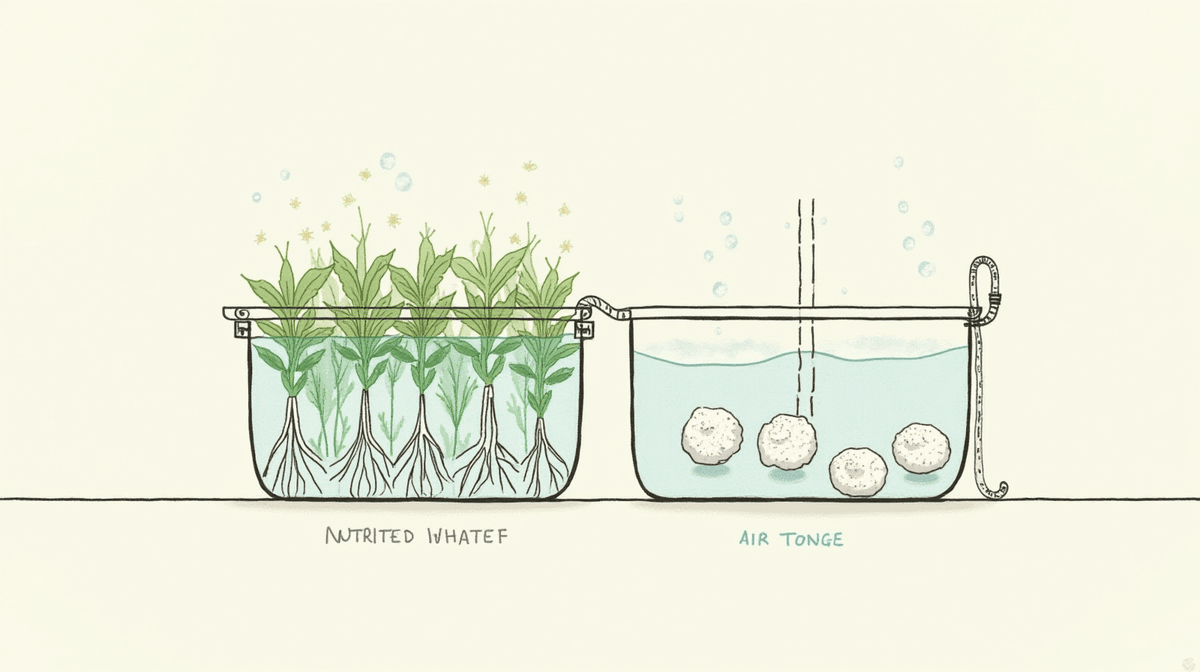
- Active aeration: Other systems (like DWC) use an air pump and some bubbling stones—much like the bubblers in a fish tank—to constantly push oxygen into the water.
Understanding that "roots need air" is the key to choosing your path. If you aren't prepared to manage pumps, bubbles, or constant monitoring, you want a system that handles aeration naturally through design rather than machinery.
Picking your first system (Kratky vs. DWC)
When you’re starting out, the biggest decision you face is whether you want a "passive" or "active" system. For most home gardeners, I always recommend starting with something passive because it's much harder to mess up when you're still learning the ropes of nutrient ratios and pH levels.
The two primary contenders for beginners are the Kratky method and Deep Water Culture (DWC). The Kratky method is essentially a "set it and forget it" approach. You put your plants in a container where the bottom portion of the roots sits in a nutrient solution, while the top part stays in an air gap. It’s incredibly reliable because if a pump fails or you forget to check on it for a day, the plant doesn't immediately die.
Deep Water Culture (DWC) is what many people think of as "traditional" hydroponics. In this setup, the roots are constantly submerged in a highly oxygenated solution thanks to an air pump and stones. It’s excellent for larger scales or more demanding crops because it provides maximum oxygen, but it requires you to keep your equipment running 24/7.
Here is how I'd break down the choice for your first setup:
| Feature | Kratky Method (Passive) | Deep Water Culture (Active) |
|---|---|---|
| Complexity | Low; no moving parts | Moderate; requires pumps/timers |
| Maintenance | Minimal; check levels weekly | Daily checks of air and water flow |
| Risk Factor | Lower; stable if you're busy | Higher; pump failure can cause rot |
| Best For | Lettuce, herbs, initial learning | Tomatoes, peppers, larger volumes |
When do you actually need this? Local zone considerations.
I get asked a lot why someone should bother with hydroponics at all if they already have a backyard. In my experience in Oklahoma (Zone 7), the answer usually comes down to two things: consistency and environmental extremes.
In our region, we deal with intense summer heat that can bake the soil until it’s as hard as brick, making it difficult for roots to penetrate or find moisture. We also have seasons where heavy rains can turn a garden bed into a swampy mess. Hydroponics solves both of those problems by isolating the root zone from the elements. If you live in an area with very poor soil drainage, high salinity, or extreme heat spikes that "cook" your ground-grown crops, a soilless system gives you much more control over what the plant is experiencing.
However, I want to be honest: if you have great soil and just want to grow some tomatoes for a hobby, you don't need hydroponics. It’s an extra layer of management. But if you are trying to grow high-value crops in small spaces (like a porch or a garage) or if you find yourself constantly fighting your local climate to keep things alive, then switching to a soilless system is a very smart move.
Step-by-step: Setting up a Kratky Jar to start
If you want to try this today, don't go out and buy a massive industrial setup. Start with one "Kratky Jar." It’s the simplest way to see if you enjoy the process of managing nutrient levels without the headache of plumbing.
- The Container: Find a large, opaque bucket or a heavy-duty jar (like a 5-gallon bucket). It must be dark; if light reaches the water, it will grow algae, which steals nutrients from your plants and makes the water messy.
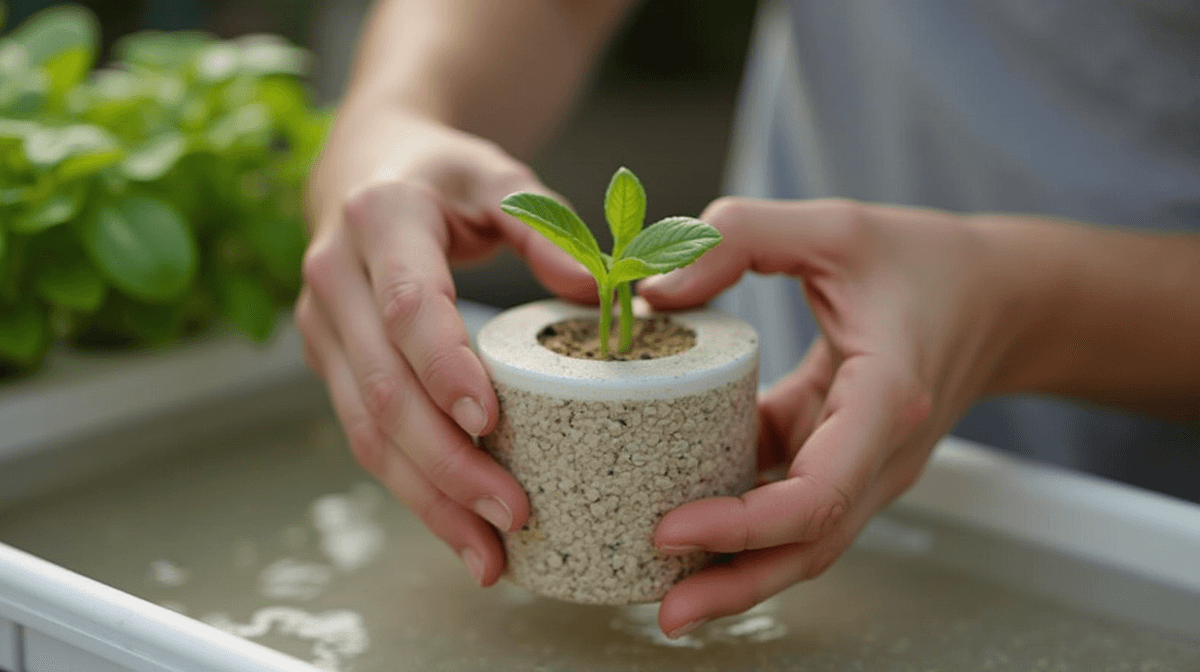
- The Net Pot: You’ll need a "net pot"—a small plastic basket with holes in the sides—and some growing medium like clay pebbles or perlite to hold the plant steady.
- The Setup: Place the net pot into the top of your container. The bottom of the net pot should sit just slightly below the surface of the water (or you can leave a gap if you're using a "wicking" method, but for a true Kratky, let the bottom few inches of roots sit in the liquid).
- The Nutrient: Fill your container with water and add your hydroponic nutrients according to the package instructions.
- The Plant: Place your seedling into the net pot with enough clay pebbles to keep it upright.
A common mistake I see is people using "garden" fertilizer instead of "hydroponic" fertilizer. Garden fertilizers often contain micronutrients that can clog up systems or aren't fully soluble in water. Stick to a dedicated hydro mix for your first time; it makes the chemistry much simpler.
Practical take-aways: Start small and learn slowly.
The biggest mistake I see new hydroponic gardeners make is trying to jump straight into "commercial scale" thinking. They want to build a massive, multi-tank system with automated dosing pumps before they've even grown a single successful head of lettuce in a bucket.
My advice? Start small and let the learning curve be gradual. Use your first few months to master these three things:
- Nutrient Concentration: Learn what "parts per million" (PPM) means for your specific crops. A lettuce plant needs much less "food" than a heavy-feeding tomato plant.
- pH Balance: Most plants prefer a slightly acidic environment (usually between 5.8 and 6.2). If the pH is off, they can't "eat" even if you have plenty of nutrients in the water.
- Water Temperature: In our Zone 7 heat, keeping your reservoir cool is vital. Water that gets too hot loses oxygen fast, which leads back to that rot problem we talked about earlier.
Start with leafy greens or herbs like basil and mint. They are incredibly forgiving and provide a quick win. Once you can consistently produce great results in a few Kratky jars, then—and only then—should you consider adding pumps, larger tanks, or more complex systems. You'll want to master the "why" of how these plants grow before you add any complicated machinery to the mix.
Your turn
Do you have a specific space in mind for an indoor garden? Let us know which kind of setup (e.g., vertical, deep water) sounds most appealing! Share this with another backyard grower who's been intimidated by fancy gardening tech.
Next issue
Next time, we tackle the easiest system to learn: Kratky jars—the perfect way to get your hands dirty without actually touching soil.
Apply this next
🌿 Get Seasonal Gardening Tips
New guides, planting reminders, and growing tips — straight to your inbox.
No spam. Unsubscribe anytime.
About the Author
David Rodgers is the Founder & Head Gardener of Planting Atlas. With over 40 years of hands-on gardening experience in Oklahoma's Zone 7 climate, he researches, writes, and personally tests every guide on the site.
David draws from real backyard trials, soil testing, and trusted sources like Oklahoma State University Extension and USDA data to deliver practical, zone-specific advice that actually works.
Read more about David and Planting Atlas →