Loading…
←Back to Newsletters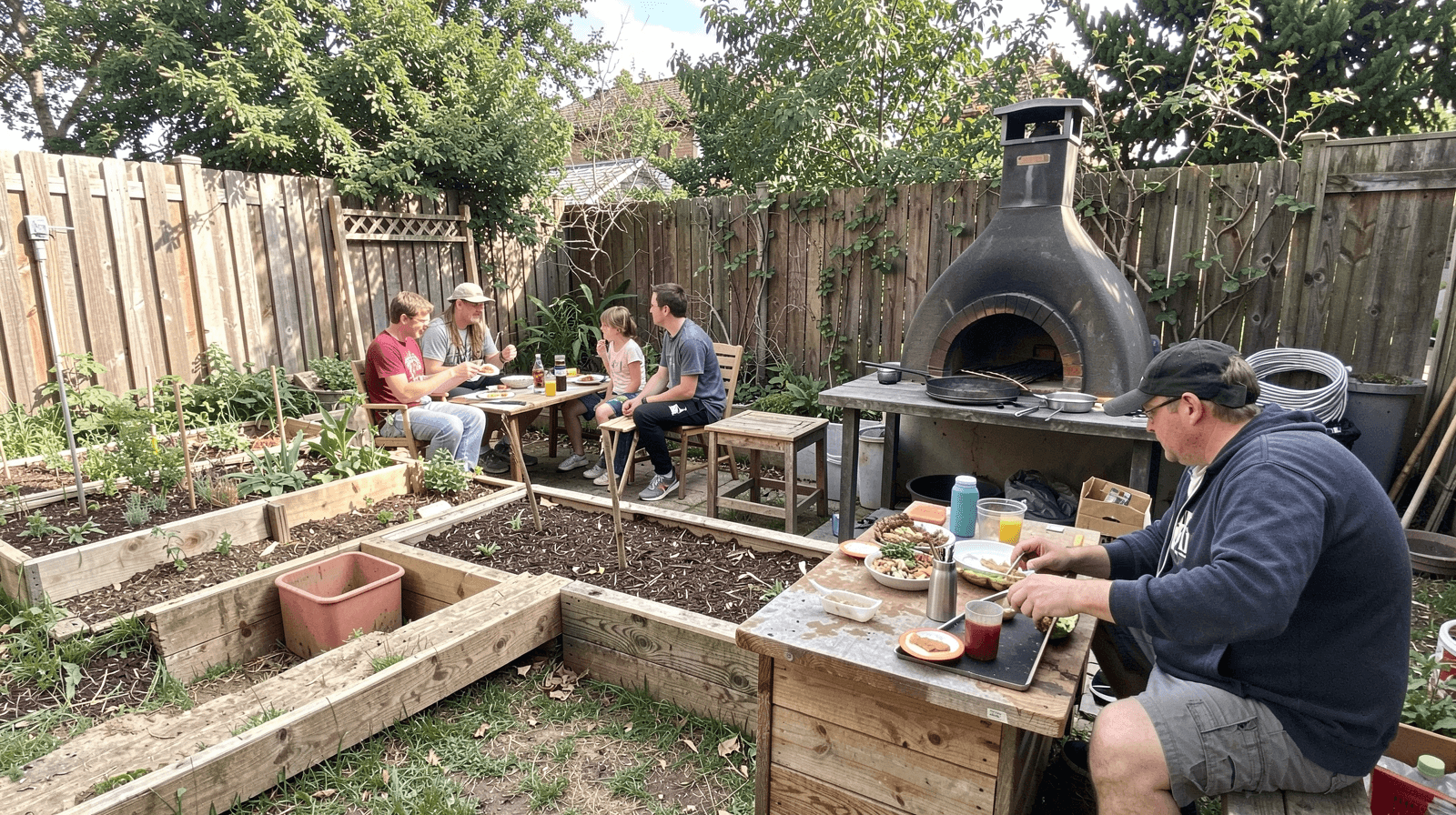
How To Make Your Backyard a Real-Life Hub (Not Just a Garden)
Written by David Rodgers — 2026-10-31
Designing the space so that planting and living are part of the same routine.
The newsletter for gardeners who want to stop seeing their yard as just a plot and start using it like an extension of the house.
landscape designhomesteadingsmall spacesedible architecture
It's not just about the harvest; it's about the whole damn experience.
In my forty years of gardening here in Oklahoma, I’ve seen people treat their backyards like industrial sites—efficient and productive, but honestly a bit lonely. They view the garden as an extraction point: you go out there to work, you pull some tomatoes, and then you run back inside to escape the heat or do the "real" work of cooking. If that’s your routine, your yard isn't a hub; it’s just a farm plot.
A real-life backyard hub is about the time spent between the planting and the harvest. It’s about creating a space where you actually want to linger—where you can grab a cold drink while watching the squash blossoms open, or where your kids can run around without being told to stay away from the "work area." You want a yard that feels like an extension of your living room, not a chore zone. When you shift your mindset from "how much can I grow?" to "how do I want to spend my Tuesday afternoon?", the way you design the space changes completely. The goal is to make planting and living part of the same daily rhythm.
Starting with a functional blueprint: Zoning your backyard mess.
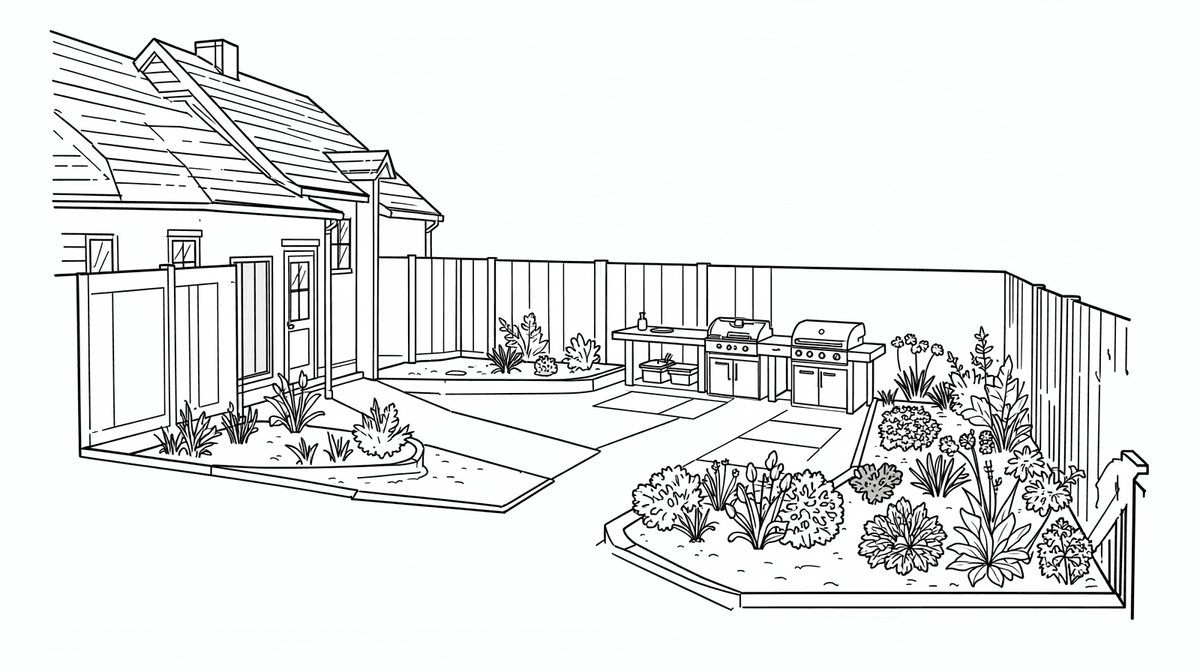
I used to just scatter raised beds wherever there was enough sun, and by year five, my "path" was a muddy mess because I hadn't planned for how people were actually going to move through the space. To make a yard work as a hub, you have to zone it out before you ever pick up a shovel. You need to separate your activities so they don't constantly trip over each other.
Think of your backyard in three primary zones:
- The Growing Zone: This is your production area. It needs the best sun and easy access to irrigation, but it can be further from the house because it’s where the "dirty" work happens.
- The Prep/Cooking Zone: You want this close enough to the garden that you aren't hauling heavy harvests a long way, but far enough away that you aren't tracking mud onto your food prep surfaces.
- The Leisure Zone: This is where the "living" happens—the chairs, the shade, and the social space.
Mapping this out on paper helps you see the flow of your yard before you spend a dime on lumber or stone.
| Zone Type | Primary Function | Key Requirements | Proximity to House |
|---|---|---|---|
| Growing | Production & Maintenance | Full sun, irrigation access | Moderate/Far |
| Prep/Cooking | Processing Harvests | Level ground, easy cleaning | Close |
| Leisure | Socializing & Rest | Shade, seating, clear paths | Very Close |
Bringing the kitchen out back: Integrating cooking into the plot.
This is where the "hub" concept really takes hold. If you’re growing peppers and zucchini every summer, why are you walking them all the way into the kitchen just to chop them? There is a massive amount of friction in that process—the heavy lifting, the heat of moving between buildings, and the mess of bringing dirt inside.
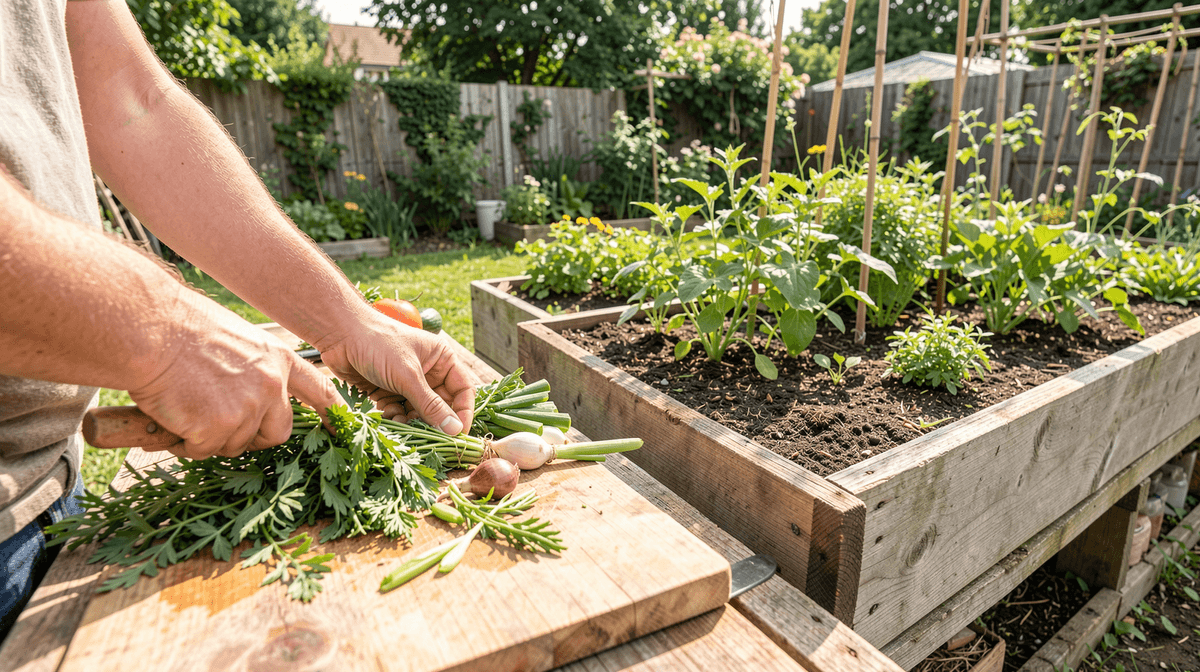
Integrating a dedicated prep station or an outdoor cooking area changes how you interact with your garden. It creates a transition point where the "farm" ends and the "home" begins. This doesn't have to be a massive construction project; it could be a heavy-duty, weather-proof table with some overhead shade where you can wash off the soil from a carrot and get it ready for the pan. In our Zone 7 climate, placement is everything. You want this area where it catches a bit of a breeze but stays out of that punishing midday sun. By creating a place to process your harvest right where it grows, gardening stops feeling like a series of chores and starts feeling like a continuous flow of activity.
Where to sit and why: The art of designing for people (not just plants.
A garden that’s hard to walk through is a garden people will eventually stop visiting. I see so many folks build beautiful raised beds but forget that humans need to move around them comfortably. You want wide enough paths—at least three feet, ideally more if you're moving a wheelbarrow—so you aren't constantly squeezing past plants or tripping over irrigation lines.
In our part of the country, shade isn't a luxury; it’s a requirement for any "hub" to be functional during the summer months. If there isn't a spot where people can sit and actually stay for more than five minutes without melting, your hub will only be used in the spring and fall. You need to think about how your yard flows from the back door to the garden beds. Good design means the "living" parts of your backyard feel natural and accessible. When you prioritize human flow—adding a few sturdy chairs or a bench where you can sit to prune the roses or watch the kids play—you turn a collection of plants into a place where memories actually happen.
The structural bones: Making raised beds work with a purpose.
When it comes to the structural bones, I always tell people to think about multi-purpose utility. A raised bed shouldn't just be a box of dirt; in a well-designed hub, those beds can serve other purposes too. For example, if you build your beds with sturdy enough edges—think heavy timber or stone that won't rot out in the Oklahoma humidity—you can use them as informal seating perches or even as surfaces to set down tools and baskets while you work.
I’ve learned the hard way that cheap materials just fail, and then you’re left with a sagging mess that makes the whole yard look neglected. You want durable edges that define your "Growing Zone" clearly but also provide enough structure to support the weight of people or heavy equipment occasionally. Every square foot should earn its keep by either producing food, providing seating, or creating a clear boundary that keeps the mud out of your "clean" zones. If you're building it once, build it with the intention that it will be touched and used every single day, not just on harvest day.
A word of warning on over-designing your plot.
Here is my honest advice after forty years: don't let the "design" become more work than the gardening itself. It’s easy to get caught up in Pinterest-perfect layouts and start stressing over perfectly symmetrical paths or expensive masonry that you can't afford to maintain. The best backyard hubs I know aren't museum pieces; they are lived-in spaces where a few weeds might pop up in a path, but the chairs are comfortable and the tomatoes are easy to reach.
If your plan is so complex that it takes more time to manage the "hub" than to actually enjoy it, you’ve overshot the mark. Keep it functional first. Get your zones right, get some good shade, and make sure you can move a wheelbarrow without hitting a corner or getting stuck in mud. You can always refine the aesthetics later—the goal is a yard that works for your life today, not a perfect photo for someone else's feed tomorrow. Simple, functional, and lived-in beats "perfect" every single time.
Your turn
What is one non-gardening activity (grilling, reading, socializing) that would instantly improve your yard? Tell us below and share this guide with a neighbor who needs to rethink their layout!
🌿 Get Seasonal Gardening Tips
New guides, planting reminders, and growing tips — straight to your inbox.
No spam. Unsubscribe anytime.
About the Author
David Rodgers is the Founder & Head Gardener of Planting Atlas. With over 40 years of hands-on gardening experience in Oklahoma's Zone 7 climate, he researches, writes, and personally tests every guide on the site.
David draws from real backyard trials, soil testing, and trusted sources like Oklahoma State University Extension and USDA data to deliver practical, zone-specific advice that actually works.
Read more about David and Planting Atlas →