Loading…
←Back to Newsletters

Fall Leaves on the Lawn: How to Mulch Without Killing Your Grass.
Written by David Rodgers — 2026-10-01
It’s not about 'leaving them out'; it's about processing leaves correctly for a healthy spring start.
The newsletter for gardeners who’d rather learn from a mistake made overhauling their lawn than repeating it themselves.
Lawn CareFall GardeningMulchingZone Specific
The Biggest Fall Myth Right Out of the Gate
One of the most common questions I get from neighbors is whether they should bag up every single leaf that falls in October or just let them sit on the lawn. For years, there was a "scorched earth" approach to this: if you didn't bag it all, your grass would suffocate and die by November. That’s not quite the truth of it.
The myth is that leaves are inherently "bad" for grass. In reality, what kills grass isn't the leaf itself; it’s a heavy, wet mat of undecomposed organic matter. When you leave large, whole leaves on the ground during a rainy autumn, they clump together and create a barrier. This prevents oxygen from reaching the soil and blocks sunlight from hitting the blades. If you can see individual leaves as distinct shapes on your lawn, you’re likely heading toward a problem. However, if those leaves are broken down into small fragments—almost like a coarse mulch—they become something else entirely: food for the soil. My goal is to move you past the "bag it all" panic and toward a method where the leaves actually work for your lawn instead of against it.
How to Process Leaves for a Healthy Lawn Start
The secret to keeping your grass healthy while using leaf litter as mulch lies in surface area. When a leaf remains whole, it acts like a roof over your grass blades. To turn that "roof" into "food," you have to break it down mechanically. This is the step most people skip because they think one mow will do the trick.
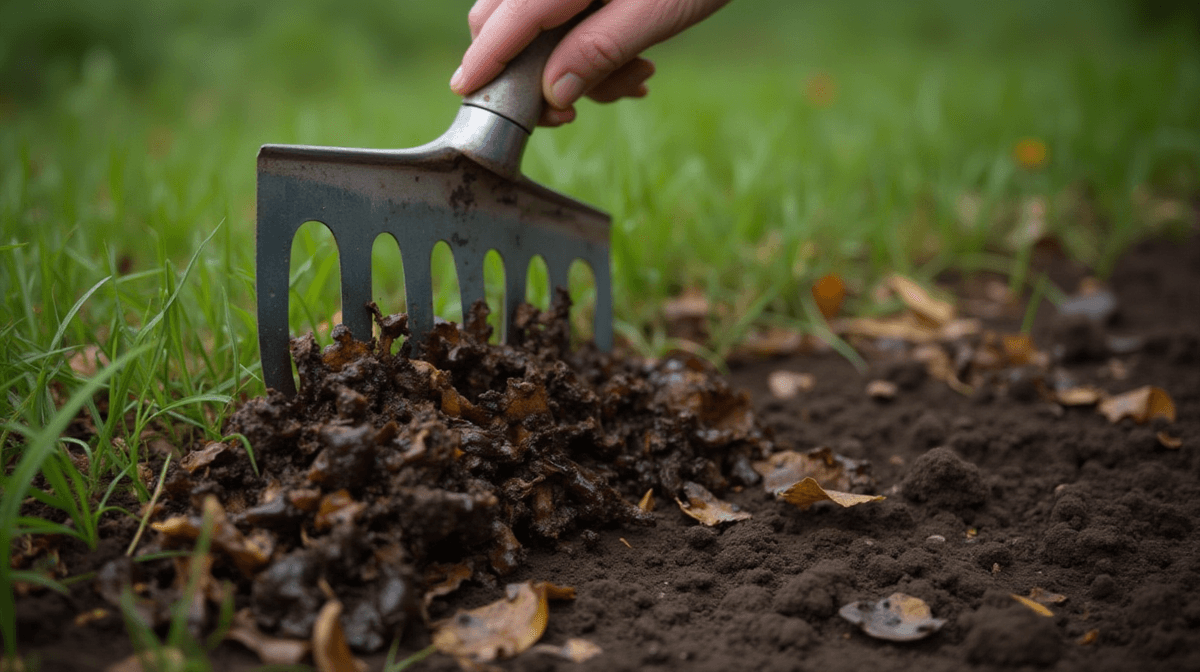
In my experience, you want those leaves processed until they are small enough that they no longer clump together when wet. You can achieve this using a standard lawnmower with a bagging attachment (though you aren't bagging them) or a mulching mower. The goal is to shred the leaf tissue into tiny pieces. When you increase the surface area of the material, soil microbes and earthworms can get to work much faster. Instead of waiting months for a large leaf to rot away, thousands of small fragments will decompose in weeks. This process transforms the leaves from a physical barrier into an organic amendment that improves soil structure and provides nutrients exactly when your grass is preparing for its winter dormancy.
What’s Actually Going Wrong? The Danger of Wet Mats
If you've ever walked onto a lawn in late October and felt like you were stepping on a wet sponge, you've seen the "failure mode" of leaf management. This happens when leaves are too large or there are too many at once to be processed effectively by your mower.
When these large pieces get soaked by rain or heavy dew, they stick together to form a dense mat. This is dangerous for two reasons: lack of oxygen and excessive moisture. Grass roots need to "breathe" gas exchange from the atmosphere; a thick layer of wet leaves blocks that air out. Furthermore, a heavy mat holds onto water like a sponge, which can lead to fungal issues or even rot at the base of the grass blades. In my own backyard in Oklahoma, I've seen what happens when a heavy rain hits an unprocessed pile of oak leaves—they turn into a muddy sludge that stays wet for days. If you see your lawn looking "matted" rather than "mulched," it’s time to get out there with the mower and break those pieces down until they disappear into the grass.
Timing Matters: Zone-Specific Notes on Moisture and Drainage
While the physics of leaf decomposition are universal, the timing and management of that material depend heavily on your local climate and soil type. In a high-humidity environment or an area with heavy clay soils (common in many parts of the Midwest and South), the window for "safe" leaf mulching is narrower because moisture lingers longer in the ground.
In drier regions, you might have more leeway, but even there, you want to finish your processing before the first major frost sets in. Once a hard freeze hits, decomposition slows down significantly, and any wet mat left on the lawn will stay there much longer into the spring.
| Soil Type / Region | Risk Factor | Recommended Strategy |
|---|---|---|
| Heavy Clay (e.g., Zone 7) | High drainage issues; risk of "swampy" mats in late fall. | Process leaves aggressively and early; avoid heavy leaf loads on low-lying areas. |
| Sandy/Well-Drained | Lower moisture retention; faster decomposition. | Can tolerate slightly larger fragments, but still requires regular mowing to break down mulch. |
| High Humidity Zones | High fungal pressure from lingering wetness. | Must ensure leaves are shredded small enough that they don't clump during heavy rain events. |
The Step-by-Step Mulch Strategy (Mower Settings & Prep)
If you want to try this, it’s about the process rather than a one-time fix. Here is how I handle my own acreage when the leaves start falling:
- Assess your turf first: Before covering anything with organic matter, ensure your grass is healthy and mowed to its normal height. You don't want to "hide" a dying lawn under mulch; you want to nourish a living one.
- Set the mower correctly: If using a mulching mower, set it slightly higher than your usual cutting height—around 3 or 3.5 inches. This allows the grass to stay strong while the blades work to chop the leaves into small pieces.
- Mow frequently: Instead of letting the leaves pile up and then trying to "clear" them in one go, mow over the fallen leaves every few days. Each pass breaks the leaf fibers further.
- The "Disappearance" Goal: You are looking for the point where you can no longer see individual leaves on the ground. Once they have been mulched into a fine, uniform layer that blends in with the grass, they are safe to leave.
By mowing frequently during the falled-leaf period, you ensure that even if a heavy rain hits, the smaller fragments won't mat together because there is no large surface area for them to "hook" onto one another.
Beyond the Lawn: When to Compost Excess Leaves
Not every leaf belongs on your lawn. If you have massive amounts of oak or maple leaves—especially in areas with high rainfall where drainage might be a concern—it is often better to move some of that material elsewhere rather than forcing it into your grass.
If you find yourself with more than the lawn can "process" before winter, these are excellent candidates for:
- Compost Piles: Shred them and mix them with "green" materials (like kitchen scraps or fresh grass clippings) to create a balanced compost.
- Garden Beds: Use heavily shredded leaves as mulch around your perennials and shrubs. This keeps moisture in the soil during the summer months and suppresses weeds.
- Mulch for Paths: If you have areas of ground that aren't intended for grass, these can be used to create a textured walking surface.
If you decide to use them in garden beds rather than on the lawn, just remember my rule about size: if you can see the shape of the leaf, it’s too big. Process them until they are small enough that they won't mat together when wet. This ensures your perennials stay healthy and your mulch stays put through the seasons.
Your turn
What’s the worst thing you ever tried mulching with? Share your biggest lawn care fail below! Don't forget to send this guide to a neighbor who always over-mulches.
🌿 Get Seasonal Gardening Tips
New guides, planting reminders, and growing tips — straight to your inbox.
No spam. Unsubscribe anytime.
About the Author
David Rodgers is the Founder & Head Gardener of Planting Atlas. With over 40 years of hands-on gardening experience in Oklahoma's Zone 7 climate, he researches, writes, and personally tests every guide on the site.
David draws from real backyard trials, soil testing, and trusted sources like Oklahoma State University Extension and USDA data to deliver practical, zone-specific advice that actually works.
Read more about David and Planting Atlas →