Design beautiful window boxes that look lush from the street and inside — with the right plant combinations, soil, and care for every season.
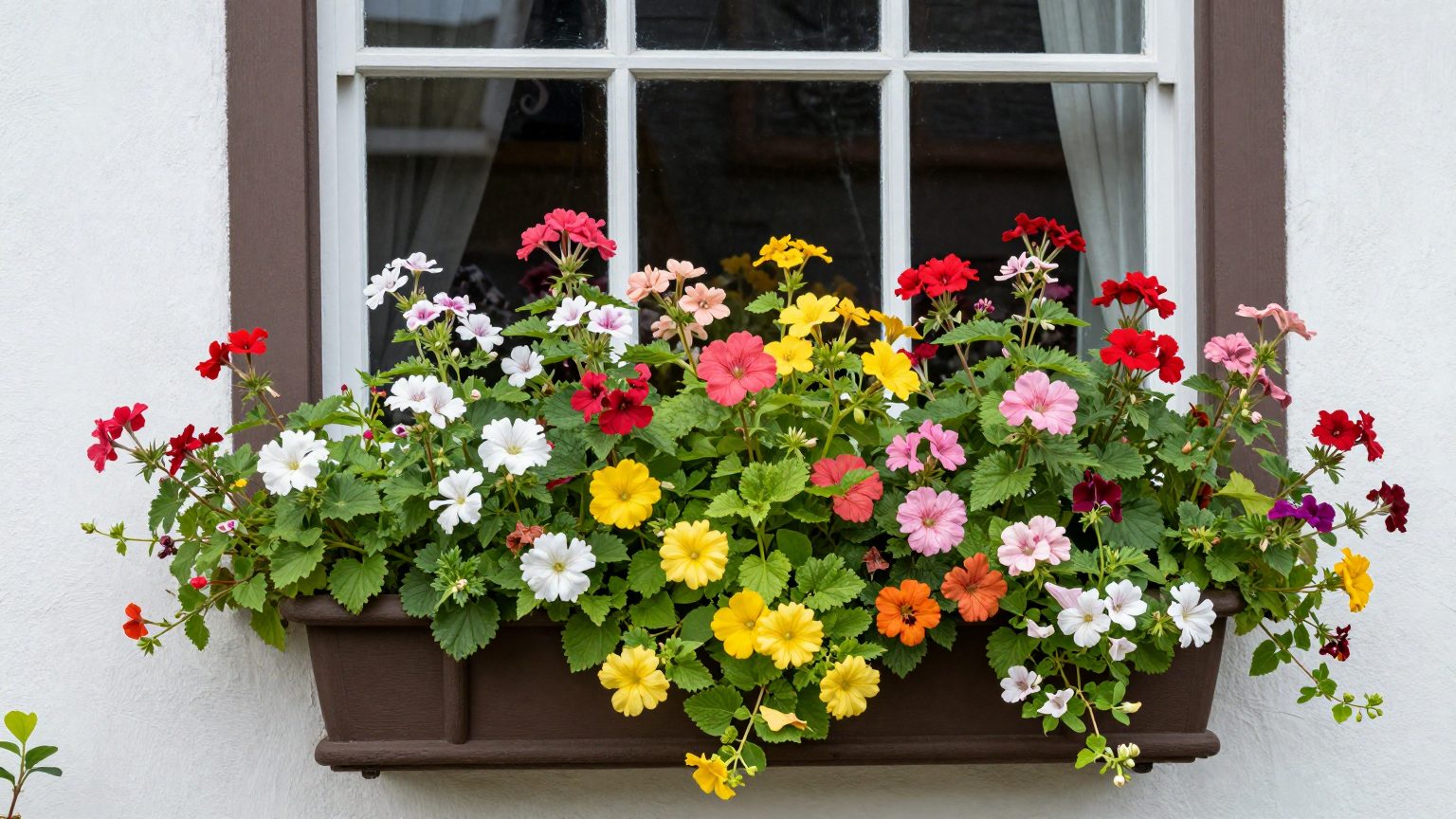
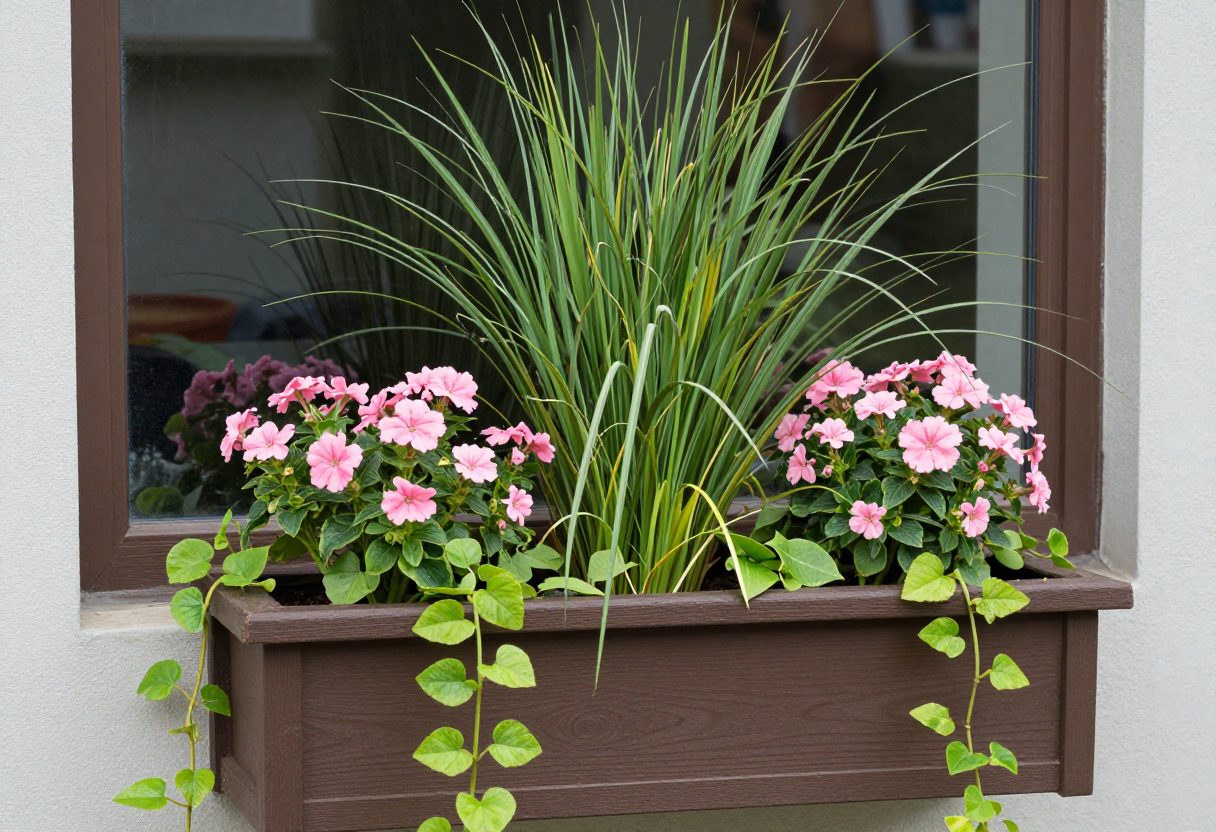
A well-planted window box transforms the exterior of a house in a way that few other garden elements can match for cost and effort — a few good containers planted with a compelling combination immediately give a home a cared-for, inviting quality that registers from the street. The classic design formula — thriller (tall, dramatic centerpiece), filler (mounding, bushy mid-height plant), and spiller (trailing plant that cascades over the edge) — works because it creates visual depth and prevents the flat, uniform look that makes many window boxes look underwhelming. The most important practical consideration is drainage: window boxes without drainage holes, or planted with dense garden soil rather than a quality container mix, will fail within weeks regardless of how well they were planted.
This classic three-part formula is the fastest route to a window box that looks professionally designed rather than randomly assembled. Each role serves a distinct visual purpose, and a box with all three reads as full and intentional far faster than one built from a single plant type.
A common ratio that reads as full without looking crowded is roughly one thriller, three fillers, and two to three spillers per standard 36-inch window box — adjust proportionally for other box lengths.
The thriller, filler, spiller formula creates visual depth that a single-plant-type box can't match.
Drainage and Soil — The Non-Negotiable Foundation
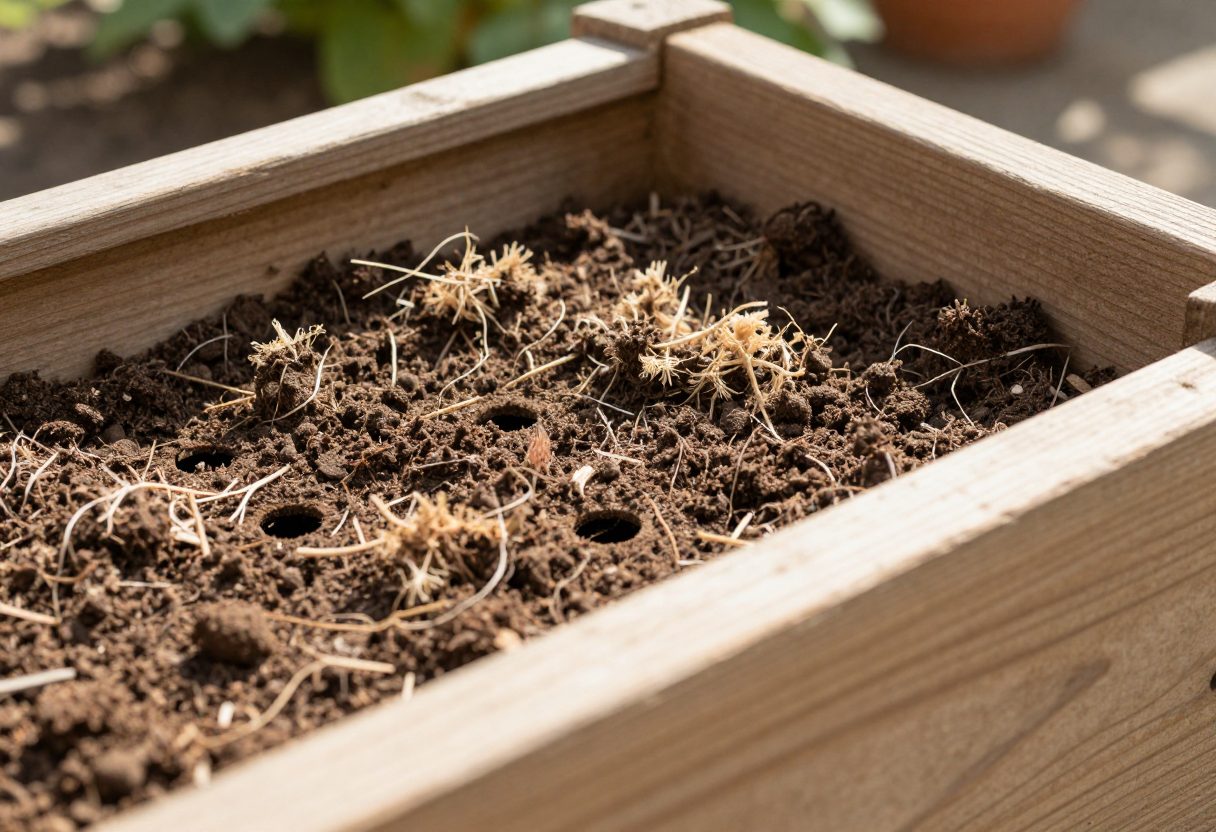
Window boxes without adequate drainage, or planted with the wrong growing medium, will fail within weeks regardless of how thoughtfully they were designed. This is the single most common reason a window box planting disappoints.
•Confirm the box has drainage holes before planting — if it doesn't, drill several, or use a well-draining liner pot inside a decorative box instead.
•Use a quality container/potting mix, never dense garden soil — garden soil compacts in a confined container and suffocates roots.
•Add a layer of coarse material (broken pottery shards, packing peanuts, or a purpose-made drainage layer) at the very bottom only if the box is unusually deep; for most standard window boxes, a good potting mix alone drains adequately.
•Elevate the box slightly off a windowsill or ledge with small feet or spacers so drainage water can escape freely rather than pooling underneath.
⚠️
A window box mounted directly against a wall with no drainage gap can trap water against the house siding or brick over time — always ensure a small air gap and a way for excess water to drain away from the structure, not just out of the box.
Drainage holes and a quality potting mix are the non-negotiable foundation of a window box that will actually thrive.
Full Sun Window Box Combinations
A south-facing window box in full sun can support a wide range of heat-tolerant, sun-loving annuals that bloom continuously through summer.
Plant
Role
Notes
Petunias
Filler
Continuous bloom all summer; deadhead or choose self-cleaning varieties to reduce maintenance
Reliable, drought-tolerant once established, classic window box choice
Lantana
Filler
Extremely heat and drought tolerant, attracts pollinators
Sweet potato vine
Spiller
Vigorous trailing chartreuse or purple foliage, low-maintenance
Ornamental grasses (dwarf varieties)
Thriller
Textural contrast, tolerates heat and some drought stress
☀️
Full-sun window boxes dry out fastest of all — plan on daily watering during peak summer heat, and consider a self-watering window box insert if daily watering isn't practical.
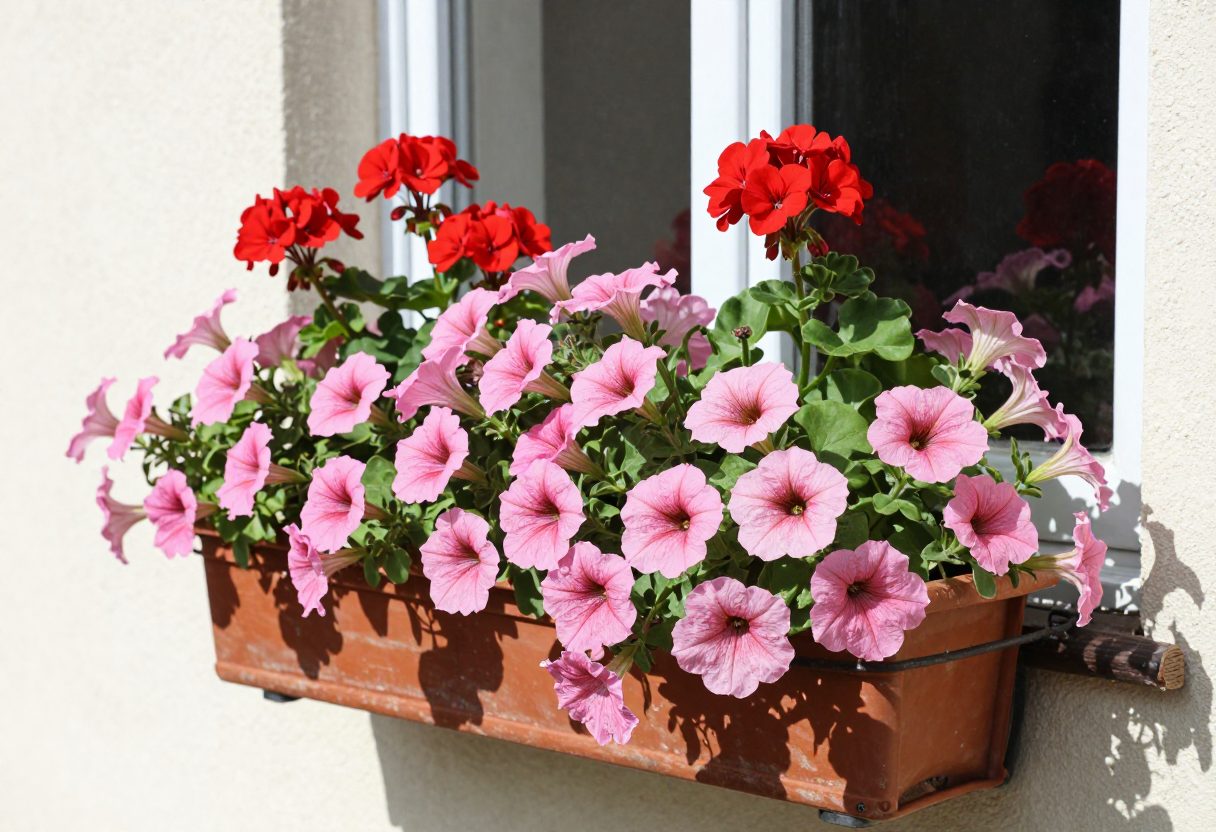
Petunias, geraniums, and calibrachoa bloom continuously through summer in a full-sun window box.
Shade Window Box Combinations
A north-facing or heavily shaded window box needs plants genuinely suited to low light — sun-loving annuals will stretch, become leggy, and bloom poorly in shade regardless of care quality.
Plant
Role
Notes
Impatiens
Filler
The classic shade annual — continuous bloom, wide color range
Begonias (wax or tuberous)
Filler
Tolerates deep shade well, attractive foliage even without bloom
Fuchsia
Filler/Spiller
Distinctive pendant blooms, prefers cooler shaded conditions
Trailing lysimachia (Creeping Jenny)
Spiller
Chartreuse trailing foliage that brightens a shaded box
Ferns (dwarf varieties)
Thriller
Textural, shade-loving, doesn't need to flower to contribute visual interest
Coleus (shade varieties)
Thriller/Filler
Foliage color carries the display where flowers would struggle
🌑
Shaded window boxes hold moisture noticeably longer than sunny ones — check soil moisture before watering on a fixed schedule, since overwatering is the more common failure mode in shade.
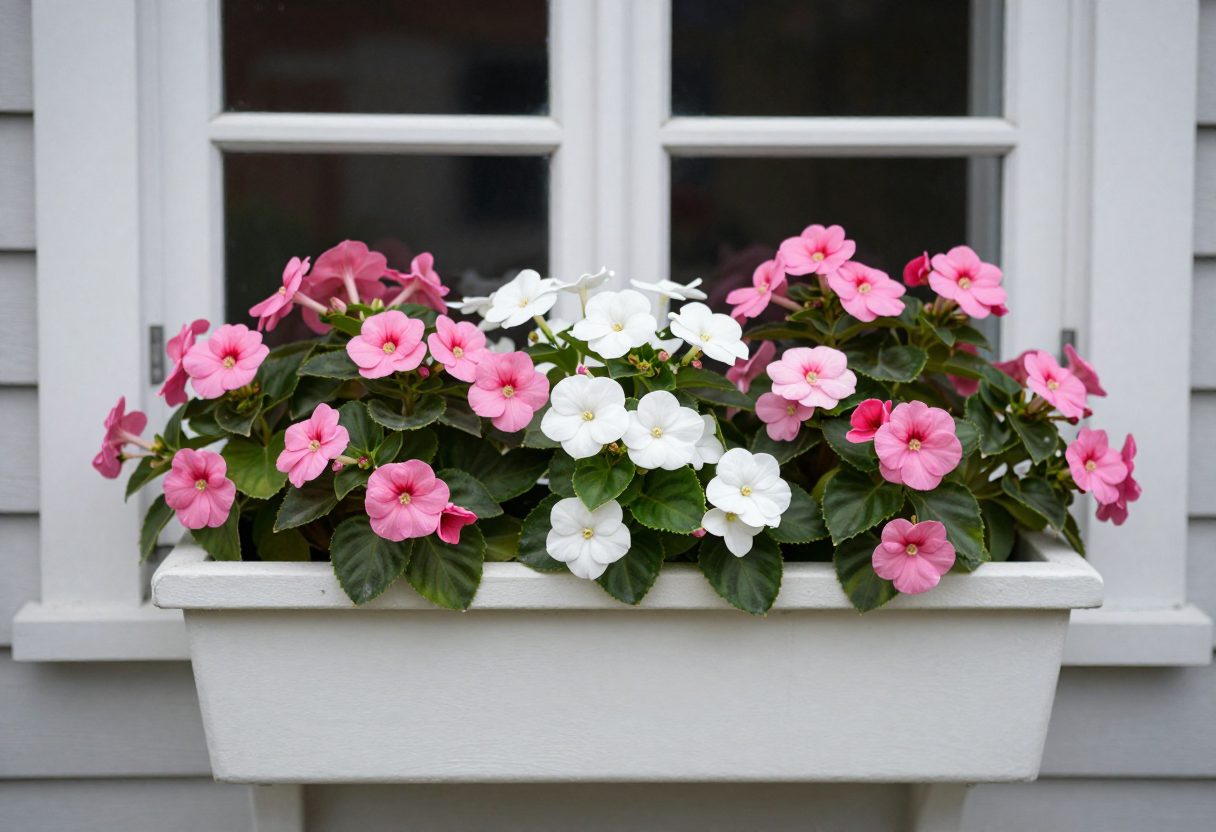
Impatiens and begonias thrive in a north-facing window box where sun-loving annuals would struggle.
Seasonal Replanting for Year-Round Interest
Swapping plantings with the seasons keeps a window box looking fresh through the whole year rather than fading after summer annuals decline, and it lets cool-season plants fill gaps that summer annuals can't handle.
Season
Plants
Notes
Spring
Pansies, violas, snapdragons, ranunculus
Cool-season annuals that thrive in the mild temperatures summer annuals would resent
A decorative, non-growing arrangement fills the box through hard winters where nothing can be actively grown
📅
Replant at the shoulder seasons (roughly when night temperatures shift by 15-20°F from the prior season's norm) rather than on fixed calendar dates — local frost dates and heat onset vary enough by zone that this adapts naturally.
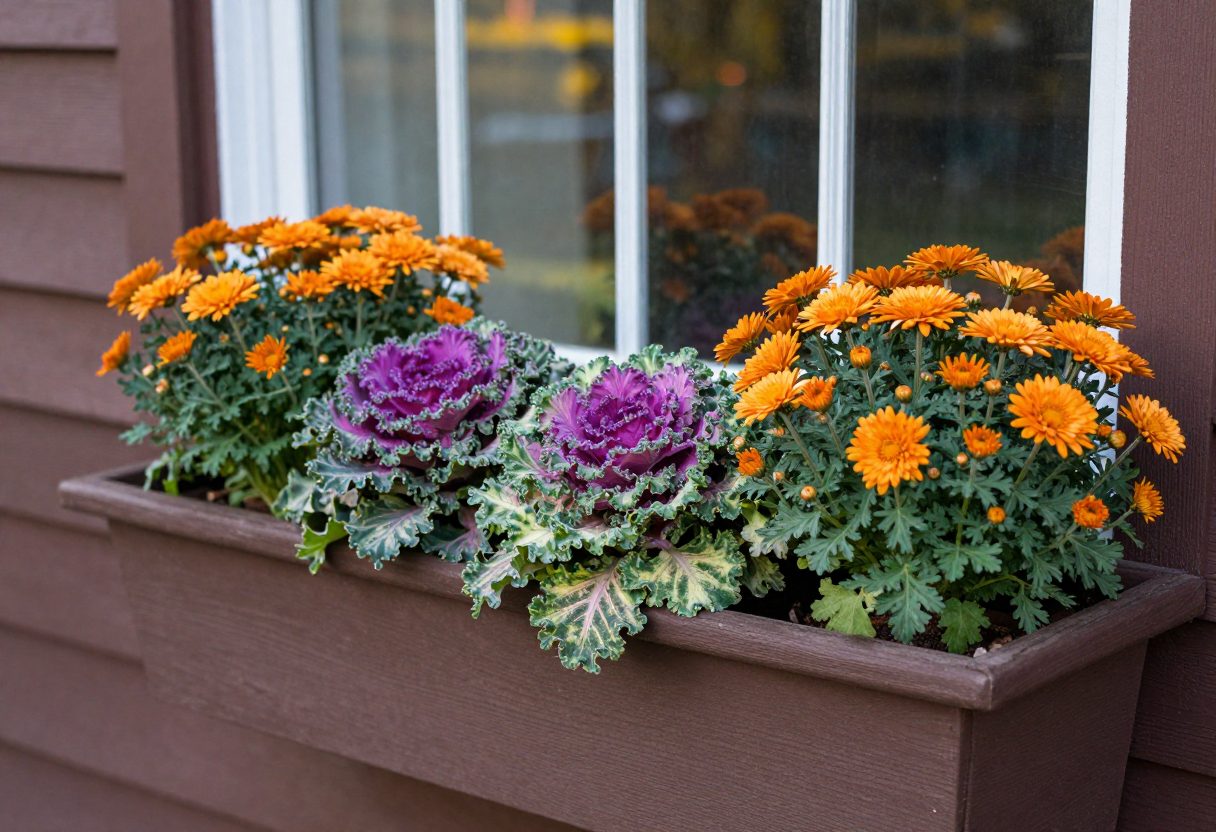
Ornamental kale and mums extend a window box's seasonal interest well past the point summer annuals would fade.
Fertilizing and Ongoing Care
Window box plantings are grown at high density in a small soil volume, which means nutrients deplete faster than in-ground plantings and consistent feeding matters more than it would for the same plants grown in open ground.
•Feed with a balanced liquid fertilizer every 1-2 weeks during the growing season — container plantings need more frequent feeding than in-ground beds.
•Deadhead spent blooms regularly on varieties that aren't self-cleaning to encourage continued flowering rather than seed production.
•Trim back leggy growth by up to a third mid-season if plants become overgrown or stop blooming well — many annuals rebound with a fresh flush of growth and flowers.
•Check soil moisture daily during hot weather; a box in full sun can need water more than once a day in peak summer heat.
•Refresh the growing medium (or at minimum top-dress with fresh compost) at the start of each new seasonal planting rather than reusing depleted soil indefinitely.
✂️
A mid-season "haircut and feed" — trimming back leggy stems and following with a dose of fertilizer — is often enough to revive a window box that's started to look tired by midsummer, rather than replanting it entirely.
🌿 Get Seasonal Gardening Tips
New guides, planting reminders, and growing tips — straight to your inbox.
No spam. Unsubscribe anytime.
About the Author
David Rodgers is the Founder & Head Gardener of Planting Atlas. With over 40 years of hands-on gardening experience in Oklahoma's Zone 7 climate, he researches, writes, and personally tests every guide on the site.
David draws from real backyard trials, soil testing, and trusted sources like Oklahoma State University Extension and USDA data to deliver practical, zone-specific advice that actually works.