Choose the right aquatic and moisture-loving plants for ponds, streams, and bog gardens — and create a thriving water ecosystem in your backyard.
A water garden without the right plants quickly becomes a maintenance problem — algae blooms in nutrient-rich water, the ecosystem stays out of balance, and the feature loses its appeal. The right mix of aquatic plants solves this naturally: submerged oxygenators like hornwort and anacharis absorb excess nutrients and produce oxygen for fish; floating plants like water hyacinth and water lettuce shade the water surface, limiting algae; and upright emergents like pickerelweed, blue flag iris, and cattails filter nutrients from the water column through their root systems. Together, a well-planted water garden stabilizes itself into a balanced ecosystem that requires minimal chemical intervention.
Water garden plants are categorized by their relationship to water depth, and matching a plant to its correct zone is the single most important factor in whether it thrives or struggles.
Category
Water Depth
Example Plants
Role
Submerged oxygenators
Fully underwater
Hornwort, anacharis, cabomba
Absorb excess nutrients and produce oxygen, competing with algae for the same resources
Deep-water aquatics
12-24 inches above the crown
Water lily (Nymphaea), lotus (Nelumbo)
Broad floating leaves shade the water surface, limiting algae growth and providing fish shelter
Floating plants
Free-floating on the surface, roots trailing in water
Water hyacinth, water lettuce, duckweed
Outstanding biological filtration and surface shading; some species are regionally invasive (see warning below)
Emergent marginals
2-6 inches, the shallow shelf zone
Pickerelweed, blue flag iris, cardinal flower, lizard's tail, Japanese iris
Filter nutrients from the water column through their root systems while standing partly above water
Bog plants
Consistently moist soil at the water's edge, not standing in water
Astilbe, ligularia, rodgersia
Extend the water garden's planted zone into the surrounding landscape without needing standing water
⚠️
Water hyacinth and water lettuce are outstanding floating plants for biological filtration but are classified as invasive species in warm-climate states (Zones 9-11) and must never be released into natural waterways — dispose of excess growth in a compost pile or trash, never a storm drain, ditch, or nearby pond/stream.
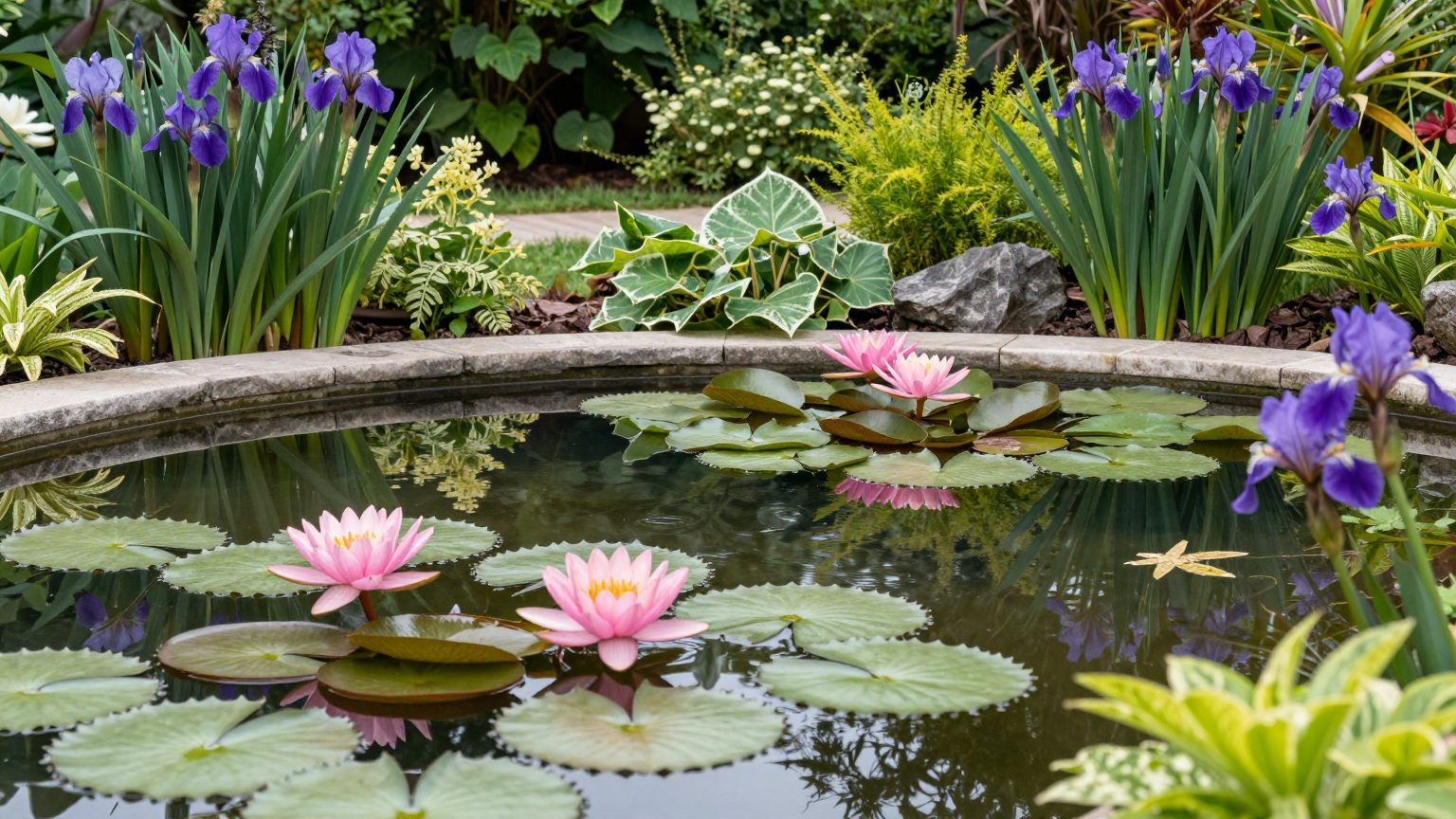
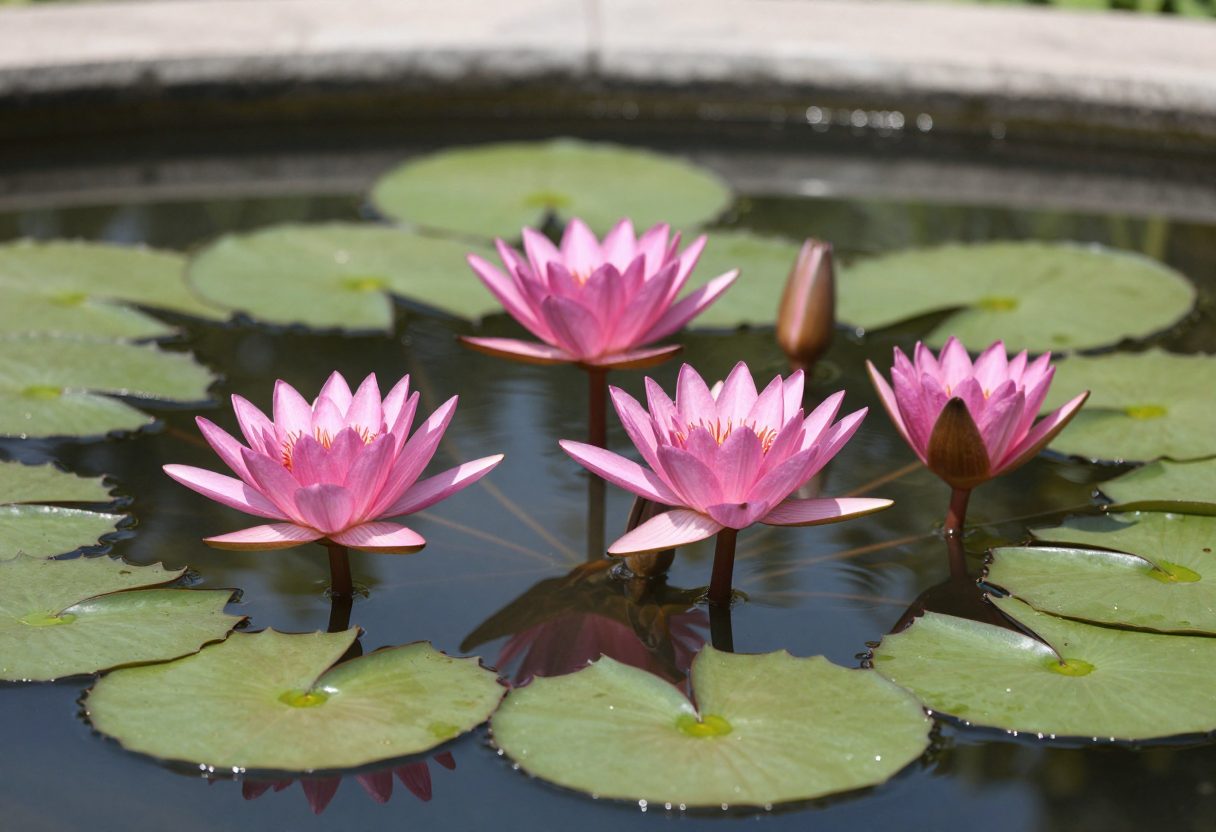
Deep-water aquatics like water lilies shade the water surface, helping limit algae growth naturally.
Balancing the Water Garden Ecosystem
A well-planted water garden becomes largely self-regulating, but reaching that balance takes a deliberate mix of plant types working together rather than a single category alone.
•Aim for roughly 60-70% surface coverage between deep-water aquatics and floating plants — enough to shade the water and limit algae-feeding sunlight, without completely blocking gas exchange and fish visibility.
•Include submerged oxygenators even though they're rarely visible — they directly compete with algae for the same dissolved nutrients, starving out the algae bloom before it can establish.
•Add emergent marginals around the shallow perimeter to filter nutrients from runoff before it concentrates in open water.
•Avoid overfeeding fish and overfertilizing marginal plants — excess nutrients feed algae faster than they feed the plants meant to outcompete it.
🌿
A new water garden often goes through a temporary "green water" algae bloom in its first weeks before plants establish enough biomass to outcompete it — this is normal and typically self-resolves within a few weeks rather than signaling a design failure.
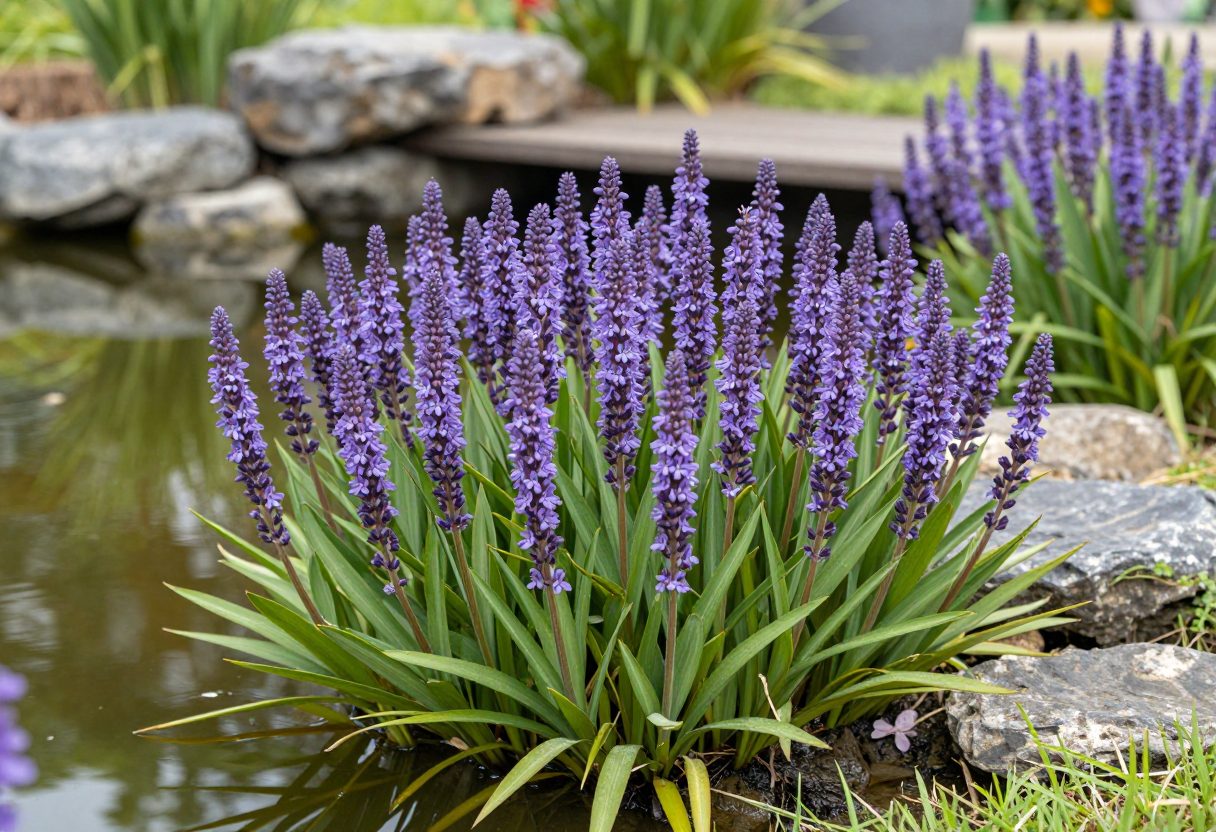
Emergent marginals like pickerelweed filter nutrients from the water column through their root systems.
Pond and Bog Garden Design Principles
Thoughtful zone design at the outset makes ongoing plant care and ecosystem balance dramatically easier than trying to correct a poorly zoned pond after the fact.
•Build in at least two depth zones — a deep zone (18-24+ inches) for deep-water aquatics and overwintering fish, and a shallow shelf (2-6 inches) for emergent marginals.
•Position a bog garden zone at the pond's edge, using a liner with a slow-drainage design or simply consistently moist adjacent soil, to extend planting opportunities beyond the water itself.
•Site the pond where it receives at least 4-6 hours of direct sun for flowering aquatics like water lilies, but some afternoon shade in hot climates helps moderate water temperature and reduce evaporation.
•Keep planted marginal shelves wide enough (12+ inches) to support a real planting depth of soil and root room, not just a narrow ledge that limits plant choices.
🪴
Growing marginal and deep-water aquatics in individual planting baskets (rather than a soil layer across the whole pond bottom) makes maintenance, division, and winter relocation of tender plants far more manageable than an integrated planting.
A pond built with distinct depth zones — a shallow marginal shelf and a deeper center — makes plant care and fish overwintering much easier.
Native vs. Non-Native Considerations
Water garden plants have an outsized capacity to escape into natural waterways compared to typical garden plants, since water itself is the dispersal mechanism — a small fragment or seed can travel far downstream from where it was planted.
Plant
Status
Notes
Water hyacinth, water lettuce
Invasive in warm climates (Zones 9-11)
Restricted or banned in several states; never release into natural waterways regardless of local regulation
Purple loosestrife
Invasive nationally
Should not be planted anywhere in the US despite its ornamental appeal — has severely degraded wetlands nationwide
Cattails (native species)
Native, but can be aggressive
Excellent for filtration and wildlife but can spread beyond intended bounds in larger ponds — best in contained plantings
Pickerelweed, blue flag iris, cardinal flower
Native to much of the US
Excellent, well-behaved choices that also support pollinators and other wildlife
Japanese iris
Non-native but non-invasive
A popular, well-behaved ornamental marginal with no significant invasive concerns
⚠️
Check your specific state's noxious/invasive aquatic plant list before purchasing — regulations vary significantly by state, and a plant sold at a garden center is not a guarantee it's legal or advisable to plant in your specific location.
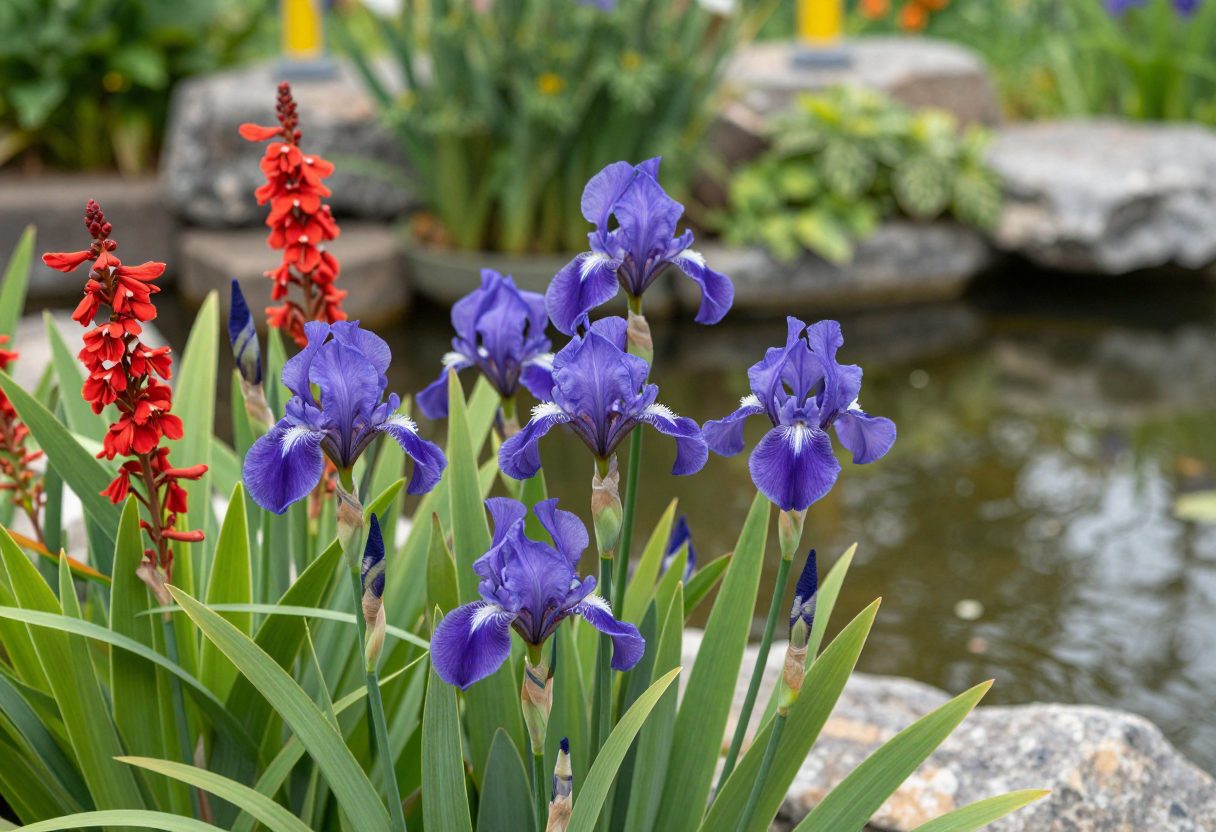
Native marginals like blue flag iris and cardinal flower are well-behaved, pollinator-friendly choices for most US regions.
Winterizing Aquatic Plants
Aquatic plant winter care varies significantly by hardiness and by whether a pond is deep enough to avoid freezing solid — matching the right strategy to each plant prevents unnecessary winter losses.
Plant Type
Winter Strategy
Notes
Hardy water lilies
Lower to the pond's deepest point (below the freeze line) for winter
Most hardy varieties survive outdoors in Zones 4+ if the pond doesn't freeze solid to the bottom
Tropical water lilies and lotus (in cold zones)
Bring indoors as a dormant tuber, or treat as an annual
Tropical varieties won't survive freezing temperatures even at pond depth
Hardy emergent marginals (iris, pickerelweed)
Leave in place; most hardy natives tolerate freezing at the root zone
Trim dead foliage after it browns, but leave roots undisturbed
Floating plants (hyacinth, lettuce)
Treat as annuals in most US zones; discard (never release) before frost
These are frost-tender and won't overwinter outdoors outside the warmest zones
Submerged oxygenators
Many die back but regrow from root fragments in spring
Some benefit from being moved to the pond's deepest section for winter
❄️
A pond deep enough (typically 24+ inches in cold climates) rarely freezes solid to the bottom, which is what allows hardy aquatic plants and overwintering fish to survive outdoors through winter without additional protection.
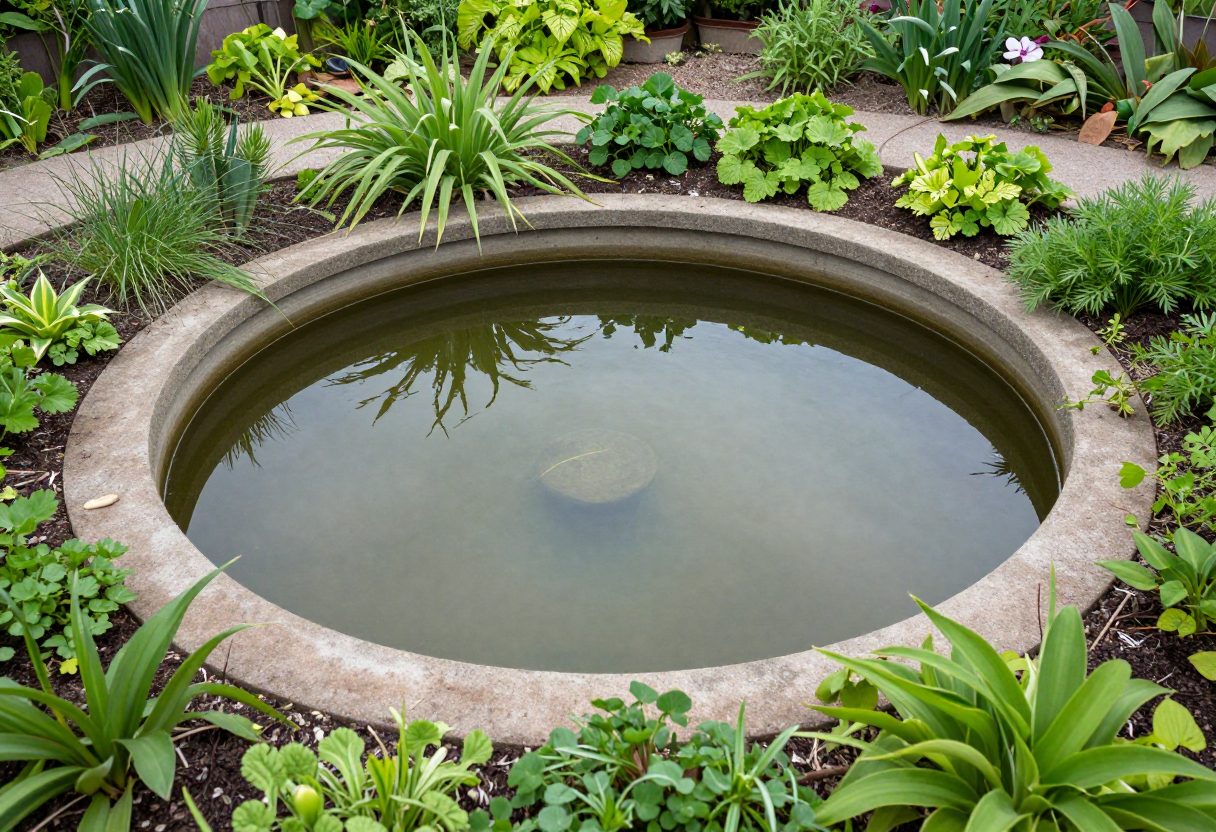
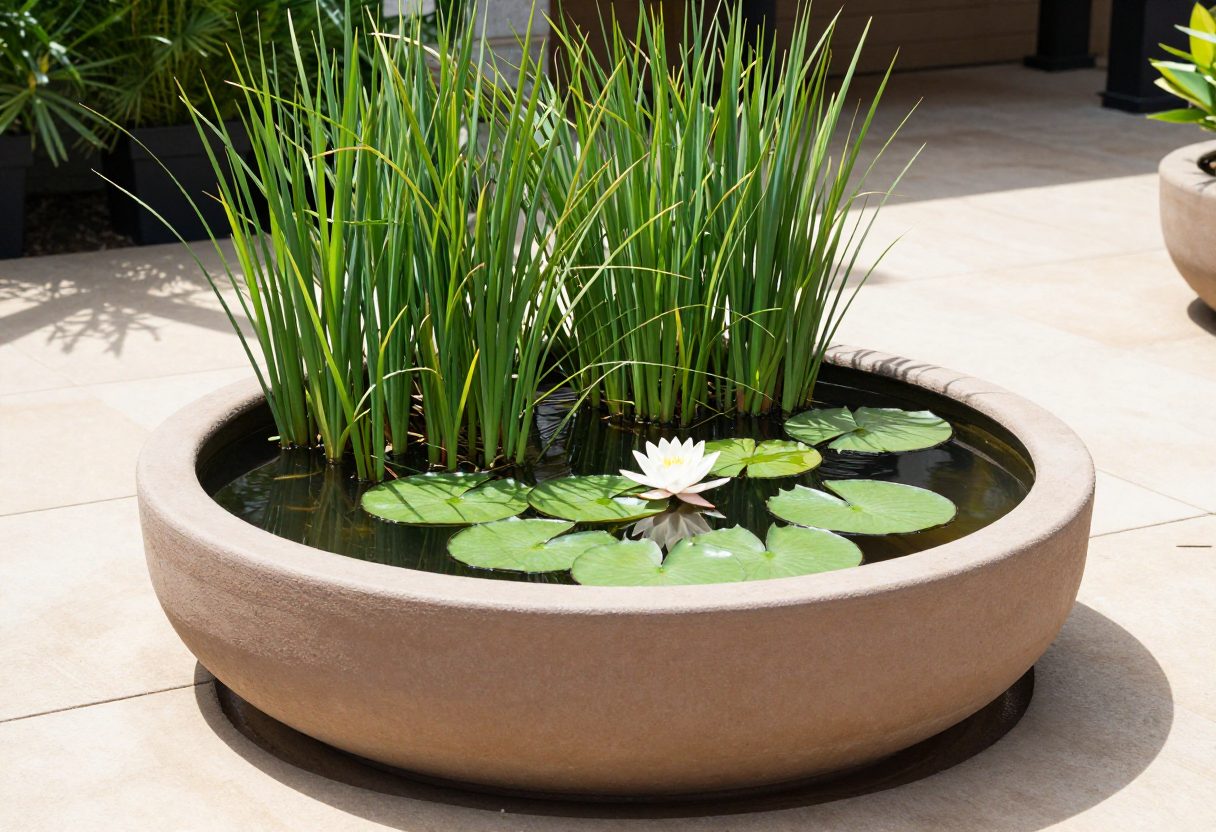
A half-barrel container can host a scaled-down, self-regulating water garden with no pump needed.
Plants for Container Water Gardens
A full in-ground pond isn't required to enjoy aquatic plants — a half-barrel or large watertight container can host a scaled-down water garden on a patio or small yard.
Plant
Container Suitability
Notes
Dwarf water lily varieties
Excellent
Bred specifically for small container water gardens, bloom well in limited root space
Miniature cattails (dwarf varieties)
Good
Provide vertical structure without the aggressive spread of standard cattails
Parrot's feather
Good
Trailing oxygenator/filler that softens a container's rim
Water lettuce, water hyacinth
Good, but treat as annuals or discard responsibly each fall
Same invasive concerns apply even in a container — never release excess growth outdoors
Dwarf papyrus
Excellent
Adds height and texture, tolerates the confined root space of a container well
🛢️
A container water garden needs no pump or filtration system if planted with a balanced mix of oxygenators and surface coverage — the same self-regulating principles that apply to a full pond scale down effectively to container size.
🌿 Get Seasonal Gardening Tips
New guides, planting reminders, and growing tips — straight to your inbox.
No spam. Unsubscribe anytime.
About the Author
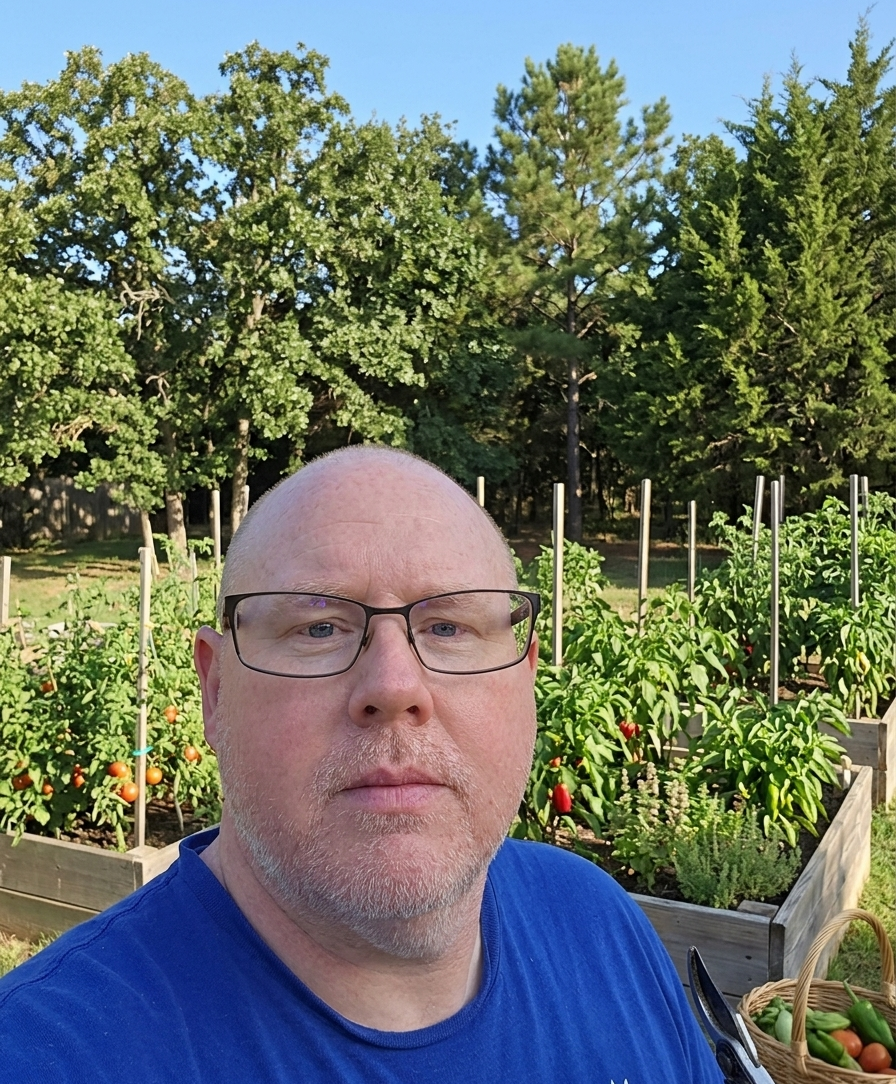
David Rodgers is the Founder & Head Gardener of Planting Atlas. With over 40 years of hands-on gardening experience in Oklahoma's Zone 7 climate, he researches, writes, and personally tests every guide on the site.
David draws from real backyard trials, soil testing, and trusted sources like Oklahoma State University Extension and USDA data to deliver practical, zone-specific advice that actually works.