What to check first when a hydroponic plant looks wrong — roots, leaves, water, pests, and equipment, in the order that finds the cause fastest.
When a hydroponic plant looks unhappy, the cause is almost always one of a short list: roots, water quality, nutrient strength or pH, light, temperature, pests, or equipment. Because there is no soil to buffer mistakes, problems show up fast — but they also have clear, checkable causes. This guide works through them in a sensible order, with tables you can match symptoms against. It applies to every system; for system-specific issues, see the Deep Water Culture, NFT, and Ebb & Flow guides, and for the numbers behind pH and strength, see Hydroponic Nutrients, pH & EC.
Guessing at the cause wastes time and can make things worse. Work through the same checks in the same order, because the earlier ones are the fastest to test and the most common causes.
•Equipment: is water actually flowing and is air actually bubbling? A stopped pump or air pump explains a sudden, system-wide decline.
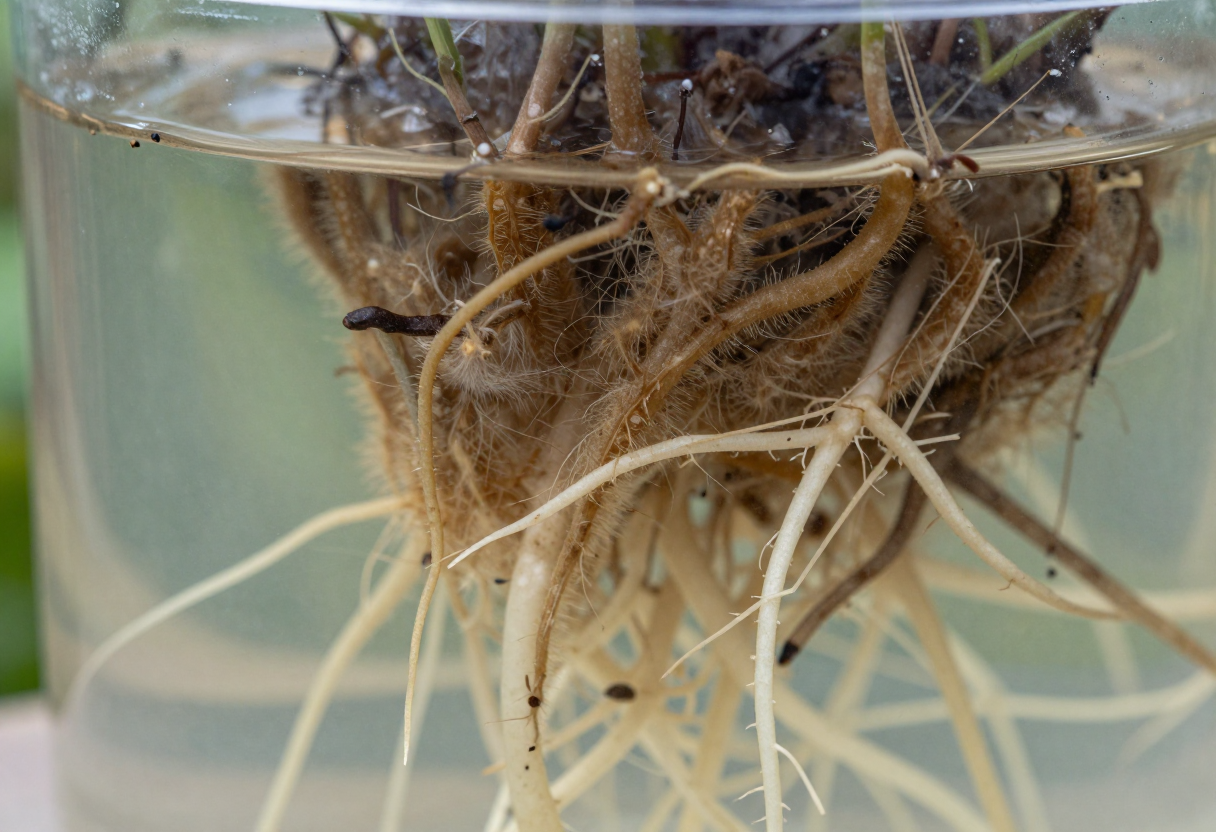
•Roots: pull one out and look. Healthy roots are white to cream and smell fresh; brown, slimy, or foul-smelling roots point to oxygen, temperature, or cleanliness problems.
•Water temperature: roughly 65-72°F is the comfortable range for most crops. Warm water is behind a large share of root problems.
•pH: outside about 5.5-6.5, plants cannot absorb nutrients that are present. Test it.
•Nutrient strength: measure EC or TDS. Too strong burns leaves; too weak slows growth.
•Light and air: is the light strong enough and the right distance away, and is the room too hot or too dry?
•Pests: check leaf undersides and the growing medium last, once the basics are ruled out.
📓
Change one thing at a time and write down what you did. If you adjust pH, strength, and light all at once, you will not know which fixed the problem — or which caused a new one.
Work through the checks in order rather than guessing at the cause.
Reading the Roots
The roots are the best diagnostic tool in hydroponics, because they show problems before the leaves do. Take a look whenever anything seems off.
What You See
What It Usually Means
What to Do
White to cream, fresh smell
Healthy
Nothing — keep doing what you are doing
Brown, slimy, or foul-smelling roots
Root rot from warm, poorly oxygenated, or dirty water
Cool and aerate the reservoir, clean the system, and replace the solution; badly rotted roots may not recover
Light brown or tan but firm and not slimy
Often stained by nutrients, not rotting
Check for a smell and slime; if none, it is likely fine
Green slime on roots or channel walls
Algae from light reaching the solution
Block all light from the reservoir and roots
Very few, short roots
Cold water, low oxygen, or a too-strong solution
Check temperature, aeration, and strength
Roots blocking a channel or drain
Normal growth outgrowing the space
Trim carefully or thin plants; keep flow paths clear
⚠️
Some growers reach for hydrogen peroxide or beneficial-microbe products at the first sign of rot. Those can help in some cases, but they do not replace fixing the cause — usually warm water, low oxygen, or light leaks. Address temperature and aeration first.
Brown, slimy, foul-smelling roots are the clearest sign of root rot.
Reading the Leaves
Leaf symptoms point toward likely causes, but many look alike, so treat them as hints and confirm with a pH and strength reading before changing the recipe.
Symptom
Possible Cause
What to Check
Brown, crispy leaf tips or edges
Solution too strong, or a calcium uptake problem
Measure strength; dilute if high; check heat and humidity
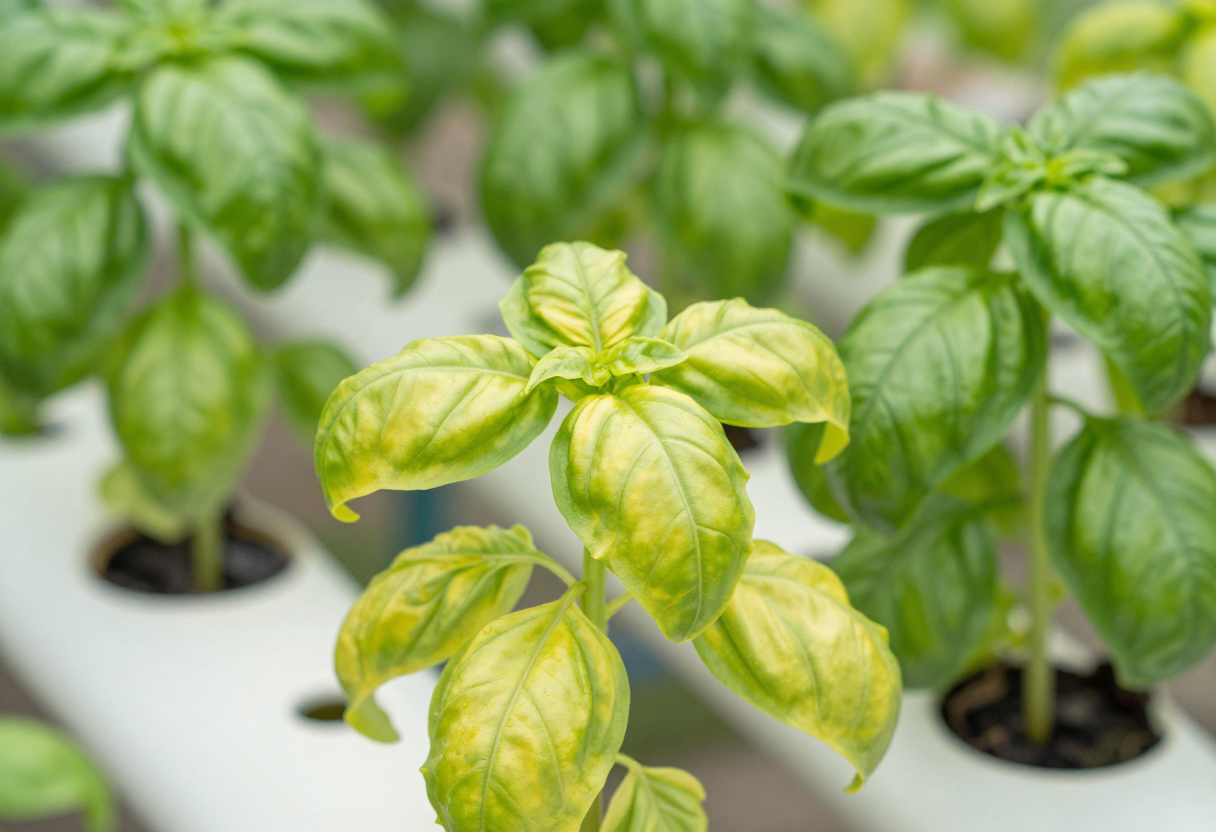
Pale or yellow new growth
pH too high, blocking micronutrients like iron
Test pH and bring it back into range
Older leaves yellowing first
Shortage of a mobile nutrient such as nitrogen or magnesium, or a depleted solution
Check strength and the feeding schedule
Tall, pale, stretched growth
Not enough light
Raise light intensity or hours; see the Grow Lights guide
Bleached or scorched leaf tops
Light too close or too strong
Raise the light or reduce intensity
Curling or drooping leaves
Heat stress, low oxygen at the roots, or over-strong solution
Check air and water temperature, aeration, and strength
Purple or reddish stems and leaf undersides
Cold roots or a phosphorus shortage in some crops
Check water temperature and the nutrient balance
Fruit flowers drop without setting fruit
Temperatures too hot or too cold, or too little light
Check temperature and light for fruiting crops
🔎
Note where the symptom shows up. Problems in the newest growth usually involve nutrients that plants cannot move around, like calcium and iron; problems in the oldest leaves usually involve mobile nutrients like nitrogen.
Where a symptom appears — new growth or old — helps narrow the cause.
Water Problems and Pests
Two groups of problems live in and around the reservoir: the water itself, and the pests that thrive in indoor growing conditions.
Problem
Likely Cause
Fix
Green algae on walls, pots, or roots
Light reaching the solution
Use opaque containers and cover any gaps around net pots
Foul smell from the reservoir
Stagnant, warm, or oxygen-poor water
Aerate, cool, clean the reservoir, and replace the solution
pH keeps drifting
Normal plant feeding, or weak water buffering
Check often and adjust in small steps; expect some drift
Strength keeps rising
Plants drinking water faster than nutrients
Top up with plain water and re-measure
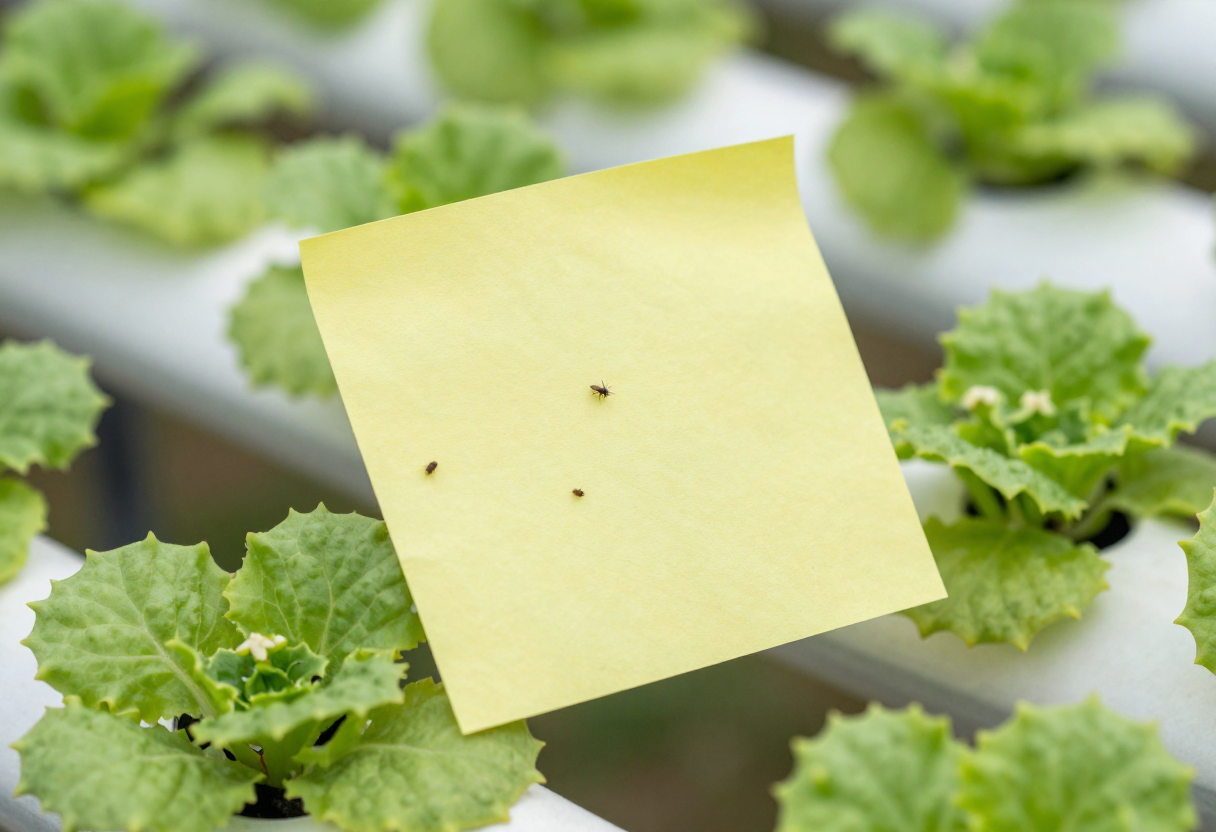
Tiny black flies around the medium
Fungus gnats in a constantly wet surface
Let the top of the medium dry, use yellow sticky traps, and consider a Bti product for larvae
Sticky leaves, curled new growth, clusters of small insects
Aphids
Rinse plants and use insecticidal soap; see the site's Organic Pest Control guide
Fine stippling and webbing on leaves
Spider mites, common in hot, dry rooms
Raise humidity, rinse leaves, and treat with insecticidal soap or neem
🪰
Yellow sticky traps cost a few dollars and give an early warning of fungus gnats and other flying pests — hang one near the plants and check it weekly.
A yellow sticky trap is an early-warning system for fungus gnats and other flying pests.
Equipment Failures and Emergencies
Hydroponic systems depend on pumps, timers, and power. Knowing what to do when one fails — and how quickly each system tolerates it — turns a crisis into a fix.
System
How Fast a Failure Hurts
What to Do
Kratky and wick (passive)
Not affected by power loss
Nothing to fix; check the water level
Deep water culture
Hours to a day, faster in warm water
Restore air quickly and keep the reservoir cool
Ebb & flow and Dutch bucket
Hours, buffered by damp medium
Restore the pump and timer; hand-water if needed
NFT and vertical towers
Roots can dry out within hours
Restore flow immediately; keep a spare pump
•Keep spares of the parts that fail: a small pump, an air pump and stone, and a timer.
•Plug pumps and lights into GFCI-protected outlets, and keep cords and plugs off the floor and away from splashes.
•If the power is out, keep the room cool, keep roots damp by hand if you can, and restore flow as soon as power returns.
•Check the system every day. A quick look at flow, level, and roots catches most problems early.
⚠️
Do not respond to a failure by dumping in more nutrients or pH adjusters. Restore oxygen and flow first, cool the water, and re-measure before changing the recipe.
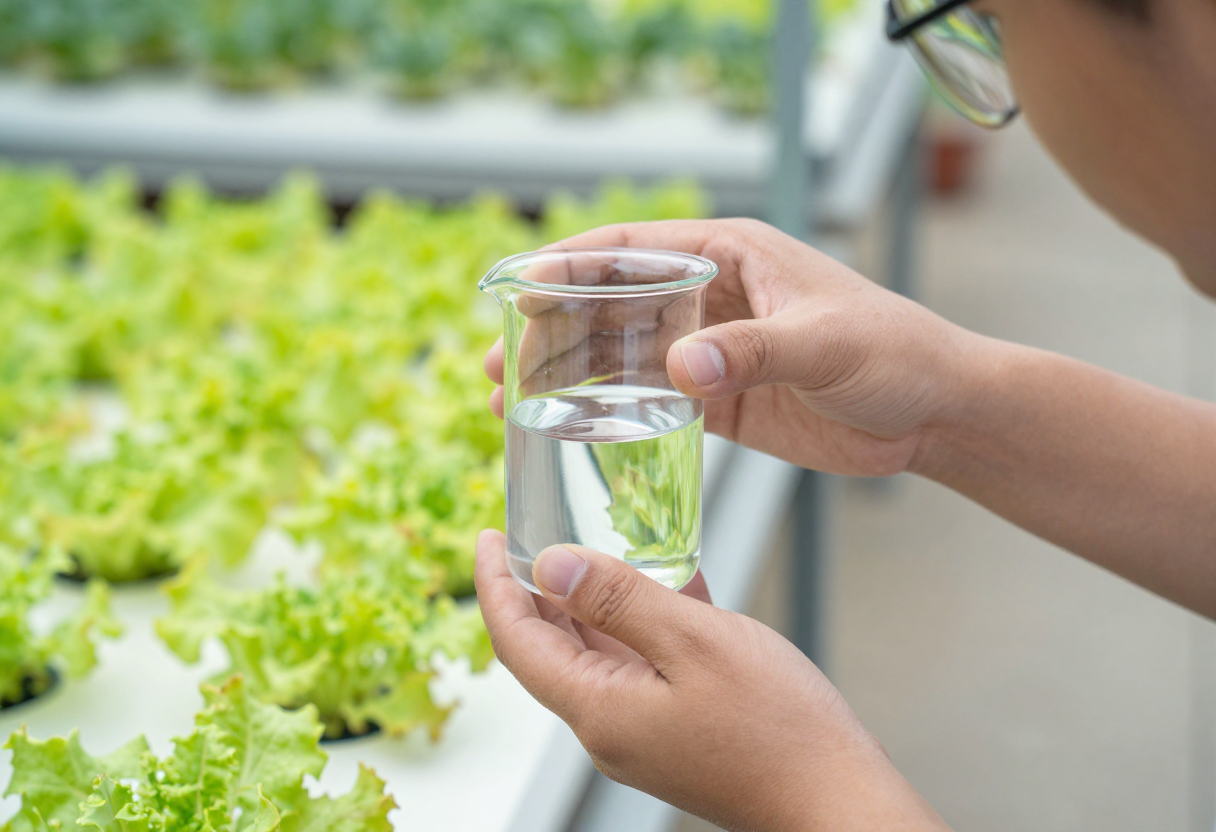
When something looks off, measure first — pH, strength, and temperature — before changing anything.
🌿 Get Seasonal Gardening Tips
New guides, planting reminders, and growing tips — straight to your inbox.
No spam. Unsubscribe anytime.
About the Author
David Rodgers is the Founder & Head Gardener of Planting Atlas. With over 40 years of hands-on gardening experience in Oklahoma's Zone 7 climate, he researches, writes, and personally tests every guide on the site.
David draws from real backyard trials, soil testing, and trusted sources like Oklahoma State University Extension and USDA data to deliver practical, zone-specific advice that actually works.