From seed to harvest — the warmth peppers demand, how to start them, feed them, keep them setting fruit, and know when to pick.
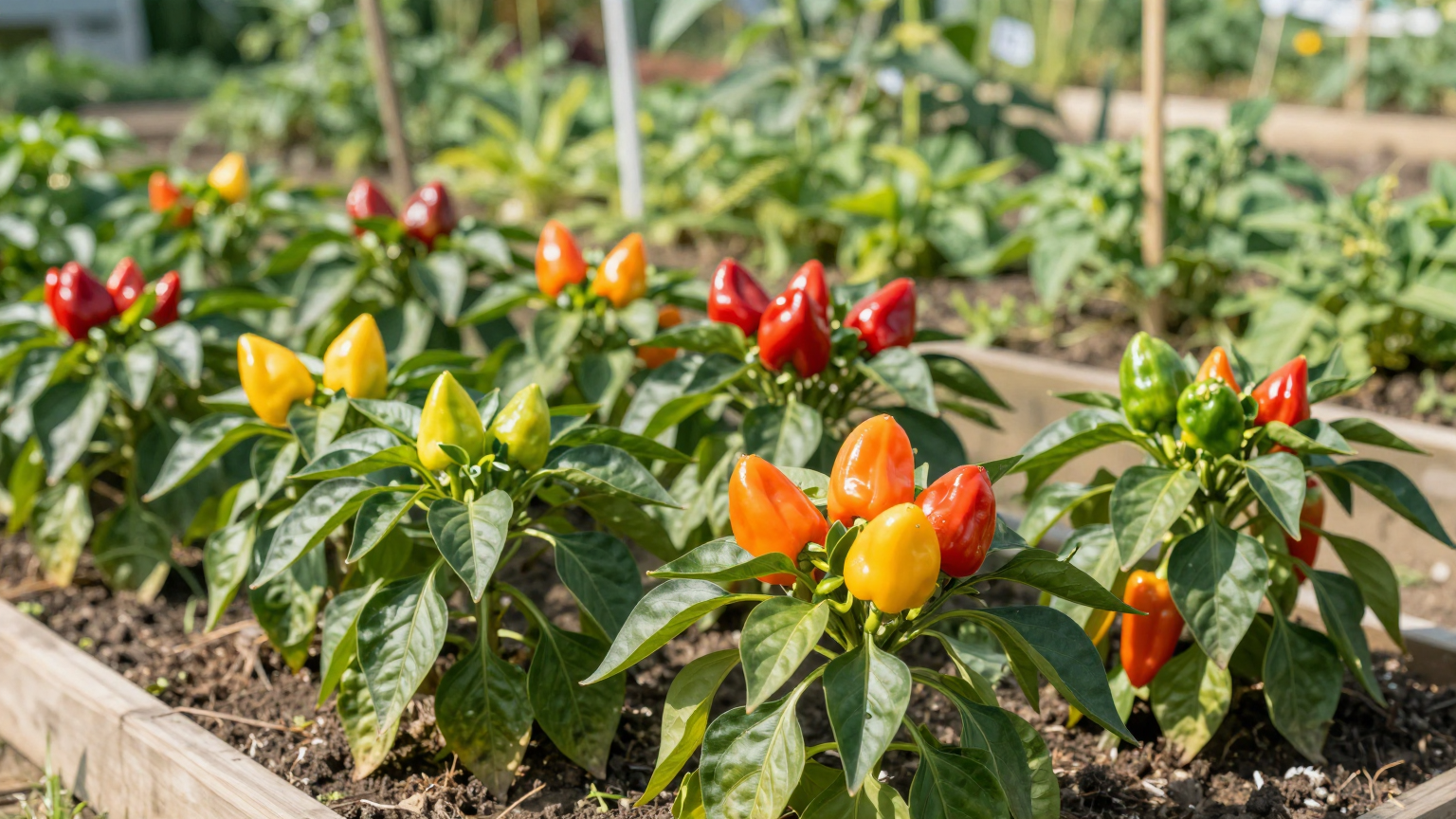
Peppers are among the most rewarding vegetables to grow, from mild bell peppers to fiery habaneros, and among the most demanding of warmth. They are slow to start, sulk in cold soil, and drop their flowers if temperatures swing too far in either direction, but grown well they produce heavily and keep producing until frost. This guide covers starting seeds, the timing and warmth that matter most, feeding and support, the common problems, and how to harvest and handle both sweet and hot types. Peppers are close relatives of tomatoes, so much of the advice in the site's Growing Tomatoes guide applies; for starting seeds, see Starting Seeds Indoors, and for the numbers behind strong light, see the Grow Lights guide.
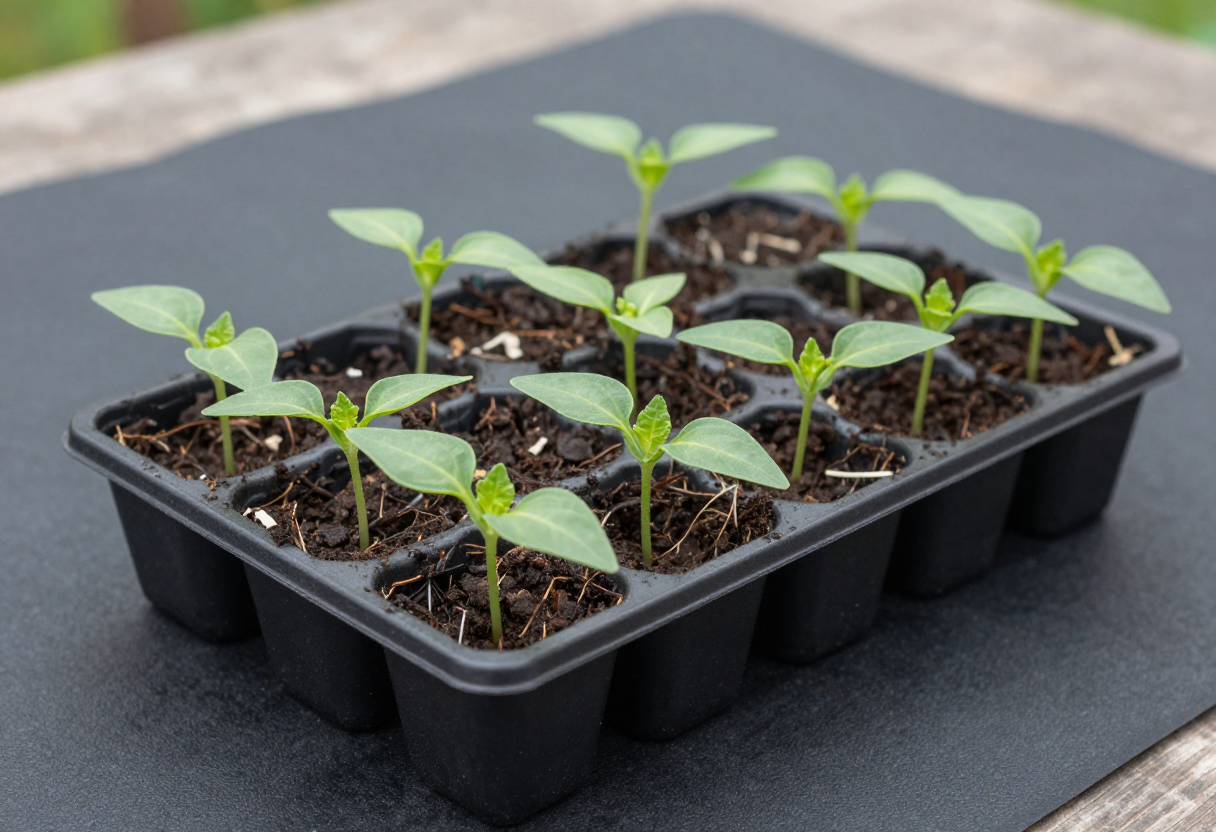
Peppers are slower than nearly any other common vegetable, so the head start indoors is longer than for tomatoes. They also germinate best with real warmth.
•Start seeds indoors roughly 8-10 weeks before your last frost date. Hot peppers, especially habaneros and their relatives, are often even slower and can be started a little earlier.
•Provide bottom heat around 75-85°F for germination. Peppers may take 7-14 days to sprout, longer in a cool room, and a seedling heat mat makes a large difference.
•Once seedlings emerge, give them strong light for 14-16 hours a day, with the light just a few inches above the plants, and cooler air around 65-75°F.
•Pot up into larger containers as roots fill the cells, and feed lightly with diluted fertilizer once true leaves appear.
•Harden off over a week to ten days before planting outdoors, as described in Starting Seeds Indoors.
🌱
If your season is short or you are new to starting seeds, buying a few healthy transplants of slow hot varieties is a perfectly reasonable shortcut. Choose sturdy plants that are not yet flowering.
Peppers germinate slowly and need bottom heat of around 75-85°F.
Warmth, Timing, and Planting
The most common pepper mistake is setting plants out too early. Cold soil and cold nights stunt peppers for weeks, and they seldom fully recover.
•Wait until the danger of frost is past and nights are reliably above about 55°F. Soil should be warm, roughly 65°F or higher, before transplanting.
•Choose a spot with full sun, at least 6-8 hours a day, and well-drained soil enriched with compost. A soil pH around 6.0-6.8 suits them.
•Space plants roughly 18-24 inches apart, so they support one another lightly and get good airflow.
•Water in well after transplanting, and mulch once the soil has warmed to hold moisture.
•In cool climates, black plastic mulch warms the soil, and row cover on cool nights adds several degrees of protection early in the season.
⚠️
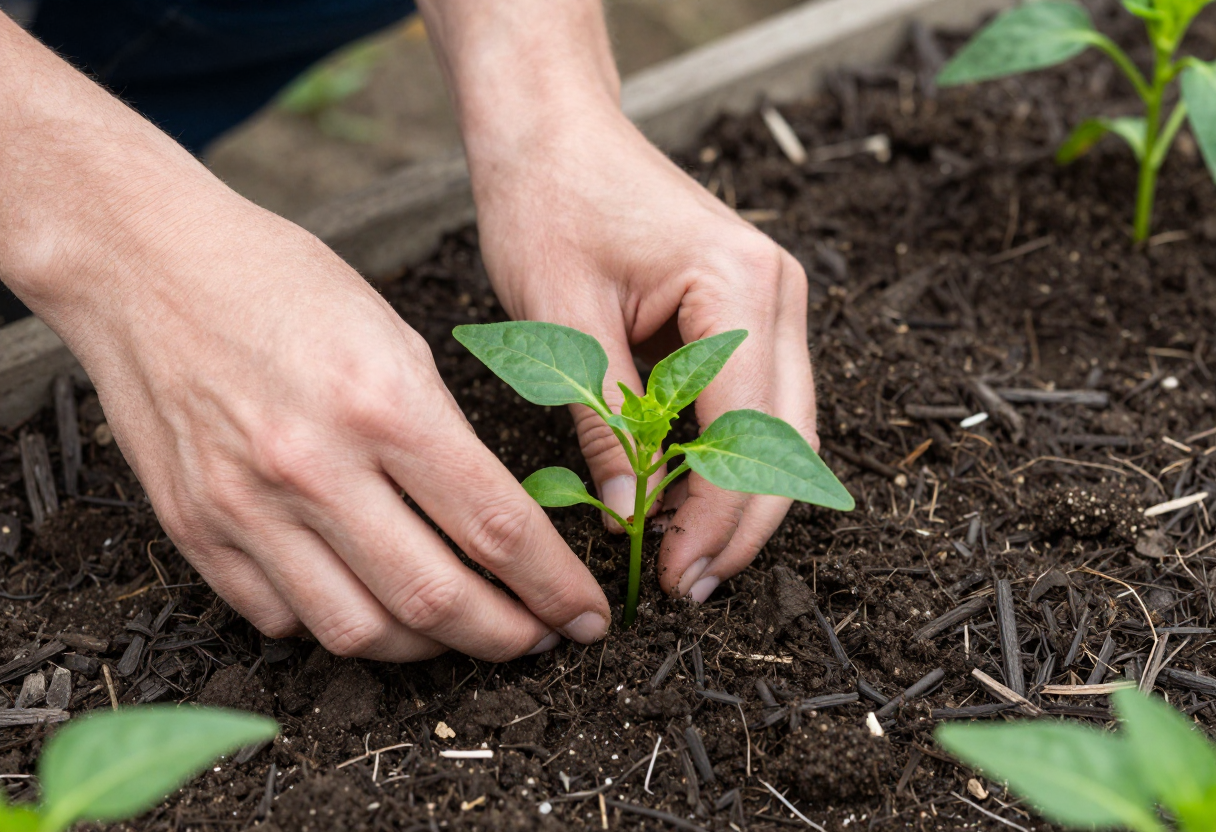
Do not rush peppers into cold ground. A pepper set out into a cold snap can stall for weeks, and a season lost to slow starts is far more common than one lost to planting a week late.
Wait for warm soil and settled weather before setting peppers out.
Choosing Varieties and Understanding Heat
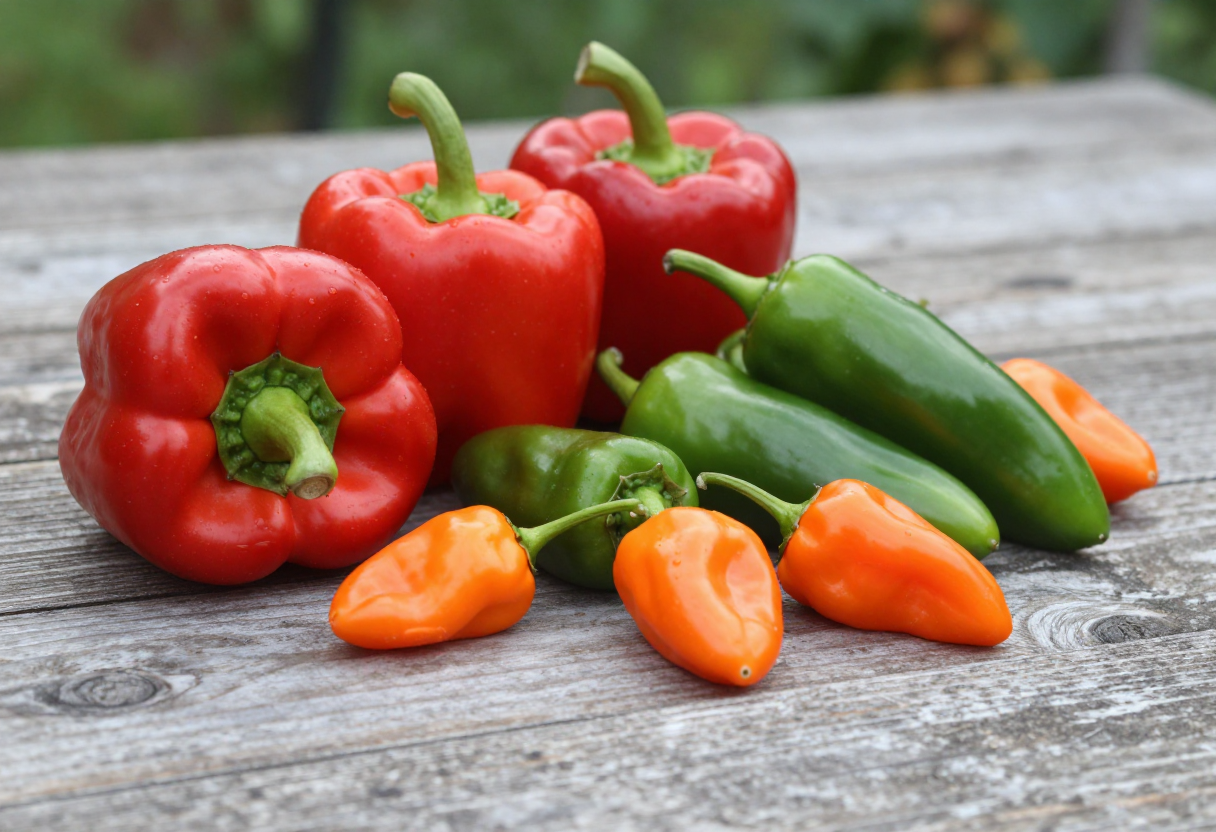
Peppers range from sweet to searing. Heat comes from capsaicin and is measured in Scoville heat units, and the figures below are rough, commonly cited ranges rather than exact values, since heat varies with variety and growing conditions.
Pepper
Approximate Heat
Notes
Bell pepper
None (0)
The classic sweet pepper; ripens from green to red, yellow, or orange with sweeter flavor
Banana and sweet frying peppers
Very mild
Productive and easy; good for beginners
Jalapeño
Roughly 2,500-8,000
A popular, forgiving hot pepper
Cayenne
Roughly 30,000-50,000
Thin, hot fruits that dry well
Habanero
Roughly 100,000-350,000
Very hot and slower to mature; needs a long, warm season
•Time to harvest is long: bell peppers typically take around 70-90 days from transplant and hot peppers around 70-100 days.
•Compact varieties suit containers and small spaces well, and many hot peppers grow happily in pots.
•Cross-pollination between pepper varieties affects the seeds you save, not the flavor or heat of this season's fruit, so a hot pepper next to a sweet one will not turn the sweet pepper hot this year.
🌶️
Wear gloves when handling hot peppers and avoid touching your eyes or face. The oils can burn skin and eyes for hours, and washing your hands does not always remove them.
Peppers range from sweet bells to hot habaneros, and heat varies with variety and conditions.
Feeding, Support, and Common Problems
Peppers are not heavy feeders compared with tomatoes, but they do need steady moisture and sensible feeding. Too much nitrogen builds lush foliage and few peppers.
•Water deeply and consistently, roughly an inch a week, and mulch to hold moisture. Uneven watering is a cause of blossom end rot.
•Feed at planting and again when flowers begin, using a balanced fertilizer or compost rather than a nitrogen-heavy one.
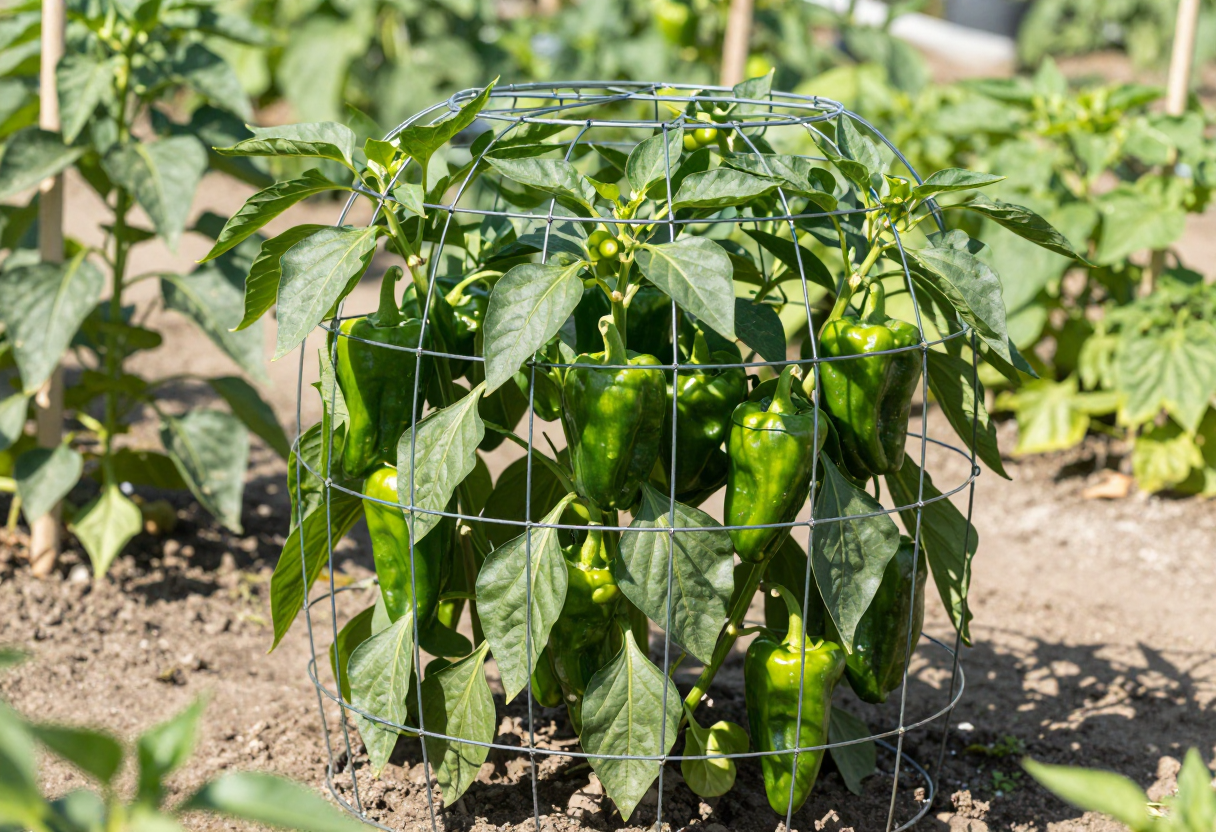
•Support heavy-fruiting plants with a cage or stake. Branches laden with fruit break easily, especially bell peppers.
•Pinching off the first flowers on young plants can help them build size before fruiting, though many growers skip this.
Problem
Likely Cause
Fix
Flowers drop without setting fruit
Temperatures above roughly 90°F or below about 55-60°F, or too much nitrogen
Usually self-corrects as temperatures moderate; shade cloth helps in heat waves
Dark, sunken patch on the fruit bottom (blossom end rot)
Uneven watering disrupting calcium uptake
Water consistently and mulch
Pale, papery sunken patches on fruit
Sunscald from too little leaf cover
Keep foliage healthy and shade fruit during heat waves
Sticky, curled new growth with small insects
Aphids
Rinse with water and use insecticidal soap; see Organic Pest Control
Leaves with small round holes
Flea beetles
Row cover on young plants; plants usually outgrow light damage
Wilting and collapse
Root disease or soil-borne wilt
Rotate away from tomatoes, eggplant, and potatoes for several years; see Common Garden Diseases
🔄
Peppers belong to the nightshade family, along with tomatoes, eggplant, and potatoes. Rotating them so they do not return to the same bed for 3-4 years prevents disease buildup; see Post-Harvest Garden Care for the rotation framework.
A cage or stake keeps fruit-heavy branches from snapping.
Harvest and Storage
Peppers can be picked at more than one stage, and the choice affects both flavor and how much the plant produces.
•Bell peppers can be harvested green, when full-sized and firm, or left to ripen to red, yellow, or orange, which takes longer but gives a sweeter flavor. Picking green peppers encourages the plant to set more fruit.
•Hot peppers generally get hotter and sweeter-fruity as they ripen and change color, though many are eaten green too.
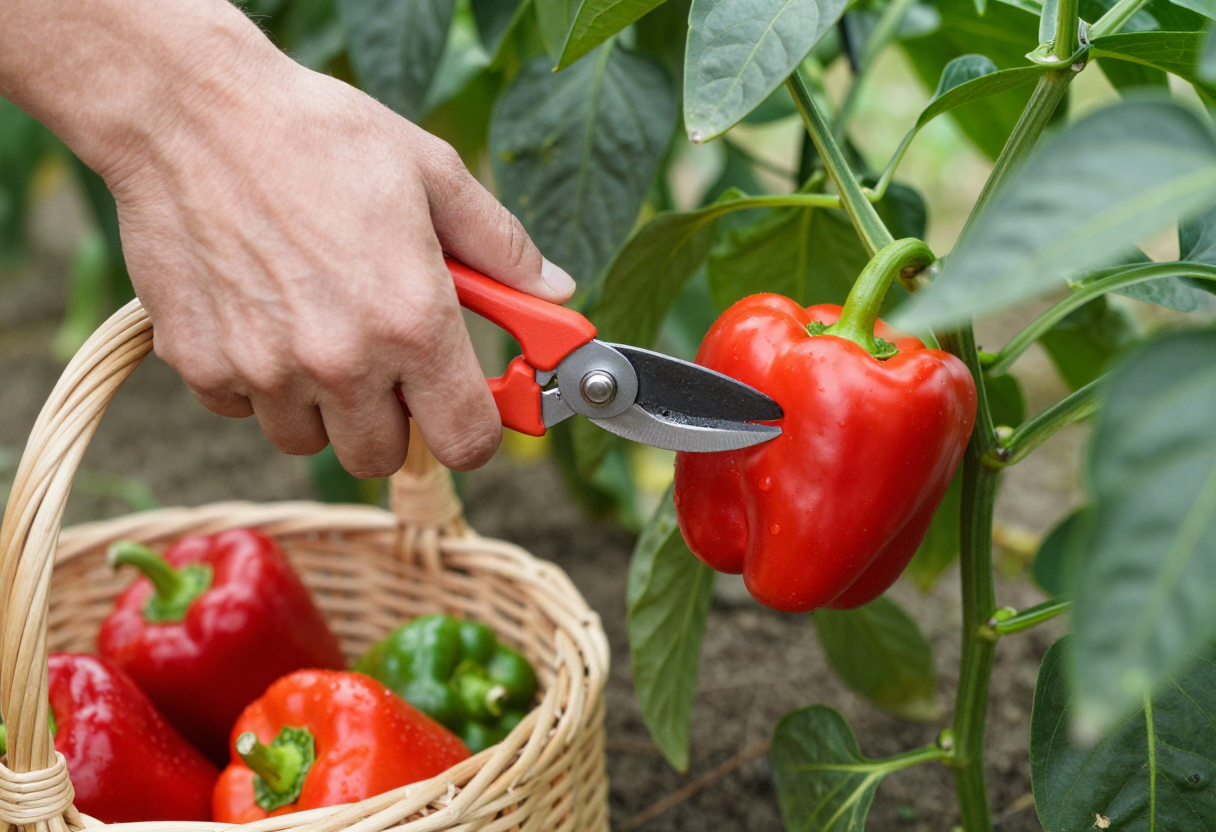
•Cut peppers from the plant with pruners or scissors rather than pulling, since branches are brittle and easily broken.
•Keep picking regularly through the season. Removing ripe fruit signals the plant to keep producing.
•Before the first frost, harvest all remaining fruit. Green peppers picked at season's end will often ripen slowly indoors.
•Store peppers in a cool place for a week or two, freeze chopped peppers for cooking, or dry hot peppers on strings or in a dehydrator.
🏡
Peppers are tender perennials. In frost-free climates they can live for years, and in cold climates a potted plant brought indoors before frost can be overwintered in a bright, cool spot, though it will need strong light.
Cut peppers from the plant rather than pulling, and keep picking to encourage more fruit.
🌿 Get Seasonal Gardening Tips
New guides, planting reminders, and growing tips — straight to your inbox.
No spam. Unsubscribe anytime.
About the Author
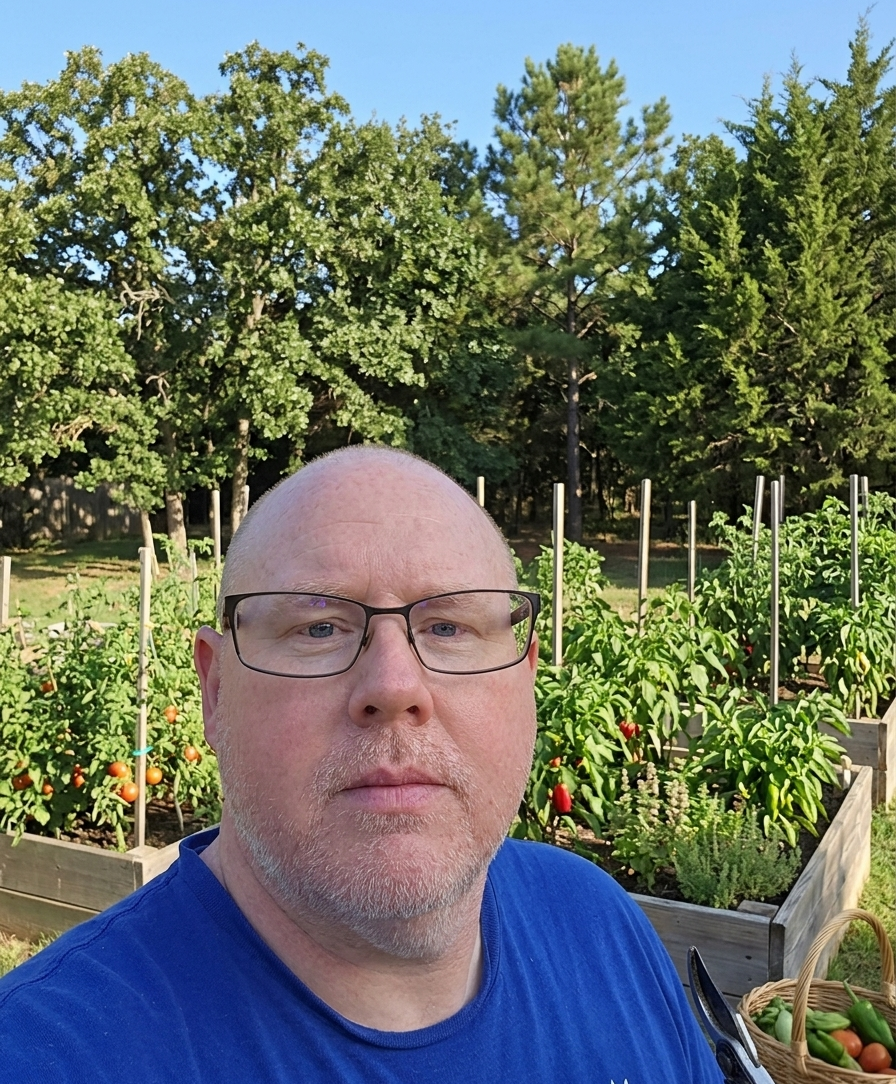
David Rodgers is the Founder & Head Gardener of Planting Atlas. With over 40 years of hands-on gardening experience in Oklahoma's Zone 7 climate, he researches, writes, and personally tests every guide on the site.
David draws from real backyard trials, soil testing, and trusted sources like Oklahoma State University Extension and USDA data to deliver practical, zone-specific advice that actually works.