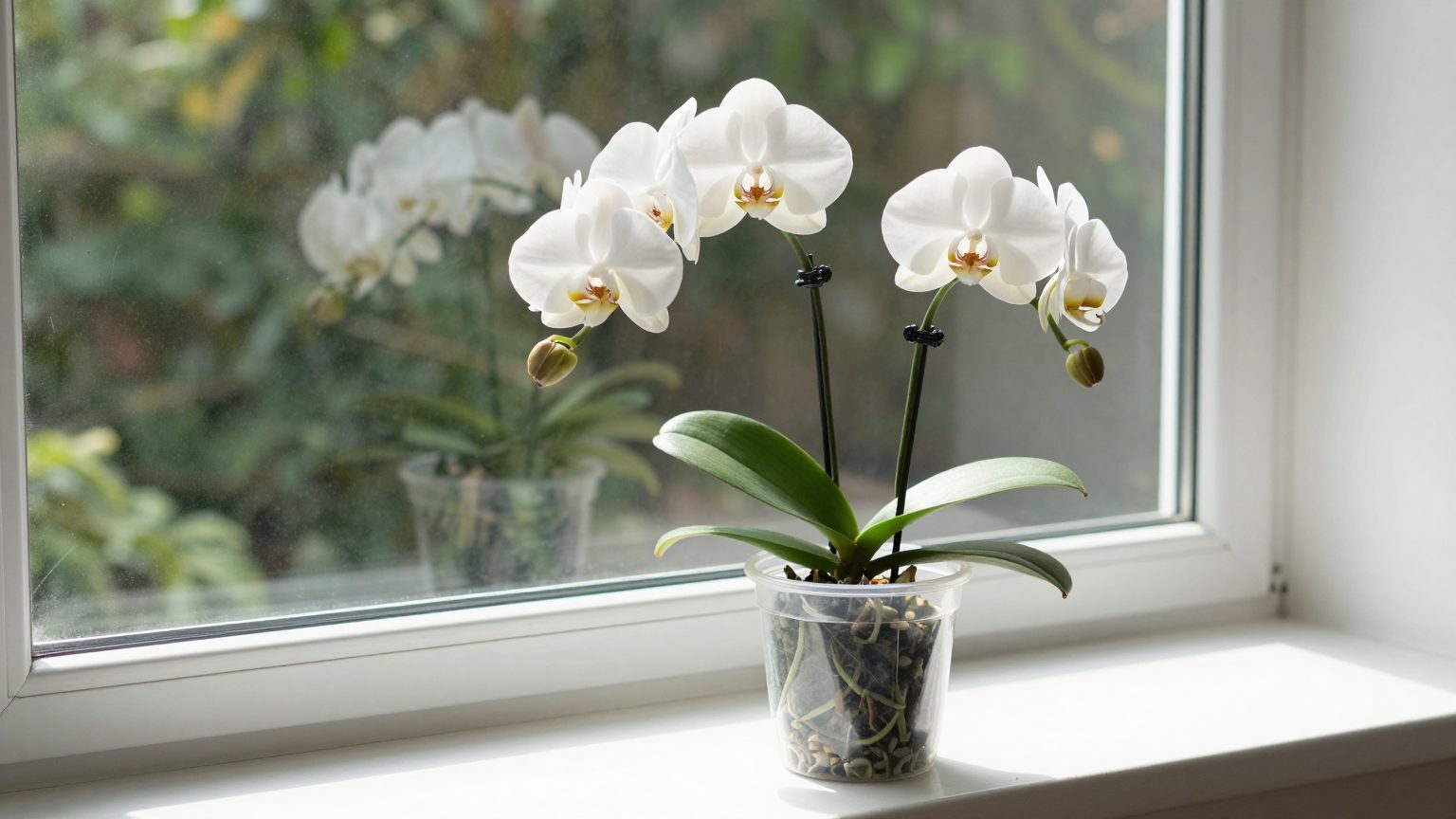
Moth orchids first — the light, watering, bark mix, and repotting that keep them healthy, and how to coax a second bloom.
Orchids have a reputation for being difficult, but the most common one sold in stores, the moth orchid (Phalaenopsis), is among the easiest to keep alive and rebloom indoors. Most failures come from treating an orchid like an ordinary houseplant: potting it in regular soil, watering it on a schedule, or leaving it in a saucer of water. In nature, most of these orchids grow on trees with their roots exposed to air, and they want the same in a pot: coarse, airy bark, bright but indirect light, and water only when the roots are ready for it. This guide focuses on moth orchids and covers choosing a plant, light, watering, potting media and roots, repotting, and getting the plant to bloom again. For other indoor plants, see Indoor Houseplants 101.
Moth orchids are the natural place to start, since they are widely sold, adapt well to typical home conditions, and bloom for months. Other types have different needs and are best tried once you are comfortable with the first.
Orchid
Light needs
Difficulty
Notes
Moth orchid (Phalaenopsis)
Bright, indirect light
Easiest
Blooms for weeks to months; the best choice for beginners and for typical home temperatures
Slipper orchid (Paphiopedilum)
Lower to medium light
Moderate
Many types have mottled leaves and tolerate lower light than moth orchids
Dendrobium
Bright light
Moderate
Different kinds have different rest periods; check the specific type
Oncidium, dancing lady
Bright light
Moderate
Often needs a little more light and a drier rest than moth orchids
Cattleya
Brighter light, sometimes some direct sun
More demanding
Fragrant, showy flowers; needs strong light and a cycle of dry periods
•Choose a plant with firm, plump leaves and healthy, mostly green or silvery roots, and avoid any with limp leaves, black mushy roots, or signs of insects.
•A plant with unopened buds will bloom for longer once you bring it home.
•Ask the seller what type it is, and look up its needs, since care differs between kinds.
Light and Temperature
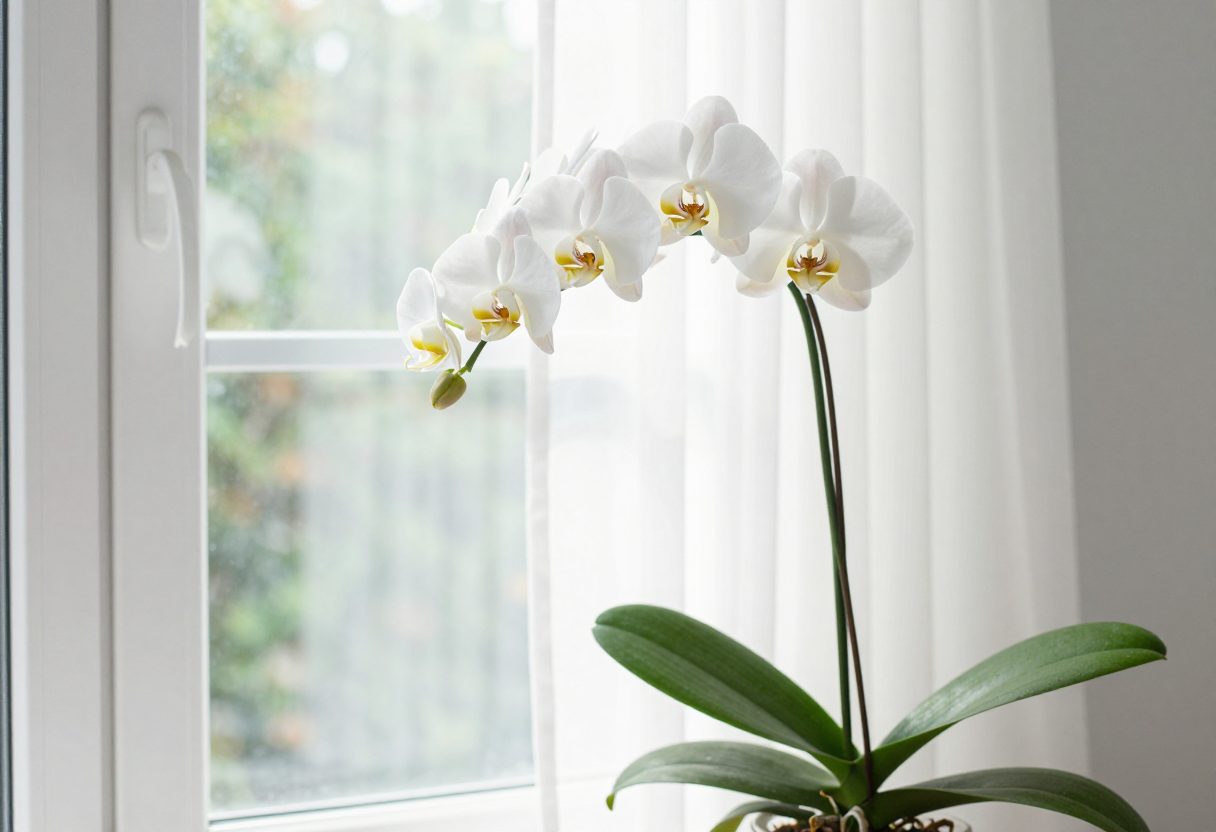
Moth orchids want bright light without harsh direct sun. Too little light means healthy leaves but no flowers, and too much scorches the leaves.
•An east-facing window is often ideal, with gentle morning sun. A south or west window works if a sheer curtain softens the light.
•Healthy leaves are a medium, grassy green. Dark, deep green leaves usually mean too little light, and yellowish or reddish-tinged leaves can mean too much.
•Sunburn shows as pale, dry, or brown patches on leaves, usually after direct midday sun.
•Typical room temperatures suit moth orchids, roughly 65-80°F. Keep them away from cold drafts, radiators, and heating vents.
•A drop in nighttime temperature of several degrees in the fall can help trigger a new flower spike.
•Where window light is limited, a full-spectrum grow light works well. See the Grow Lights guide for placement.
Bright, filtered light suits moth orchids, and a sheer curtain softens strong sun.
Watering and Humidity
More orchids die of overwatering than of anything else. The roots need to dry partly between waterings, so they get both moisture and air.
•Water when the potting bark looks and feels dry and the roots in a clear pot turn silvery-gray, roughly once a week for many homes, and less often in cool or dim conditions.
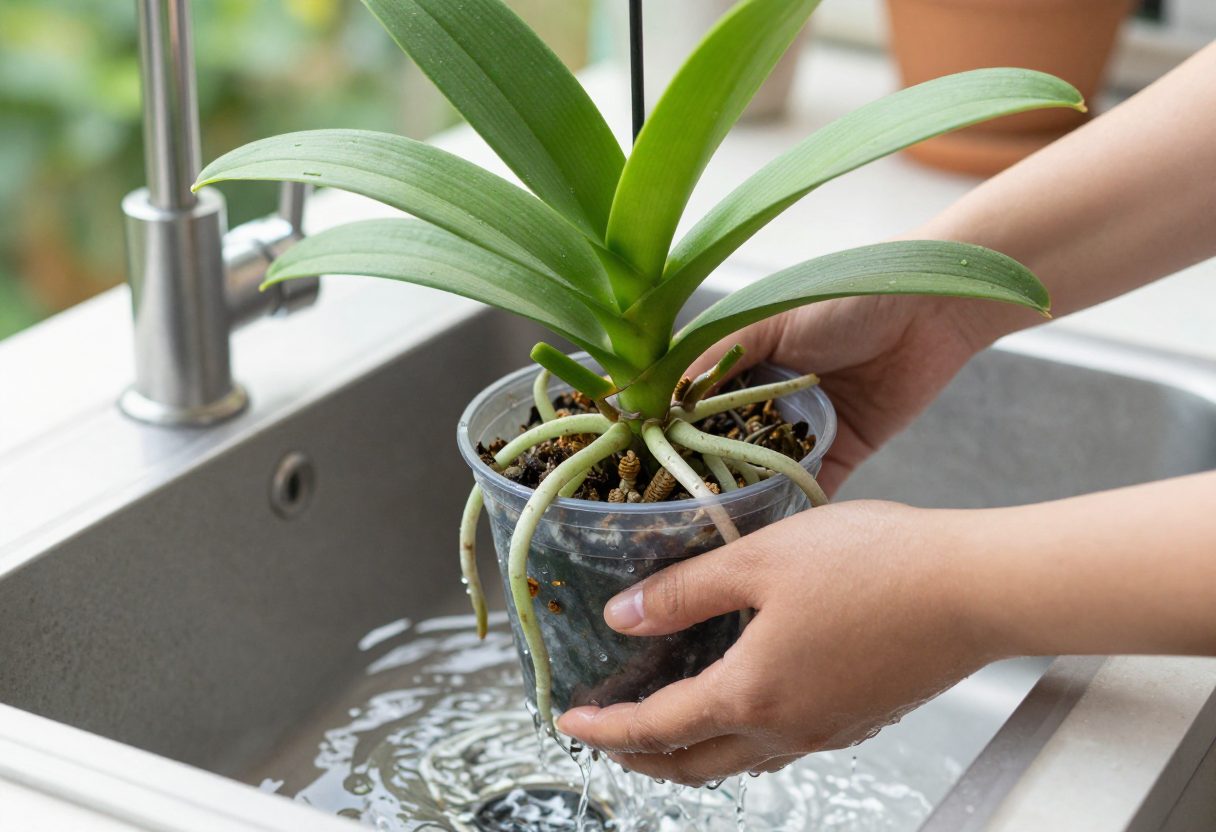
•Soak the pot in a sink or bowl of room-temperature water for about 10-15 minutes, or run water through it, then let it drain thoroughly. Roots turn plump and green when they are hydrated.
•Never leave the pot standing in water in a saucer or decorative cover pot.
•Water in the morning, so leaves dry by evening. Avoid letting water sit in the crown, the center where the leaves join, since it can cause rot.
•Moth orchids like moderate humidity, roughly 40-60 percent. Grouping plants, or standing a pot on a tray of pebbles with water below the pebbles, can help in dry homes.
•Use room-temperature water. If your tap water is very hard or softened with salt, rainwater or filtered water is kinder to the roots.
A short soak, followed by full drainage, waters the roots without leaving them wet.
Potting Media and Reading the Roots
Orchid roots are adapted to grip bark and breathe air, so they need a very open, chunky medium, not soil. The roots are also the best guide to how the plant is doing.
•Use a coarse orchid bark mix, sometimes with a little sphagnum moss or charcoal, in a pot with plenty of drainage.
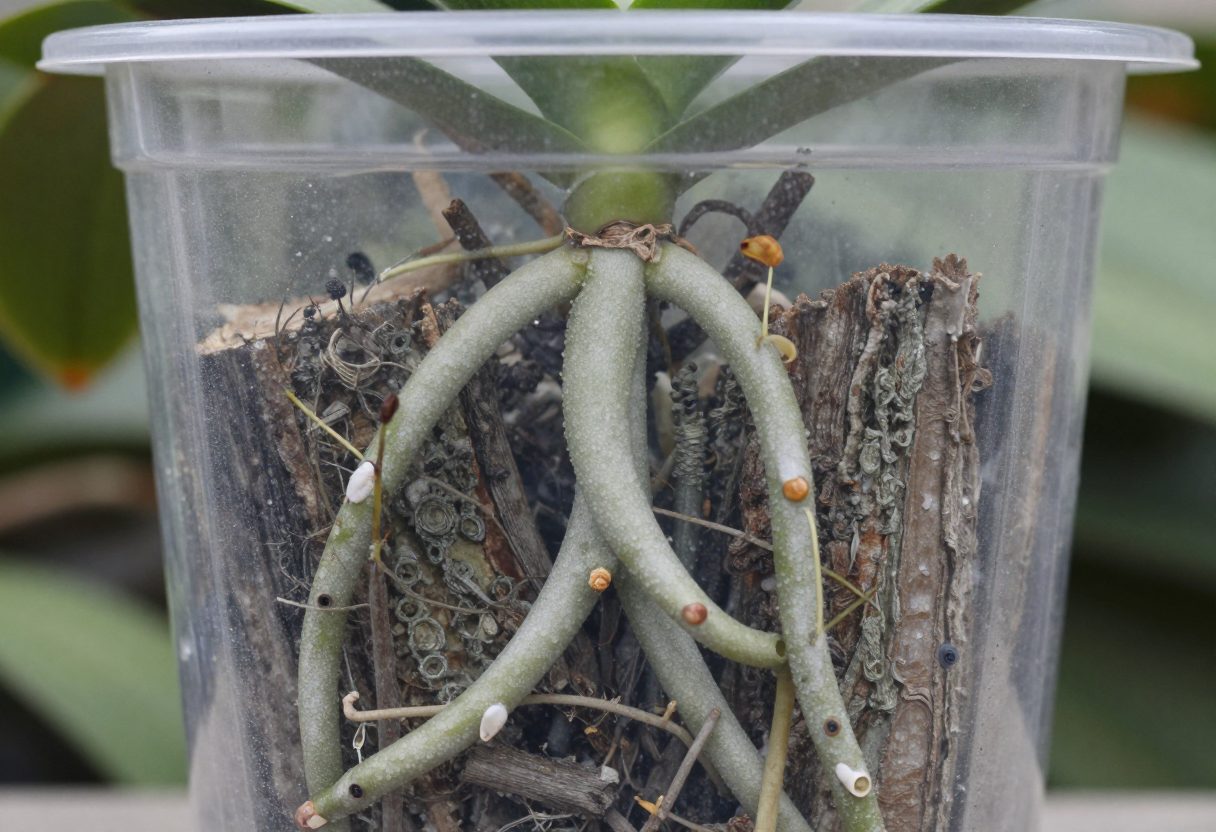
•Clear plastic pots let you see the roots and judge when to water, and let light reach them. Many orchids thrive in them, often inside a decorative cover pot.
•Healthy roots are firm and plump, silvery-gray when dry and green when wet.
•Brown, mushy, or hollow roots are rotting, usually from too much water or a medium that has broken down.
•Some aerial roots growing out of the pot are normal. Leave them alone, and do not bury them.
•Bark breaks down over a year or two, becoming soggy and dense, which is one reason for regular repotting.
A clear pot shows the roots, which turn silvery when dry and green when they have had water.
Repotting
Most moth orchids need fresh bark every year or two, or sooner if the bark has decayed or the roots have outgrown the pot. The best time is right after flowering, when new roots begin to grow.
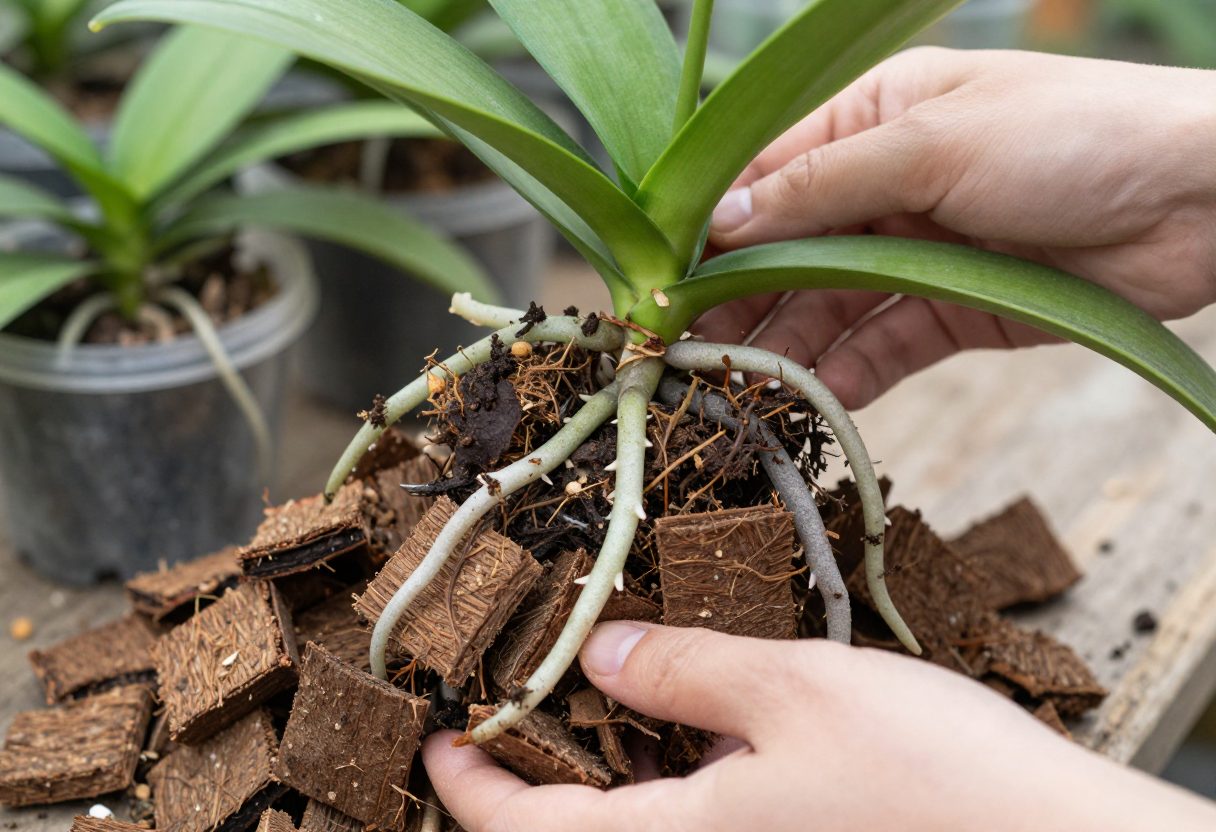
•Slide the plant from its pot, gently loosen the old bark from the roots, and rinse the roots if it helps you see them.
•Trim away any roots that are brown, mushy, or papery and hollow, using clean, sharp scissors, and leave healthy roots alone.
•Choose a pot just large enough for the roots, since orchids bloom better when slightly snug.
•Position the plant so the base of the leaves sits at the top of the medium, and work fresh bark gently between the roots.
•Do not pack the bark tightly, since the roots need air.
•Wait several days before watering thoroughly, and keep the plant out of strong light while it re-establishes.
Fresh, coarse bark and trimmed roots give an orchid a healthy start after flowering.
Feeding and Getting a Second Bloom
Orchids are light feeders, and a plant that is healthy, well lit, and repotted on time will usually bloom again on its own schedule.
•Feed with a balanced fertilizer made for orchids at a weak strength, often quarter to half of the label rate, every couple of weeks while the plant is growing, and less in winter.
•Flush the pot with plain water regularly to wash away built-up fertilizer salts.
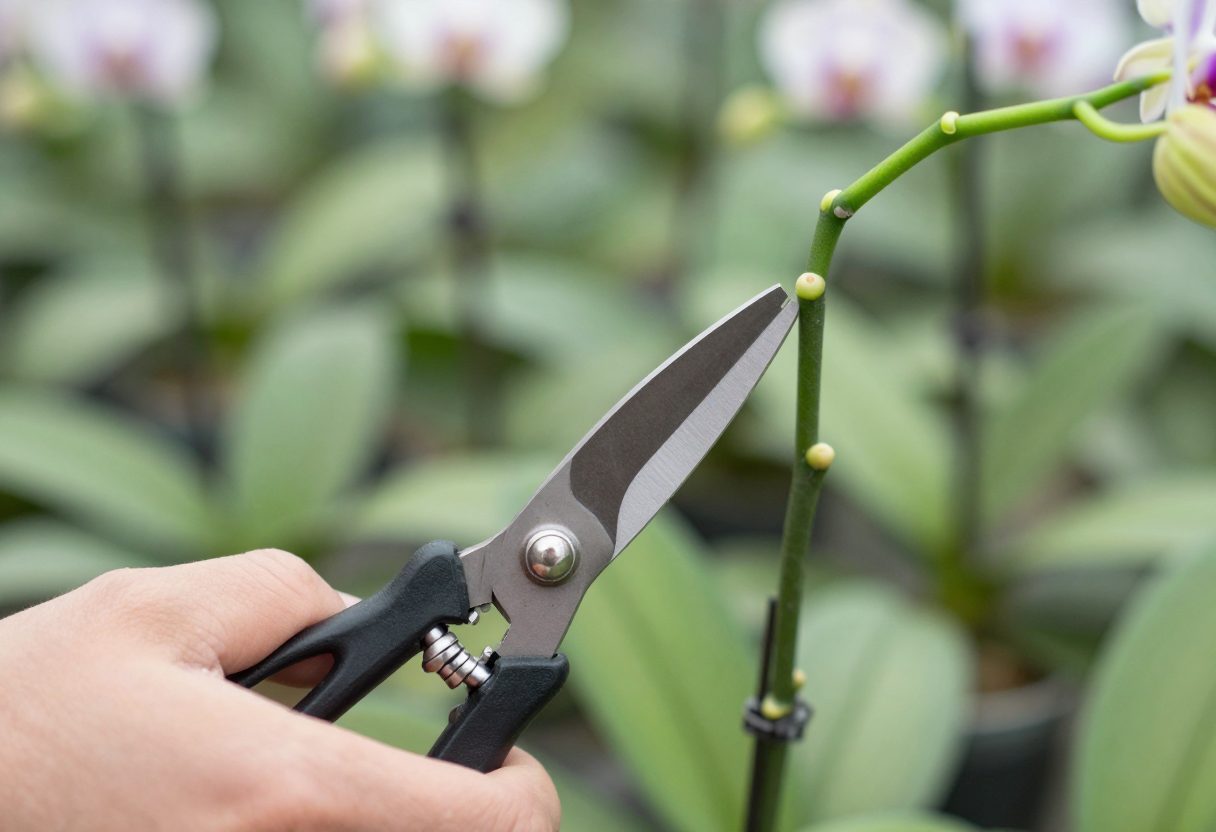
•When the last flower drops, check the flower spike. If it is still green, cut it just above a node, a small bump on the stem, about an inch or so above a lower node, and it may branch and bloom again.
•If the spike has turned brown and dry, cut it off close to the base.
•To trigger a new spike, give bright light and, in the fall, cooler nights for a few weeks. Rebloom often follows in a couple of months.
•Be patient. Some plants rest for many months between bloom cycles.
Problem
Likely cause
What to do
Limp, wrinkled leaves
Rotting roots from overwatering, or dry roots from underwatering
Look at the roots; trim rotten ones and repot, or soak if the roots are dry and shriveled
Flowers or buds drop
Drafts, sudden temperature change, or moved location
Keep the plant away from vents and cold windows, and avoid moving it around
Healthy leaves but no blooms
Not enough light, or no cool-night trigger
Move to brighter light and give cooler autumn nights
Yellowing lower leaf
Normal aging of the oldest leaf
Let it yellow and fall naturally; remove when it comes away easily
Small brown bumps or cottony spots
Scale or mealybugs
Dab with a cotton swab dipped in rubbing alcohol and repeat
Brown, sunken spots on leaves
Sunburn or fungal spot
Move away from direct sun, and keep water out of the crown and off the leaves
Cutting a finished spike just above a node may encourage a second round of flowers.
🌿 Get Seasonal Gardening Tips
New guides, planting reminders, and growing tips — straight to your inbox.
No spam. Unsubscribe anytime.
About the Author
David Rodgers is the Founder & Head Gardener of Planting Atlas. With over 40 years of hands-on gardening experience in Oklahoma's Zone 7 climate, he researches, writes, and personally tests every guide on the site.
David draws from real backyard trials, soil testing, and trusted sources like Oklahoma State University Extension and USDA data to deliver practical, zone-specific advice that actually works.