Sun, drainage, restrained feeding, and winter protection — how to grow figs in the ground or in a large container, even beyond the warmest climates.
Figs have a reputation as a warm-climate fruit, but a fig tree is more adaptable than most gardeners expect. It thrives in poor, well-drained soil, needs no second tree for pollination in the common home-garden types, and can be grown in a large container, trained against a warm wall, or cut back by frost and left to regrow. What figs demand is sun, drainage, and enough summer heat to ripen the fruit. This guide covers choosing a variety, siting and planting, growing in containers, pruning, winter protection, and harvest. For other fruit, see the Fruit Trees and Dwarf Trees guides, and for pruning technique, see Pruning Basics.
Most figs grown at home are the common type, which sets fruit without pollination, so a single tree is enough. Varieties differ mainly in cold tolerance, fruit color and flavor, and how much summer heat they need to ripen.
Variety
Fruit
Suits
Notes
Brown Turkey
Medium, brownish-purple skin, mild sweet flesh
A wide range of climates
One of the most widely grown and adaptable; a good first fig
Celeste
Small, sweet, purplish-brown
Moderately cool to warm climates
Often chosen for cold tolerance and early ripening
Chicago Hardy
Medium, dark purple, sweet
Cold climates; often used where winters are hard
Tends to die back to the ground in cold winters but regrow and fruit the same year
Black Mission
Deep purple to black, rich flavor
Warm climates with long hot summers
A classic for drying and fresh eating; less cold tolerant
Kadota
Yellow-green skin, light amber flesh
Warm climates
Often used for preserves and drying; needs good summer heat
Hardiness varies a lot by variety and by how well the tree is protected. As a rough guide, many figs grow in the ground with little help in mild-winter regions, while in colder areas you choose a hardy variety and either protect it or grow it in a container that can be sheltered.
📍
Ask a local nursery or your cooperative extension office which varieties do well locally. Figs that have already proved themselves in nearby gardens are the safest choice.
Site, Soil, and Planting
Give a fig the sunniest, warmest, best-drained spot you have. It is a tree that rewards neglect in the soil and generosity in the light.
•Choose a site with full sun, at least 6-8 hours a day. More heat means sweeter, better-ripened fruit.
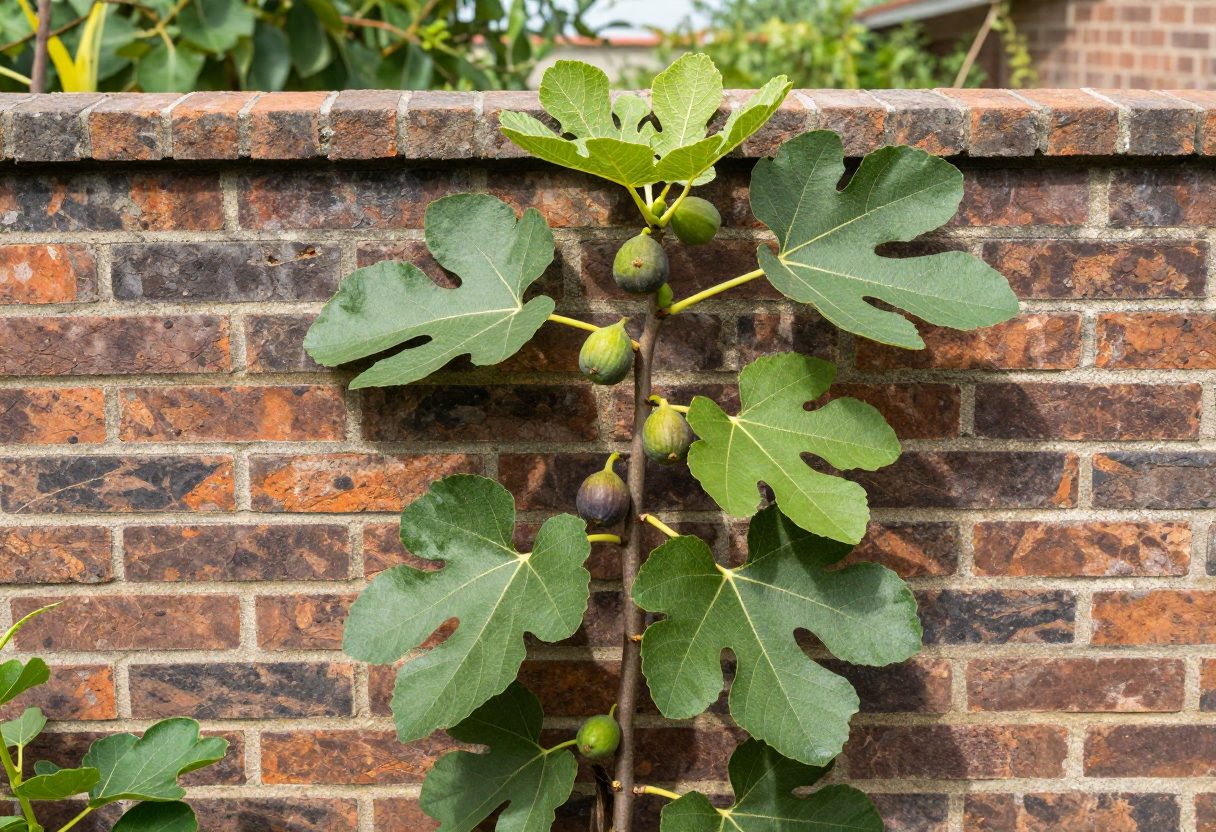
•A south-facing wall or fence that reflects heat is an excellent spot, especially in cooler climates.
•Plant in well-drained soil. Figs dislike wet roots, and a soil pH around 6.0-7.0 suits them. They tolerate ordinary and even poor soil.
•Avoid rich, high-nitrogen soil and heavy feeding. It produces vigorous leafy growth at the cost of fruit, and soft growth is more easily damaged by cold.
•Give in-ground trees room, since many grow into large shrubs or small trees. Roughly 10-15 feet between trees is typical for standard sizes, and pruning can keep them smaller.
•Plant at the same depth as in the nursery pot, water in well, and mulch to hold moisture, keeping the mulch a few inches from the trunk.
•Water regularly through the first season while roots establish, then deeply but less often once the tree is settled.
A sunny wall stores heat and helps figs ripen, especially where summers are short.
Growing Figs in Containers
Figs do well in containers. The limited root space keeps them smaller and often makes them fruit sooner, and in cold climates a potted tree can be moved to shelter for winter.
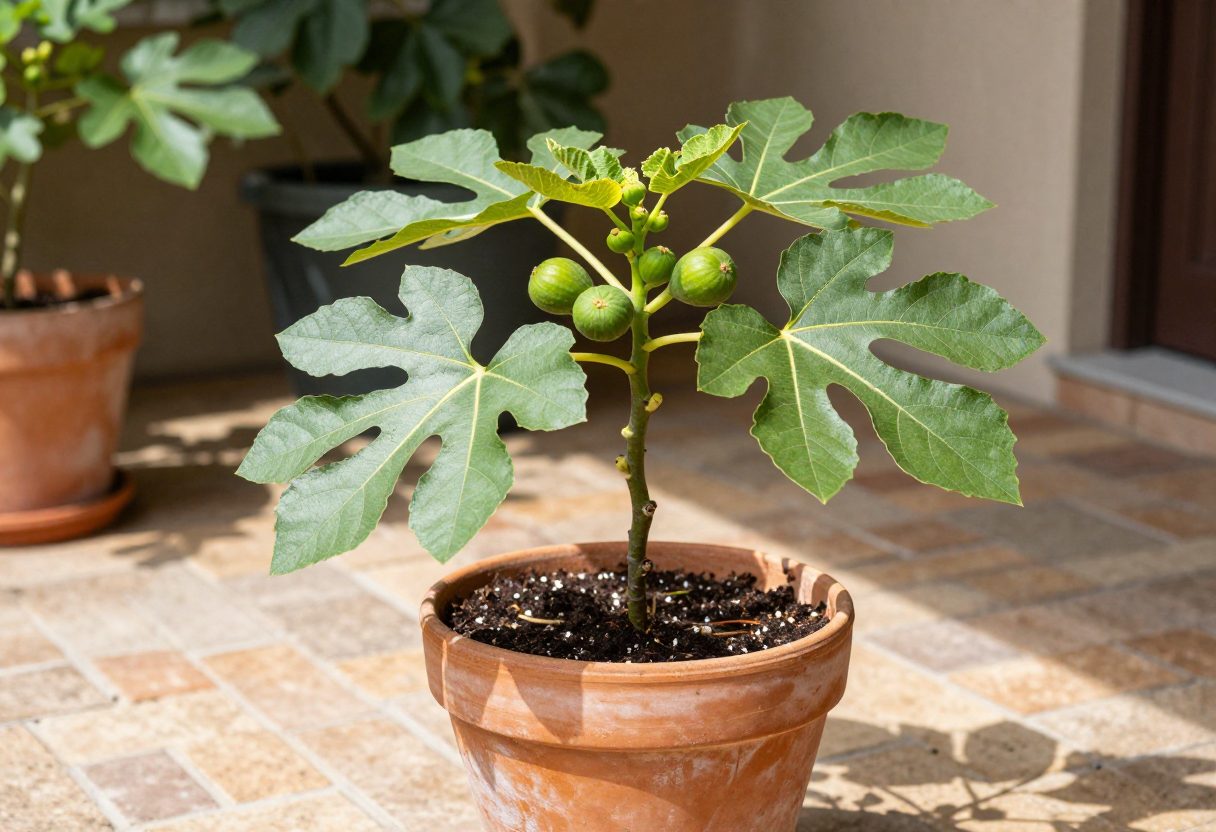
•Use a large container with drainage holes, roughly 15-20 gallons for a mature tree, and start smaller for a young plant, moving it up in size as it grows.
•Fill with a good-quality, well-draining potting mix. Heavy garden soil compacts in pots and holds too much water.
•Put the pot in full sun. A rolling stand makes it easy to move the tree to a warmer or more sheltered spot.
•Water when the top few inches of soil feel dry, and expect to water often in summer, since a large leafy tree in a pot dries quickly.
•Feed lightly through the growing season, using a balanced fertilizer at the label rate or less. Too much nitrogen produces leaves instead of figs.
•Every few years, root-prune or repot the tree in late winter while it is dormant, trimming some outer roots and refreshing the mix.
A large pot in full sun suits a fig, and lets you move it under cover for winter.
Pruning and Training
Figs fruit on wood grown the same season and, in some varieties and climates, on wood from the previous year as well. Pruning is mainly about shaping the tree, keeping it a manageable size, and letting light into the canopy.
•Prune in late winter while the tree is dormant and before new growth starts.
•Remove dead, damaged, and crossing branches, and any weak growth crowding the center.
•Keep a few main branches, often three to five, and shorten others to control size and height.
•Remove suckers that sprout from the base unless you want a multi-stemmed shrub.
•A tree that is cut back hard by frost can still be pruned in spring, cutting to healthy live wood once you see where new growth begins.
•To keep a tree compact and fruit within reach, cut back overly tall shoots and keep the height manageable.
⚠️
The milky sap of a fig can irritate skin, and in sunlight it may cause a rash in some people. Wear gloves and long sleeves when pruning, and wash off any sap promptly.
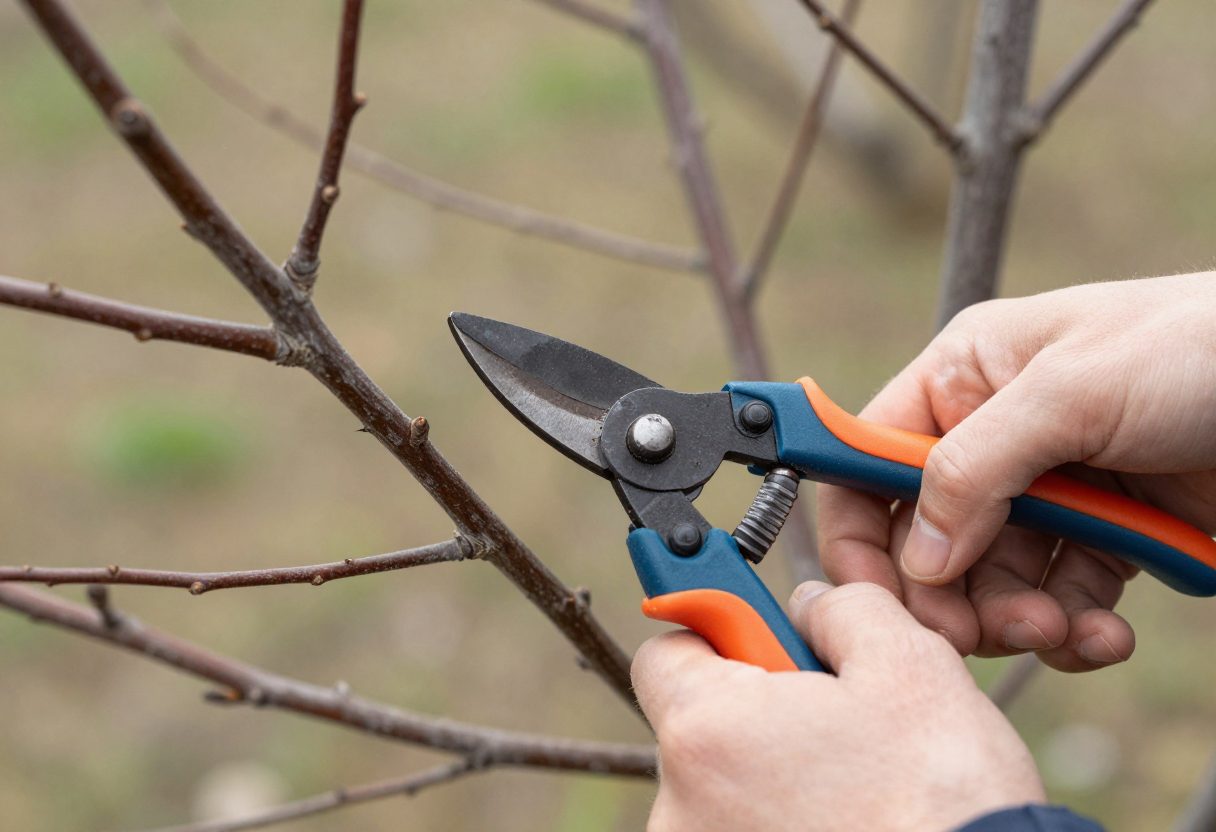
Late winter, while the tree is dormant, is the time to prune a fig.
Winter Protection
In mild climates a fig needs no special care, but where winters are colder the tree needs help. The aim is to protect the wood and roots so the tree comes back strongly in spring.
Situation
What to do
Mild winters, little frost
No protection is usually needed; mulch the base lightly
Cool winters with occasional hard frost, in the ground
Mulch deeply around the base, and wrap the tree loosely with burlap or frost cloth on the coldest nights
Cold winters, in the ground
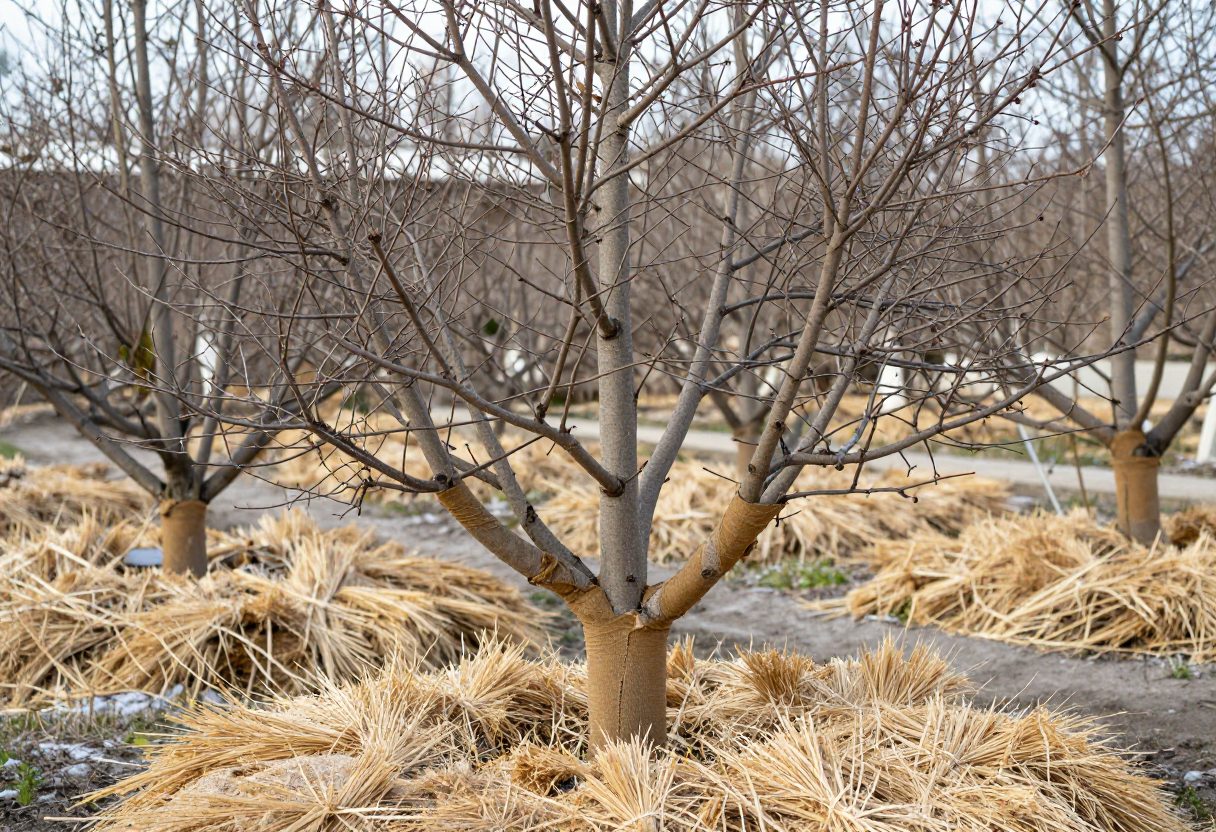
After leaf drop, tie branches together, wrap with burlap over insulation, cover the base with a thick layer of straw or leaves, and shelter from wind; a hardy variety may regrow from the roots even if stems die back
Container fig in a cold climate
After leaves drop, move the pot to an unheated garage, shed, or cellar that stays cold but above severe freezing; water very lightly through winter, and return the pot outdoors when danger of hard frost has passed
🧣
Do not wrap a fig in plastic, which traps moisture and can cause rot. Use breathable materials such as burlap, and remove the wrap gradually in spring once hard frost is over.
Deep straw mulch over the roots is the first layer of winter protection; burlap over the branches adds more.
Harvest and Common Problems
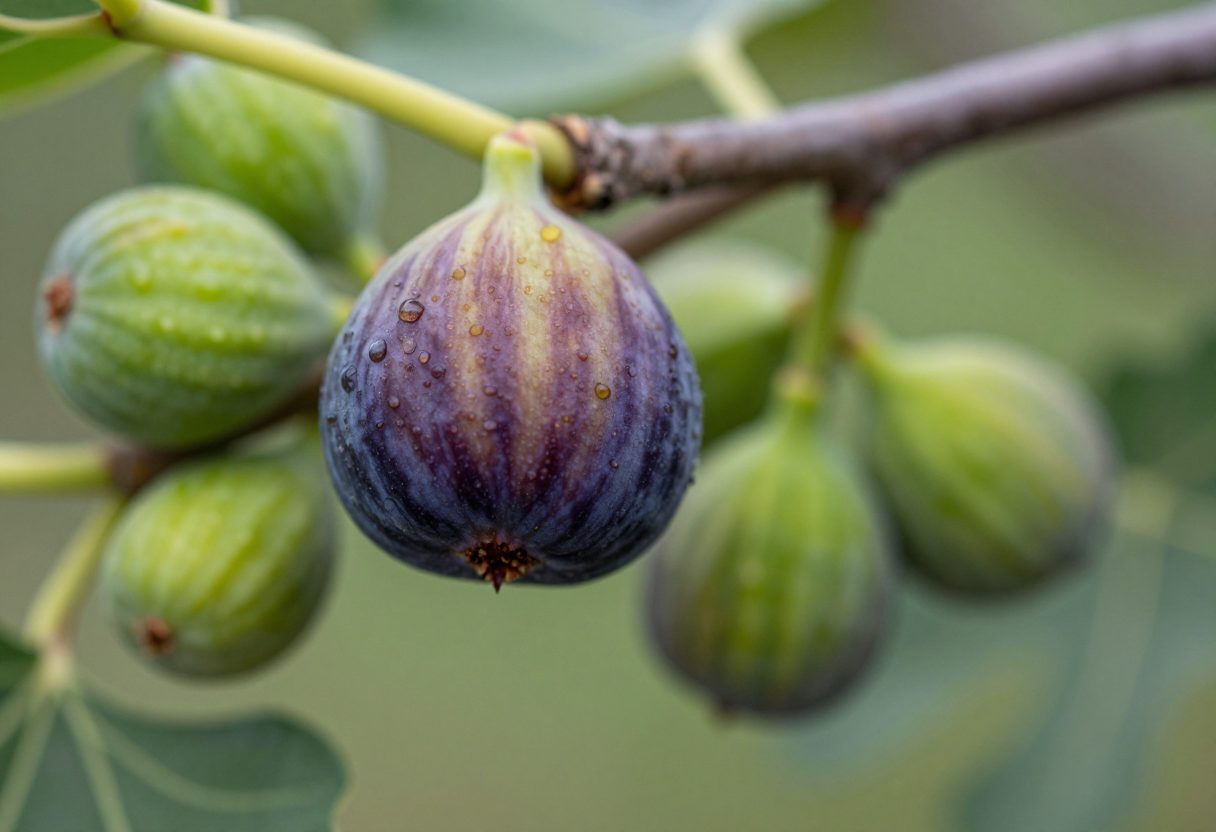
A fig does not ripen further once picked, so wait until it is truly ready. A ripe fig hangs and droops on the stem, feels soft to a gentle squeeze, and often shows a small crack or bead of syrup near the eye.
Problem
Likely cause
What to do
Figs stay hard and never ripen
Not enough summer heat, too much shade, or too much nitrogen
Give the tree the sunniest spot, reduce feeding, and try a wall or container that captures more warmth
Fruit splits
Uneven watering, or heavy rain when the fruit is ripe
Water evenly and pick figs as soon as they are ripe
Fruit drops while small
Water stress, or a young tree that is not yet established
Keep watering consistent; young trees often improve with age
Birds and insects eat ripe fruit
Ripe figs are attractive to wildlife and to wasps and ants
Cover branches with netting as fruit ripens and pick promptly
Orange spots on leaves, leaf drop
Fig rust, common in humid, wet weather
Water at the base, rake up fallen leaves, and improve airflow
Poor growth in sandy soil
Root-knot nematodes in some soils
Grow the tree in a large container with clean potting mix, or plant in improved soil with lots of organic matter
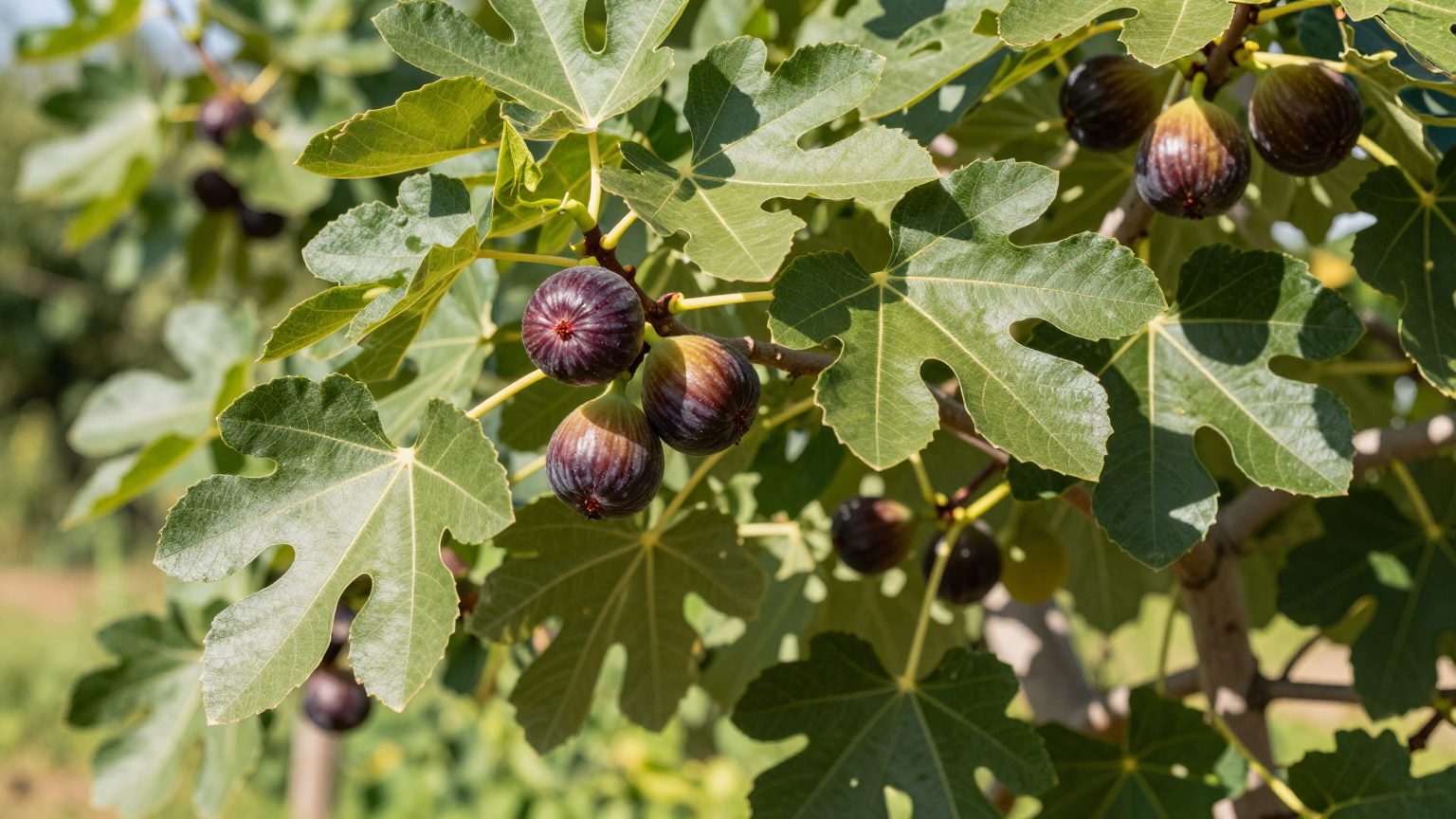
A ripe fig droops and softens; hard green figs are not ready yet.
🌿 Get Seasonal Gardening Tips
New guides, planting reminders, and growing tips — straight to your inbox.
No spam. Unsubscribe anytime.
About the Author
David Rodgers is the Founder & Head Gardener of Planting Atlas. With over 40 years of hands-on gardening experience in Oklahoma's Zone 7 climate, he researches, writes, and personally tests every guide on the site.
David draws from real backyard trials, soil testing, and trusted sources like Oklahoma State University Extension and USDA data to deliver practical, zone-specific advice that actually works.