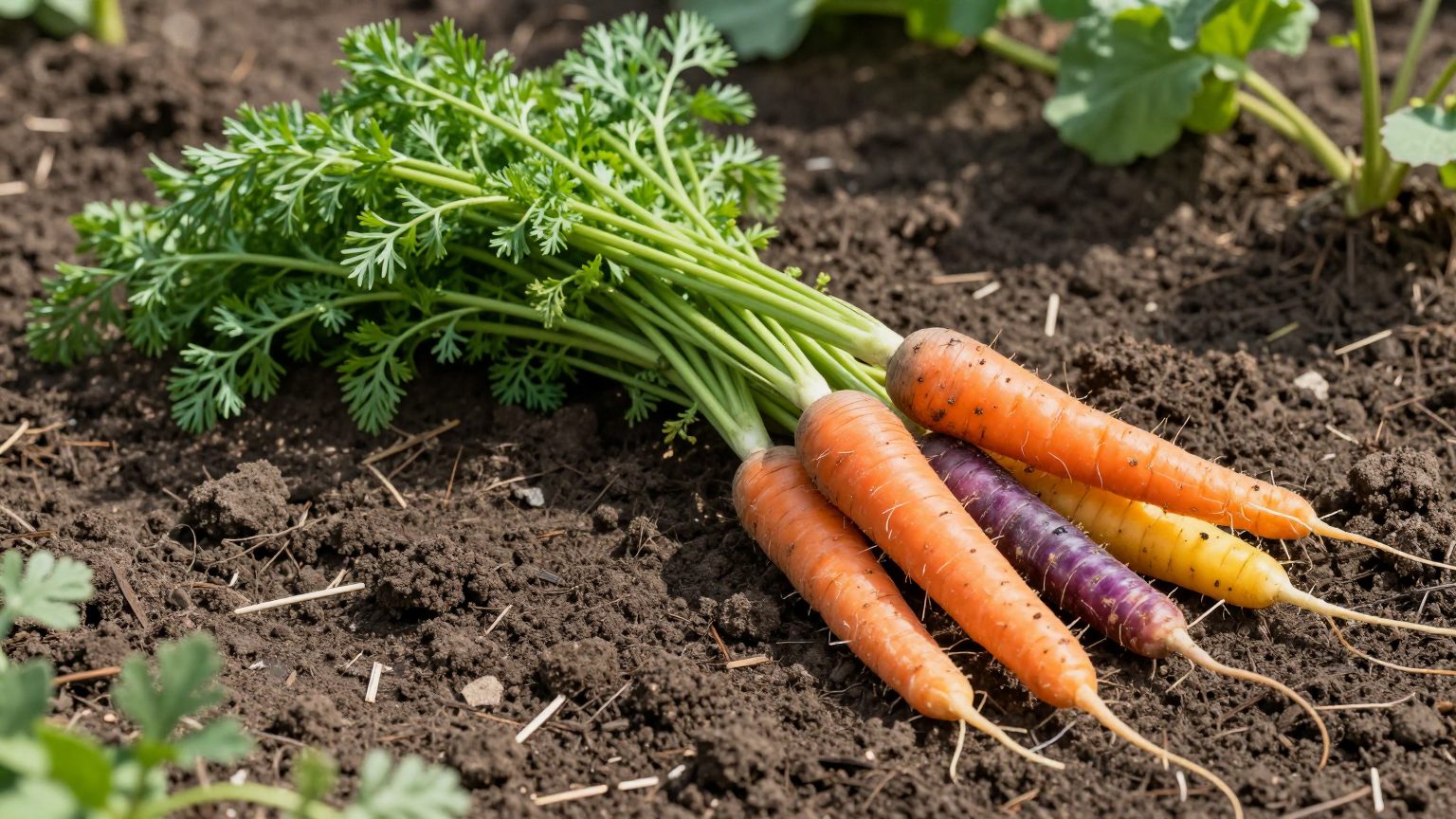
Loose soil, patient germination, and steady water — how to grow straight carrots, beets, radishes, turnips, and parsnips.
Root vegetables reward good soil preparation more than almost any other crop. Carrots, beets, radishes, turnips, and parsnips all form their harvest underground, so hard soil, stones, and uneven watering show up directly in the crop as forked, cracked, or stunted roots. The good news is that most of the work happens before you sow: a loose, stone-free, well-drained bed carries a root crop nearly on its own. This guide covers preparing the seedbed, sowing and thinning, the other common root crops, the usual problems, and harvest and storage. For bed construction, see Raised Bed Gardening, and for keeping crops coming, see the Succession Planting Planner.
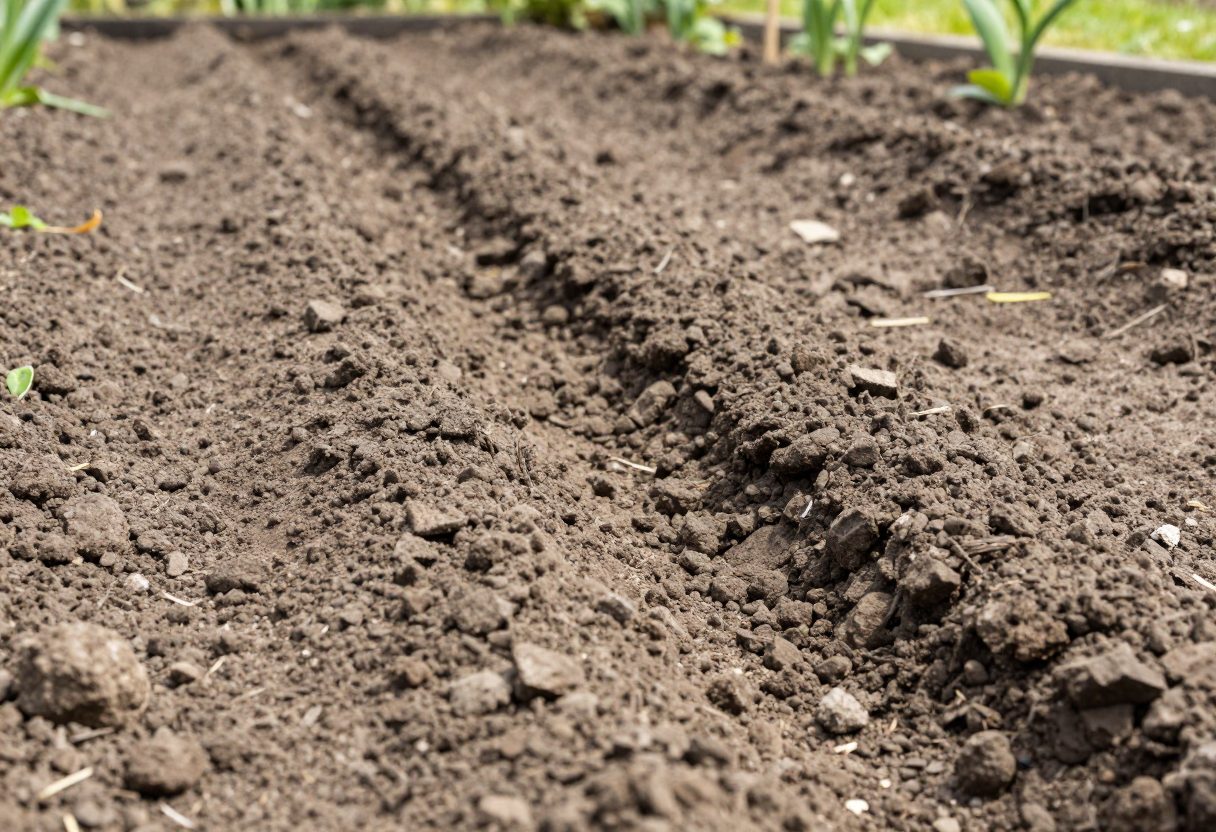
A root has to push straight down through the soil, so the ideal bed is loose, deep, and free of anything that blocks it. Carrots and parsnips are the most demanding, since their long roots deflect or fork at the first obstacle.
•Loosen the soil to roughly 10-12 inches deep for carrots and more for parsnips, and remove stones, sticks, and clods you find.
•Rake the top few inches fine and level, so tiny seeds are in contact with crumbly soil.
•Choose a spot with full sun and good drainage. Heavy clay is a challenge; raised beds filled with loose, sandy loam are a reliable fix.
•Aim for a soil pH around 6.0-7.0 for most root crops.
•Do not add fresh manure before sowing, and go easy on nitrogen. Fresh manure and too much nitrogen encourage forked, hairy roots and lots of leafy tops instead of good roots. Compost that is fully finished is fine.
•Where soil is hard or rocky, consider growing shorter or round varieties, which are more forgiving.
🌱
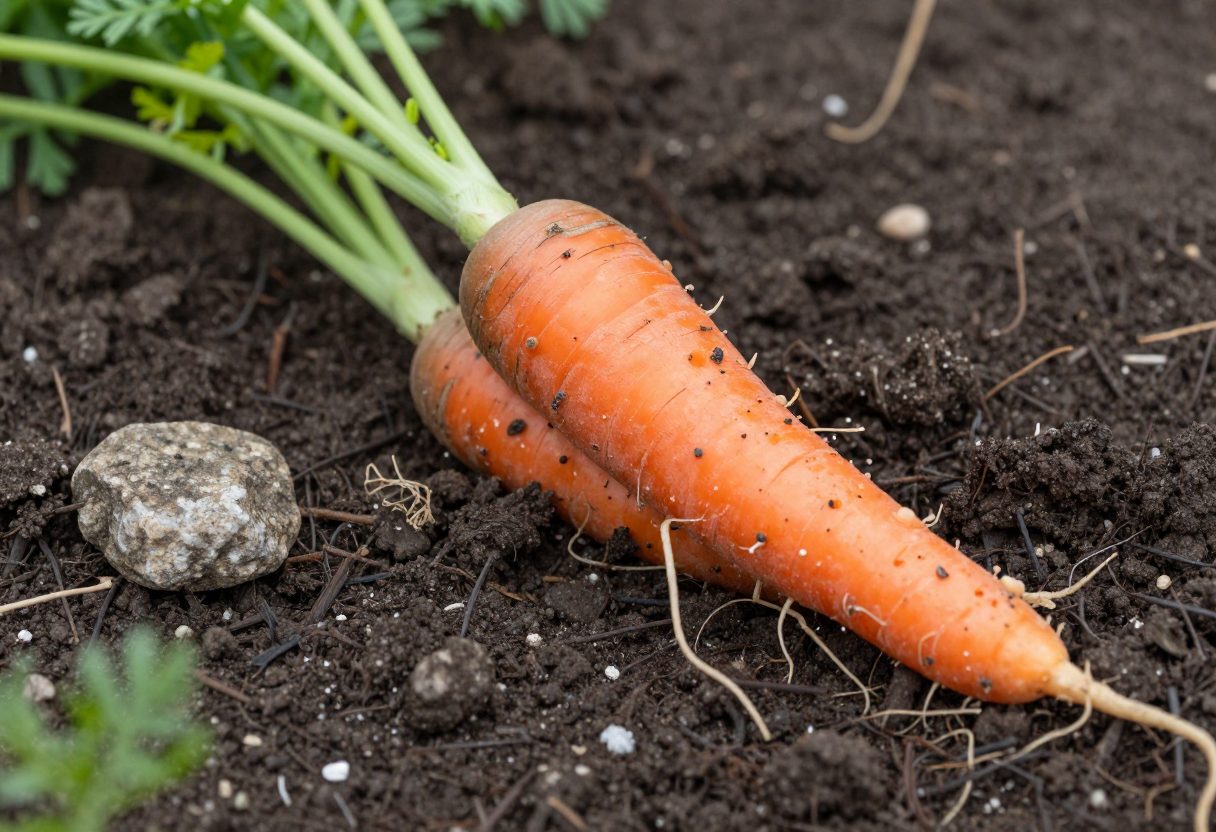
Fine, crumbly soil with no stones is the single biggest factor in straight carrots. If you only improve one thing, sift or rake out the stones and break up every clod.
A fine, stone-free bed and a shallow furrow give carrot seeds the best start.
Sowing, Germination, and Thinning
Carrot seeds are tiny and slow. They can take one to three weeks to germinate, and the seedbed must stay evenly damp the whole time. A crust that dries and hardens over the row is a common reason carrots fail to come up.
•Sow carrots directly, about 1/4 inch deep, in rows spaced roughly 12 inches apart. Root crops do not transplant well, since disturbing the root causes forking.
•Sow carrots a few weeks before the last spring frost, once soil can be worked, and continue every few weeks for a steady harvest. A fall crop sown in late summer is often the sweetest.
•Keep the surface consistently damp until seedlings emerge. Lightly water once or twice a day in dry weather, or lay a board or strip of burlap over the row and lift it daily to check for sprouts.
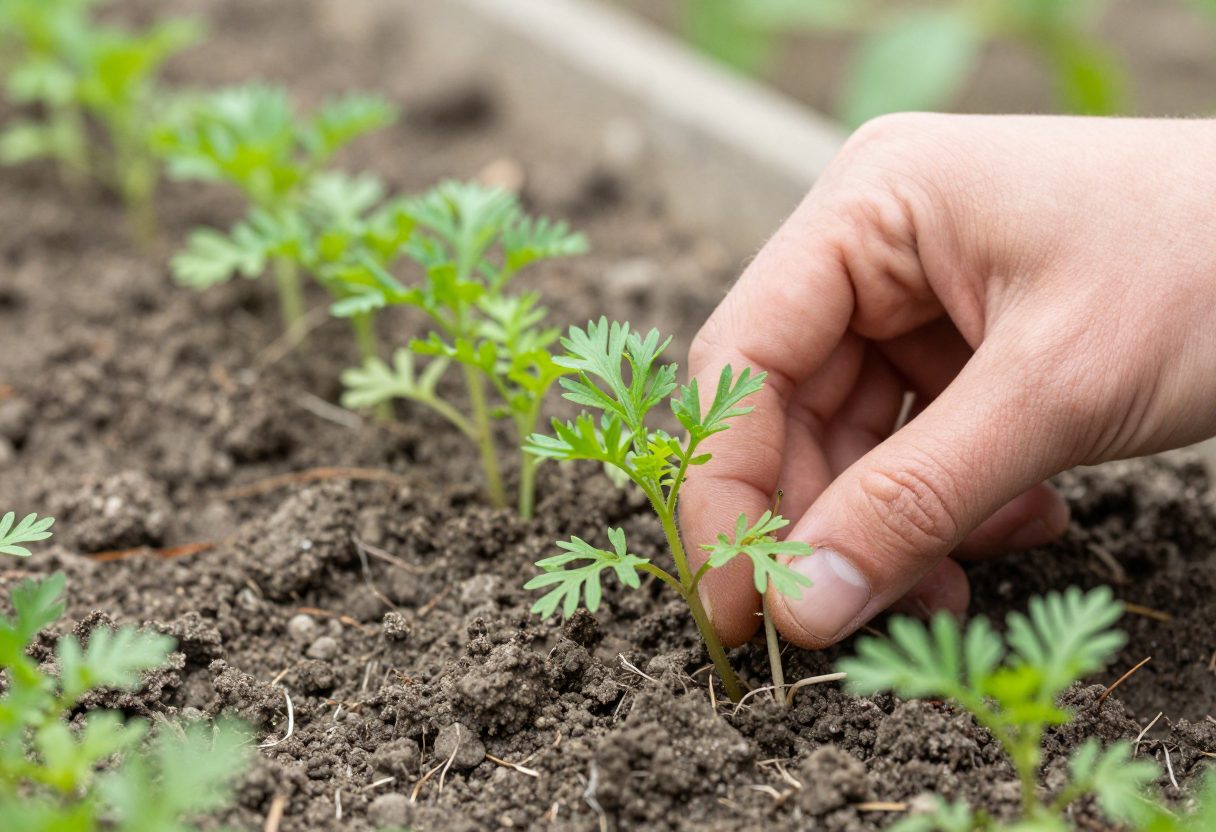
•Thin seedlings when they are about 2 inches tall, to roughly 2-3 inches apart. Snip extras with scissors at the soil line instead of pulling, which can disturb the neighbors.
•Thin on a cool or cloudy evening if you can, since the smell of bruised carrot leaves can attract carrot rust flies.
•Mulch lightly after the seedlings are established, to hold moisture and prevent the soil from crusting.
⏱️
Mix a few fast radish seeds into the carrot row. Radishes sprout in days, marking the row and breaking the soil crust, and you harvest them long before the carrots need the room.
Thin carrot seedlings to a few inches apart so each root has room to swell.
Beets, Radishes, Turnips, and Parsnips
The other common root crops share the same basic recipe: loose soil, direct sowing, and even moisture. They differ mainly in speed, depth, and how much cold they enjoy.
Crop
Sowing
Spacing after thinning
Time to harvest (approx.)
Notes
Carrots
Early spring to midsummer; fall crop in late summer
2-3 inches
Roughly 60-80 days, varying by variety
Slow to germinate; sweeter after a light frost
Beets
Early spring and again in late summer
3-4 inches
Roughly 50-65 days
Each seed is a cluster that produces several seedlings, so thinning is needed; leaves are edible too
Radishes
Early spring and fall; struggle in summer heat
1-2 inches
Roughly 3-5 weeks
The fastest crop; pick promptly or roots turn woody and hot
Turnips
Early spring and late summer for fall
4-6 inches
Roughly 5-8 weeks
Prefer cool weather; greens are edible
Parsnips
Early spring, as soon as soil can be worked
3-4 inches
Roughly 100-120 days
Very slow to germinate and need a long season; flavor sweetens after cold weather
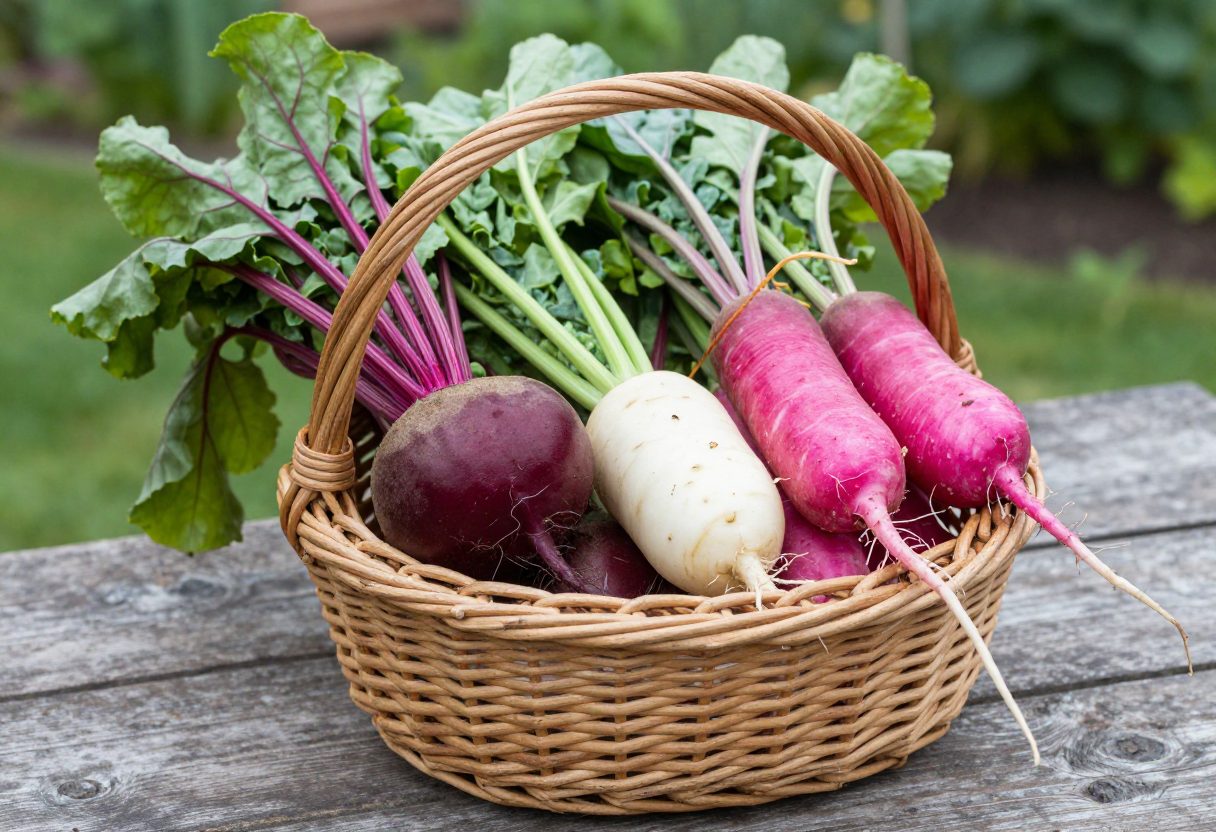
Radishes and turnips are quick and cool-season, and a hot spell makes them bolt, or run to seed, and turn woody. Beets tolerate a little more heat and give you both roots and greens. Parsnips are the long-term, patient choice, occupying the bed most of the season.
Root crops share the same basic needs, but differ in speed and how much heat they tolerate.
Common Problems
Most root crop problems trace back to the soil and the watering. Uneven moisture and obstacles in the soil cause the majority of misshapen roots.
Problem
Likely cause
What to do
Forked or twisted roots
Stones, hard soil, or fresh manure; sometimes root damage from thinning
Prepare a loose, stone-free bed and avoid fresh manure; sow in place instead of transplanting
Split or cracked roots
Heavy watering after a dry spell
Water evenly and mulch to steady soil moisture
Green or purple shoulders on carrots
Roots exposed to light at the soil surface
Hill a little soil or mulch over exposed tops
Bitter or woody roots
Heat stress, or roots left in the ground too long
Sow for cooler seasons and harvest at a good size
Lots of leaf but small roots
Too much nitrogen, or crowding
Avoid nitrogen-heavy fertilizer and thin promptly
Tunnels in the roots
Carrot rust fly larvae, or wireworms
Cover carrots with fine row cover from sowing, rotate crops, and avoid thinning in a way that releases scent
Seeds do not come up
Soil surface dried out or crusted
Keep the seedbed damp and lay a board or burlap over the row until germination
Forked roots are usually a soil problem, and a fine, stone-free bed prevents most of them.
Harvesting and Storing
You can begin harvesting root crops once they reach a usable size, and small roots are often the tenderest. Check the size of the shoulders at the soil surface to judge how big the root is below.
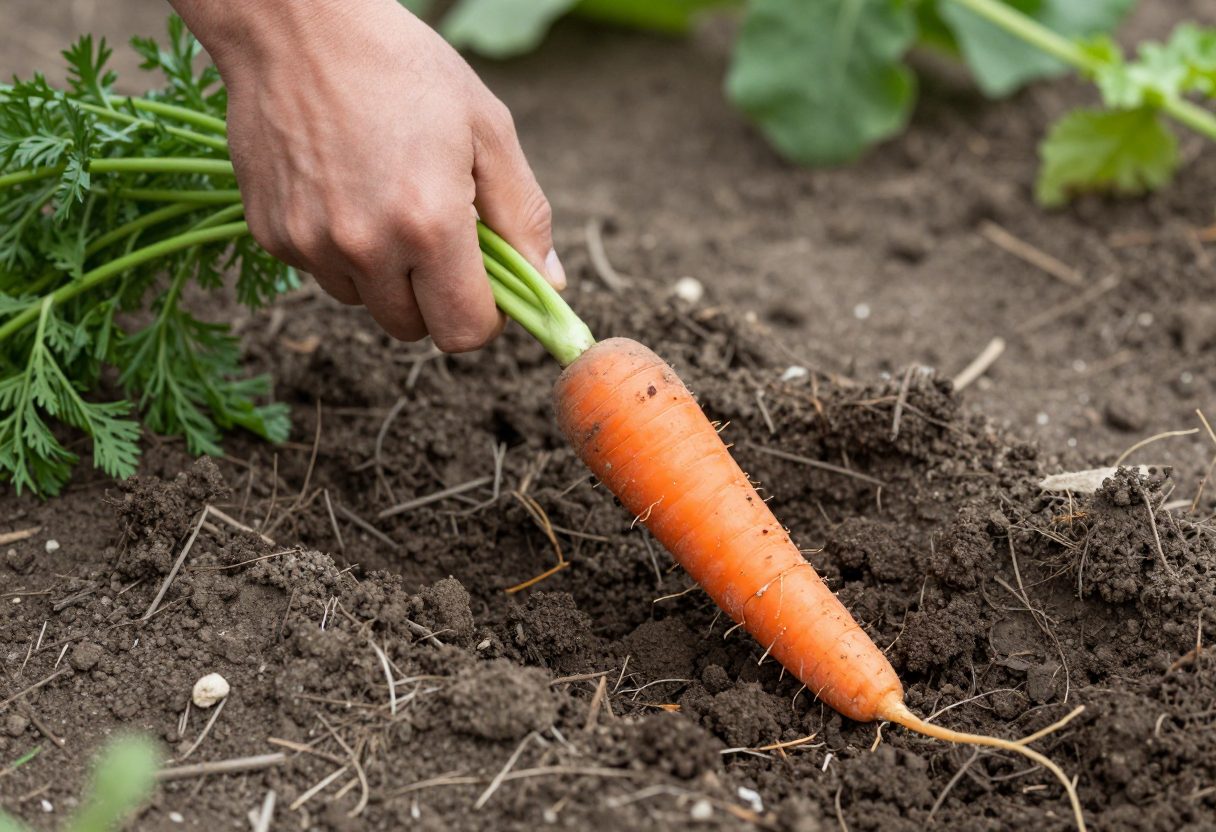
•Water the bed the day before harvesting, so the soil is soft and roots pull easily. Loosen the soil with a garden fork beside the row for long roots such as carrots and parsnips.
•Twist off the tops when you harvest, leaving about an inch of stem. Left on, the leaves draw moisture out of the root.
•Carrots and beets keep for weeks in the refrigerator in a loosely sealed bag. Radishes are best used within a week or so.
•For longer storage, pack undamaged roots in barely damp sand or sawdust in a cool place, ideally somewhere near freezing but not below, and high in humidity, such as a cool basement or root cellar.
•In mild climates, carrots, beets, and parsnips can stay in the ground under a thick layer of mulch and be dug as needed.
•Parsnips and carrots often taste sweeter after a few light frosts, as cold turns starch to sugar.
🔄
Do not grow the same root crop in the same bed year after year. Rotating carrots and their relatives to a new spot each year reduces carrot rust fly and soil pests. See Post-Harvest Garden Care for a rotation plan.
Water the day before, so roots slide out of soft soil without breaking.
🌿 Get Seasonal Gardening Tips
New guides, planting reminders, and growing tips — straight to your inbox.
No spam. Unsubscribe anytime.
About the Author
David Rodgers is the Founder & Head Gardener of Planting Atlas. With over 40 years of hands-on gardening experience in Oklahoma's Zone 7 climate, he researches, writes, and personally tests every guide on the site.
David draws from real backyard trials, soil testing, and trusted sources like Oklahoma State University Extension and USDA data to deliver practical, zone-specific advice that actually works.