Bush, pole, snap, shelling, and snow — when to sow each one, how to support them, and how to harvest heavily for weeks.
Beans and peas are among the easiest and most generous vegetables in the garden. They grow from large, easy-to-handle seeds sown straight into the ground, they need little feeding because they work with soil bacteria to gather their own nitrogen, and a small patch can produce for weeks if you keep picking. The main thing to understand is that the two are opposites in temperature: peas are cool-season plants sown in early spring, while beans are warm-season plants that wait until the soil has warmed. This guide covers the types, timing, supports, care, common problems, and harvest of both. For bed layout, see Square Foot Gardening, and for classic pairings, see Companion Planting and Three Sisters Garden.
Both crops come in several forms, and the form you choose decides how much space and support you need and when you harvest.
Type
Growth habit
Harvest
Good to know
Bush snap beans
Compact plants, roughly 1-2 feet tall, no support needed
Pods eaten whole while slender; one main flush over a few weeks
Easiest for beginners and containers; sow again every few weeks for a steady supply
Pole snap beans
Twining vines that climb 6 feet or more
Pods eaten whole; picking continues for many weeks
Need a sturdy trellis or teepee, but yield more per square foot of ground
Runner beans
Vigorous climbing vines with showy flowers
Pods eaten whole; flowers attract hummingbirds and bees
Prefer cooler summers and often stop setting pods in extended heat
Shelling and dry beans
Bush or pole, depending on variety
Seeds shelled fresh, or left to dry on the plant
Need a longer season; ideal for storing through winter
Snap peas
Vines, often 4-6 feet tall
Whole plump pod is eaten, crisp and sweet
The most popular garden pea; most varieties want a trellis
Snow peas
Vines, usually 3-5 feet tall
Flat pods eaten before the peas swell
Fast and productive; pick daily at peak
Shelling (garden) peas
Vines or shorter bush types
Peas are shelled from the pod, which is discarded
Sweetest when eaten fresh; the sugar turns to starch soon after picking
🌱
For a first garden, plant one bush snap bean and one snap pea variety. Both are forgiving, both produce quickly, and between them you cover the cool and warm seasons.
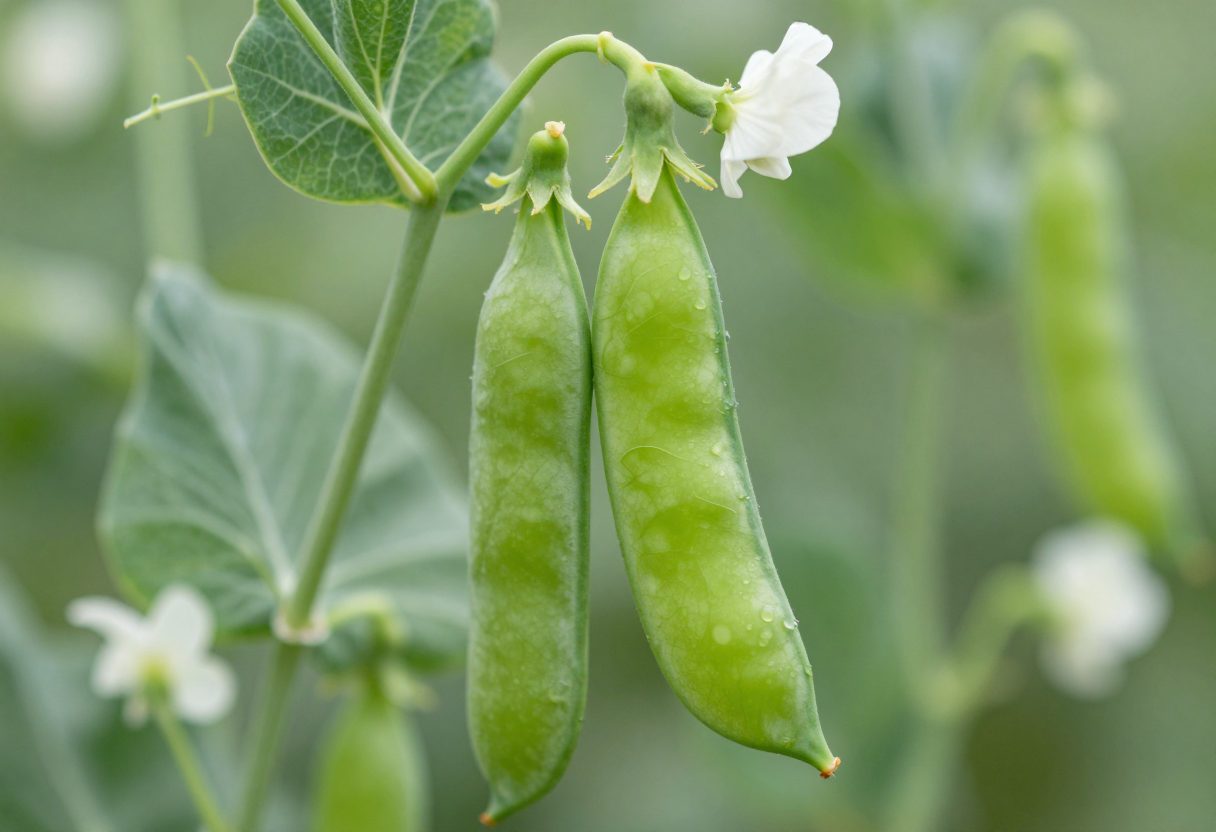
Snap peas are eaten pod and all, and are usually best picked while the pods are full but still tender.
When and How to Plant
Timing is the most important difference between the two crops. Plant peas as soon as the soil can be worked in spring, and wait for warm soil before planting beans.
•Peas: sow as soon as the ground is workable and no longer waterlogged. Seeds germinate in quite cool soil, and plants tolerate light frosts. Sow roughly 1-2 inches deep and about 2 inches apart.
•Beans: wait until the danger of frost has passed and the soil has warmed, generally to 60°F or more. Bean seeds rot in cold, wet soil, so patience pays off. Sow roughly 1 inch deep.
•Bush beans: space seeds roughly 2-4 inches apart in rows or blocks. Pole beans: plant a few seeds at the base of each support and thin to the strongest.
•Sow directly into the garden. Both crops resent root disturbance, so they usually do poorly when started in pots and transplanted.
•For a steady supply, sow bush beans again every 2-3 weeks until roughly two months before your first fall frost. In areas with mild winters, peas can also be sown in fall for a late crop.
•Watering the seed in well once at sowing is enough. Avoid heavy repeated watering until seedlings emerge, since soggy soil rots seed.
🧪
Legume inoculant is a powder of the beneficial bacteria that help beans and peas fix nitrogen. It is inexpensive and can help in soil that has never grown legumes, but it is optional in most established gardens.
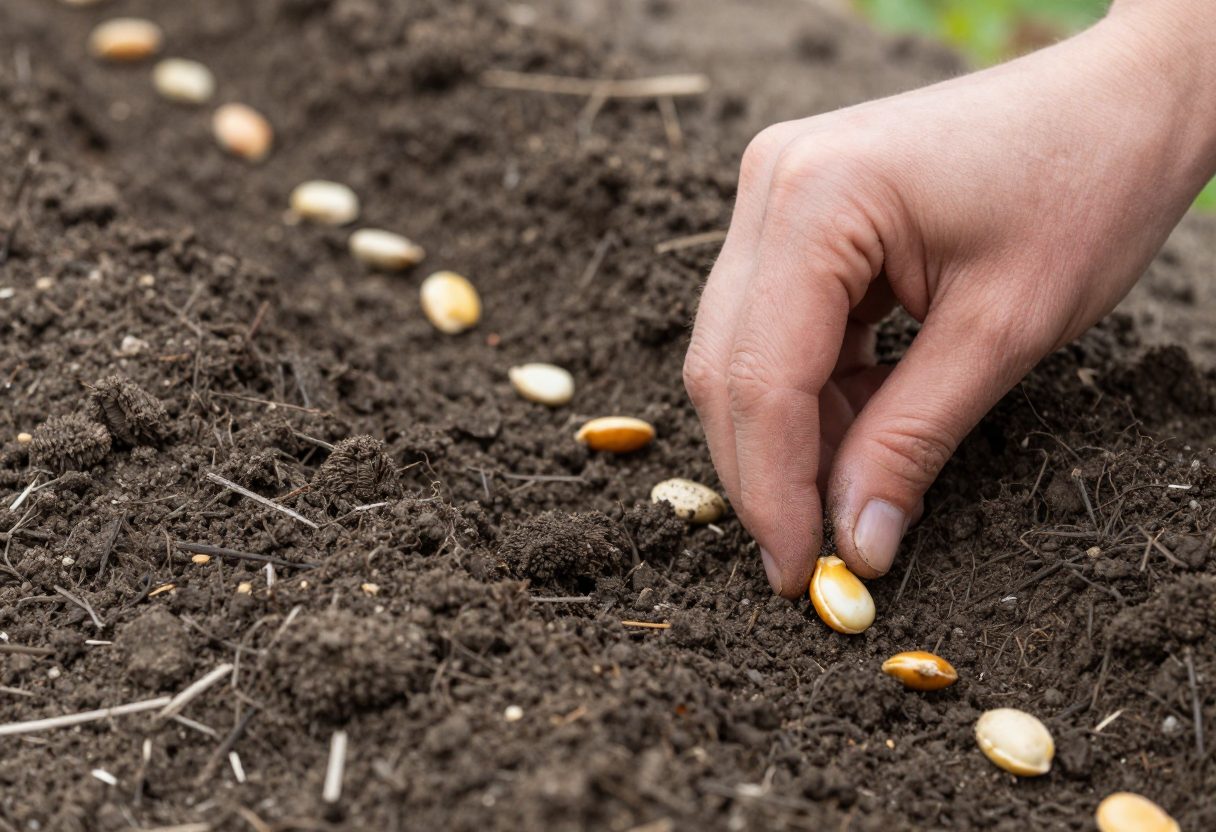
Large seeds are easy to space by hand and are sown straight into the bed.
Supports for Climbing Types
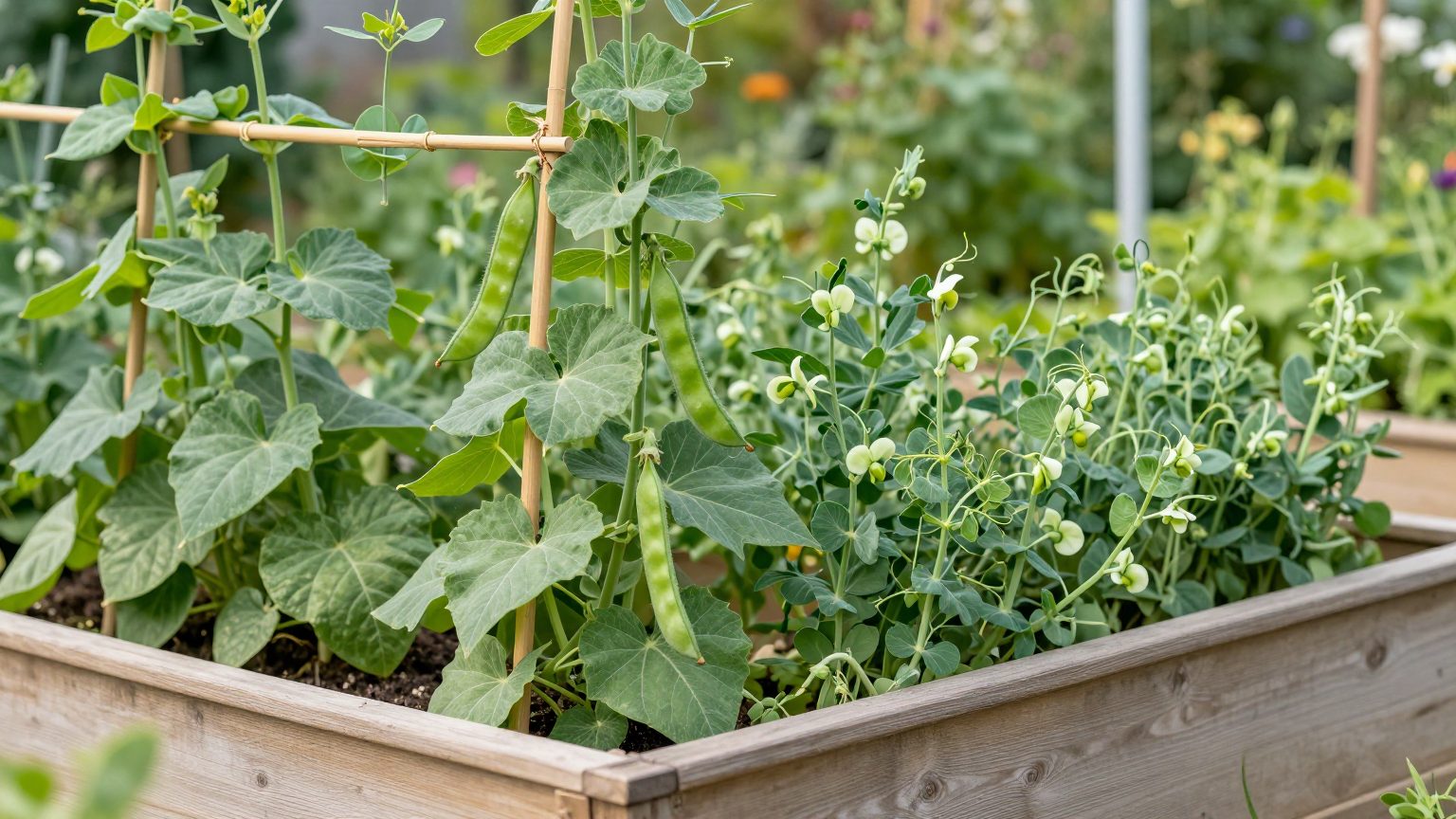
Pole beans, runner beans, and most peas climb, and giving them something to climb is what makes them productive. Put supports in before or at planting, since pushing stakes in later damages roots.
•Teepee: tie the tops of 6-8 tall poles together and plant a few seeds at the base of each. A teepee is sturdy, attractive, and good for a small footprint.
•Trellis or fence panel: a wire or wooden panel works well for both beans and peas and is easy to harvest from both sides.
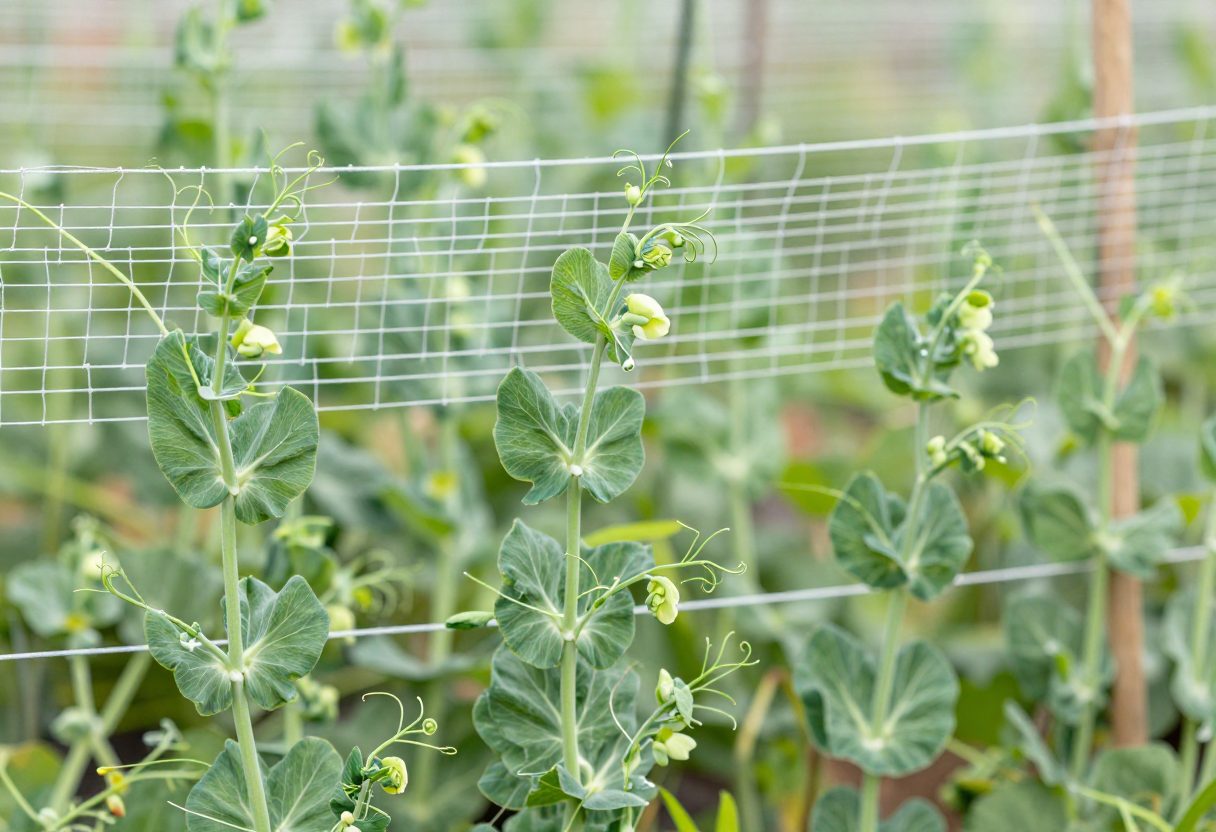
•Netting: fine plastic or cotton netting stretched between posts suits peas, whose tendrils grab thin supports easily. Beans twine and prefer a thicker pole or string.
•Strings: vertical strings running from a top wire to the ground are a light option that works with either crop.
•Height matters: pole beans often reach 6 feet or more, so choose supports of at least that height, and make them strong enough to hold a heavy vine in wind.
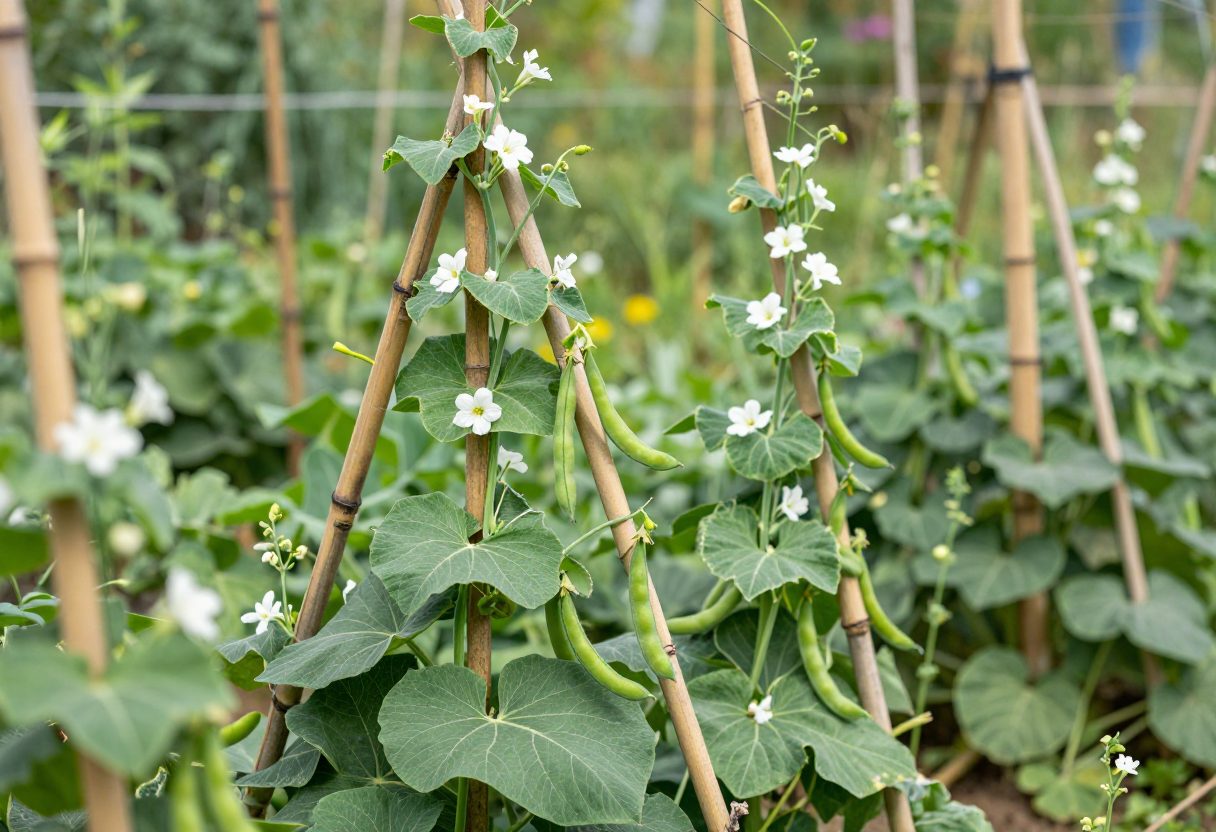
A bamboo teepee holds pole beans and makes picking easy.
Watering, Feeding, and Cool-Season Care
Both crops are low maintenance. Beans and peas make much of their own nitrogen, so the usual mistakes are giving too much fertilizer or too little consistent water.
•Water steadily, giving roughly 1 inch a week including rainfall. Consistent moisture matters most while plants are flowering and pods are filling.
•Water at the base of the plants where possible, and in the morning, so leaves dry quickly. Wet leaves encourage rust and mildew.
•Go easy on nitrogen fertilizer. Too much gives lush leaves but few pods. Working in compost before planting is usually all these crops need.
•Mulch lightly once plants are up to hold moisture and keep the soil cool.
•Avoid working among the plants when the foliage is wet, since that spreads fungal diseases from leaf to leaf.
•Peas fade as summer heat arrives; when temperatures stay well above the 80s, vines slow down and produce less. Pull them then and use the space for a warm-season crop.
Pea tendrils grip thin netting or string readily, which is why they suit fine supports.
Common Problems
Beans and peas are seldom troubled by serious problems if they are planted at the right time and spaced for airflow. These are the ones you are most likely to meet.
Problem
Likely cause
What to do
Seeds fail to come up
Cold, wet soil rotted the seed, or birds and rodents ate it
Wait for warmer soil for beans, sow again, and cover the bed with netting until seedlings emerge
Flowers drop without setting pods
Heat, particularly nights that stay very warm, or uneven watering
Water consistently and mulch; pick regularly, and sow another round when weather cools
Holes in bean leaves
Mexican bean beetle or other leaf-feeding beetles
Check leaf undersides for yellow egg clusters and hand-pick adults and larvae; row cover early helps
Curled leaves with sticky residue
Aphids
Spray plants with a firm stream of water, and encourage predators such as ladybugs
Orange-brown pustules on leaves
Rust fungus
Water at the base, give plants space, and remove badly affected leaves
White powdery coating on leaves
Powdery mildew, common late in the season
Improve airflow; many plants finish producing anyway, so remove them after harvest
Yellowing and poor growth
Waterlogged soil or root rot
Improve drainage, avoid overwatering, and rotate the crop to a new bed next year
⚠️
Raw or undercooked dry beans of some kinds, especially kidney beans, contain compounds that can make people ill. Always boil dry beans thoroughly, following a trusted cooking method, before eating them.
Harvesting, Storing, and Rotation
The secret to a long harvest is picking often. When pods are left to mature fully on the plant, the plant considers its work done and slows or stops producing.
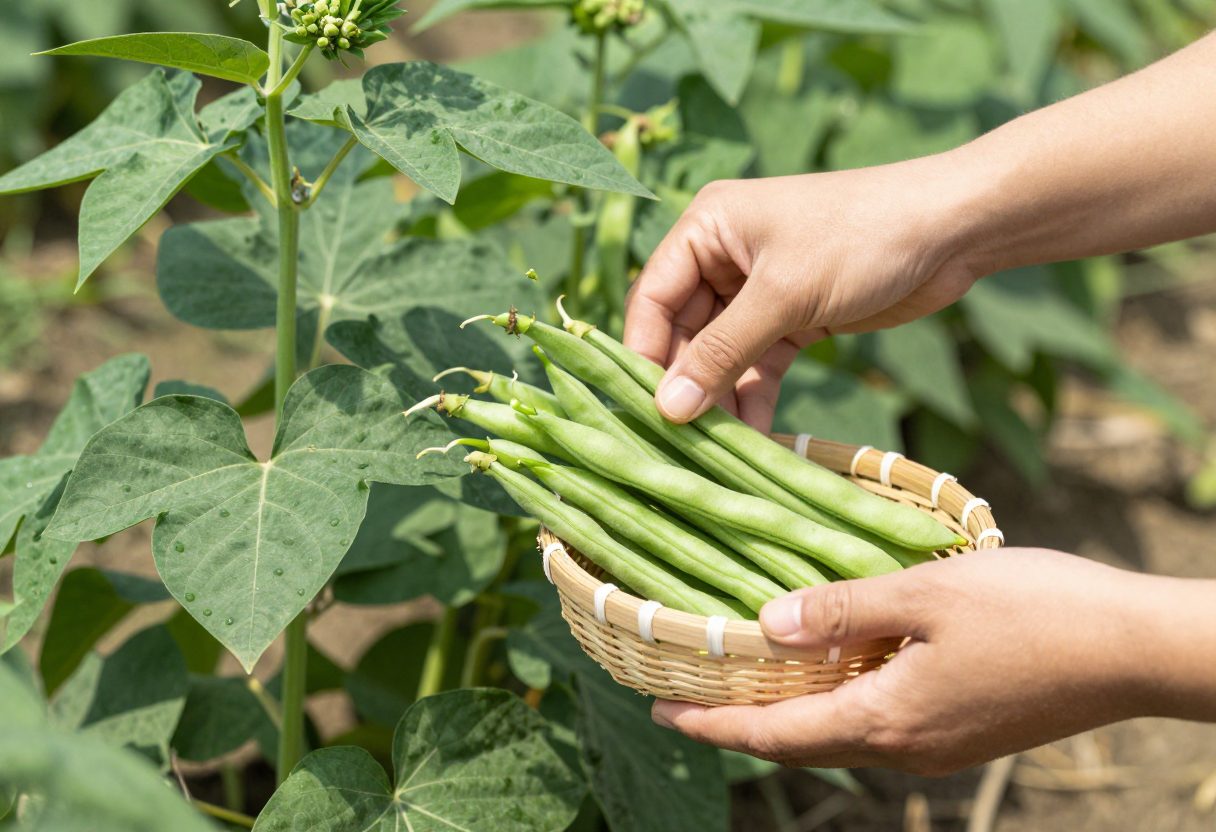
•Snap beans: pick when pods are slender, firm, and snap cleanly, before the seeds inside bulge noticeably. Check plants every day or two once they begin.
•Snap peas: pick when the pods are full and plump but still tender and bright green. Snow peas: pick while pods are flat, before the peas swell.
•Shelling peas: pick when pods are rounded and full, and shell them soon; they are sweetest fresh.
•Dry beans: leave pods on the plant until they turn dry and papery and the seeds rattle inside, then finish drying indoors on a tray before storing in a sealed container.
•Pick gently, holding the vine with one hand and pulling the pod with the other, so you do not tear the plant.
•Fresh pods keep best refrigerated and are best used within several days. Peas and beans also freeze well after a brief blanch.
🌾
When the crop finishes, cut the plants at the soil line instead of pulling them, and leave the roots in the ground. The roots break down and leave nitrogen behind for whatever you grow next. See Post-Harvest Garden Care for rotation planning, and the Cover Crops guide for more on feeding soil with legumes.
Pick snap beans while they are slender, and check the plants every day or two.
🌿 Get Seasonal Gardening Tips
New guides, planting reminders, and growing tips — straight to your inbox.
No spam. Unsubscribe anytime.
About the Author
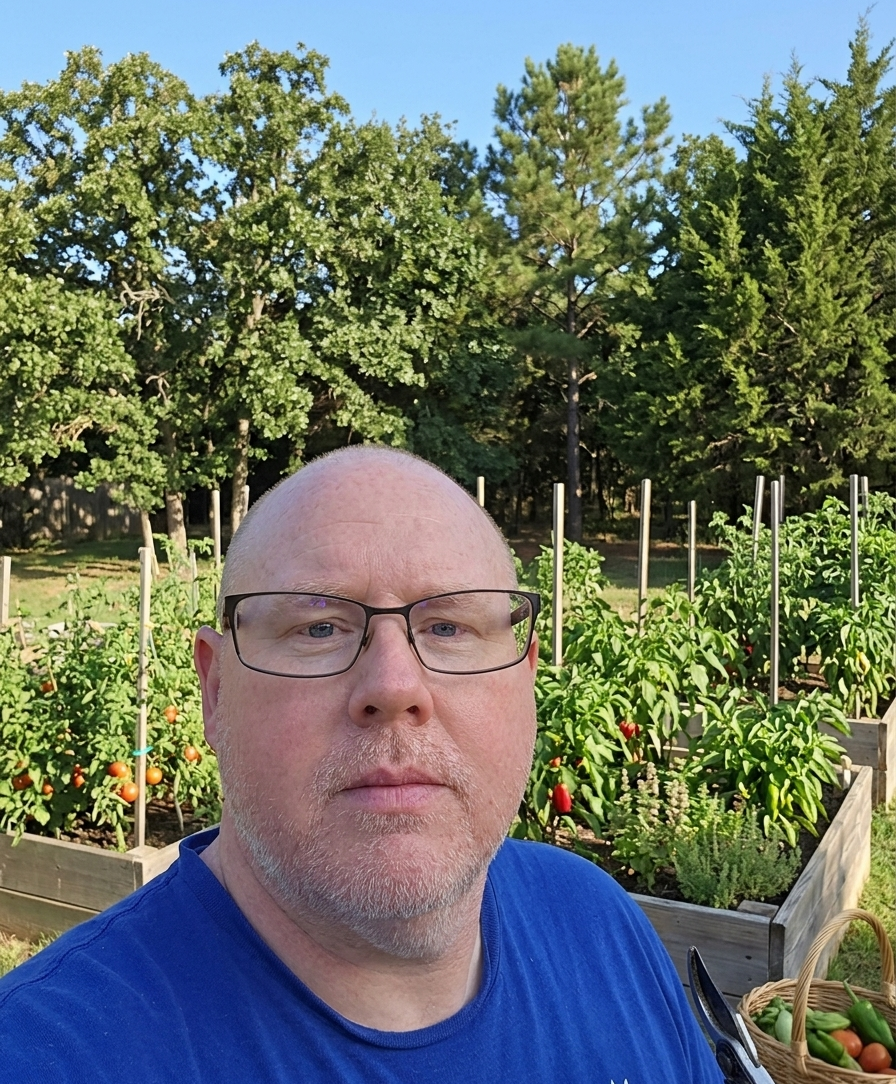
David Rodgers is the Founder & Head Gardener of Planting Atlas. With over 40 years of hands-on gardening experience in Oklahoma's Zone 7 climate, he researches, writes, and personally tests every guide on the site.
David draws from real backyard trials, soil testing, and trusted sources like Oklahoma State University Extension and USDA data to deliver practical, zone-specific advice that actually works.