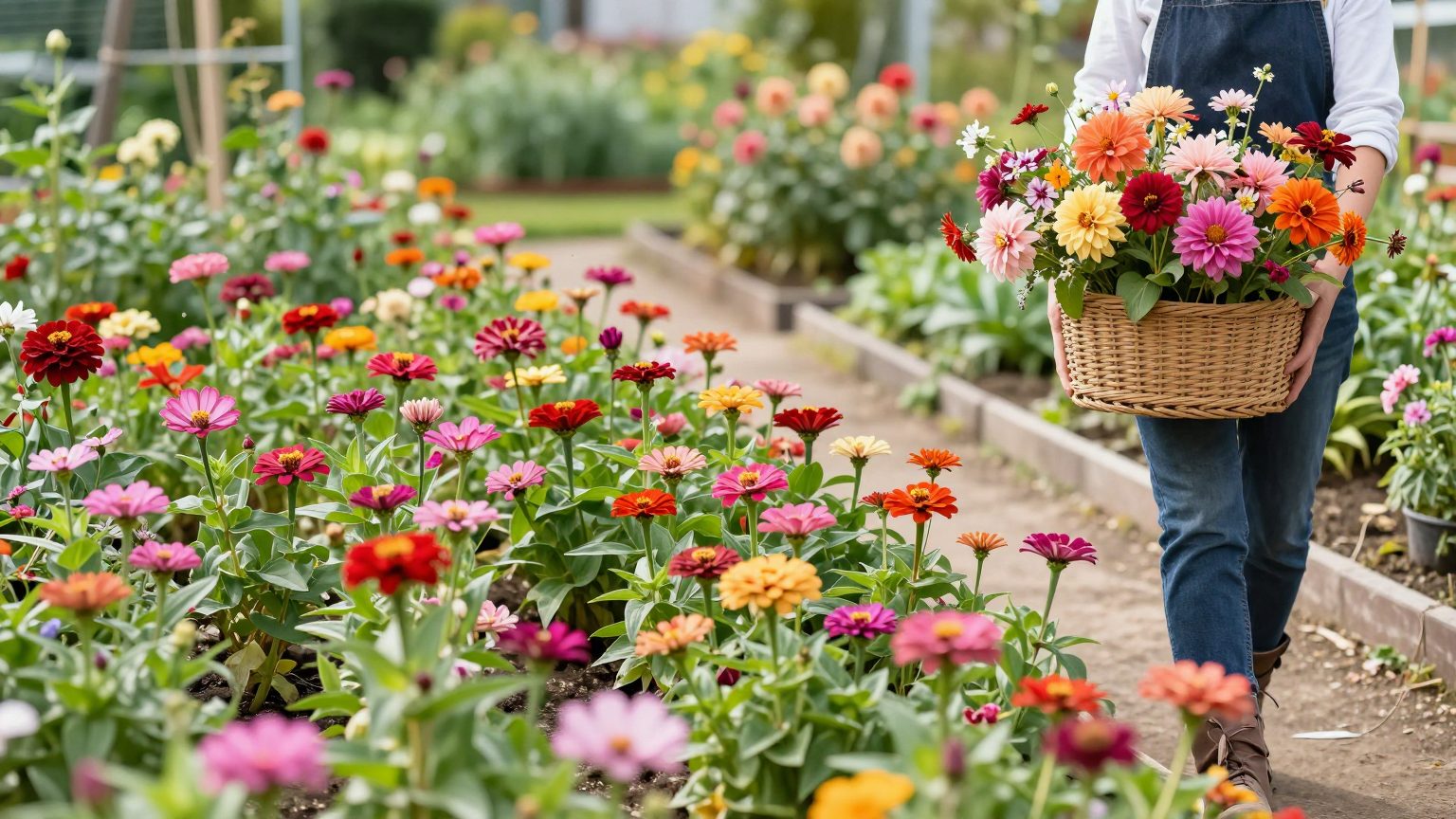
Grow flowers specifically for fresh-cut bouquets and dried arrangements — with succession planting strategies that keep stems coming from spring through frost.
A cutting garden is fundamentally different from a display garden — it prioritizes yield and stem length over visual perfection in the landscape. Plants are grown in rows for easy harvest, deadheaded aggressively to encourage continuous stem production, and selected for vase life rather than compact garden form. The most productive cutting gardens combine reliable annual workhorses (zinnia, sunflower, celosia, cosmos, lisianthus) with a backbone of perennials that produce year after year (peony, yarrow, Siberian iris, catmint) and a selection of everlastings that can be dried for long-lasting arrangements (statice, strawflower, globe amaranth, lunaria, nigella). Together these three layers give the cutting gardener something to harvest from May through October in most US zones. This guide focuses specifically on the succession scheduling and drying techniques that separate a productive cutting garden from an ordinary flower bed — see the site's Cut Flower Garden guide for the broader plant-selection and bouquet-design side of growing flowers for cutting.
A cutting garden that produces continuously from spring through frost combines three distinct plant categories, each contributing something the others can't.
Layer
Role
Example Plants
Bloom Window
Annual workhorses
Fast-growing, prolific bloomers that respond to succession sowing
Zinnia, sunflower, celosia, cosmos, lisianthus
Roughly 8-10 weeks after sowing, then continuously with deadheading
Perennial backbone
Return year after year without replanting, often bloom earlier than annuals can be sown for
Peony, yarrow, Siberian iris, catmint
Concentrated bloom windows, typically spring through early summer
Everlastings
Dry well for long-lasting arrangements, extending the garden's value past the fresh-cut season
Summer through fall; many can be dried and used indefinitely after harvest
🌻
A garden built from all three layers rarely has a truly "empty" week — perennials cover the early season before annuals from spring sowing are ready, annuals carry the bulk of summer, and everlastings extend value into fall and beyond as dried material.
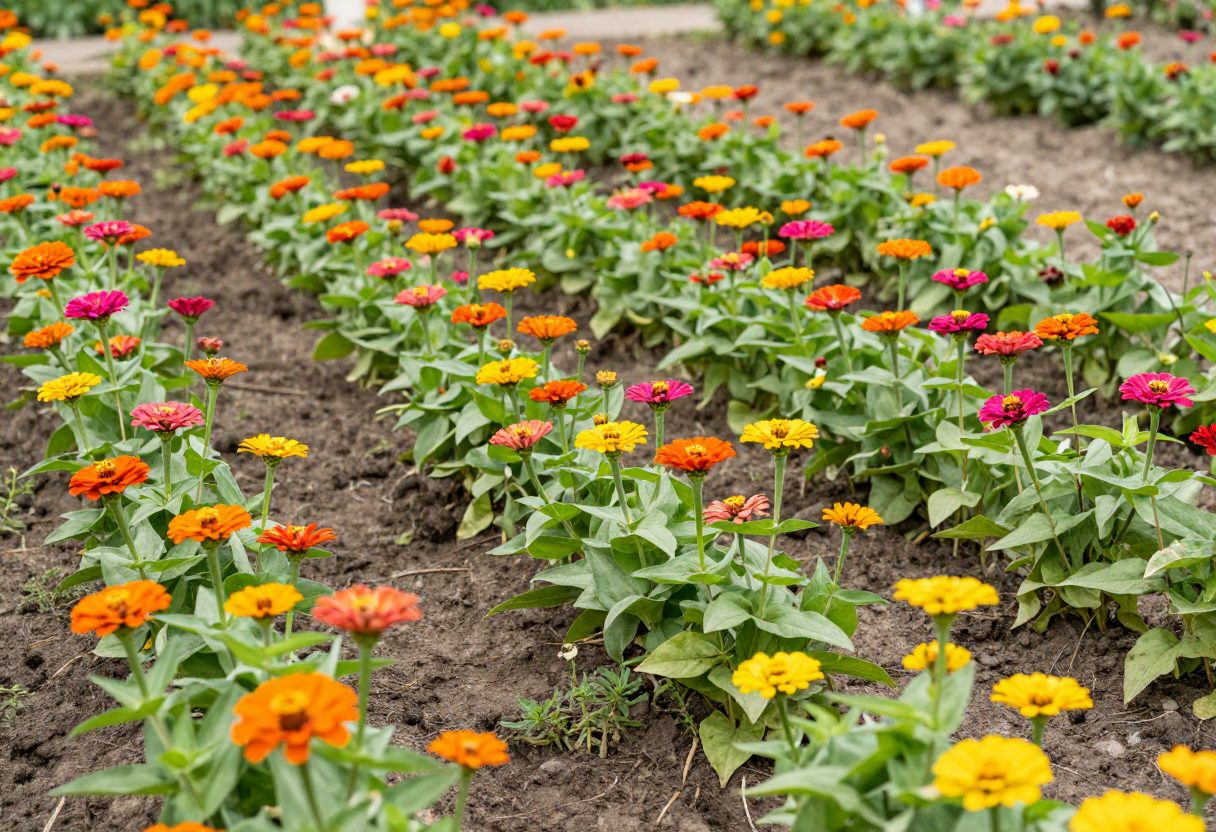
Annual workhorses like zinnia and cosmos form the productive backbone of a cutting garden through summer.
Succession Planting to Avoid Feast or Famine
The single most common cutting garden mistake is sowing an entire season's annuals all at once — this produces one overwhelming flush of bloom followed by weeks of bare rows, rather than the steady, continuous harvest a cutting garden should provide.
•Sow fast-growing annuals (zinnia, sunflower, cosmos) in small batches every 2-3 weeks from after last frost through early-to-mid summer.
•Stop new sowings roughly 10-12 weeks before first frost — later plantings won't have time to mature and bloom before the season ends.
•Stagger slower-maturing annuals (lisianthus, celosia) less frequently, since their longer time to bloom naturally spaces out their harvest windows.
•Keep a simple planting log noting sow dates and first-bloom dates for each variety — this builds a personalized succession schedule tuned to your specific climate over a season or two.
📅
Zinnias and cosmos are the most forgiving succession-planting crops for beginners — they germinate quickly, bloom reliably within 8-10 weeks, and tolerate a slightly imperfect sowing schedule far better than more finicky cutting flowers.
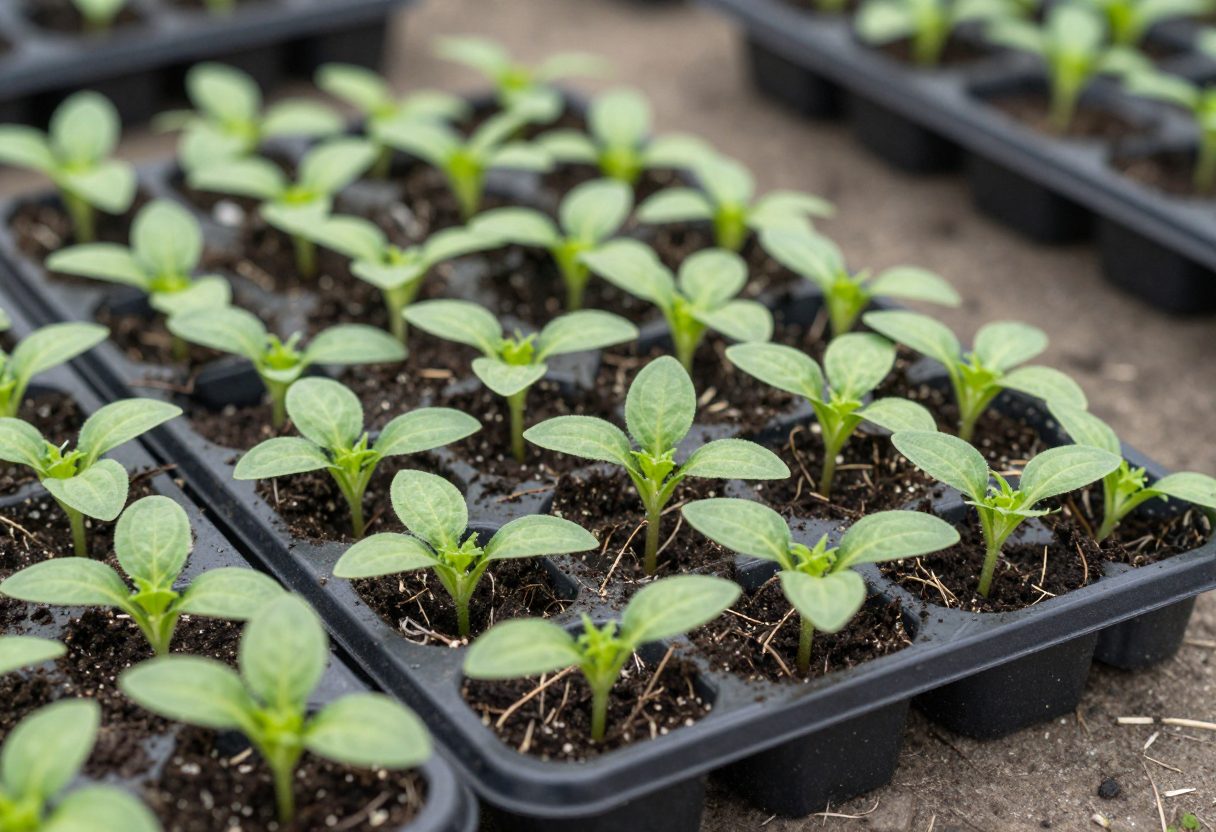
Sowing small batches of seedlings every 2-3 weeks avoids the feast-or-famine cycle of a single big planting.
Harvesting Technique for Maximum Vase Life
How and when a stem is cut affects vase life as much as the variety itself — the same flower harvested well can last twice as long in a vase as one harvested carelessly.
•Cut in the early morning while stems are fully hydrated and temperatures are cool, before the day's heat causes wilting stress.
•Place cut stems immediately into a bucket of cool water rather than letting them sit in air, even briefly.
•Condition stems for several hours (or overnight) in a cool, dark location before arranging — this allows them to fully rehydrate and firm up.
•Cut at the flower's recommended stage — some flowers (zinnia, dahlia) should be fully open when cut since they won't continue opening in the vase, while others (sunflower, lisianthus) can be cut when buds are just beginning to show color and will continue opening afterward.
•Strip any foliage that would sit below the water line — submerged leaves decompose and shorten vase life for the whole arrangement.
⚠️
Harvesting in the heat of the afternoon, when stems are already under moisture stress from the day's sun, reliably shortens vase life even for flowers cut at the right growth stage — timing matters as much as technique.
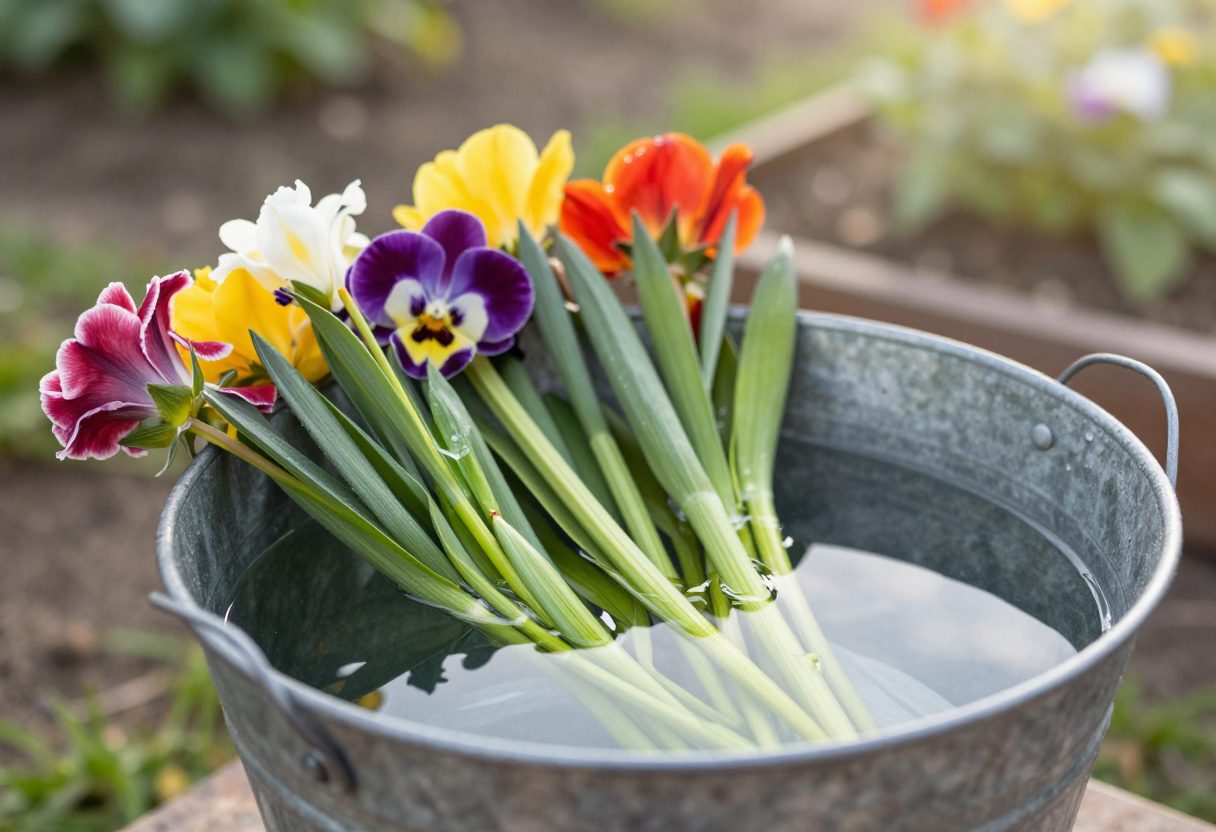
Cutting stems in the cool early morning and placing them immediately in water maximizes vase life.
Drying Methods by Flower Type
Everlastings and many garden flowers can be dried for arrangements that last indefinitely, but different flower types need different drying approaches to preserve color and form well.
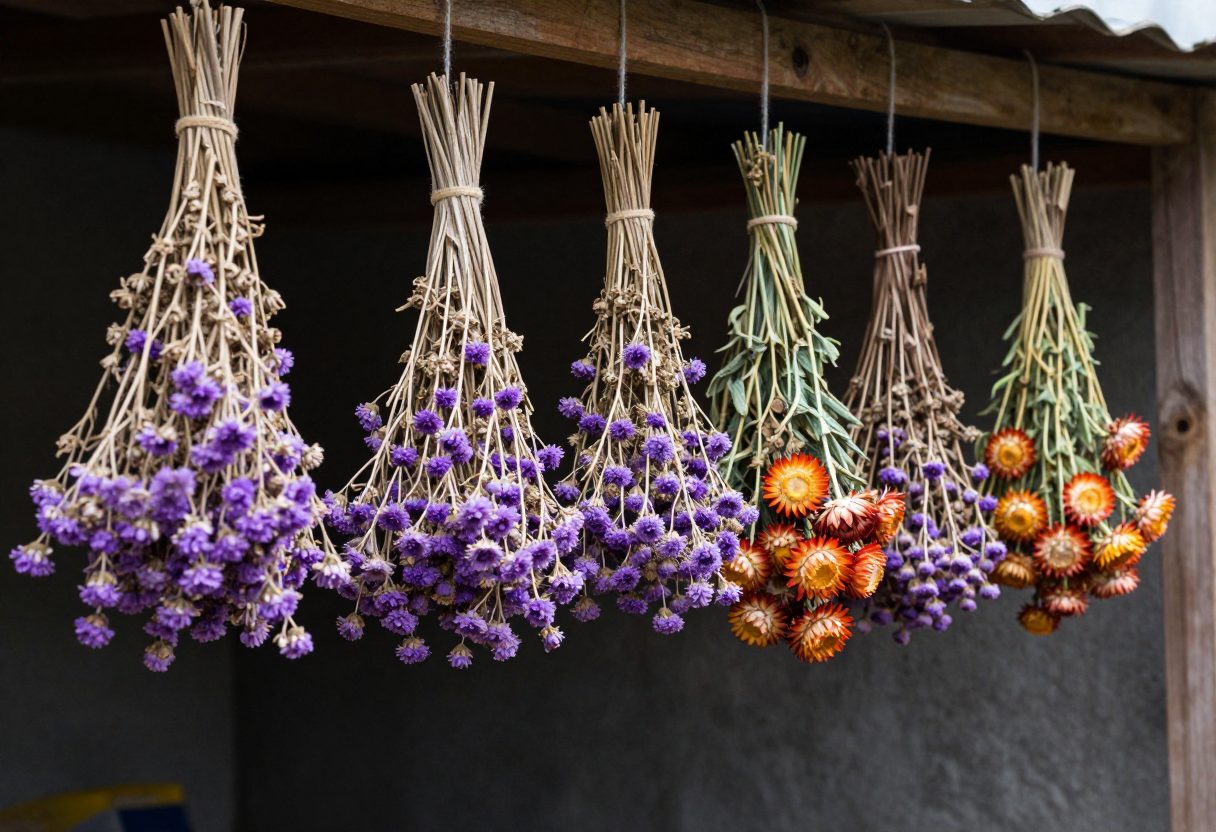
Bundle small groups with a rubber band, hang upside down in a dry, dark, well-ventilated space for 1-3 weeks
Air drying (upright, in a vase with no water)
Grasses, seed pods, lunaria (money plant)
Stand stems in an empty vase or container; many dry naturally in place over a few weeks
Silica gel drying
Delicate, full-form flowers that would flatten or shrivel air drying (roses, peonies, dahlias)
Bury blooms in silica gel in a sealed container for several days to a week, preserving 3D form
Pressing
Flat display use — cards, framed art, botanical prints
Press between heavy books or in a flower press for 1-2 weeks; not suitable for arrangements needing volume
⚠️
Strawflower and globe amaranth should be picked slightly before full open — they continue to open somewhat as they dry, and flowers picked fully open can look overblown or start shattering once dried.
🌾
A dark drying location matters more than most gardeners expect — direct light fades color significantly during the drying process, even for naturally vivid varieties like strawflower and statice.
Hanging bundles upside down in a dark, well-ventilated space preserves color and form in dried everlastings.
Designing a Productive Cutting Garden in a Small Space
A cutting garden doesn't need a large dedicated plot to be genuinely productive — efficient row spacing and a focus on high-yield varieties can produce a meaningful cutting harvest from a surprisingly modest footprint.
•Plant in tight rows (roughly 9-12 inches apart) rather than the wider spacing used for display gardens, since cutting garden plants are harvested regularly rather than left to fill out into a mature landscape form.
•Use support netting or grid stakes for taller varieties (zinnia, cosmos, dahlia) grown at high density — closely spaced plants are more prone to flopping without support.
•Prioritize prolific, "cut-and-come-again" varieties over one-time bloomers to maximize yield per square foot.
•Consider a raised bed or dedicated row along a fence or garden edge rather than trying to integrate a cutting garden into an ornamental bed, where aggressive harvesting can leave visible gaps.
📐
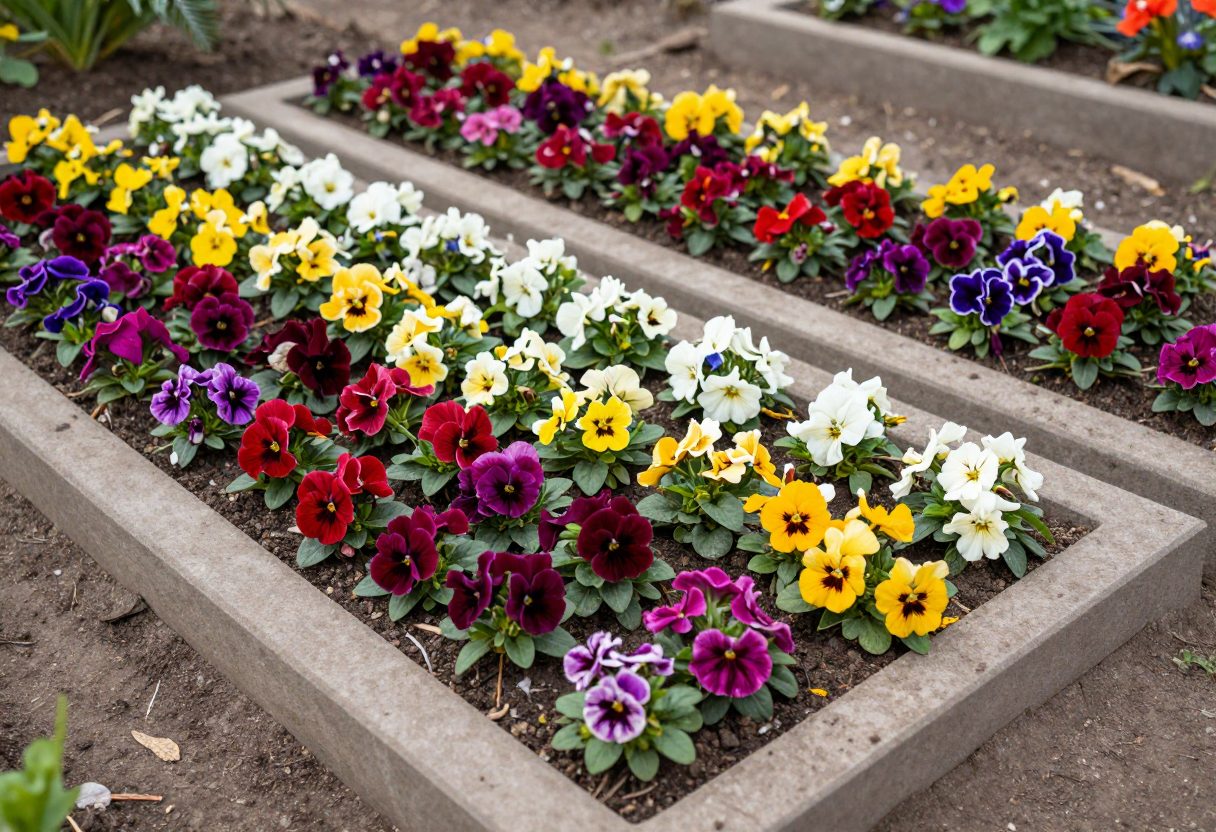
A 4-by-8-foot raised bed, planted intensively with a mix of the three cutting garden layers, can realistically supply weekly bouquets for a household through most of the growing season.
A single 4x8-foot raised bed, planted intensively, can supply weekly bouquets for a household most of the season.
🌿 Get Seasonal Gardening Tips
New guides, planting reminders, and growing tips — straight to your inbox.
No spam. Unsubscribe anytime.
About the Author
David Rodgers is the Founder & Head Gardener of Planting Atlas. With over 40 years of hands-on gardening experience in Oklahoma's Zone 7 climate, he researches, writes, and personally tests every guide on the site.
David draws from real backyard trials, soil testing, and trusted sources like Oklahoma State University Extension and USDA data to deliver practical, zone-specific advice that actually works.