Lemons, limes, and mandarins on a patio or in a sunny window — the pot, mix, light, watering, and winter care that keep them fruiting.
Citrus trees are tropical and subtropical plants, which is why gardeners in colder climates once thought them impossible. A container changes that. A dwarf citrus tree in a large pot can spend the warm months outdoors in full sun and the cold months indoors or under cover, and it will produce fragrant blossoms and real fruit. Success comes down to a few things: a fast-draining mix, plenty of light, careful watering, and protection from cold. This guide covers choosing the tree and pot, planting, light and temperature, watering and feeding, flowering and fruit, and the common problems. For general container advice, see Vegetables in Containers, and for the numbers behind indoor light, see the Grow Lights guide.
Choose a variety known to stay compact and to fruit reliably in a pot. Grafted dwarf trees from a nursery are the usual choice, since they fruit sooner than trees grown from seed.
Variety
Fruit
Notes
Meyer lemon
Rounded, thin-skinned, sweeter than a standard lemon
The most popular container citrus; fairly tolerant of cooler conditions and indoor life
Calamondin
Small, tart, orange-like fruit
Very compact and decorative; flowers and fruits over a long season
Kumquat
Small oval fruit eaten whole, peel and all
Among the most cold-tolerant of the citrus group; good for containers
Key lime
Small, tart, aromatic limes
Needs warmth and is sensitive to cold; bring indoors early
Satsuma mandarin
Easy-peeling, sweet fruit
One of the more cold-tolerant mandarins; a compact form suits pots
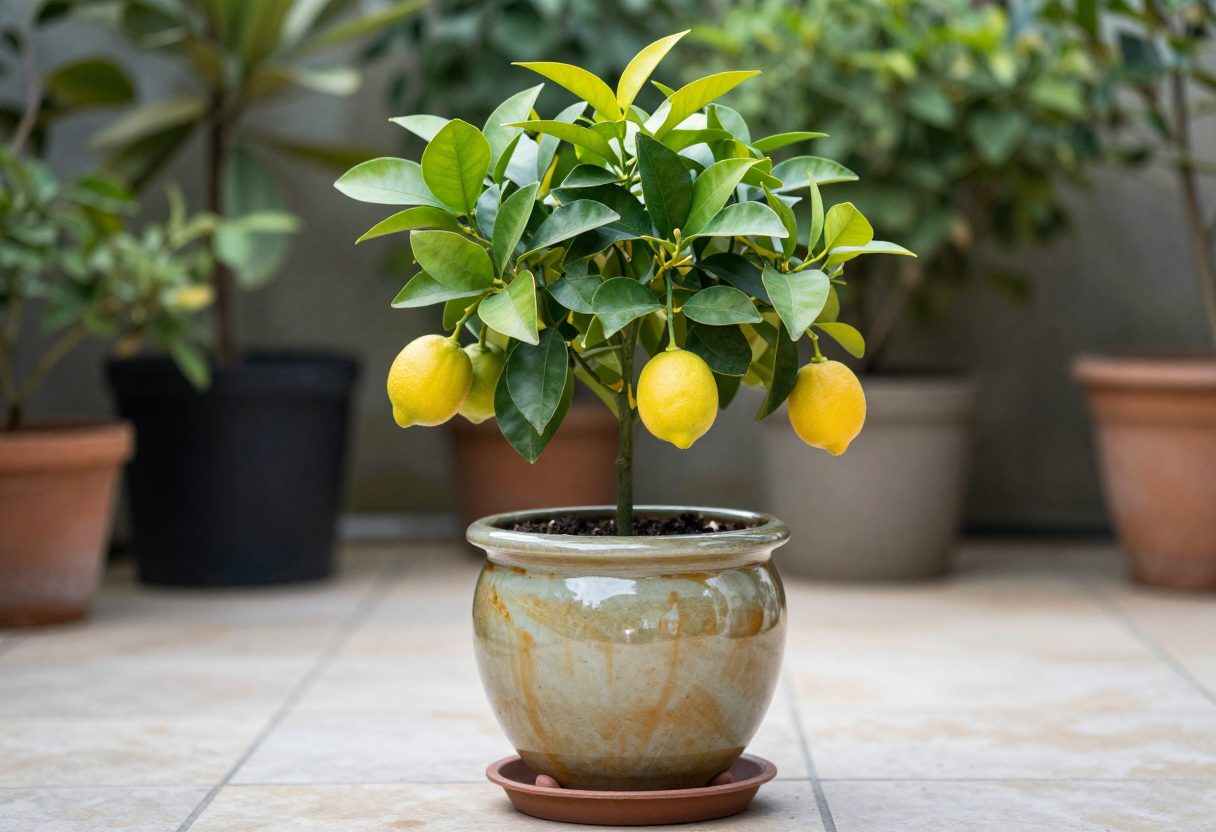
•Start with a pot only a few inches wider than the root ball, roughly a 5-10 gallon container for a young tree, and step up in size as it grows to roughly 15-25 gallons for a mature one.
•Make sure the pot has ample drainage holes. Citrus roots need air, and sitting in water is the fastest way to lose a tree.
•Raise the pot on pot feet or small blocks so water drains freely from the holes and does not pool in a saucer.
•Light-colored or glazed pots stay cooler in strong sun, while dark pots heat up quickly in summer.
•A pot on a wheeled stand makes it much easier to shift the tree indoors and out.
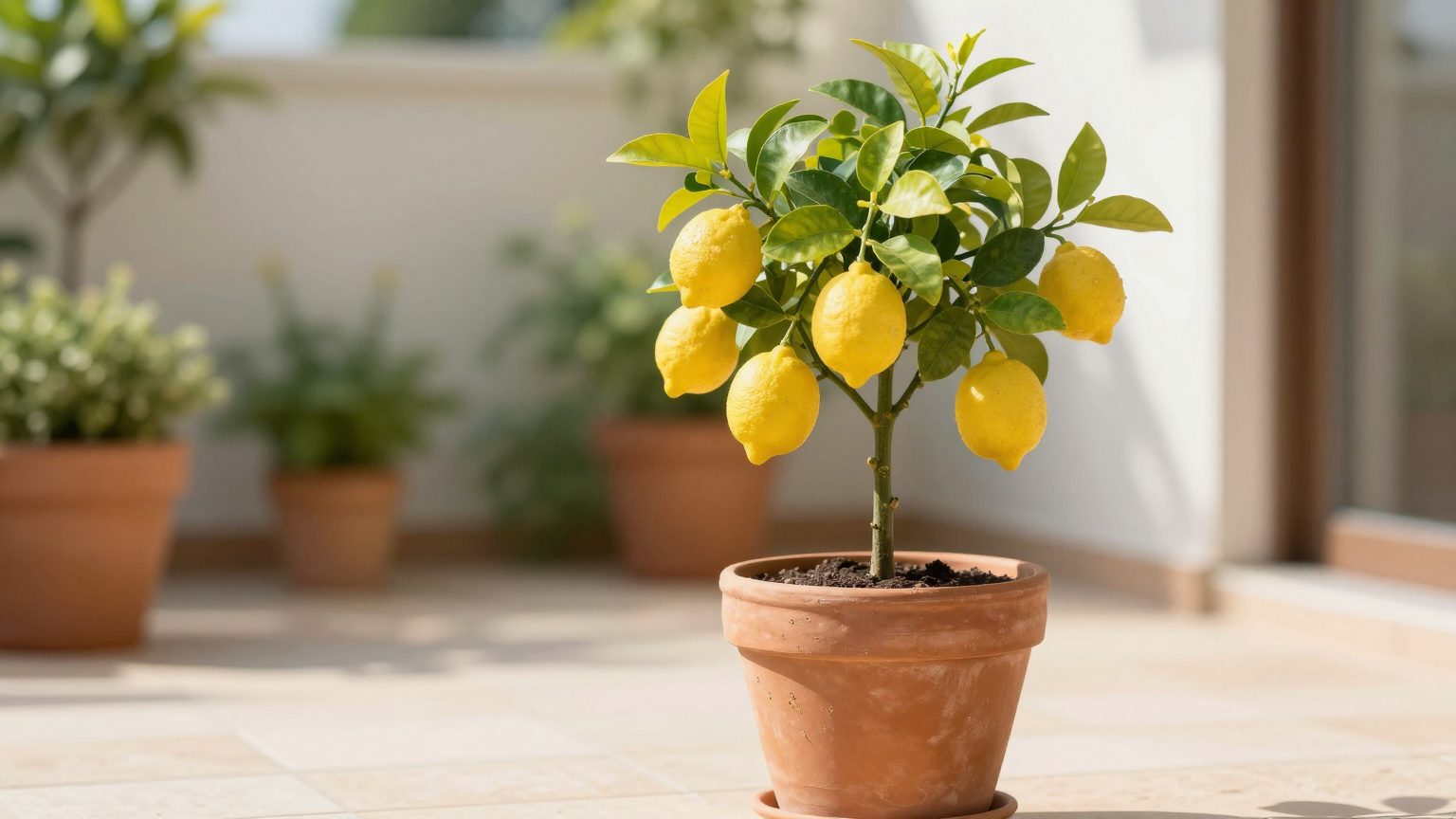
A large pot with good drainage, raised on feet, keeps citrus roots from sitting in water.
Potting Mix and Planting
Citrus needs a light, fast-draining, slightly acidic mix. Garden soil packs down in a container and suffocates roots, so use a quality potting mix instead.
•Use a potting mix labeled for citrus and cacti, or blend a general potting mix with extra perlite or fine bark to improve drainage.
•Aim for a mix that stays moist but never soggy, and drains in moments when watered.
•Plant so the top of the root ball sits level with or slightly above the soil, and keep the grafted bump on the trunk above the soil line.
•Water thoroughly after planting, until water flows from the drainage holes.
•Skip rich compost-heavy mixes and heavy garden soil, which hold too much water around the roots.
🌱
Buy a citrus that is already in a nursery container and pot it up rather than bare-rooting it. Citrus roots are sensitive, and the least disturbance gives the best start.
Light and Temperature
Citrus wants as much sun as you can give it: generally at least 8 hours of direct light a day. Cold is the main danger, since most citrus is damaged by frost and stressed by temperatures in the low 40s Fahrenheit and below.
•Spring to fall: keep the tree outdoors in full sun once nights are reliably warm, hardening it off over a week or so so leaves do not scorch.
•Bring the tree inside before frost, and earlier in the fall for the more sensitive types such as limes, when nights start to fall toward the 40s.
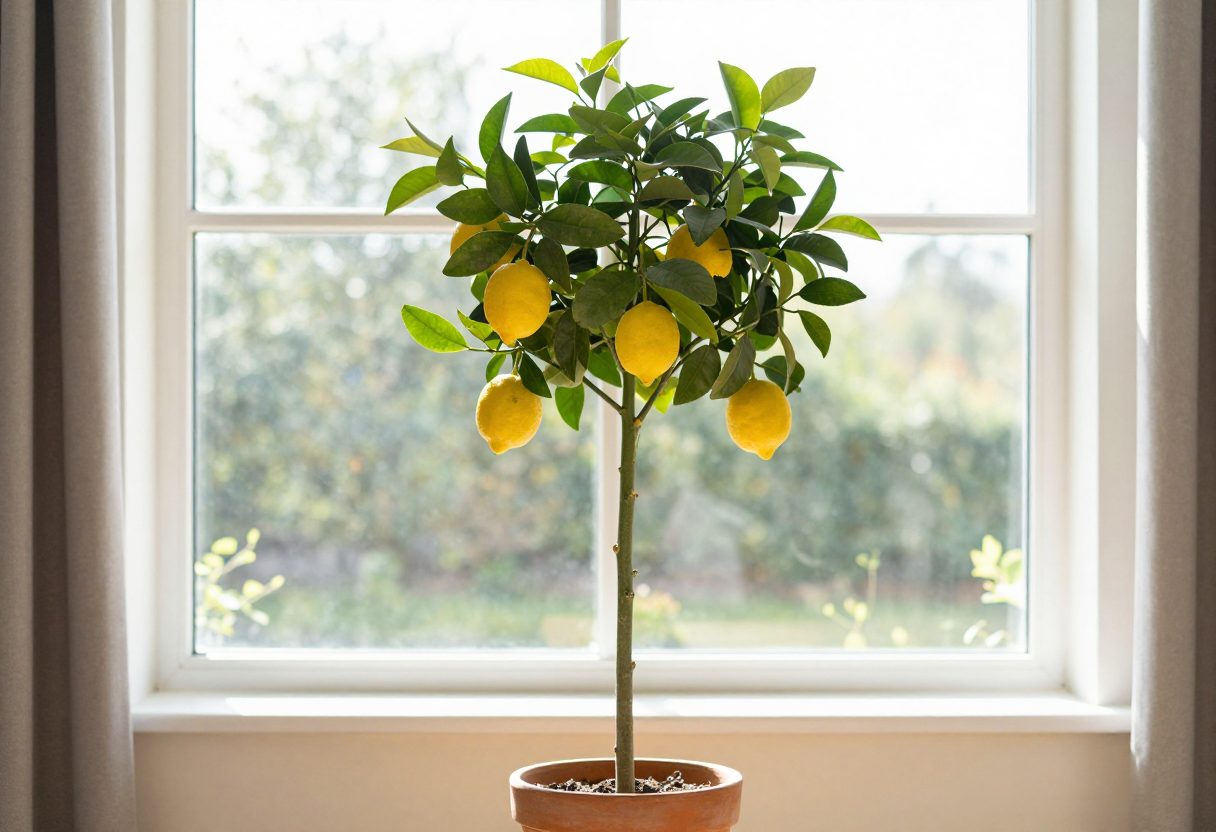
•Indoors, place the tree in your brightest south-facing window, and turn the pot occasionally so all sides get light.
•If window light is weak, add a full-spectrum grow light for 12 or more hours a day. See the Grow Lights guide for how to place and time lights.
•Indoor winter air is dry, so keep the tree away from heating vents and drafts, and expect some leaf drop as it adjusts.
•Move the tree back outdoors gradually in spring, in a sheltered spot at first.
Indoors in winter, a citrus tree wants the brightest window you have, or a grow light.
Watering and Feeding
Overwatering kills more container citrus than anything else. The goal is even moisture: water deeply, then let the top of the soil dry before watering again.
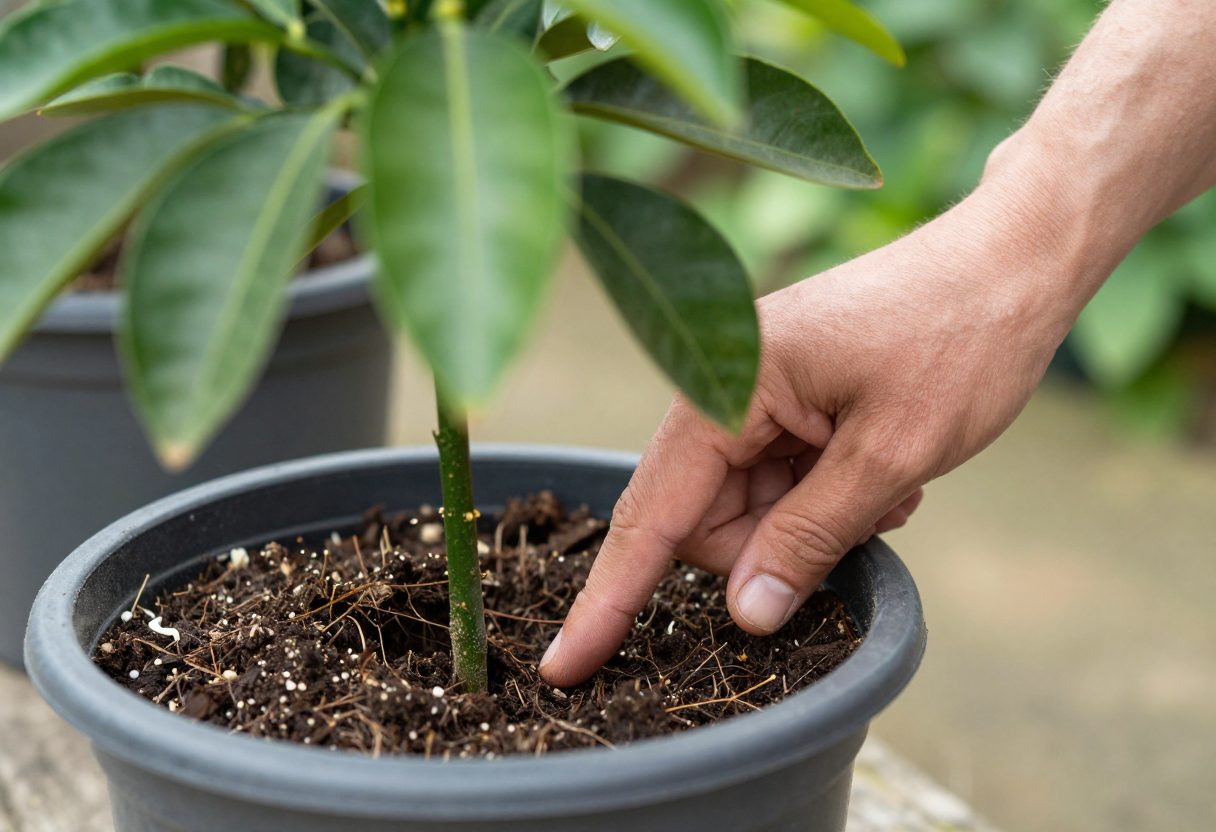
•Check by pushing a finger into the mix. Water when the top inch or two feels dry, and water until liquid drains from the bottom holes.
•Empty any saucer of standing water within an hour or so.
•Water more often in hot summer weather and less often in cool, low-light winter months.
•Feed with a fertilizer made for citrus, which contains nitrogen and micronutrients such as iron, zinc, and magnesium, following the label rate.
•Feed regularly during active growth from spring through summer, and reduce or stop feeding in winter when growth slows.
•Flush the pot with plenty of plain water every so often to wash out mineral salts that build up from fertilizer and tap water.
A finger pushed into the mix is the simplest, most reliable moisture check.
Flowers, Pollination, and Fruit
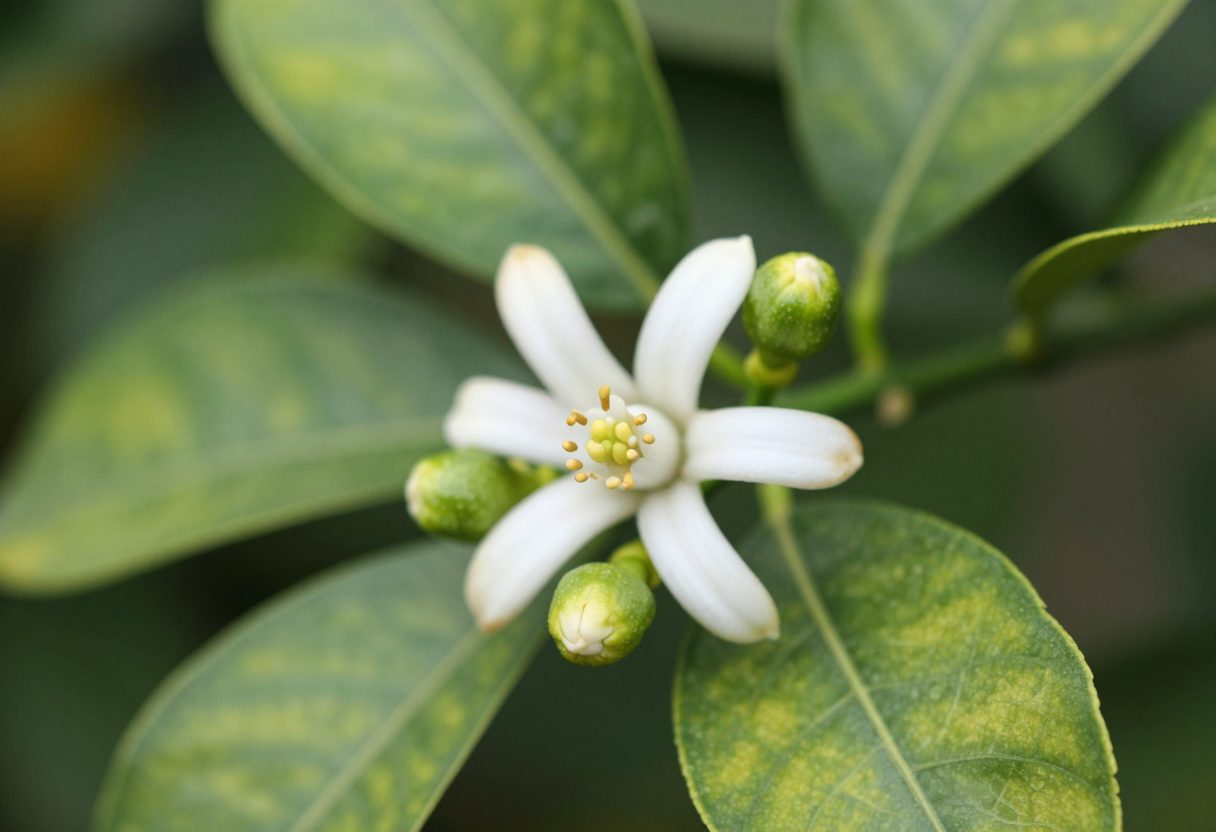
Citrus blossoms are white, intensely fragrant, and can appear several times a year. Most home citrus types are self-fertile, so a single tree can set fruit, and outdoors bees do the work.
•Indoors there are no bees, so you can help by gently dabbing pollen from flower to flower with a small soft brush or cotton swab.
•Dropping some blossoms and tiny fruit is normal. A tree sets far more flowers than it can carry, so do not be alarmed.
•Fruit takes months to ripen, often 6-12 months or more depending on the type, so a tree can carry fruit and flowers at once.
•Judge ripeness by color, size, and taste rather than by date. Many fruits sweeten the longer they stay on the tree.
•Pick fruit by twisting or cutting it from the stem, and enjoy it soon after harvest.
Citrus blossoms are fragrant, and a tree can carry blossoms and ripening fruit together.
Common Problems
Most citrus problems come from watering, light, or nutrition. Look at the pattern of the symptoms before treating, since several causes look alike.
Symptom
Likely cause
What to do
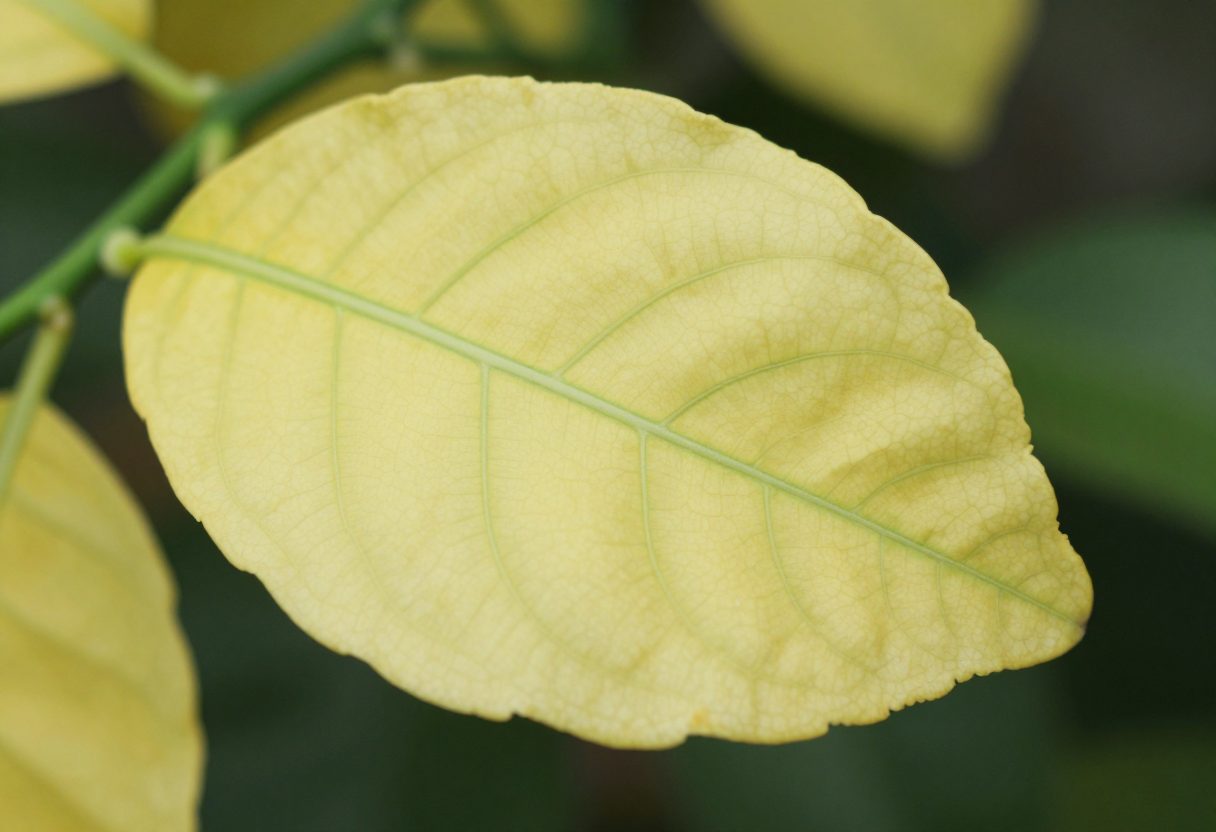
Pale yellow leaves with green veins
Shortage of iron, zinc, or magnesium, often in overly alkaline or waterlogged soil
Use a citrus fertilizer with micronutrients, and check drainage and watering
Overall yellowing and leaf drop
Overwatering, poor drainage, or cold stress
Let the mix dry between waterings, improve drainage, and keep the tree warm
Leaf drop after moving indoors
Change in light and humidity
Give the brightest light possible; the tree usually recovers once acclimated
Curled leaves with squiggly trails
Citrus leafminer
Prune and discard damaged new growth; protect new flushes of growth
Small bumps on stems and leaves, sticky residue
Scale insects
Wipe off with alcohol on a cotton swab, or use horticultural oil
Fine webbing and stippled leaves indoors
Spider mites in dry air
Rinse the leaves, raise humidity, and use insecticidal soap if needed
Blossoms and small fruit drop
Normal thinning, or water stress and temperature swings
Keep watering steady and avoid sudden changes in location
Yellowing leaves usually point to a nutrient shortage or a watering problem, so check both.
🌿 Get Seasonal Gardening Tips
New guides, planting reminders, and growing tips — straight to your inbox.
No spam. Unsubscribe anytime.
About the Author
David Rodgers is the Founder & Head Gardener of Planting Atlas. With over 40 years of hands-on gardening experience in Oklahoma's Zone 7 climate, he researches, writes, and personally tests every guide on the site.
David draws from real backyard trials, soil testing, and trusted sources like Oklahoma State University Extension and USDA data to deliver practical, zone-specific advice that actually works.